
When the Roles Reverse: What Families in Richmond Need to Know About Helping Your Elderly Parents
Helping your elderly parents stay safe and independent is one of the most important — and overwhelming — things you may ever do.
Here is a quick overview of the most effective steps:
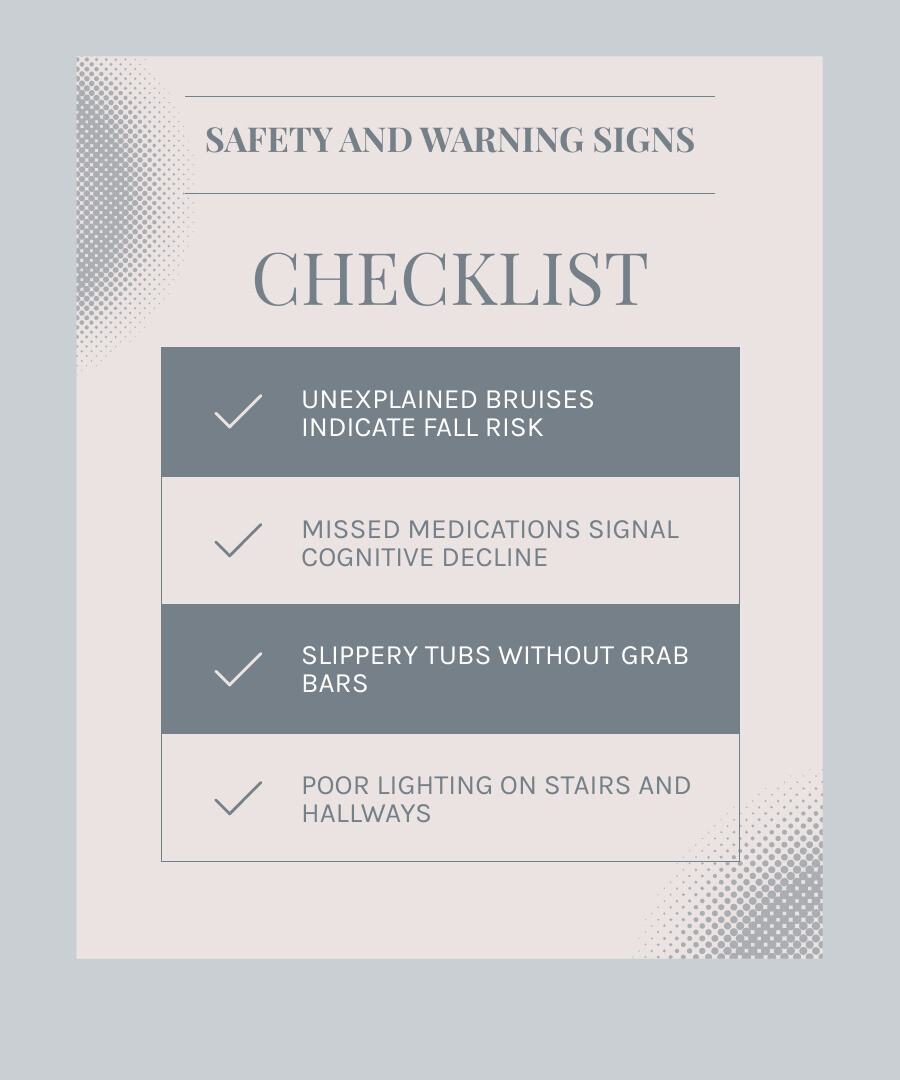
- Watch for warning signs — changes in hygiene, missed medications, clutter, or unexplained bruises
- Start the conversation early — before a crisis forces the decision
- Make the home safer — grab bars, better lighting, non-slip surfaces, stair lifts
- Build a support team — family, neighbors, local agencies, and care professionals
- Get legal documents in place — power of attorney, healthcare proxy, advance directives
- Find financial help — Medicaid waivers, VA benefits, Virginia caregiver programs
- Protect yourself from burnout — use respite care, support groups, and local resources
It rarely starts with a dramatic moment. More often, it's something small. Your dad grips the counter a little longer when he stands up. Your mom's fridge is nearly empty during your last visit. A phone call sounds fine, but something feels off.
For families across Richmond — whether your parents live in a classic two-story in the Fan, a ranch house in Henrico, or a split-level in Chesterfield — this quiet shift marks the beginning of a new chapter. One that most of us never feel fully ready for.
More than 63 million Americans provide unpaid care for an aging family member, spending an average of nearly 24 hours a week doing so. Many are also working full-time jobs. The emotional and financial weight adds up fast — with the average family caregiver spending over $7,200 out of pocket each year.
The good news? You do not have to figure this out alone, and you do not have to wait for a fall or a hospitalization to take action. This guide walks you through everything — from spotting early warning signs to making your parent's home genuinely safer — so you can make confident decisions for your family.
Helping your elderly parents vocabulary:
Recognizing the Signs: When is it Time for Helping Your Elderly Parents?
It is easy to miss the early warning signs of cognitive or physical decline, especially if you do not see your parents every day. Many seniors are masters at "masking" their struggles during a brief phone call or a short Sunday dinner. They want to protect their independence and avoid worrying you. However, as time goes on, managing daily life becomes increasingly difficult.
To understand where your parents actually stand, we look at their ability to manage Instrumental Activities of Daily Living (IADLs). These are the complex skills needed to live independently in the community, and they usually decline before basic physical needs do.
- Financial management: Are bills piling up unopened? Are there unusual purchases, or are they struggling to balance a checkbook?
- Medication management: Over 40% of older adults take five or more prescription medications. Missing doses or mixing up pills is the most common early indicator that a senior is failing to manage safely at home.
- Housekeeping and meal prep: Is the kitchen cluttered with expired food? Are they skipping meals or eating poorly because cooking feels too difficult?
- Community mobility: Are they avoiding driving at night, getting lost on familiar routes, or showing signs of anxiety about leaving the house?
Physical and behavioral changes are also vital indicators. You might notice a elegant mother who has suddenly stopped styling her hair, or a father who avoids bathing because he is secretly terrified of slipping in the tub. A decline in social activities — such as skipping their weekly book club in Midlothian or church events in Glen Allen — can also point to underlying depression, unaddressed hearing loss, or early cognitive changes.
If you are a long-distance caregiver, monitoring these changes requires a deliberate strategy. Short holiday visits are rarely enough to get an accurate picture. We recommend establishing a permission-based local check-in network. Introduce yourself to trusted neighbors in Henrico or Chesterfield, exchange phone numbers, and ask them to let you know if newspapers start piling up on the porch or if they notice any changes in your parent's routine.
When you do visit, perform a quiet safety sweep. Look for physical hazards like loose throw rugs, poorly lit hallways, or towel bars that are loose because your parent has been using them as makeshift grab bars (towel bars are not load-rated and will pull out of the wall under body weight!). For more detailed guidance, read our resource on Help Looking After Elderly Parents or check out the clinical perspective on stepping in from UCHealth Today.
Starting the Conversation Without Stripping Their Independence
One of the hardest parts of helping your elderly parents is talking about it. Many adult children dread these conversations, fearing their parents will become angry, defensive, or deeply hurt. It is a delicate psychological balance: you want to keep them safe, but they want to maintain their dignity and control over their own lives.
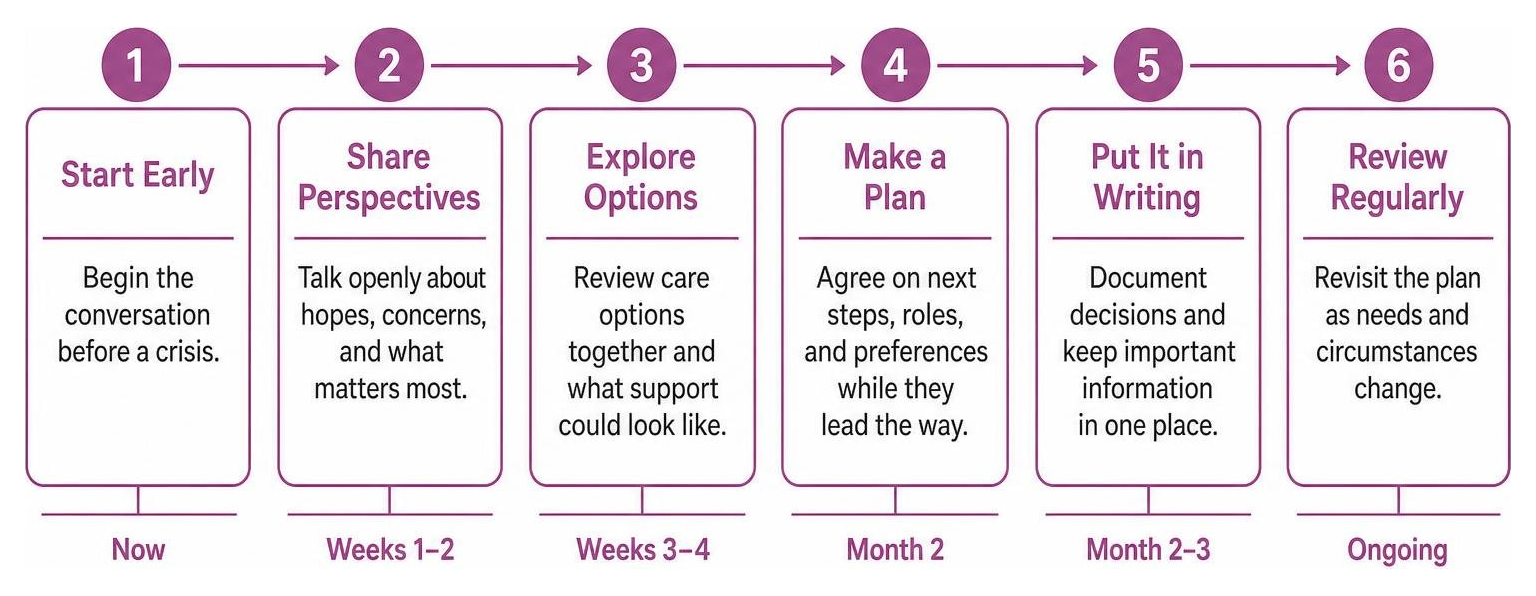
The key to success is collaborative planning. The best time to talk about future care needs is before a crisis occurs. Experts often refer to the 40-70 Rule: if you are nearing age 40 or your parents are approaching 70, it is time to start having these discussions. This ensures you can make deliberate, non-reactive decisions together, rather than rushing through choices in an emergency room lobby.
How to Talk About Helping Your Elderly Parents Respectfully
To keep the conversation constructive, we must throw out the idea of "role reversal." Your parents are not children, and "parenting" them is highly disrespectful. They have a lifetime of wisdom and experience, and they deserve to lead the planning process.
Instead of lecturing them with statements like, "You need to stop driving," or "You have to let us install grab bars," ask open-ended, supportive questions:
- "What is feeling a little harder around the house lately?"
- "What matters most to you about staying in this house?"
- "How can we make things easier so you can focus on doing what you love?"
Active listening is your most powerful tool. If your mother admits she is struggling to keep up with the yard work at her Bon Air home, do not immediately suggest she move to assisted living. Instead, offer a specific, practical solution: "What if we set up a local lawn care service to handle the mowing, so you can just enjoy the garden?" By focusing on environmental support rather than personal limitations, you preserve their autonomy. For more practical advice on managing these complex family dynamics, read Psychology Today's guide on communicating with aging parents.
Overcoming Resistance to Helping Your Elderly Parents
If your parents insist they do not need help, do not push back with anger. Resistance often stems from fear — fear of losing their home, their privacy, or their identity.
To lower their defenses, try these strategies:
- The "Test Run": Suggest trying a minor change or service for a temporary trial period of two to four weeks. Framing a change as a temporary experiment makes it feel much less intimidating.
- Focus on Your Peace of Mind: Sometimes, parents who refuse help for themselves will accept it to relieve stress on their children. Try saying, "I know you can manage fine, but I worry about you falling when I'm at work. Having this safety assessment would really give me peace of mind."
- Frame Modifications as Home Improvements: Instead of calling grab bars or stair lifts "senior safety aids," frame them as modern home upgrades that make the house more comfortable and valuable.
Starting small is always the best approach. You can learn more about managing parental resistance in our article on how to Help Aging Parents.
Creating a Safe Haven: Home Modifications and Technology
Statistically, the home is where most accidents occur for older adults. More than one in four seniors fall every year, and falls are the leading cause of both fatal and nonfatal injuries for people over 65. Fortunately, many of these incidents are entirely preventable with targeted home modifications and smart technology.
At Burnie’s Way, we believe that a parent's independence is the ultimate goal, not an obstacle. We specialize in providing families in the Richmond area — including Henrico, Glen Allen, Short Pump, Midlothian, and Bon Air — with professional In-Home Senior Safety Assessments and Aging-in-Place Home Modifications.
When modifying a home for safety, we prioritize the highest-risk areas first:
1. The Bathroom (The Highest-Risk Room)
Due to wet, slippery surfaces and awkward transitions, the bathroom is statistically the most dangerous room in the house.
- Grab Bars: Install load-rated, professionally anchored grab bars by the toilet and inside the shower entry. Never rely on towel racks, which are not designed to support body weight.
- Shower Seating & Handheld Showers: A sturdy shower chair paired with a flexible handheld shower head allows your parent to bathe safely while seated.
- Low-Threshold Showers: Eliminating the high tub barrier entirely prevents dangerous tripping hazards.
2. Lighting and Pathways
Failing eyesight and poor lighting are a major recipe for falls, especially during nighttime trips to the bathroom.
- Lighting Upgrades: Replace old bulbs with bright, high-efficiency LEDs. Install motion-activated nightlights along hallways, on staircases, and in bathrooms.
- Clear Obstacles: Route all electrical cords along walls, secure them with clips, and completely remove loose throw rugs, which are a leading cause of trips.
3. Stairs and Entryways
Historic homes in the Fan and multi-story houses in Mechanicsville or Glen Allen often feature steep, narrow staircases.
- Stair Lifts: Installing a professional stair lift preserves access to the entire home without the physical strain of climbing stairs.
- Handrails: Ensure staircases have secure, continuous handrails on both sides for balanced bilateral support.
4. Smart Home Technology
Unobtrusive technology can act as a continuous, respectful safety net.
- Smart Sensors & Video Doorbells: A Ring doorbell allows parents to see who is at the door without rushing, while smart home sensors can alert you to unusual activity without invading their privacy.
- Medical Alert Systems: A wearable device with automatic fall detection ensures that if a fall does occur, help is on the way immediately.
For a deeper dive into making independent living safe, explore The Complete Guide for Adult Children on Elder Safety Guide and our local resources on Help for Seniors Living at Home.
Navigating the Care Spectrum: Adjacent Services and Referral Partners
As you plan for your parent's future, it is vital to understand the full spectrum of senior care. Many families confuse environmental safety modifications with hands-on personal care.
To help clarify your options, we have broken down the main categories of care:
| Care Option | Primary Focus | Best Suited For | Cost & Coverage |
|---|---|---|---|
| Home Modifications (Burnie's Way) | Physical environment safety (grab bars, stair lifts, lighting, ramps). | Seniors who want to stay in their own homes safely and independently. | One-time investment; FSA/HSA eligible; private pay. |
| Non-Medical In-Home Care | Hands-on assistance with ADLs (bathing, dressing, meal prep, companionship). | Seniors needing daily personal care but wishing to remain at home. | Hourly rate ($30–$45/hr); paid out-of-pocket, via LTC insurance, or Medicaid waivers. |
| Home Health Care | Skilled clinical care (wound care, physical therapy, nursing) ordered by a doctor. | Seniors recovering from surgery, injury, or managing a chronic illness. | Short-term; typically covered by Medicare or private health insurance. |
| Assisted Living Facilities | Residential community with housing, meals, social activities, and personal care. | Seniors who can no longer live alone safely even with modifications. | Monthly rent ($4,500+); primarily private pay. |
Please note: Burnie's Way is not a hands-on home care or home health agency. We do not provide medical care, bathing assistance, or meal preparation. Instead, we are the physical home safety and remodeling specialists.
We work hand-in-hand with trusted local home care agencies and clinical providers across the Richmond area. If your parent needs hands-on companion care or skilled nursing, we are happy to refer you to our vetted local partners. Our goal is to make the physical home safe, while coordinating with care professionals to manage daily life seamlessly. Learn more in our guide on How to Care for an Elderly Person at Home and explore practical caregiving tips on fyi50plus.
Financial and Legal Safeguards: Planning Before a Crisis
Putting legal and financial protections in place before a health crisis or cognitive decline occurs is essential. Without the proper documents, you may find yourself locked out of vital medical decisions or unable to manage your parent's bank accounts to pay for their care.
Essential Legal and Financial Documents
We strongly recommend consulting with a local elder law attorney in the Richmond area to draft or update these core documents:
- Durable Power of Attorney (POA): This grants a trusted person the legal authority to manage your parent's financial affairs, pay bills, and handle property if they become incapacitated.
- Healthcare Power of Attorney / Healthcare Proxy: This designates who can make medical decisions on your parent's behalf if they are unable to communicate.
- Advance Directive (Living Will): This outlines your parent's specific wishes regarding life-prolonging medical treatments, ensuring their preferences are respected.
- Will or Trust: This ensures their assets are distributed according to their wishes.
Having these documents organized in a secure, fireproof home safe — with digital backups shared with trusted family members — prevents immense stress during a medical emergency. For more details on organizing these protections, see our guide on Assistance Caring for Elderly Parents.
Financial Assistance and Getting Paid as a Caregiver in Virginia
Caring for a parent can be a significant financial strain, but there are local and state-specific programs in Virginia designed to help offset these costs.
- Virginia Medicaid Waivers: Virginia's Commonwealth Coordinated Care Plus (CCC Plus) Waiver allows eligible seniors to receive care at home rather than in a nursing facility. Crucially, this program offers a "consumer-directed" option, which allows the senior to hire and pay a family member (including an adult child) to be their personal caregiver.
- VA Aid and Attendance Benefits: If your parent is a wartime veteran or the surviving spouse of one, they may qualify for a pension upgrade called Aid and Attendance. This provides tax-free monthly payments to help cover the costs of in-home personal care or assisted living.
- The Medicaid Caregiver Exemption: In some cases, if an adult child moves into their parent's home and provides care that prevents them from needing nursing home placement for at least two years, the parent can transfer ownership of the home to the child without violating Medicaid's asset transfer rules.
To explore these options further, check out the resources provided by the Virginia Department for Aging and Rehabilitative Services (DARS) and learn how to navigate the process of becoming a paid caregiver in Virginia or review discussions on caretaker options with Medicare in Virginia.
Preventing Caregiver Burnout and Accessing Support
Caring for an aging parent is a marathon, not a sprint. Because 61% of family caregivers also work full- or part-time jobs, the physical and emotional toll can quickly lead to caregiver burnout. Burnout is a serious health risk, often manifesting as persistent exhaustion, irritability, social withdrawal, and feelings of hopelessness.
To protect your own well-being, you must build a support network:
- Utilize Respite Care: Respite care provides temporary relief, allowing you to take a break for a few hours or a few days. This can be arranged through adult day programs, local companion care agencies, or trusted friends and family.
- Connect with Local Agencies: In the Richmond area, Senior Connections (The Capital Area Agency on Aging) is an invaluable, government-backed resource that provides free counseling, meal deliveries, and caregiver support programs.
- Join Support Groups: Sharing your experiences with others who are walking the same path offers deep emotional comfort and practical advice.
- Reduce Physical Strain: Many caregivers injure themselves trying to assist parents with transfers or mobility. By investing in home modifications — like installing grab bars, ramps, or stair lifts — you dramatically reduce the physical strain of daily caregiving tasks.
Taking care of yourself is not selfish; it is a prerequisite for taking care of your parent. For more strategies on maintaining your physical and mental health, read our Family Caregiver Support Guide.
Frequently Asked Questions about Helping Aging Parents
How do I know if my parent is no longer safe living alone in Richmond?
Look for difficulties with Instrumental Activities of Daily Living (IADLs), such as unpaid bills, missed medications, weight loss, or neglected personal hygiene. Additionally, consider the structure of their home. A historic, multi-story home in the Fan or Museum District with steep stairs and slippery bathrooms presents a much higher fall risk than a single-level ranch house in Henrico or Chesterfield. If they are struggling to navigate their environment safely, it is time to step in.
Does Medicare pay family members for caregiving in Virginia?
No, traditional Medicare does not pay family members for caregiving services. However, Virginia's Medicaid CCC Plus Waiver offers a consumer-directed option that allows eligible seniors to hire and pay family members for personal care. Additionally, the VA's Program of Comprehensive Assistance for Family Caregivers (PCAFC) provides monthly stipends to designated family caregivers of eligible veterans.
What are the most critical home modifications for fall prevention?
The most critical modifications focus on the bathroom and stairways. These include installing professionally anchored, load-rated grab bars in the shower and next to the toilet, upgrading to bright LED lighting with motion sensors, removing all loose throw rugs, and installing stair lifts on steep staircases. Scheduling a professional home safety assessment is the best way to identify specific hazards in your parent's home.
Conclusion
Helping your elderly parents age in place safely and with dignity is a journey that requires patience, love, and the right support. You do not have to carry the entire load on your shoulders.
At Burnie’s Way, we are dedicated to helping families across the Richmond area navigate this transition. We serve communities throughout Henrico, Glen Allen, Short Pump, Innsbrook, Chesterfield, Midlothian, Bon Air, and Chester, as well as Mechanicsville, Ashland, Powhatan, and Goochland.
We are here to help you make your parent's home a safe, comfortable haven. Take the first supportive, stress-free step today by booking a free, no-obligation In-Home Senior Safety Assessment with our experienced team. We will walk through your parent's home together, identify key safety risks, and recommend beautiful, functional modifications to help them stay independent for years to come.
Explore how we can support your family by visiting Our Services.