


12 min read
Mastering Daily Life: A Comprehensive Look at ADLs
Sydney Giffen
:
Updated on February 19, 2026
What Daily Living Assistance Really Means

Daily living assistance refers to support that helps people accomplish the everyday tasks needed to live safely and independently. These tasks fall into two main categories: basic personal care activities (called Activities of Daily Living or ADLs) and more complex tasks needed for independent living (called Instrumental Activities of Daily Living or IADLs).
Quick Definition:
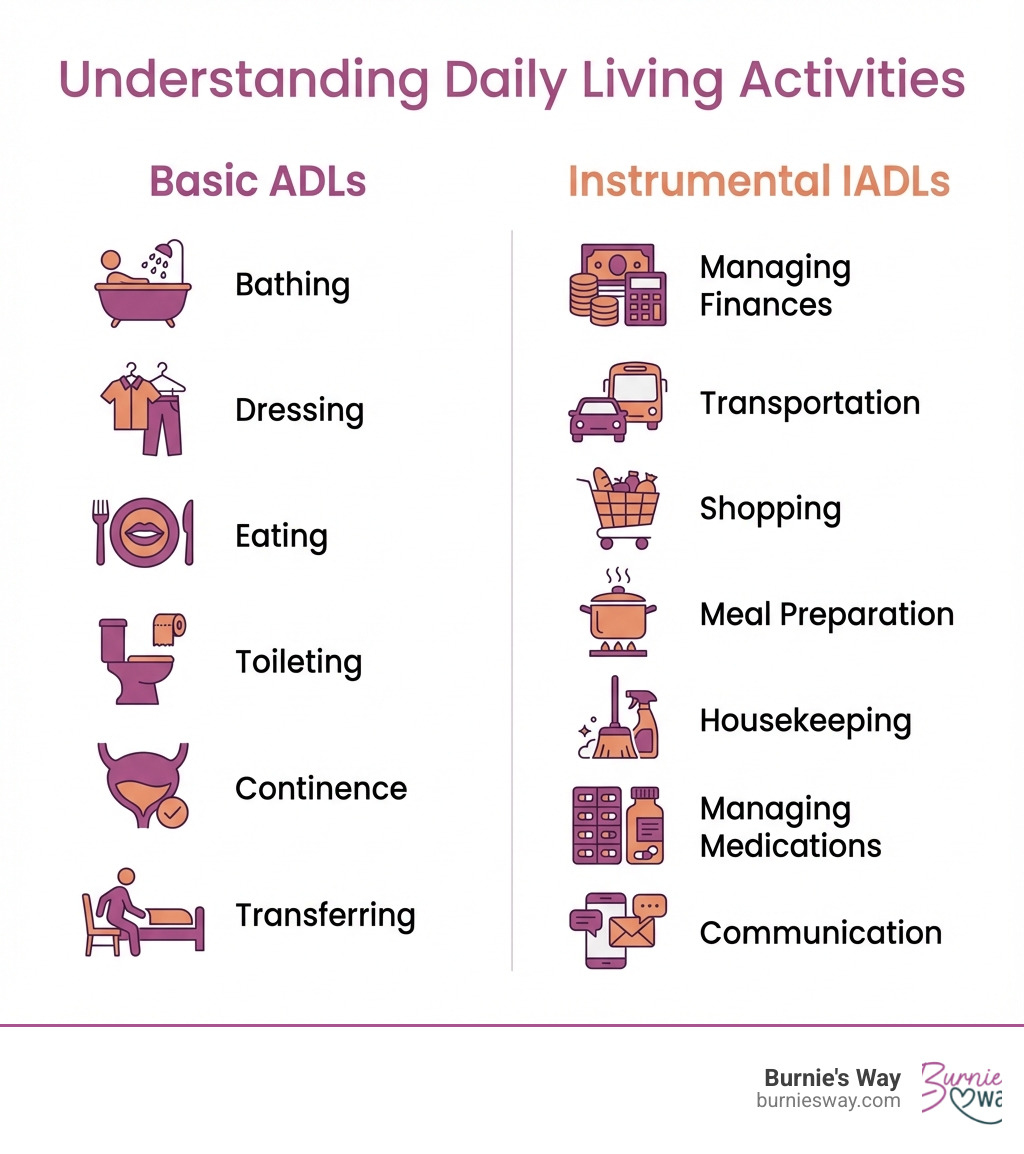
- Basic ADLs include bathing, dressing, eating, toileting, continence, and moving around
- Instrumental IADLs include managing finances, shopping, meal preparation, housekeeping, managing medications, transportation, and communication
- Daily living assistance means providing support with these activities to help someone maintain independence and safety at home
Understanding these activities is the first step in recognizing when someone you love might benefit from personalized support.
As individuals age, they often need help with the more complex IADLs first—things like managing bills or preparing meals—before requiring assistance with basic personal care. This progression is natural. Research from the National Health Interview Survey found that among adults 85 and older, about one in five needed some form of assistance with daily activities.
The challenge for families isn't just recognizing when help is needed. It's finding the right kind of support that honors independence while ensuring safety and well-being.
That's where understanding the full picture of daily living activities becomes so important. When you know what to look for, you can have better conversations with your loved one about the support that makes sense for them. You can plan proactively rather than reactively. And you can find solutions that help them live the way they want—confidently, comfortably, and at home.

Understanding the Two Types of Daily Activities
When we talk about daily living assistance, we're really talking about two distinct yet interconnected sets of tasks that define our ability to live independently. These concepts were first formalized by pioneers in geriatric care: Activities of Daily Living (ADLs) by Sidney Katz in the 1950s and Instrumental Activities of Daily Living (IADLs) by M. Powell Lawton in the late 1960s. Together, they provide a comprehensive framework for understanding an individual's functional abilities.

Basic Activities of Daily Living (ADLs)
Basic ADLs are the fundamental self-care tasks essential for our physical survival and well-being. Think of them as the building blocks of personal independence. These are the routine tasks most healthy individuals can perform without assistance, but which can become challenging due to aging, illness, or disability.
Common examples of basic ADLs include:
- Personal Hygiene: Bathing, showering, and grooming (like brushing teeth and hair).
- Dressing: Selecting appropriate clothes and putting them on.
- Eating: The ability to feed oneself, from bringing food to the mouth to chewing and swallowing.
- Toileting: Getting to and from the toilet, using it, and cleaning oneself.
- Continence: Managing bladder and bowel control.
- Transferring and Mobility: Moving from one position to another (e.g., bed to chair) and walking or moving around one's home.
These are the "physical survival tasks" that are often assessed first to gauge a person's most immediate needs for support.
Instrumental Activities of Daily Living (IADLs)
Instrumental ADLs are more complex tasks that support independent living within a community. They require more advanced cognitive and organizational skills than basic ADLs. Often, individuals will need support with IADLs before they need help with basic ADLs.
Common examples of IADLs include:
- Managing Finances: Paying bills, managing bank accounts, budgeting.
- Transportation: Driving, arranging rides, or using public transport.
- Shopping: Planning and purchasing groceries and other necessities.
- Meal Preparation: Planning, cooking, and serving nutritious meals.
- Housekeeping: Performing light chores, cleaning, and maintaining the home.
- Managing Medications: Remembering to take medications, refilling prescriptions, understanding dosages.
- Communication: Using the telephone, mail, or other communication devices.
These are the "community living skills" that allow someone to maintain their household and participate in society. Losing the ability to perform IADLs can lead to social isolation and negatively impact overall well-being.
For a deeper dive into these activities, you can refer to resources like What are activities of daily living?.
| Category | Basic Activities of Daily Living (ADLs) | Instrumental Activities of Daily Living (IADLs) |
|---|---|---|
| Focus | Fundamental personal care tasks for physical survival | More complex tasks for independent living within a community |
| Examples | Bathing, dressing, eating, toileting, continence, transferring, walking | Managing finances, transportation, shopping, meal preparation, housekeeping, managing medications, communication |
| Skills Req. | Primarily physical abilities | Cognitive skills (planning, problem-solving, memory), organizational skills, fine motor skills |
| Progression | Often impacted later in the decline of functional ability | Often impacted earlier, serving as an early indicator of a need for support |
| Impact | Direct impact on personal health and hygiene | Direct impact on maintaining a household, social engagement, and overall quality of life |
| Assessment | Katz Index of Independence in ADL | Lawton Instrumental Activities of Daily Living Scale |
Why and How Functional Abilities Are Considered
Understanding an individual's functional abilities – their capacity to perform ADLs and IADLs – is incredibly important. It's not just about identifying needs; it's about empowering individuals to live their best life, safely and with dignity. For families, this understanding is key to planning for personalized support and ensuring peace of mind.

At Burnie's Way, we believe in a personalized approach. Our personal support coordinators and lifestyle assistants work with families to understand these functional abilities, helping to tailor support that truly makes a difference.
The Importance of Understanding Daily Living Support Needs
Assessing ADLs and IADLs is crucial for several reasons:
- Predicting Support Needs: They are powerful predictors of whether someone will need assistance at home, or even whether they might require alternative living arrangements. For example, individuals often need assistance with IADLs before requiring help with basic ADLs.
- Preventing Falls and Ensuring Safety: Difficulty with mobility or transferring, for instance, can significantly increase the risk of falls. Inability to perform basic ADLs can lead to unsafe conditions. If someone feels off balance or has near misses when moving around their home, it's a clear sign to address potential fall risks. You can find information on fall risk to learn more.
- Identifying Opportunities for More Independence: By understanding specific challenges, we can introduce adaptive strategies or assistive tools that allow individuals to continue performing tasks themselves, fostering a sense of accomplishment and independence.
- Tracking Changes Over Time: Functional abilities aren't static. Regular check-ins help us monitor changes, allowing for timely adjustments to support plans and ensuring the individual's evolving needs are met. This is particularly important as chronic conditions can progress, leading to physical decline.
- Quality of Life: The ability to perform daily tasks directly impacts an individual's quality of life and sense of autonomy. We want to support that as much as possible.
Consider this: In 2011, the United States National Health Interview Survey found that 20.7% of adults aged 85 or older, 7% of those aged 75 to 84, and 3.4% of those aged 65 to 74 required assistance with ADLs. These statistics highlight the widespread need for support as we age, emphasizing the importance of proactive assessment and planning.
Common Ways to Understand Support Needs
While formal clinical assessments exist, there are many practical ways to understand someone's daily living support needs:
- Simple Checklists: Many easy-to-use checklists are available online that can help you gauge independence across various tasks.
- Self-Reflection: Encourage your loved one to honestly reflect on what tasks feel easy, what feels hard, and what they might be avoiding.
- Family Conversations: Open and honest discussions among family members can reveal insights into an individual's daily struggles or successes.
- Observation of Daily Routines: Sometimes, simply observing how someone steers their day can provide valuable clues. Are they struggling to open jars, forgetting to take medications, or having difficulty with personal hygiene?
- Professional Assessment Tools: Healthcare professionals often use standardized tools like the Katz Index of Independence in ADL for basic ADLs and the Lawton Instrumental Activities of Daily Living Scale for IADLs. These provide a structured way to measure functional status and can be highly useful in identifying specific areas where support may be beneficial. For more details on these approaches, explore more on ADL assessment approaches.
The goal is always to gather enough information to create a supportive environment that improves autonomy and well-being.
Signs It Might Be Time for Daily Living Assistance
Recognizing when a loved one needs daily living assistance can be challenging. It's often a gradual process, and many individuals try to maintain their independence for as long as possible. However, certain signs can indicate that additional support might be beneficial, even crucial for their safety and well-being.
Keep an eye out for these indicators:
- Unexplained Weight Loss: This could signal difficulty with meal preparation, shopping for groceries, or even eating itself.
- Changes in Hygiene: Infrequent bathing, unkempt hair, body odor, or wearing the same clothes repeatedly can suggest struggles with personal care ADLs.
- Cluttered or Unkempt Home: A noticeable decline in housekeeping, excessive clutter, or accumulation of trash might point to difficulties with IADLs like cleaning and home maintenance.
- Difficulty with Mobility: Frequent tripping, holding onto furniture, or expressing fear of falling, even if they can still move from one spot to another, suggests a need for support with transferring or ambulating.
- Forgetting Medications: Missed doses, taking incorrect dosages, or expired prescriptions can be a serious health risk, indicating challenges with medication management IADLs.
- Social Withdrawal: A decrease in participation in social activities, community events, or even phone calls could signal difficulties with transportation or communication IADLs, or a general decline in energy or mood.
- Near-Miss Accidents: Minor falls, small kitchen fires, or dents on their car can be red flags that more significant safety risks are present.
Early Indicators vs. Urgent Needs
Often, individuals will first struggle with IADLs before needing help with basic ADLs. For instance, managing finances or driving may become difficult before bathing or dressing does. This is a common progression. However, if basic ADLs like personal hygiene or mobility become challenging, it often signals a more urgent need for support.
Statistics underscore this reality: In 2011, the National Health Interview Survey reported that among adults aged 85 or older, 20.7% required assistance with ADLs. For those aged 75 to 84, it was 7%, and for 65 to 74, it was 3.4%. These numbers clearly show that the need for support increases significantly with age.
If you notice it's harder for a loved one to perform a basic ADL than it used to be, don't shrug it off as "normal for their age." Simple changes, like getting rid of area rugs or installing handrails, can make a big difference in preventing falls and improving safety. For more insights on adapting the home environment, explore more about home modifications.
Starting the Conversation About Support
Initiating a conversation about needing daily living assistance requires sensitivity and empathy. Here are some tips:
- Choose the Right Time: Find a calm moment when you both can talk without distractions or pressure.
- Express Concern with Love: Frame your observations as concerns for their well-being, not as accusations of inability. Use "I" statements, e.g., "I've noticed you seem to be having trouble with..."
- Focus on Independence: Emphasize how support can help them maintain their independence and stay in their home longer, rather than taking things away.
- Involve the Individual in Decisions: Make it clear that they are in control and their preferences matter. This fosters a sense of autonomy.
- Ask Open-Ended Questions: Instead of making statements, ask questions like, "What's one thing that's become a bit more challenging lately?" or "How can we make things easier around the house?"
The goal is to partner with your loved one, not to take over.
Strategies for Providing Support While Preserving Dignity
Providing daily living assistance is an art. It’s about more than just completing tasks; it’s about empowering the individual, respecting their autonomy, and preserving their dignity. Our approach at Burnie's Way is always person-centered, ensuring that support improves, rather than diminishes, an individual's sense of self.
Effective support involves empathy, clear communication, and a genuine desire to collaborate. It means being a partner, not just a provider.
Practical Tips for Assisting with Daily Tasks
Here are some practical strategies to provide support while upholding dignity:
- Establish Routines: Predictable routines can reduce anxiety and make tasks feel more manageable. We can help coordinate these routines seamlessly.
- Simplifying Tasks: Break down complex tasks into smaller, manageable steps. For instance, instead of "get dressed," suggest "let's pick out your shirt," then "now put your arm through this sleeve."
- Using Adaptive Equipment: Simple tools can make a huge difference. Grab bars, liftd toilet seats, dressing aids, or large-handled utensils can empower individuals to perform tasks with less struggle.
- Offering Choices: Even small choices, like "Would you like the blue shirt or the green one?" or "Would you prefer to shower in the morning or evening?" can give a sense of control and respect.
- Allowing Extra Time: Rushing can cause frustration and distress. Build in ample time for tasks, especially for personal care activities.
- Gentle Encouragement: Focus on what they can do, and offer gentle encouragement for their efforts. Celebrate small victories!
For more detailed guidance, the Managing Activities of Daily Living Tip Sheet offers excellent suggestions.
At Burnie's Way, our philosophy is rooted in collaborative support. We believe that by working together, we can create an environment where individuals feel confident and capable. Learn more about How We Work to understand our personalized approach.
Supporting Individuals with Cognitive Changes
When cognitive abilities are affected, such as with dementia, the strategies for providing daily living assistance evolve. The key is patience, flexibility, and focusing on remaining abilities.
- Breaking Down Instructions: Use simple, one-step commands and gestures. Avoid complex sentences or multiple instructions at once.
- Using Visual Cues: Point to the item needed, demonstrate the action, or use pictures to help guide them through a task.
- Maintaining a Calm Environment: Reduce distractions, noise, and clutter during tasks. A peaceful setting can prevent agitation.
- Focusing on Remaining Abilities: Even with cognitive decline, individuals retain many abilities. Encourage them to participate as much as they can, even if it takes longer. For example, they might still be able to brush their teeth if you put the toothpaste on the brush.
- Adapting Support as Needs Change: As cognitive decline progresses, the level and type of support will need to adapt. What works today might not work tomorrow. Be prepared to be flexible and creative. For example, in mild dementia, individuals might need help with IADLs like managing finances, but in severe dementia, they may require consistent direct assistance with most basic ADLs. If bathing becomes a source of distress, a sponge bath might be a more acceptable and comfortable alternative.
The "small things" of support are particularly important in ensuring that support is genuinely helpful and improves an individual's autonomy and well-being.
Resources and Programs for Daily Living Support
Navigating the landscape of daily living assistance can feel overwhelming, but a wealth of resources and programs exist to help individuals maintain their independence and quality of life at home. From community initiatives to private support services, understanding your options is the first step toward finding the right fit.
Many of these resources aim to help individuals with tasks that support their daily routines, ensuring they can continue to live comfortably and confidently where they want to be.
Common Support Services
Here's a list of common support services that can provide daily living assistance:
- Personal Support Coordination: Services like Burnie's Way specialize in understanding individual needs and coordinating a custom suite of support services. We act as a central point of contact, connecting clients with vetted resources and managing schedules.
- Meal Delivery Services: Programs like Meals on Wheels America or private meal delivery companies provide nutritious meals directly to the home, which can be crucial for those who struggle with meal preparation or shopping. Many offer options for special diets.
- Transportation Options: Various services, from volunteer-driven programs to specialized ride services for seniors, can help individuals get to appointments, run errands, or attend social events. Public transit agencies often offer discounted fares.
- Home Modification Assistance: Services that assess a home for safety improvements (like grab bars, ramps, or improved lighting) and assist with modifications. This can prevent falls and make daily tasks easier.
- Help with Organizing Finances: Trusted financial counselors or family members can assist with paying bills, managing bank accounts, and filling out insurance forms, a critical IADL. The Consumer Financial Protection Bureau offers resources for safe money management.
- Respite for Family Members: Programs that provide temporary relief for primary family members, allowing them to rest and recharge. These can range from a few hours to several weeks and can be offered at home, in adult day centers, or in facilities. The ARCH National Respite Locator is a good place to start.
- Social and Enrichment Programs: Adult day services centers offer supervised programs during the day, providing social interaction, activities, and sometimes basic health services. This can combat social isolation and stimulate cognitive function.
- Homemaking Services: Assistance with light housekeeping, laundry, and other household chores helps maintain a clean and safe living environment.
For a comprehensive overview of services available for older adults living at home, the National Institute on Aging provides an excellent resource: Services for Older Adults Living at Home.
Finding the Right Help for Your Situation
Finding the right support often involves a bit of research and knowing where to look:
- Local Resource Directories: Your local Area Agency on Aging (AAAs) is a fantastic starting point. They can provide information on local programs, services, and resources custom to your community. The Eldercare Locator (eldercare.acl.gov) is a national service that connects you to your local AAAs.
- Personal Support Coordinators: For a comprehensive and personalized approach, consider engaging a service like Burnie's Way. We specialize in understanding individual needs and coordinating a network of trusted services, reducing the burden on families and ensuring seamless support.
- Checking References: Whether you're hiring an individual or a service, always check references. Look for any complaints filed with state and local agencies or the Better Business Bureau.
- Consult Healthcare Professionals: Doctors, social workers, and occupational therapists can often recommend reputable services and programs based on an individual's specific needs.
Don't hesitate to reach out for guidance. We are here to help you steer these choices and build a personalized plan for confident living at home. Contact us for a consultation to explore how we can support you and your loved ones.
Frequently Asked Questions about Daily Living Assistance
We understand that you may have many questions about daily living assistance and how to approach it. Here are answers to some commonly asked questions, framed to help you empower your loved one's independence.
What is the first step if I think a loved one needs help?
The first step is to observe their specific challenges with ADLs and IADLs and then have an open, supportive conversation with them about your concerns, focusing on how support can help them maintain their independence and safety. Approach the conversation with empathy and respect, highlighting how assistance can make daily life easier and more enjoyable, rather than focusing on perceived shortcomings. Our role at Burnie's Way is to help facilitate these conversations and find practical solutions that resonate with your loved one's desires.
How do you balance helping with respecting someone's independence?
Balance is achieved by offering choices, involving them in every decision, and providing assistance as a partner rather than taking over. Focus on enabling them to do tasks for themselves with support, rather than doing tasks for them. For example, instead of fully dressing someone, you might lay out clothes and assist with buttons or zippers. We always emphasize that our support is designed to improve independence, giving individuals the tools and coordination they need to live life on their own terms. It's about helping them live the way they want, with support in key areas of daily life.
Are there programs that help pay for daily living support?
Yes, depending on location, income, and need, programs such as certain government or community initiatives may help cover the cost of some personal support services. For example, Medicare may cover some home health services if certain medical criteria are met, and Medicaid offers programs for eligible individuals that can help with daily living assistance. Private long-term care insurance can also be a significant resource. It's important to research what's available in your specific area and for your loved one's unique circumstances. Our coordinators can help you understand options and connect you with relevant resources.
Conclusion
Understanding Activities of Daily Living (ADLs) and Instrumental Activities of Daily Living (IADLs) is more than just a clinical exercise; it's a compassionate roadmap to ensuring our loved ones can live safely, comfortably, and with dignity. We've seen that daily living assistance is a broad term, encompassing everything from basic personal care to the complex tasks that keep a household running smoothly.
The journey of aging often involves a gradual shift in capabilities, with IADLs typically presenting challenges before basic ADLs. Recognizing the signs, fostering open communication, and implementing thoughtful strategies are crucial steps in providing support that genuinely empowers independence. It's about finding that delicate balance between assistance and autonomy, always prioritizing the individual's preferences and well-being.
At Burnie's Way, we believe in a proactive, personalized approach. We stand as your partner in coordinating the support needed to manage daily life, ensuring that your loved one can continue living confidently and comfortably at home. Our 50 years of combined experience have taught us that true support is about more than just tasks; it’s about connection, ease, and giving families peace of mind that everything’s okay.
Ready to explore how personalized support can make a difference for your loved one?