10 min read

Unlocking Support: Essential Private Elder Care Services for Seniors

Unlocking Support: Essential Private Elder Care Services for Seniors

Why Understanding Your Options Matters Now

Private elder care services are non-medical and specialized support options that help seniors live independently at home. If you're exploring these services, you're likely trying to understand what's available and how to choose the right option for your family.

Quick Overview: What Are Private Elder Care Services?

  • Companionship & Personal Assistance - Help with daily routines, light housekeeping, meal prep, and social engagement
  • Specialized Support Coordination - Medication reminders, post-hospital care, memory support resources
  • 24/7 or Live-In Options - Round-the-clock presence for complex needs
  • Respite Care - Temporary relief for family caregivers
  • Transportation & Errands - Getting to appointments and managing daily tasks

Nine out of ten older adults prefer to stay in their own homes, but many families feel overwhelmed coordinating the support to make this possible safely.

The challenge isn't just finding help—it's understanding the right type of support, vetting trustworthy providers, and managing the practical and emotional aspects of this transition.

This guide covers the full spectrum of private elder support, from companionship to intensive coordination. You'll learn to identify needs, find professionals, understand costs, and steer the emotional journey of helping a loved one age with dignity at home.

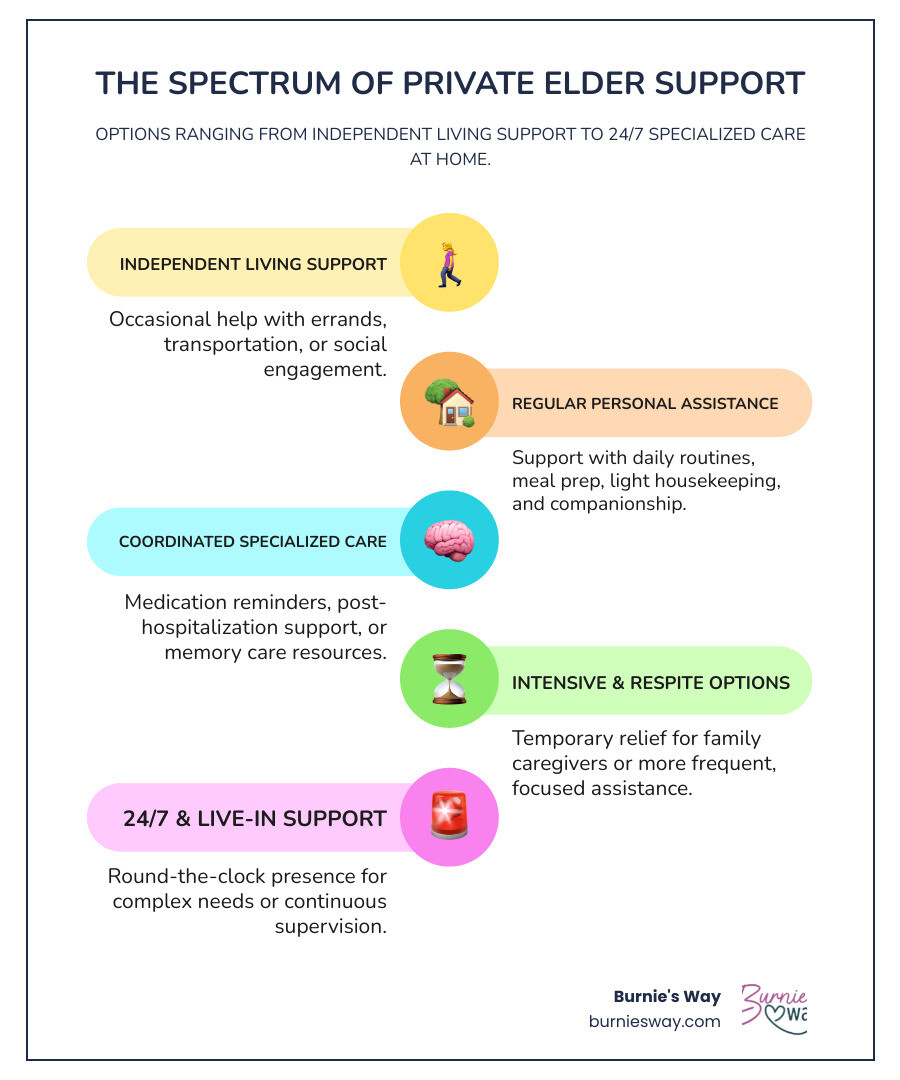
infographic showing the continuum of senior support options from independent living with minimal help to 24-hour specialized support, including average costs and typical services at each level - private elder care services infographic infographic-line-5-steps-colors

Understanding the Spectrum of Private Elder Support Services

Navigating senior support can feel complex. Our goal is to simplify it by outlining the personal and lifestyle support available, helping you identify what's needed for your loved one to thrive at home. We act as your guide, helping coordinate these essential services.

Non-Medical Support: Companionship and Personal Assistance

Often, the most immediate needs are non-medical, focusing on comfort, routine, and social connection to enable independence and prevent isolation.

  • Companion Services: Sometimes, a friendly face and conversation are all that's needed. Companion services provide social interaction to alleviate loneliness. This can range from volunteer visits to paid companions who engage in hobbies or share stories. We can help coordinate these connections.
  • Social Engagement: A personal concierge can coordinate active social engagement, like outings to community centers, visits with friends, or local events that align with your loved one's interests.
  • Light Housekeeping: Support can include light housekeeping tasks like dusting, vacuuming, and laundry to ensure a clean, safe environment, which can become challenging for seniors.
  • Meal Planning and Preparation: Proper nutrition is vital. Support can include meal planning, grocery shopping, and food preparation. Meal delivery programs are another excellent option for ensuring access to healthy food.
  • Transportation Coordination: Losing the ability to drive impacts independence. We can coordinate reliable transportation for appointments, errands, and social events, keeping your loved one connected to their community.
  • Personal Assistance with Daily Routines: This category covers a broad range of non-medical support.
    • Activities of Daily Living (ADLs) Support (Informational Context): While Burnie's Way does not provide direct hands-on care, we can help families coordinate professional assistance for Activities of Daily Living (ADLs)—fundamental tasks like bathing, dressing, and mobility. We can guide you to reputable providers for this crucial support.
    • Bathing and Hygiene Reminders: For those who can manage personal care but might forget, we can coordinate gentle reminders and encouragement to help maintain hygiene with dignity.
    • Mobility Encouragement: Staying active is key. Support can include encouraging safe movement, assisting with walks, or coordinating with physical therapists.

a supportive companion and a senior laughing together over a cup of tea - private elder care services

Specialized and Intensive Support Options (Educational Overview)

Beyond daily assistance, some seniors require more specialized support. While Burnie's Way focuses on coordination, we can be a resource in helping you understand and arrange these services through trusted partners.

  • Information about Coordinating Skilled Support: For medical needs like wound care or physical therapy, skilled nursing services are essential. We can help you find Medicare-certified home health agencies or other qualified licensed professionals.
  • Medication Reminders: Managing multiple medications can be confusing. While administration is a medical service, we can coordinate professional assistance for timely reminders and organizing schedules.
  • Post-Hospitalization Assistance as Services Families May Arrange: The transition from hospital to home is challenging. We can help coordinate temporary support during recovery, including help with daily tasks and transportation to follow-up appointments.
  • Respite and Short-Term Relief for Family Members: Caring for a loved one is demanding. Respite services offer temporary relief for primary caregivers. Lasting from hours to weeks, they can be provided at home or in other settings. We can connect you with resources like the ARCH National Respite Locator.
  • 24-hour vs. Live-in Support (Informational): For continuous presence, families often consider these options. Live-in care involves one professional living in the home and being available on standby overnight. 24-hour care uses a team working in shifts for constant, alert coverage, often for complex needs. We can help you understand these options and coordinate with agencies.
  • Memory Support Resources: For those with dementia or Alzheimer's, specialized support is crucial. We can guide you to resources like the Alzheimer's Association and Dementia Alliance of NC for specialized information and programs.
  • Importance of Specialized Training for Certain Needs: For specialized needs like Parkinson's or chronic disease management, it's vital that coordinated professionals have specific training. This ensures the highest quality of support for unique circumstances.

The Advantages of Choosing Private In-Home Support

Choosing how a loved one receives support is a major decision. We believe maintaining independence and comfort at home is often the best path. This section explores the benefits of in-home personal support and coordination, focusing on personalization, comfort, and finances.

The Benefits of Aging in Place

The desire to remain at home is about preserving a lifetime of memories, routines, and personal freedom.

  • Comfort of Home: The familiarity of one's own home is unparalleled. It's a place of memories and personal preferences. Nine out of ten older adults prefer to live at home.
  • Maintaining Independence: With coordinated support, seniors can continue making their own choices and managing their daily lives, empowering them to live confidently.
  • Dignity and Autonomy: Staying at home allows individuals to maintain dignity by upholding personal routines and receiving support that respects their individuality.
  • Personalized One-on-One Attention: Unlike facilities, in-home support provides dedicated, one-on-one attention, allowing support to be customized to an individual's personality, preferences, and needs.
  • Slower-Paced, Relationship-Based Support: In-home support fosters deeper relationships between seniors and professionals, leading to a more compassionate approach.

We are committed to helping your loved one live the way they want, with support in key areas of daily life, and giving families peace of mind. To understand more about our philosophy, you can find More info about how we work.

Private Hire vs. Coordination Through a Personal Concierge (Informational)

When considering in-home support, families often weigh directly hiring an individual versus using a personal concierge service like Burnie's Way to coordinate professionals.

Feature Direct Private Hire (Individual Caregiver) Coordination Through a Personal Concierge (e.g., Burnie's Way)
Vetting & Background Checks Your responsibility to conduct thoroughly Handled by the concierge service or partnering agencies
Insurance & Liability Your responsibility to ensure coverage; potential employer liability Concierge partners with insured and bonded professionals
Scheduling & Management Your responsibility; managing sick days, vacations Managed by the concierge service or partnering agencies
Backup Support No guaranteed backup; your responsibility to find replacements Concierge can arrange backup professionals
Payroll & Taxes Your responsibility to handle as an employer Handled by partnering agencies; no employer burden for you
Training & Supervision Your responsibility to ensure ongoing training and quality Professionals from agencies often have continuous training and supervision
Flexibility High, but requires significant management time High, with the benefit of professional coordination
Control Over Selection Full, but with more effort Guided selection; concierge presents vetted options for your choice
  • Flexibility: A personal concierge offers flexibility without the administrative burden of direct hiring. We can adjust schedules, services, and professionals as needs evolve.
  • Control Over Selection: Direct hire gives you full control but requires significant effort. We offer a guided selection process, presenting vetted professionals from our network for you to choose from with less stress.
  • Benefits of Working with a Trusted Coordinator: A personal concierge acts as your central point of contact, simplifying the process. We handle logistics, screen partners, and ensure smooth transitions for your peace of mind.
  • Insured and Bonded Professionals: A key benefit of using coordinated agencies is that their professionals are insured and bonded. This protects against accidents or theft, a liability you would bear with a direct hire.

Cost-Effectiveness Compared to Facilities

When considering private elder care services, cost is a major factor. A closer look often shows in-home support can be a cost-effective choice.

  • Average Monthly Costs: National averages for different care options:
    • In-Home Support: $2,253 - $4,957 per month for 20-44 hours of one-to-one support per week. The hourly structure allows for flexibility.
    • Assisted Living Facilities: $4,500 per month, typically covering room, board, and some personal care.
    • Nursing Home Facilities: $7,908 - $9,034 per month for 24/7 skilled nursing care.

These statistics show that in-home support can be more cost-effective than facility care, especially if 24/7 medical care isn't needed. For a full overview, consult the Genworth Cost of Care Survey.

  • Value of One-on-One Support and Coordination: Beyond cost, consider the value of one-on-one support in a familiar environment, which can improve health outcomes and quality of life. With a personal concierge, you invest in expert coordination and a custom approach that prioritizes well-being and independence, optimizing value.

How to Find, Vet, and Hire the Right Support

Finding trustworthy and qualified professionals for private elder care services is crucial. This practical guide walks you through the search, vetting, and hiring process, with Burnie's Way acting as your expert coordinator.

The Search: Where to Find Qualified Private Elder Support Services

The first step is knowing where to look. We can help guide you through these avenues.

  • Physician Referrals: Your loved one’s doctor can be an excellent source for referrals to reputable agencies, as they understand your loved one's needs.
  • Community Resources: Local Area Agencies on Aging and senior centers are rich sources of information. The Eldercare Locator is a public service connecting you to services for older adults and their families (1-800-677-1116 or visit https://eldercare.acl.gov).
  • Geriatric Care Managers: Also known as aging life care experts, these specialists can help identify needs and find local services. The Aging Life Care Association can help you locate one.
  • Online Comparison Tools: Tools like Medicare's Care Compare help you find and compare Medicare-certified home health agencies, offering a good starting point for quality metrics.
  • Local Organizations Focused on Senior Well-being: Local non-profits and senior advocacy groups often offer directories or recommendations for non-medical support.

The Vetting Process: Ensuring Safety and Competence

Once you have potential professionals or agencies, a thorough vetting process is non-negotiable. We streamline this by partnering with agencies that meet rigorous standards.

  • Interview Questions: Prepare questions about experience, training, emergency protocols, and how they handle specific situations relevant to your loved one.
  • Background Checks: Comprehensive background checks are critical. Reputable agencies coordinated by Burnie's Way handle these for their professionals.
  • Checking References: Always contact professional references to get an honest assessment of a professional's reliability, compassion, and competence.
  • Verifying Credentials: Confirm any stated licenses or certifications. For agencies, ask about their hiring and training processes.
  • Check a company with the Better Business Bureau: It's always a good idea to check for complaints filed against a company. You can contact the Better Business Bureau in your area.

a family having a positive conversation with a potential support professional - private elder care services

Understanding the legal and financial aspects is crucial. We simplify many of these complexities by coordinating with established agencies.

  • Service Agreements: A clear, written service agreement is essential. It should outline services, schedule, fees, and payment terms.
  • Defining Duties and Expectations: The agreement should explicitly define the scope of support and boundaries to prevent misunderstandings.
  • Tax and Payroll Obligations: If you hire directly, you may become an employer with tax and payroll obligations. When coordinating through agencies via Burnie's Way, the agency typically handles this.
  • Liability Insurance: Ensure any professional or agency has liability insurance to protect against accidents. This is a key benefit of working with coordinated agencies.
  • Help with Money Management: For help with finances like paying bills, a trusted relative, financial counselor, or the Consumer Financial Protection Bureau can offer guidance.
  • Power of Attorney: Consider establishing a Power of Attorney (POA) to designate a trusted individual to make financial and/or healthcare decisions if your loved one becomes unable to.

Recognizing the Need and Managing the Transition

Knowing when to seek support and how to introduce it can be one of the most challenging aspects of this journey. We understand the emotional complexities and are here to help you steer this sensitive process.

Key Signs It's Time for Private Elder Support Services

Identifying the signs that your loved one could benefit from private elder care services is the first step. Look for a combination of these indicators:

  • Physical Signs:
    • Decline in Personal Routines: Noticeable changes in hygiene, such as unkempt appearance or wearing the same clothes repeatedly.
    • Unexplained Weight Loss: Difficulty preparing meals or forgetting to eat can lead to significant weight loss.
    • Frequent Falls or Near Falls: Increased instability or unsteadiness can indicate a need for mobility support to prevent injuries.
    • Unsafe Home Environment: Clutter, poor sanitation, or unopened mail suggest a struggle with household management.
  • Cognitive Changes:
    • Forgetting Medications: Missing doses, taking incorrect dosages, or confusion about medication schedules.
    • Increased Confusion or Disorientation: Difficulty remembering recent events or getting lost in familiar places.
    • Poor Judgment: Making questionable financial decisions or falling victim to scams.
  • Emotional Shifts:
    • Social Withdrawal: Losing interest in hobbies, friends, or family activities.
    • Loneliness: Expressing feelings of sadness, boredom, or lack of purpose.
    • Increased Irritability or Mood Swings: Frustration with declining abilities or difficulty coping.

If you observe these signs, it's a good indication that your loved one could benefit from personal support and coordination to live safely at home.

Introducing the idea of outside support can be met with resistance. It’s a significant emotional step for everyone involved.

  • Family Communication: Open communication is key. Approach the conversation with empathy, focusing on how support can improve independence and safety, rather than on limitations.
  • Addressing Feelings of Guilt or Resistance: Caregivers may feel guilty about seeking help, but it's a sign of love. For seniors, resistance often stems from a fear of losing independence. Listen to and validate their concerns.
  • Involving the Senior in Decisions: Empower your loved one by involving them in decisions. Letting them choose the type of support or meet professionals can reduce resistance.
  • Starting with Part-Time Support: Introduce support gradually. Start with a few hours a week for companionship and increase as needed. This allows your loved one to adapt and build trust.
  • Resources for Caregivers: The emotional toll on family caregivers can be immense. Support is available for you too. The National Institute on Aging offers a valuable resource, and you can Download The Caregiver’s Handbook for guidance.

Frequently Asked Questions About Private Elder Support

We know you have questions, and we're here to provide clear answers about private elder care services.

How much do private elder support services typically cost?

The cost of private elder support varies based on:

  • Location: Costs differ by state and region.
  • Type of Service: Basic companionship costs less than specialized or 24-hour non-medical supervision.
  • Level and Frequency of Need: The more hours required, the higher the overall cost.
  • Hourly Rates: Nationally, rates for non-medical in-home support typically range from $25-$35 per hour.
  • Monthly Averages: For 20-44 hours of support per week, the national average is between $2,253 and $4,957. Specialized support costs more.

These are averages; specific quotes will come from the agencies we coordinate with, custom to your loved one's needs.

Does Medicare or Medicaid cover these services?

Navigating insurance coverage can be complex:

  • Medicare: Medicare generally offers limited, short-term coverage for medically necessary home health services from certified agencies. It does not typically cover long-term non-medical personal assistance or companionship. For details, visit www.medicare.gov.
  • Medicaid: State-specific Medicaid programs may offer more coverage for non-medical home support for those with low income and significant needs. Coverage and eligibility vary widely. To learn more, visit www.medicaid.gov. Geriatric care manager services are typically self-funded.

What role does technology play in modern elder support?

Technology is increasingly integrated into modern elder support to improve safety and connectivity, complementing the human touch of coordinated support.

  • Personal Emergency Response Systems (PERS): Worn as a pendant or bracelet, these systems allow seniors to call for help with a button push. Some include fall detection.
  • Remote Health Monitoring: Devices that track vital signs, activity, and sleep can provide valuable data to families and healthcare providers for proactive health management.
  • Smart Home Devices for Safety: Smart lighting, locks, and cameras can improve safety. Automated systems can provide medication or appliance reminders.
  • Video Calling for Social Connection: Video calling is invaluable for families living apart, helping to reduce isolation and maintain social connection.
  • Medication Management Apps: These apps send reminders and track dosages, helping seniors manage their medication routines.
  • Virtual Care Agents: Some services use 24/7 virtual care agents for data-based insights that support proactive care coordination.

Conclusion: Building a Confident and Independent Future

Choosing private elder care services is a powerful step toward ensuring a loved one can live with dignity and independence at home. While navigating the options can feel complex, the result is peace of mind and an improved quality of life. Every decision, from coordinating companionship to understanding financial considerations, contributes to a more fulfilling aging experience.

For families seeking a partner to help coordinate these choices and manage daily life logistics, a personal concierge approach can be invaluable. Burnie's Way acts as your trusted guide, helping you orchestrate the right support to create a confident and fulfilling future at home. We're here to help your loved one live the way they want, with support in key areas of daily life, and to give your family peace of mind that everything’s okay.

Learn more about our services

The Complete Guide to Elderly In-Home Care Options

9 min read

The Complete Guide to Elderly In-Home Care Options

Why Understanding In-Home Support Matters for Your Family Elderly in-home care includes a range of services that help older adults maintain...


Read More
The Ultimate Guide to At-Home Elder Care: Services, Specialists, and Support

12 min read

The Ultimate Guide to At-Home Elder Care: Services, Specialists, and Support

Why Finding the Right Support Matters Most Reliable home care starts with understanding what you need and knowing where to find trustworthy help....

Read More
Beyond the Walls: Finding Your Perfect Home Care Solution

12 min read

Beyond the Walls: Finding Your Perfect Home Care Solution

The Comfort of Home and the Path to Independence Home care solutions are the services and support that help aging adults live safely, comfortably,...

Read More