
When Time is of the Essence: Navigating Emergency Support for Seniors
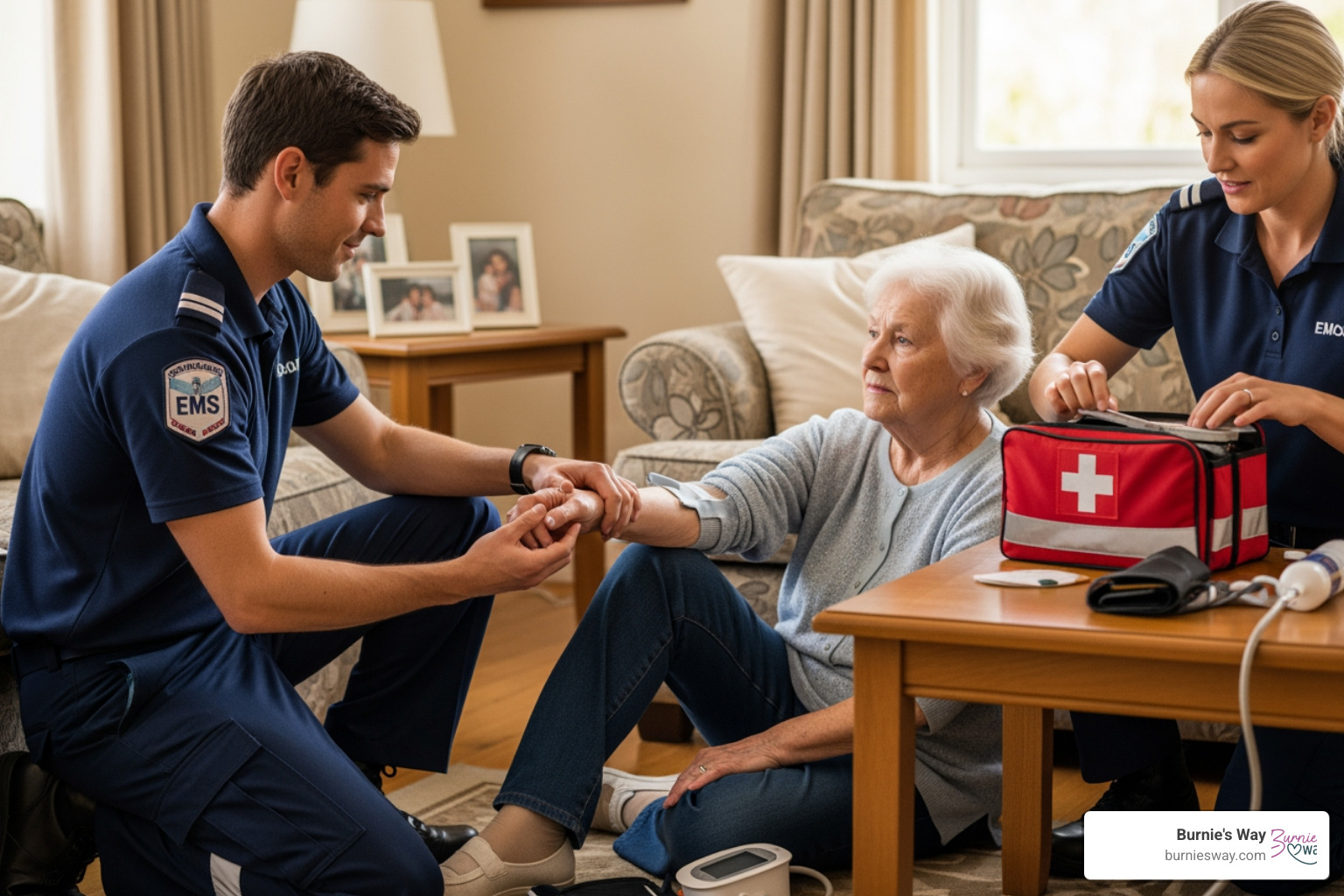
When Every Second Counts: Understanding Emergency Elderly Care Help
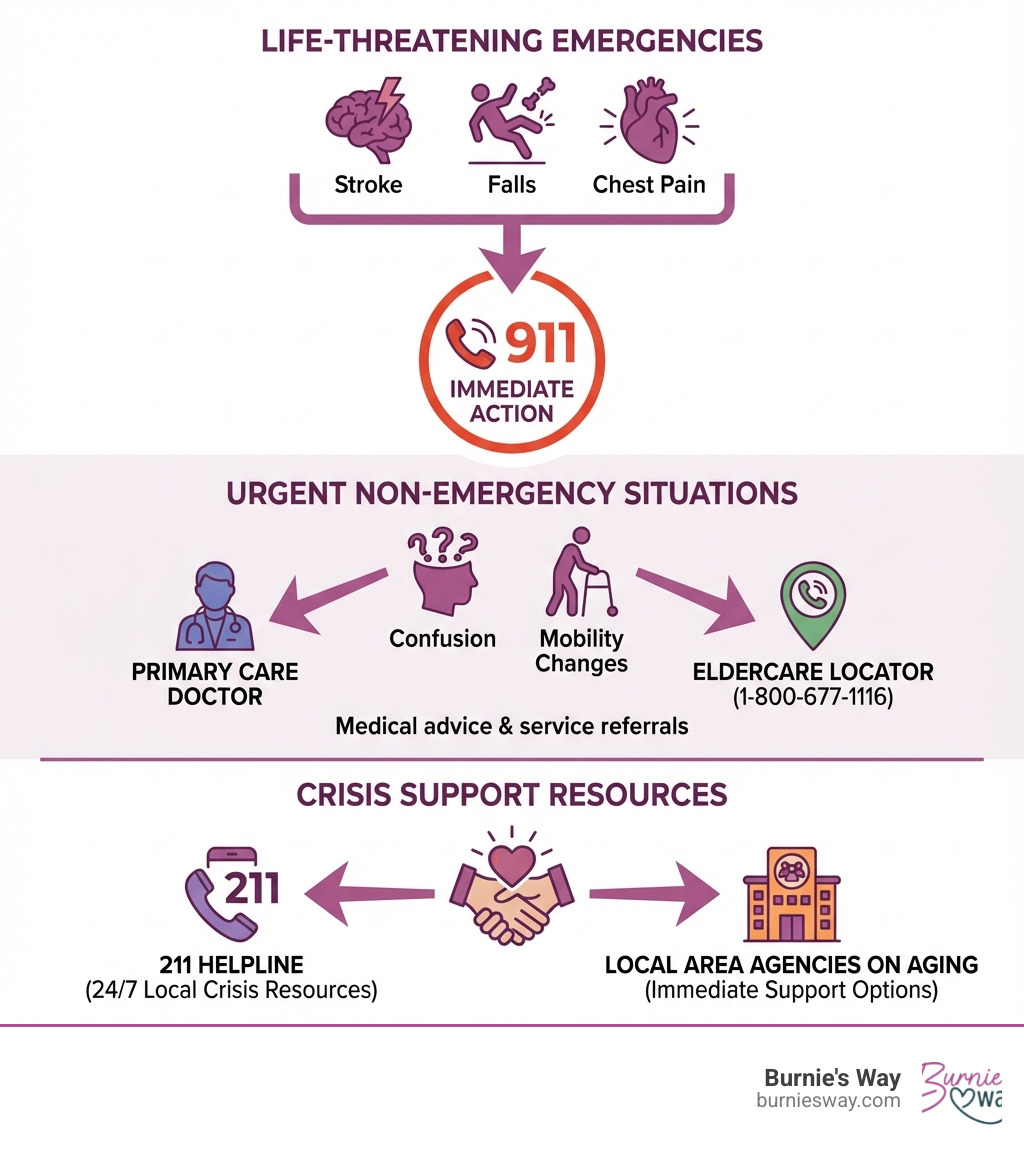
Emergency elderly care help is available through multiple channels when a senior faces a crisis. If you need immediate assistance, here’s where to start:
For Life-Threatening Emergencies
-
Call 911 for stroke, severe chest pain, difficulty breathing, or serious falls.
-
Contact the Eldercare Locator at 1-800-677-1116 (M–F, 8 AM–9 PM ET) for urgent service referrals.
-
Dial 211 for immediate connection to local crisis resources (available 24/7 in most areas).
For Non-Emergency Urgent Needs
-
Contact your loved one’s primary care physician.
-
Reach out to hospital discharge planners if transitioning from medical care.
-
Connect with local Area Agencies on Aging for immediate support options.
It happens in an instant. One moment, your aging parent seems fine; the next, they’ve fallen, are confused, or something just isn’t right. Your heart races, and your mind floods with questions: What do I do? Who do I call? How do I find help right now?
Emergencies involving older adults can be overwhelming, but you don’t have to face them alone. Whether it’s a medical crisis or a non-medical situation like sudden wandering or caregiver burnout, knowing where to turn can transform panic into action. This guide will walk you through recognizing a crisis, taking the right steps, finding support, and preparing for the future—because when time is of the essence, a clear plan is essential.
Recognizing the Crisis: Signs an Elder Needs Immediate Help
Recognizing the signs that an elderly individual might need emergency elderly care help is the first critical step. Sometimes, these signs are obvious, like a severe fall, but often they can be subtle.
Here are common indicators that an older adult requires urgent attention:
-
Sudden confusion or delirium: A rapid change in mental state could indicate a serious health issue like an infection or medication reaction.
-
Unexplained or repeated falls: Falls are a leading cause of injury among older adults and a clear red flag.
-
Signs of a stroke (FAST method): Remember FAST: Face drooping, Arm weakness, Speech difficulty, Time to call 911.
-
Severe headache or chest pain: These can be symptoms of a heart attack or stroke.
-
Difficulty breathing: Shortness of breath or gasping can signal serious respiratory or heart problems.
-
Sudden changes in mobility or behavior: Inability to walk, stand, or perform daily tasks—or drastic mood shifts—may signal an underlying medical issue.
-
Signs of severe dehydration or malnutrition: Sunken eyes, dry mouth, or extreme fatigue can indicate a critical lack of fluids or nutrition.
-
Acute self-neglect: A sudden decline in hygiene or home management can indicate a rapid decline in physical or mental health.

Differentiating Urgent Needs from a Full-Blown Emergency
It’s crucial to distinguish between a full-blown emergency that warrants a 911 call and an urgent situation that requires prompt, but not immediately life-threatening, attention.
-
When to call 911: Unconsciousness, severe bleeding, difficulty breathing, sudden severe pain (chest or head), signs of stroke, or major fall injury. These are life-threatening emergencies.
-
When to contact a doctor: Urgent but not life-threatening issues like sudden confusion, a minor fall, persistent fever, or other new concerning symptoms. A primary care physician or urgent care can guide next steps.
-
Non-medical crises: Wandering (especially with dementia), caregiver burnout, or acute self-neglect require immediate safety action—even if it’s not a 911 call.
-
Trust your instincts: If something feels profoundly wrong, err on the side of caution. You know your loved one best.
Immediate Steps to Take During a Medical Emergency
When an emergency strikes, taking swift and appropriate action can make all the difference.
- Call 911 immediately: For any life-threatening situation, do not hesitate. Provide the dispatcher with clear, concise information about the situation, the senior's location, and any known medical conditions.
- Stay calm and provide comfort: While waiting for help, remain with the individual. Speak calmly and reassuringly. If they are conscious, try to keep them still and comfortable.
- Do not move the person after a fall unless they are in danger: Moving them could worsen an injury. Only move them if they are in immediate danger (e.g., near a fire).
- Gather essential documents: If possible, quickly gather crucial medical information. This includes a medication list, doctor's contact information, insurance cards, and advance directives like a Living Will or Power of Attorney.
- Hands-only CPR: If the person is unresponsive and not breathing, and you are trained, perform hands-only CPR. For guidance, watch this Hands-only CPR Video.
Finding Emergency Elderly Care Help: Services and Resources
When an urgent situation arises, knowing where to find emergency elderly care help is crucial. A network of services and resources is available to support seniors and their families.
- Local agencies and community resources: Your local Area Agency on Aging (AAA) connects you to services like meal programs, transportation, and caregiver support. Find your local AAA through the Eldercare Locator by calling 1-800-677-1116 or visiting their website.
- Hospital discharge planners: After a hospital stay, social workers or discharge planners can arrange for follow-up care, in-home support, or rehabilitation.
- Short-term vs. long-term solutions: Emergencies often require immediate, short-term solutions like temporary home health aides or respite care. It's also important to consider how these fit into a long-term care plan.
Burnie’s Way is a virtual geriatric concierge service that coordinates, guides, and supports aging at home.
- Ongoing virtual relationship with seniors and families
- Care navigation, planning, and coordination
- Safety oversight and proactive check-ins
- In-home services delivered through trusted local partners when needed
- Communication portal to keep families informed and connected
- Core insight: We orchestrate care virtually

Types of Emergency Support Services
The types of emergency elderly care help available are diverse, designed to address various needs:
- In-home health aides (informational context only): These professionals provide medical or personal care at home, from skilled nursing to help with daily activities. Medicare offers limited short-term coverage from certified agencies, while Medicaid coverage varies by state. Private insurance often does not cover these costs.
- Emergency respite support: Respite care offers temporary relief for primary caregivers. It can be provided at home, in an adult day care center, or in a facility. Medicare covers up to five days for hospice patients, and Medicaid may also help. Find local services through the ARCH National Respite Locator.
- Short-term stays at supportive living communities: When a senior needs more supervision than can be provided at home, a short-term stay in an assisted living or skilled nursing facility can be a good option, especially during recovery.
- Personal support coordinators: Navigating senior services during a crisis is overwhelming. A personal support coordinator, like those at Burnie's Way, can organize and manage care needs, ensuring your loved one gets the right support to maintain their independence. Learn More info about support coordination.
- Adult day programs: These programs provide a safe, engaging environment for seniors during the day with activities, meals, and health monitoring. They are a valuable resource when a primary caregiver is unavailable. Medicare doesn't cover this, but Medicaid and other programs might.
How to Quickly Find Emergency Elderly Care Help in Your Area
When time is critical, knowing how to find help makes a difference.
- Community resource directories: The Eldercare Locator is a national public service that connects you to services for older adults and their families. You can use their online tool or call 1-800-677-1116.
- Using trusted national and local resource locators:
- 211: This confidential helpline connects you to a wide range of social services, including housing, food assistance, and caregiver support. Simply dial 211 from your phone.
- Area Agencies on Aging (AAAs): These local agencies are central hubs for senior services. They can provide referrals for emergency services, transportation, meal delivery, and more.
- Hospital social workers: If your loved one is hospitalized, the hospital's social work department is an excellent resource for finding post-discharge care.
- Referrals from a primary care physician: Your loved one's doctor can often provide referrals to trusted local services for emergency elderly care help.
When contacting any potential provider for emergency elderly care help, here are key questions to ask:
- What emergency services do you provide and what is your response time?
- Are your staff licensed, certified, and background-checked?
- What are your costs, and do you accept insurance or financial assistance?
- What is your communication protocol during a crisis?
- How do you handle after-hours or weekend emergencies?
- What is your experience with my loved one's specific needs (e.g., dementia, mobility issues)?
Understanding the Costs and Financial Assistance for Urgent Care
The financial aspect of emergency elderly care help can be a significant concern. Costs vary widely depending on the type of service, duration, and provider. Understanding potential financial assistance options is crucial.
Hourly vs. Daily Rates: Many in-home services, like home health aides or personal support, charge by the hour. Respite care and adult day care might have hourly or daily rates. Facilities for short-term stays typically charge daily.
Here's a look at potential coverage for various emergency services:
- Medicare: Medicare offers limited, short-term coverage for services from certified home health agencies and up to five days of respite care for hospice patients. It generally does not cover adult day care, medical alert systems, or geriatric care managers. For more detailed information, you can visit Understanding Medicare benefits.
- Medicaid: Medicaid benefits for home health, meal delivery, transportation, and adult day care vary significantly by state. To learn more about specific programs, visit Learn about Medicaid programs.
- VA Benefits: The Department of Veteran Affairs (VA) Caregiver Support Program (CSP) offers services to caregivers of eligible veterans, including training, counseling, a monthly stipend, and respite care. If you are caring for a veteran, explore the VA Caregiver Support Program.
- Long-Term Care Insurance: Some long-term care insurance policies may cover a portion of costs for in-home care, adult day care, or respite care, depending on the specifics of the policy. Review your policy carefully or contact your provider.
Preparing for the Future: Proactive Emergency Planning
The best defense against a crisis is a good offense. Proactive planning can significantly reduce stress and improve outcomes when emergency elderly care help is needed. As we believe at Burnie's Way, preparing for what’s next should feel empowering—not overwhelming.
- Create an emergency contact list: Include family, neighbors, doctors, and service providers. Make it easily accessible.
- Organize important documents: Keep medical records, medication lists, insurance cards, and legal documents (like Power of Attorney) in one accessible place. Share the location with trusted contacts.
- Conduct home safety assessments: Regularly check for and remove hazards like loose rugs, poor lighting, and lack of grab bars to prevent falls and other accidents.
- Build a support network: Create a local network of friends and neighbors who can check in on your loved one, especially if you live far away.
- Establish a communication plan: Decide who to contact first in an emergency and who will handle medical and logistical decisions to avoid confusion.
The Role of Emergency Medical Alert Systems
For elderly individuals living alone, emergency medical alert systems provide a crucial layer of safety and a direct line to emergency elderly care help.
- How they work: A wearable button connects the user to a 24/7 monitoring center that can dispatch help.
- GPS tracking features: Many systems include GPS, which is helpful for seniors who may wander.
- Automatic fall detection: Advanced systems can automatically call for help after a fall, even if the user can't press the button.
- Choosing a reliable system: Look for ease of use, good battery life, range, waterproof features, and a reputable monitoring service.
- Understanding costs and potential coverage: Systems usually have an initial fee and a monthly service charge. Medicare doesn't typically pay for them, but Medicaid or long-term care insurance might.
- Recognizing system limitations: These devices supplement, but don't replace, a support network. They must be worn and maintained to be effective.
How to Choose and Vet Emergency Elderly Care Help Providers
When selecting a provider for emergency elderly care help, thorough vetting is essential.
- Check licenses and certifications: Ensure providers are properly licensed. Use Medicare's online tool to find and compare Medicare-certified home health agencies.
- Read online reviews: Check reputable platforms for feedback, paying attention to patterns of negative comments.
- Ask for references: Reputable providers should be able to offer references from past clients.
- Check with reputable organizations: Contact your local Area Agency on Aging or the Better Business Bureau for information and complaints.
- Interview potential providers: Ask about their experience, training, emergency procedures, and how they handle specific situations related to your loved one's needs.
- Find a certified geriatric care manager: For help navigating complex care, a geriatric care manager can be invaluable. You can find one through the Aging Life Care Association.
Frequently Asked Questions about Emergency Elderly Care
What legal documents are essential in an elderly emergency?
In an emergency, having specific legal documents prepared and accessible is crucial for ensuring your loved one's wishes are respected and that you can act on their behalf.
- Power of Attorney (POA) for healthcare and finances: A Healthcare POA designates someone to make medical decisions if the senior is unable to. A Financial POA grants authority to manage financial affairs. These are vital if the senior becomes incapacitated.
- Living will or advance directive: This document outlines a person's wishes regarding medical treatment in end-of-life situations, such as whether to receive life-sustaining treatment.
- Do Not Resuscitate (DNR) orders: A DNR is a medical order indicating that CPR should not be performed if a person's heart stops or they stop breathing. This is often part of an advance directive.
- Importance of making documents accessible to first responders and family: These documents must be readily available. Keep copies in a binder in a known location, and ensure your personal support coordinator, family members, and healthcare providers have copies.
What is respite care and when is it used in an emergency?
Respite care is temporary, short-term care provided to an older adult to give their primary caregiver a break. In an emergency, it becomes an essential form of emergency elderly care help.
- Definition of respite care: It can be provided in the senior's home, at an adult day care center, or in a short-term stay at a residential facility. Its purpose is to relieve the primary caregiver, allowing them time for rest, personal appointments, or to manage their own unexpected emergencies.
- Preventing caregiver burnout: Regular respite care can prevent the physical and emotional exhaustion that often affects caregivers, ensuring they remain healthy enough to provide ongoing support.
- Support during a primary support person's sudden illness: If the primary caregiver falls ill or has their own emergency, respite care can immediately step in to ensure the senior's needs are met without interruption.
- Post-hospitalization transition: After a hospital stay, a senior might need more intensive care than the family can immediately provide at home. Respite care, or a short-term facility stay, can bridge this gap, offering professional support during recovery.
- You can find local respite services through the ARCH National Respite Locator.
How can I get help if I'm a long-distance support person during a crisis?
Being a long-distance support person during an emergency can feel incredibly challenging. However, resources and strategies can help you manage the situation effectively.
- Hiring a personal support coordinator: A personal support coordinator, like those at Burnie's Way, can be your local advocate and organizer. We can assess the situation, coordinate with local emergency services, communicate with healthcare providers, and arrange for immediate and ongoing support, acting as your eyes and ears on the ground.
- Activating a local support network of friends or family: Leverage your emergency contact list. Reach out to trusted neighbors, friends, or other relatives who live closer to your loved one. They might be able to provide immediate checks, gather information, or offer temporary assistance until more formal arrangements can be made.
- Using technology for communication: Use video calls, messaging apps, and shared online documents to stay connected with your loved one, local support network, and healthcare providers. Technology can help you feel more involved and informed, even from afar.
- Arranging emergency travel: If the situation warrants it, be prepared to travel. Having an emergency fund for travel expenses and a plan for quick departure can reduce stress in a crisis.
- Utilizing resource locators to find local help: Tools like the Eldercare Locator (1-800-677-1116) or the 211 helpline can connect you to local Area Agencies on Aging, social workers, and other community resources that can provide emergency elderly care help in your loved one's area.
Conclusion
Facing an emergency involving an elderly loved one can be one of the most stressful experiences a family can endure. The initial shock and fear can quickly lead to panic, making it difficult to think clearly or act decisively. However, by understanding the signs of a crisis, knowing the immediate steps to take, and being aware of the available resources, we can shift from a state of panic to one of preparedness and effective action.
We've explored the different types of emergency elderly care help, from immediate medical response to essential non-medical support. We've highlighted the crucial role of national and local resources like the Eldercare Locator and the 211 helpline, and discussed the financial considerations and assistance programs available. Most importantly, we've emphasized the power of proactive planning – creating emergency contact lists, organizing vital documents, and establishing robust support networks.
In those overwhelming moments, you don't have to manage everything alone. Having a clear path forward isn't just helpful; it's essential. A partner in coordination can make all the difference, helping you steer complex systems and ensuring your loved one receives the comprehensive support they need.
At Burnie's Way, we believe in empowering older adults to live comfortably and confidently at home. While we don't provide direct care, we offer personalized support and comprehensive daily life management. We help you understand your choices, coordinate trusted services, and make sure everything's okay, giving you and your family peace of mind. When you're ready to ensure every contingency is covered, we're here to help you build that robust support system.
To learn more about how our personal support services can help you prepare for and steer life's unexpected moments, visit Our Services.