13 min read

Beyond the Search: How to Pick the Best Caregiver Matching Service

Beyond the Search: How to Pick the Best Caregiver Matching Service

Why Finding the Right Support Partner Matters

older adult and family caregiver smiling together at home - caregiver matching service

A caregiver matching service connects families with qualified support companions or personal assistants who help aging adults maintain independence at home. These services handle screening, vetting, and matching based on needs, personality, location, and preferences—saving families time and reducing stress.

Quick Answer: What to Look For

  • Thorough vetting process (background checks, references, skill verification)
  • Personalized matching approach (considers personality, interests, and communication style—not just tasks)
  • Satisfaction guarantees (ability to request a different match if needed)
  • Ongoing support and communication (check-ins, coordination, and backup options)

When someone you love can't manage daily life like they used to, you worry. You wonder about their safety. You question whether they're eating well, taking their medications, or feeling lonely. And you wonder how you'll balance supporting them while managing your own family and work.

Millions of people provide support to a family member, partner, friend, or neighbor. The challenge isn't just finding help—it's finding the right help. Someone who understands your loved one's needs. Someone who connects with them as a person, not just a task list.

That's where a matching service comes in. The best ones don't just send someone to your door. They take time to understand who your loved one is, what they need, and what kind of personality will make them feel comfortable and supported.

A good match means more than help with daily tasks. It means genuine connection, trust, and peace of mind for everyone involved.

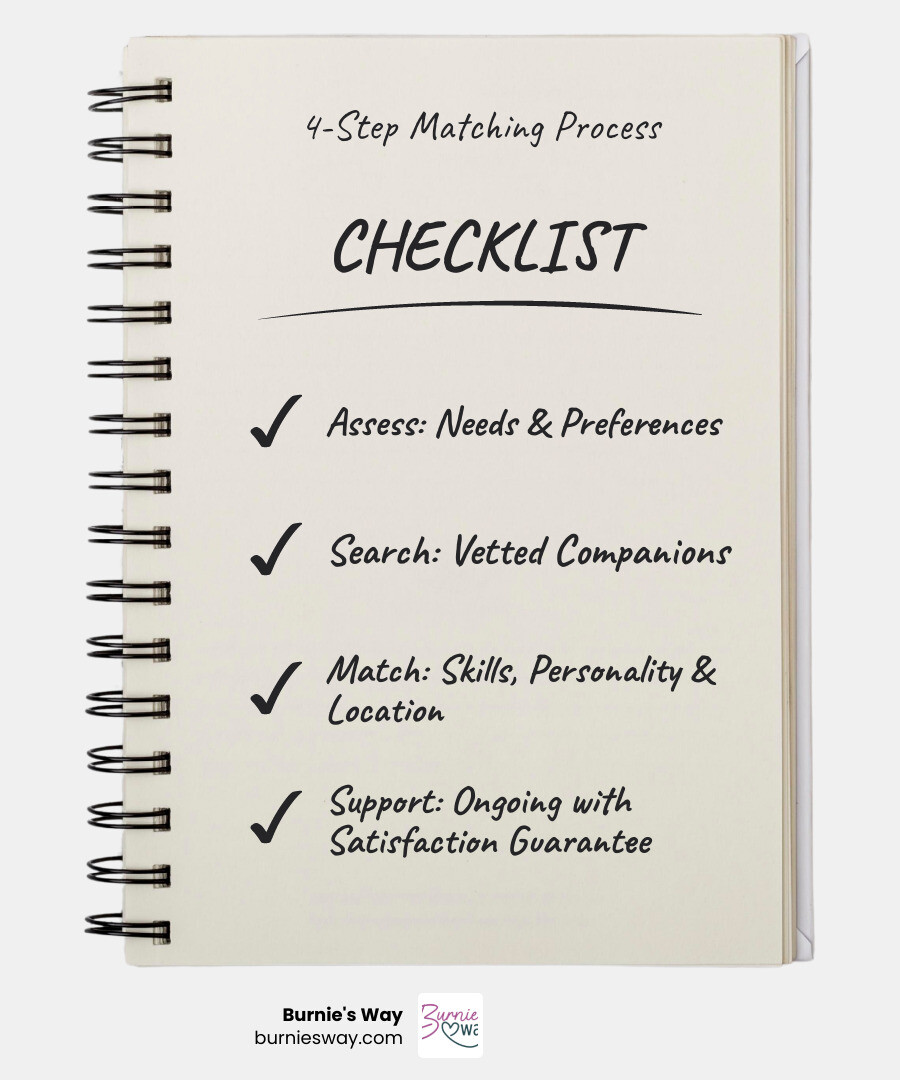
infographic showing 4-step caregiver matching process: Step 1 - Assess needs and preferences through consultation; Step 2 - Search vetted companion database using matching criteria; Step 3 - Match based on skills, personality, location, and availability; Step 4 - Provide ongoing support with satisfaction guarantee and team backup - caregiver matching service infographic checklist-notebook

Relevant articles related to caregiver matching service:

  • memory care program coordinator
  • memory care support

Understanding What a Caregiver Matching Service Does

Navigating the landscape of in-home support for an aging loved one can feel overwhelming. There are many options, and each promises to deliver the best fit. But what exactly does a caregiver matching service do, and how can it simplify your search for the right personal support?

Essentially, a caregiver matching service acts as a bridge, connecting individuals and families with support companions who can provide assistance with daily life. These services understand that finding the right person isn't just about checking off a list of skills; it's about fostering a genuine connection and building a supportive relationship.

Matching is important because a personal connection truly matters. A well-matched support companion can transform a senior's daily life, bringing not just practical help but also companionship and joy. It’s about more than tasks; it’s about ensuring your loved one feels understood, respected, and genuinely cared for.

These services simplify your search by taking on the heavy lifting of vetting and presenting you with choices. Instead of you sifting through countless resumes, conducting background checks, and verifying references, a reputable caregiver matching service performs these crucial steps for you. This due diligence helps ensure that the individuals presented have been thoughtfully screened, allowing you to focus on the personal fit.

In an educational context, it’s worth noting the differences between how various entities approach this. Traditional home care agencies typically employ their support companions directly, handling aspects of employment, from payroll to supervision. Other services might act more like registries, connecting families with independent contractors. While both aim to provide support, understanding these distinctions can help you steer your options.

Burnie's Way helps you understand these choices and coordinate the personal support that fits best for your family. We believe in providing guidance and clarity through every step of this process. You can learn more about how we approach this on our How We Work page.

The core benefit of a dedicated caregiver matching service is its ability to help families steer through the many options available. They provide a structured approach to finding someone who not only meets the practical needs but also resonates with your loved one's personality, interests, and lifestyle. This thoughtful approach helps lay the foundation for a meaningful relationship from the very beginning.

Key Factors for a Successful Match

Finding the right support companion is a personal journey. It’s not just about qualifications; it's about finding someone who clicks with your loved one and becomes a trusted presence. At Burnie's Way, we know this goes beyond assigning a helper—it is about building relationships, fostering trust, and using a personalized approach that honors your loved one.

support companion and client sharing a laugh over a puzzle - caregiver matching service

Essential Skills and Logistics

When evaluating a caregiver matching service, start with practical needs and logistical compatibility. These basics help ensure your loved one receives the right kind of assistance safely and reliably.

First, consider the specific support needs. Does your loved one need help with daily activities like meal preparation, personal hygiene, medication reminders, safe movement, errands, or light housekeeping? In-home support helps aging loved ones maintain dignity and independence by assisting with these tasks, promoting comfort and stability in a familiar environment.

Beyond general assistance, specialized needs matter too. If your loved one is experiencing memory challenges, such as those associated with Alzheimer's or dementia, or if they require post-hospitalization assistance following surgery, the matching service should be able to identify companions with relevant training and experience.

Logistical factors also play a significant role:

  • Language: Ensuring the companion speaks a language your loved one is comfortable with supports clear communication and can significantly reduce feelings of isolation.
  • Culture: A companion who understands and respects your loved one's cultural background can provide more sensitive and appropriate support, making them feel more at ease.
  • Location: Proximity matters for reliability and convenience. A local companion often means more consistent support and quicker response times.
  • Availability: The companion's schedule must align with your loved one's needs, whether it's full-time, part-time, or specific hours during the day or night. Good services ensure that companions are reliable and have backup options if necessary.

A robust caregiver matching service takes these factors into account, including location, language, culture, and personal interests. Through matching tools and a diverse roster of companions, they aim to ensure a match that not only meets your loved one’s needs but also fosters a genuine connection.

The Personal Connection: Why Personality and Interests Matter

While essential skills and logistics form the backbone of a successful match, the true magic often lies in the personal connection. A companion who shares similar personality traits, hobbies, or interests with your loved one can create a deeper, more meaningful relationship.

Imagine a companion who enjoys gardening as much as your loved one, or who can discuss classic literature with enthusiasm. These shared interests transform routine assistance into joyful companionship, combating loneliness and enriching daily life. A significant part of a companion's role can involve socializing—chatting, engaging in activities like puzzles or crafts, or listening to music together. This emotional support is just as crucial as practical help.

Personality fit is paramount. Some individuals thrive with an energetic and outgoing companion, while others prefer a calm and gentle presence. A good caregiver matching service understands these nuances, aiming to match personalities in a way that promotes comfort, trust, and open communication. It's about finding someone who's a "good fit" in terms of personality and shared interests, establishing the foundation for a meaningful relationship.

This personalized approach is at the heart of what makes a match successful. It starts with getting to know both the individual seeking support and the companion, then identifying ideal matches based on interests and needs. This commitment to genuine connection is what truly sets apart an exceptional matching service. At Burnie's Way, our own journey is rooted in understanding these deep human connections, as you can read on Our Story page.

How to Evaluate a Caregiver Matching Service

Choosing a caregiver matching service is a significant decision for your loved one's well-being and independence. It requires careful attention to ensure you make an informed choice. Our goal is to empower you to evaluate these services effectively by understanding their commitments and what you can expect as a client.

person on a laptop looking at support companion profiles - caregiver matching service

Assessing Their Screening and Vetting Process

A service's quality begins with its screening and vetting process. This is your first line of insight for ensuring the safety and professionalism of anyone entering your loved one's home. Thorough background checks and skill verification are critical.

A reputable service should implement a thoughtful, multi-step approach that includes:

  • Background Checks: Checks that go beyond basic criminal records, covering driving history and other relevant indicators.
  • Reference Checks: Verifying past employment and character references to gain insights into a companion's reliability and professionalism.
  • Skill Verification: Confirming that companions possess the necessary skills for the services they provide, especially for specialized needs like memory support or post-surgery assistance.
  • Training Credentials: Confirming that companions have received appropriate training. Many excellent e-learning courses for support companions exist, and a good service will ensure their roster is well-equipped with up-to-date knowledge. For educational context, resources like E-Learning Courses for support companions offer valuable training.
  • Interview Process: A solid interview process helps assess not just skills, but also personality, empathy, and communication style—factors critical for a successful match.

A quality service should be transparent about their vetting process. They should be able to explain how they ensure that every companion on their roster is not only qualified but also trustworthy and compassionate.

Understanding the Matching Technology and Process

Once the initial vetting is complete, the next step is understanding how the caregiver matching service actually makes a match. Is it purely algorithmic, or is there a human touch involved?

Many services today use matching technology to cross-reference your loved one's needs, preferences, and personality traits with the profiles of available companions. This can efficiently narrow down a diverse roster of companions based on factors like location, language, culture, and interests.

However, the most successful matches often blend technology with human insight. The role of experienced coordinators is invaluable. These professionals get to know your family, understanding the subtle nuances an automated system might miss. They consider the "human element"—interests, communication style, and the daily life approach that would best suit your loved one.

This process should feel customized. You should have options and input into the selection. A good service will explain how they get to know you and your loved one, ensuring that the match is truly personalized rather than a generic assignment.

Reviewing Support, Guarantees, and Your Role as a Client

Even with the most careful matching process, sometimes the first match isn't perfect. This is where a caregiver matching service truly demonstrates its commitment to client satisfaction.

Key aspects to review include:

  • Satisfaction Guarantee: Does the service offer a satisfaction guarantee? Many reputable services state that if you’re not satisfied with a companion for any reason, they will work to find someone else. This underscores the importance of a personal connection.
  • Replacement Process: Understand the process for requesting a new match. How quickly can a replacement be arranged? What steps are involved? This provides peace of mind, knowing that you won't be left without support if a match isn't working out.
  • Handling Dissatisfaction: Inquire about their process for addressing dissatisfaction. Do they have a clear communication channel for feedback? How do they respond to concerns? Some services obtain objective client feedback regularly, sometimes even through third-party research, to continuously improve.
  • Ongoing Support: A good service doesn't disappear after the match is made. They should offer ongoing support, with regular check-ins and a clear point of contact for any questions or concerns.
  • Client Feedback Mechanisms: Ask how your feedback is collected and used. Knowing that your input contributes to service improvement can build confidence.
  • Your Right to Choose: You and your loved one have the right to choose who provides support. A service that respects this choice and empowers you throughout the process is one you can trust.

You are entering into a partnership. A transparent and supportive caregiver matching service will make you feel confident and heard, helping ensure that your loved one receives the best possible support.

From Match to Partnership: Ensuring Long-Term Success

Finding the right match is just the beginning. The goal is to cultivate a lasting partnership that fosters trust, improves your loved one's quality of life, and provides ongoing peace of mind for your family. A truly effective caregiver matching service understands that the relationship evolves, requiring continuous communication and a flexible approach.

The Role of a Personalized Support Plan

A personalized support plan is the blueprint for success. It goes beyond a simple task list, encompassing your loved one's routines, preferences, and aspirations. When you choose an external caregiver matching service, they should facilitate the creation of this plan.

This plan should be a dynamic guide that:

  • Sets Expectations: Clearly defines the scope of support, from assistance with daily activities to companionship.
  • Defines Tasks: Outlines specific duties, such as meal preparation, medication reminders, or light housekeeping.
  • Schedules Activities: Incorporates daily routines and preferred timings to maintain consistency and comfort.
  • Sets Goals: Helps to achieve broader objectives, like maintaining independence, engaging in hobbies, or improving social interaction.
  • Improves Quality of Life: Focuses on activities and interactions that bring joy and meaning to your loved one's day.

We advocate for personalized support plans because we know they are essential for helping aging adults live confidently and stay connected. While we focus on coordinating these plans, many reputable matching services ensure that the support companion works closely with the family to tailor the plan to individual needs, based on your input. This individualized approach is designed to help the entire family achieve quality of life goals. You can explore how we help coordinate comprehensive support services on our Our Services page.

What to Do if You're Unsatisfied with Your Match

Despite the best efforts in matching, sometimes a companion might not be the perfect fit. This is normal, and a reliable caregiver matching service will have a clear process in place to address such situations.

If you find yourself unsatisfied, here's what we recommend:

  1. Communicate Promptly: Don't hesitate to voice your concerns. A good service will encourage open communication.
  2. Provide Specific Feedback: Clearly articulate why the match isn't working. Is it a personality clash? A misunderstanding of tasks? The more specific you are, the better the service can respond.
  3. Understand the Service Process: Familiarize yourself with their satisfaction guarantee and replacement policy. Most services will offer to select someone else if you're not satisfied, because they know a personal connection matters.
  4. Request a New Match: If issues can't be resolved, don't be afraid to request a different companion. The goal is your loved one's comfort and well-being.

The commitment of a caregiver matching service to resolving issues and supporting client satisfaction is a hallmark of quality. They should work toward practical resolutions for client concerns, understanding that the right match is crucial for peace of mind.

The Benefit of a Team-Based Approach

For many families, the idea of a "team-based approach" to support might seem complex, but it offers significant advantages. A dedicated support team, often provided by a robust caregiver matching service, can help ensure continuity and comprehensive oversight.

This approach can mean:

  • Support Team: A network of professionals, including coordinators and sometimes a dedicated team, provides ongoing guidance to companions and support to families.
  • Backup Companions: If the primary companion is unavailable due to illness or vacation, a backup can step in, helping maintain consistency of support and preventing disruptions.
  • Consistency of Support: Even with multiple companions, a well-coordinated team ensures that the personalized support plan is followed consistently.
  • Professional Oversight: A dedicated support team monitors quality and addresses any issues that arise.
  • Peace of Mind for Families: Knowing there's a reliable team behind the primary companion can significantly reduce stress, especially for long-distance family members who need to monitor and ensure quality.

We believe in the power of coordinated support. While Burnie's Way focuses on being your personal concierge and guide, we understand the immense value a strong support network provides. We help you steer and coordinate with services that offer this kind of team-based security. This collaborative effort helps your loved one live confidently and stay connected, with reliable assistance always at hand. If you have questions about how to coordinate such a team, please don't hesitate to Contact Us.

Frequently Asked Questions about Finding a Caregiver

Navigating in-home support can bring up many questions. We've gathered some of the most common ones to help you understand your options and make informed decisions about a caregiver matching service.

How is a matching service different from a traditional home care agency?

In an educational context, here's a simple breakdown:

  • Traditional Home Care Agency: These agencies typically employ their support companions directly. This means they handle aspects of employment such as payroll, taxes, insurance, benefits, and supervision. They are responsible for the companion's performance and scheduling, and often have backup companions to fill in when needed. The agency usually manages all administrative duties.
  • Caregiver Matching Service (Registry Model): Some matching services operate more like a registry. They connect families with independent support companions who are often self-employed. In this model, the family might become the employer, taking on responsibilities for payroll, taxes, and potentially liability insurance. While these services vet companions, the level of ongoing management and oversight provided by the service can vary.

Key Differences to Consider:

  • Employment Model: Employee (agency) vs. independent contractor (some matching services/registries).
  • Liability: Agencies typically carry comprehensive insurance, protecting both the client and the companion. If you hire an independent companion directly, you might be responsible for liability.
  • Cost Structure: Agency fees usually cover administrative burdens. With a registry, you might pay a matching fee, then pay the companion directly, potentially requiring you to handle payroll and taxes.
  • Level of Involvement: Agencies offer a more hands-off experience for families. A registry might require more direct management from the family.

Many older adults prefer to live independently in their own homes. If you value safety, security, and reliability, a quality home care agency (or a matching service that partners with such agencies) can provide more comprehensive support than hiring an independent companion directly. Burnie's Way helps you understand these distinctions, so you can make the choice that provides the most peace of mind.

What happens if my loved one's needs change over time?

It’s completely natural for needs to evolve as someone ages or recovers from an illness. A reliable caregiver matching service anticipates this and has processes in place to adapt.

Here's what to expect:

  • Re-evaluation Process: A good service will offer periodic re-evaluations of your loved one's needs. This could be through regular check-ins, or upon your request if you notice significant changes.
  • Adjusting the Support Plan: Based on the re-evaluation, the personalized support plan can be adjusted to reflect new requirements. This might involve adding new tasks, modifying schedules, or incorporating different types of assistance.
  • Finding a New Companion with Different Skills: If the changes are substantial (for example, a loved one develops memory challenges requiring specialized approaches, or needs more intensive physical support), the service should be prepared to facilitate a new match. They can help find a companion who possesses the specific skills and experience needed for the evolved situation.

Burnie's Way provides continuous support and partnerships for comprehensive daily life management. This includes helping you steer these transitions and coordinate with services that can adapt to changing needs, so your loved one can continue to live confidently and independently.

How much do these services typically cost?

The cost of a caregiver matching service and the associated support can vary widely. There isn't a one-size-fits-all answer, as pricing models depend on several factors.

Key considerations include:

  • Service Fees vs. Direct Pay: Agencies bundle many costs, while some matching services might charge a one-time matching fee, with hourly rates paid directly to the companion.
  • Type of Support: Basic companionship and homemaking services generally cost less than personal support (for example, bathing and dressing) or specialized assistance (such as memory support).
  • Hours Required: Full-time, part-time, overnight, or 24-hour support will have different price points.
  • Location: Rates can vary significantly by geographic region.
  • Companion's Experience and Qualifications: Highly experienced companions or those with specialized training may command higher rates.

Many services offer personalized quotes after an initial assessment of your loved one's needs. This assessment helps them understand the scope of support required and tailor a pricing structure. Ask for a detailed breakdown of all costs involved, including any administrative fees, hourly rates, and potential surcharges for holidays or specialized services.

At Burnie's Way, we believe in transparency when it comes to understanding financial aspects. While we don't directly provide caregiving services, we can help you understand the various pricing models and coordinate services that fit your budget. You can find more general information about our own approach to pricing on our Pricing page. Investing in quality support for your loved one is an investment in their independence and your peace of mind.

Conclusion: Finding More Than Just a Helper

Choosing a caregiver matching service is a pivotal step towards helping your loved one live a life of dignity, comfort, and independence in their own home. It is about much more than just finding someone to perform tasks; it is about finding a partner who can foster a genuine connection and truly improve their quality of life.

The human element is irreplaceable. The best matches are built on shared interests, compatible personalities, and a foundation of trust. A thoughtful matching process, coupled with robust vetting and ongoing support, can transform the daily lives of aging adults and bring immense peace of mind to their families. From ensuring essential skills and logistical compatibility to prioritizing that crucial personal connection, each step in the evaluation process brings you closer to finding the ideal support.

Navigating the many options can still feel daunting, even with a clear understanding of what to look for. This is where Burnie's Way comes in. We act as your personal concierge and guide, helping you understand these choices, coordinate trusted services, and manage comprehensive daily life needs. We believe in empowering aging adults to live the way they want, with support in key areas of daily life, and giving families the assurance that everything is okay.

Our personalized approach, backed by decades of experience, is designed to provide continuous support and partnerships. We help you explore your options, from understanding the nuances of different matching services to coordinating personalized support plans that adapt as needs evolve. With us, you're not just finding a helper; you're building a network of support that champions independence, connection, and a truly fulfilling aging experience.

We invite you to learn more about how we can support your loved one's journey to living confidently and independently. Explore our comprehensive support services today, and let us help you find the peace of mind you deserve.

The Continuous Care Compass: Navigating Ongoing Health Services

13 min read

The Continuous Care Compass: Navigating Ongoing Health Services

What Continuous Care Services Really Mean for You and Your Family Continuous care services are specialized, short-term support designed to help...

Read More