
12 min read

Beyond the Walls: Finding Your Perfect Home Care Solution

Beyond the Walls: Finding Your Perfect Home Care Solution

The Comfort of Home and the Path to Independence

Home care solutions are the services and support that help aging adults live safely, comfortably, and independently in their own homes. These solutions range from personal assistance with daily routines to coordination of professional services, all designed to preserve dignity while providing the help needed to thrive at home.

Quick Overview: Types of Home Care Solutions

  1. Personal Support & Companionship - Help with daily tasks, meal prep, light housekeeping, transportation coordination, and social connection
  2. Home Health Care - Medical services from licensed professionals (nurses, therapists) prescribed by a doctor for specific conditions
  3. Specialized Programs - State-funded options like CDPAP that let you choose your own support person
  4. Coordination Services - Personal concierge support that helps organize and manage multiple resources

The numbers tell a powerful story: 86% of older adults want to age in place. They want to stay in the homes where they've built their lives, surrounded by familiar comforts and memories.

This isn't just preference. It's about maintaining independence, dignity, and quality of life.

But here's the reality: 70% of adults over 65 will need some form of assistance at some point. That gap between wanting to stay home and needing help? That's where the right support makes all the difference.

Whether you're noticing small changes in a parent's routine or planning ahead for future needs, understanding your options is the first step. The good news? There are more ways than ever to get the right help while keeping home as home.
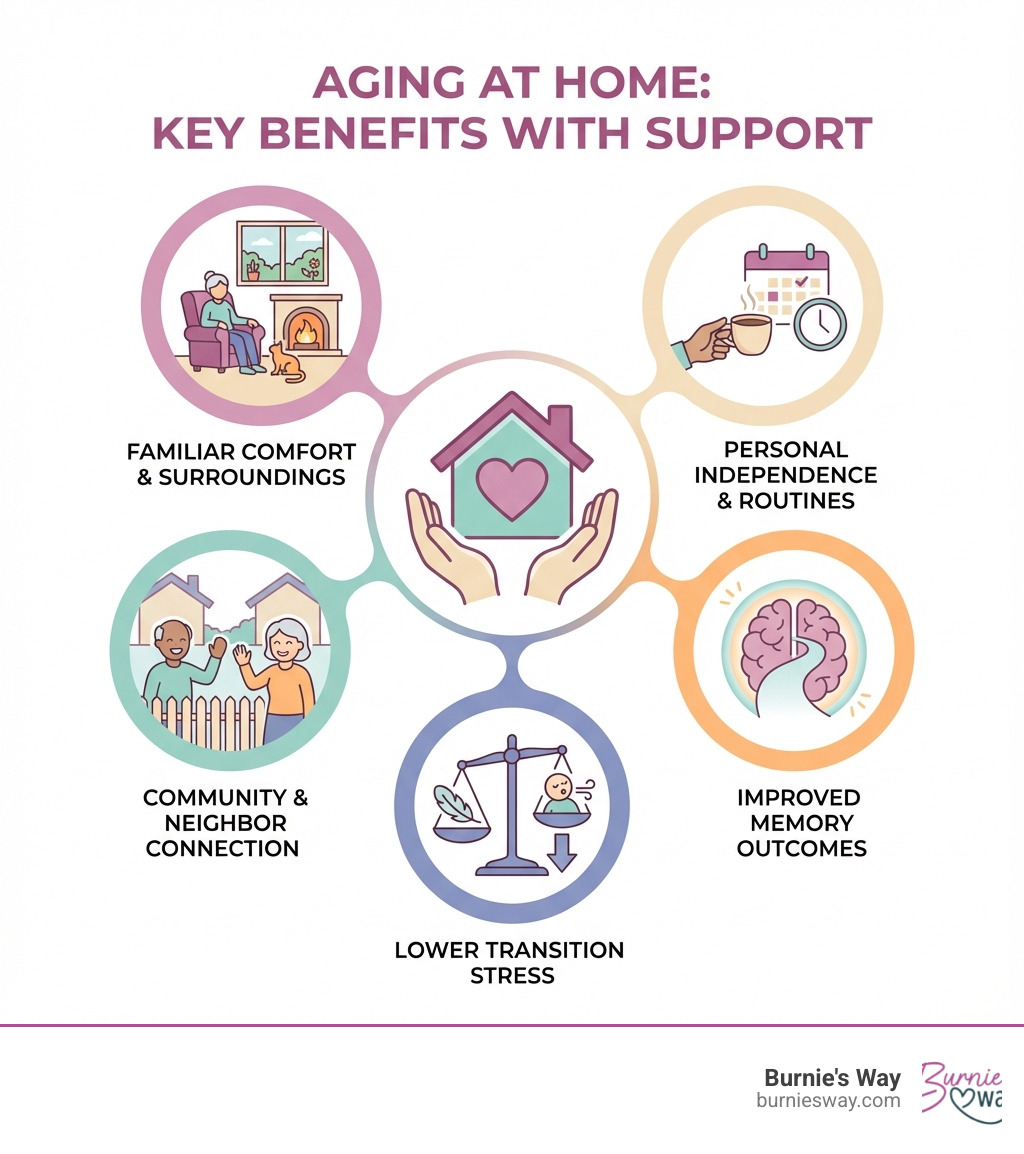
infographic showing five key benefits of aging at home with proper support: maintaining familiar surroundings and comfort, preserving independence and personal routines, staying connected to community and neighbors, better outcomes for those with memory concerns, and lower stress compared to facility transitions - home care solutions infographic

Understanding the Landscape: Exploring Home-Based Support Options

Navigating in-home support can feel overwhelming, but it doesn't have to be. Essentially, home care solutions fall into two main categories: non-medical personal assistance and medical home health care. While distinct, they often complement each other, forming a comprehensive support system that allows individuals to thrive in their own environment.
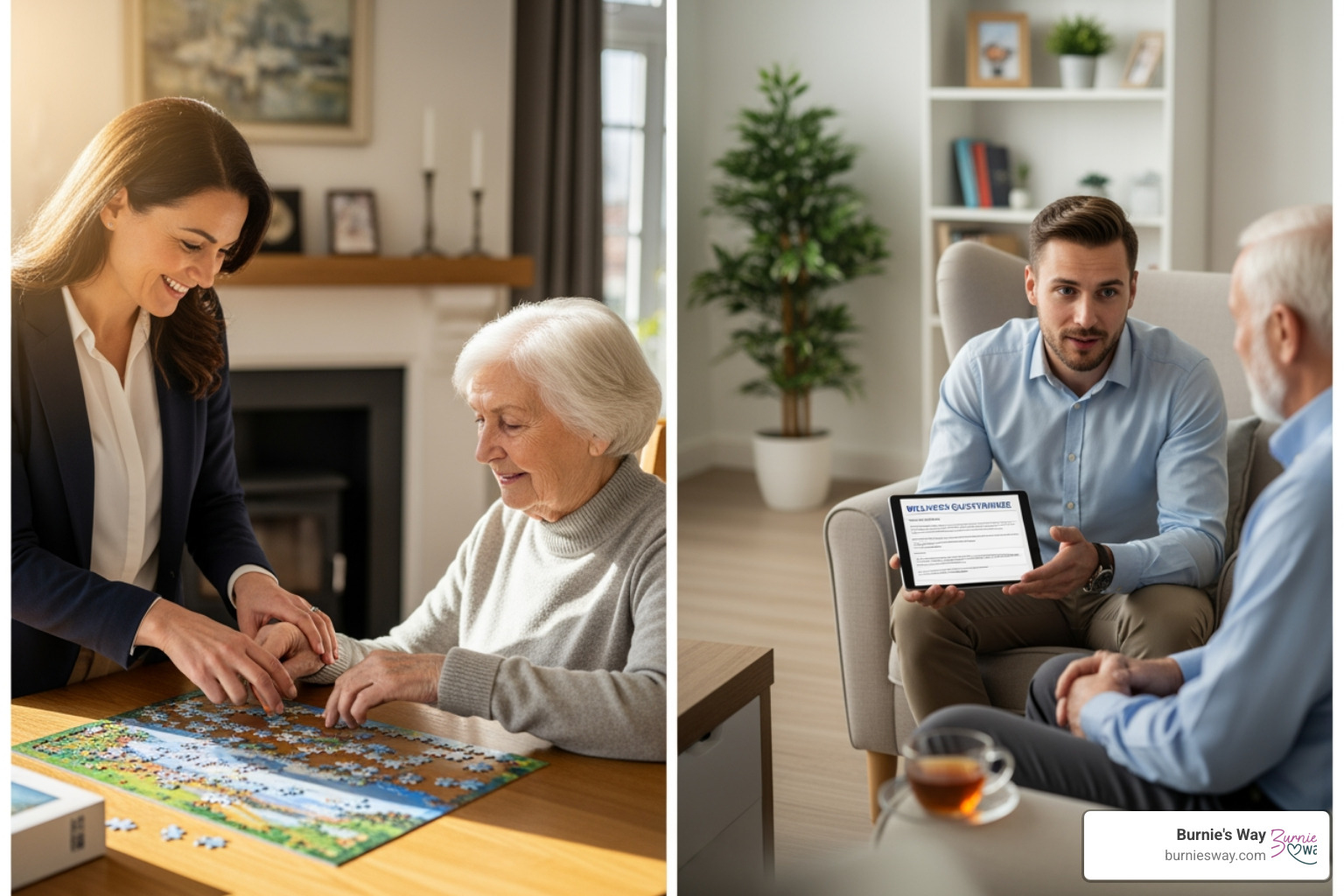
friendly assistant helping senior with puzzle, contrasted with personal concierge visiting for wellness check-in - home care solutions

At Burnie's Way, we focus on providing personal support, lifestyle coordination, and independence-focused assistance. We act as a guide, helper, and companion, ensuring our clients live comfortably and confidently at home. We help people understand their choices and coordinate the personal support that fits best, helping them live the way they want.

The Two Main Types of Home-Based Support

Let's clarify the distinctions, as understanding them is key to finding the right home care solutions.

  1. Personal Support Services (often called in-home care or non-medical care): This type of support focuses on assistance with daily living activities that don't require clinical medical training. It's about maintaining a comfortable, independent lifestyle.

    • Companionship: Providing social interaction, engaging in hobbies, accompanying on outings. This can combat loneliness and social isolation, which are significant concerns for many older adults.
    • Personal Care & Hygiene: Assistance with bathing, dressing, grooming, toileting, and mobility. This helps maintain dignity and personal well-being.
    • Meal Preparation & Nutrition: Planning and preparing healthy meals, ensuring dietary needs are met, and assisting with feeding if necessary.
    • Light Housekeeping & Laundry: Keeping the home tidy and managing laundry to create a clean and safe living space.
    • Transportation Coordination: Arranging and accompanying clients to appointments, errands, social events, or even just a scenic drive.
    • Medication Reminders: Ensuring medications are taken on schedule, though not administering them.
    • Respite Care: Providing temporary relief for family members who are primary support persons, allowing them time to rest and recharge.
    • Hospice Support: While not medical hospice, personal support can offer comfort and companionship during end-of-life care, allowing families to focus on emotional support.

    These services are crucial for empowering individuals to maintain their highest level of independent function and preserve their dignity.

  2. Home Health Care (medical care): This category involves skilled medical services provided by licensed healthcare professionals, typically prescribed by a doctor for a specific health condition. It's usually short-term, with a defined goal, and often follows a hospital stay or illness.

    • Skilled Nursing Care: Services provided by a Registered Nurse (RN) or Licensed Practical Nurse (LPN), such as wound care, medication management (injections, IVs), monitoring vital signs, and chronic disease management.
    • Therapies: Physical therapy (PT) to improve mobility and strength, occupational therapy (OT) to regain independence in daily tasks, and speech-language pathology (SLP) for communication or swallowing difficulties.
    • Medical Social Work: Providing counseling and connecting families to community resources.
    • Home Health Aide (HHA) Services: Provided under the supervision of a nurse or therapist, these aides assist with personal care and some light housekeeping directly related to the medical condition.

    A key distinction: home health care is medical, while personal support services are non-medical. Home health agencies are often Medicare-certified, meaning they meet federal requirements for patient care.

Here’s a simplified look at the key differences:

Feature Personal Support Services (Non-Medical) Home Health Care (Medical)
Purpose Maintain independence, comfort, daily living, companionship, lifestyle coordination Recover from illness/injury, manage chronic conditions, medical treatment
Services Personal care, meal prep, light housekeeping, transportation, companionship, medication reminders, errands Skilled nursing, physical therapy, occupational therapy, speech therapy, medical social work
Provider Personal assistants, companions, home care aides (non-medical) Licensed nurses, physical therapists, occupational therapists, speech pathologists, medical social workers
Duration Ongoing, long-term Short-term, goal-oriented, intermittent
Coverage (US) Primarily private pay, long-term care insurance, some Veterans benefits, Medicare Advantage (limited) Medicare Part A & B, Medicaid, private insurance (often doctor-prescribed)
BNW's Focus Direct support and coordination of these types of services. Educational context and coordination of referrals to these services.

How Different Support Types Can Work Together

Imagine an older adult recovering from a hip replacement. They might receive home health care from a physical therapist for a few weeks to regain strength and mobility. Simultaneously, personal support services can assist with daily tasks like bathing, dressing, and meal preparation, and even coordinate transportation to follow-up appointments. This combination provides comprehensive support, enabling a smoother recovery and preventing hospital readmission. Over 2.6 million seniors per year are readmitted to the hospital within the first 30 days after discharge, highlighting the critical need for coordinated transitional care.

The licensed nurse or therapist plays a crucial role in home health care, developing and overseeing a medical care plan. In cases where both types of support are needed, a personal concierge service like Burnie's Way can be invaluable. We can help coordinate all these moving parts, ensuring seamless transitions and comprehensive daily life management. Our focus is on making sure the individual's personal routines and lifestyle are supported, while also connecting them with the medical professionals they need.

More info about our approach to coordination.

Recognizing the Signs and Starting the Conversation

Sometimes, the need for support isn't immediately obvious. It often begins with subtle shifts in routine or behavior. Recognizing these signs early can make a significant difference, allowing families to explore home care solutions proactively rather than reactively.

family having warm, supportive conversation at kitchen table - home care solutions

Initiating conversations about needing support can be challenging. Many older adults value their independence deeply and may resist the idea of assistance. Our approach is always to come from a place of empathy and respect, focusing on how support can improve independence and quality of life, not diminish it.

Common Indicators That Support Is Needed

We've all heard stories, or perhaps even seen firsthand, the subtle clues that suggest a loved one might benefit from additional help at home. Here are some common indicators:

  • Changes in Personal Hygiene or Appearance: Unkempt hair, body odor, wearing the same clothes repeatedly, or a general decline in grooming habits can be red flags.
  • Neglected Home Environment: A once tidy home becoming cluttered, dirty, or showing signs of disrepair. Unopened mail or unpaid bills piling up can also indicate difficulty managing household affairs.
  • Difficulty with Meal Preparation or Nutrition: Significant weight loss or gain, expired food in the fridge, or a lack of variety in their diet suggests challenges with cooking or remembering to eat.
  • Mobility Issues or Increased Falls: Shuffling gait, difficulty getting up from a chair, unexplained bruises, or expressed fear of falling.
  • Memory Lapses or Confusion: Forgetting to turn off the stove, getting lost in familiar places, repeatedly asking the same questions, or trouble managing medications.
  • Social Withdrawal or Loss of Interest: A once active individual becoming isolated, losing interest in hobbies, or canceling social engagements. This can lead to depression and further decline.
  • Financial Difficulties: Unpaid bills, unusual purchases, or difficulty managing finances.
  • Safety Concerns: Leaving doors open uped, inappropriate use of appliances, or an inability to respond to emergencies.
  • Changes in Driving Habits: New dents on the car, getting lost while driving, or receiving traffic tickets.

These signs, individually or in combination, suggest that a loved one might need assistance to maintain their safety and well-being at home.

How to Discuss Support Needs with a Loved One

Bringing up the topic of home care solutions requires sensitivity and patience. Here's how we recommend approaching these conversations:

  1. Choose the Right Time and Place: Find a quiet, comfortable setting where everyone feels relaxed and unhurried. Avoid high-stress moments or times when they might feel rushed.
  2. Express Concern, Not Criticism: Start by expressing your love and concern for their well-being. Instead of saying, "You can't manage anymore," try, "We've noticed you've been a bit tired lately, and we're wondering how we can help make things easier for you."
  3. Listen Actively to Their Perspective: Give them space to voice their feelings, fears, and preferences. They might be worried about losing independence, privacy, or control. Validate their emotions.
  4. Frame it as Maintaining Independence: Emphasize that assistance isn't about taking away their independence, but about providing the support that allows them to maintain it in their own home. "With a little help, you can continue living exactly where you want to be."
  5. Focus on Specific, Manageable Tasks: Instead of suggesting a full-time assistant immediately, propose help with one or two specific tasks they find challenging, like meal preparation or transportation coordination.
  6. Involve Them in the Decision-Making Process: Give them choices and control. Let them weigh in on the types of support, the schedule, and even the personality of a potential personal assistant.
  7. Share Your Own Needs: Sometimes, explaining how their well-being impacts your own can be helpful. "We worry about you when you're alone, and having someone check in would give us peace of mind."
  8. Be Prepared for Resistance: It's normal for loved ones to resist initially. Be patient, revisit the conversation, and offer to start small with a trial period.

The goal is to collaborate on a solution that supports their desire to age in place safely and comfortably.

Read our story on compassionate support.

Once you've had those initial conversations and identified a need, the next step is to find the right home care solutions. This involves a bit of research, asking pointed questions, and understanding the different ways you can bring support into the home. It's about finding a reliable partner who understands your loved one's unique needs and personality.

Essential Questions to Ask Potential Service Providers

Whether you're considering an agency or an independent personal assistant, asking the right questions is crucial to ensure safety, quality, and a good fit. Here's a comprehensive list of questions we recommend:

For Agencies (providing personal support or home health care):

  1. Licensing and Accreditation: Is the agency licensed by the state? Are they accredited by any national organizations (e.g., Joint Commission, CHAP)? (This is particularly important for home health care agencies).
  2. Background Checks and Vetting: What is your screening process for personal assistants/caregivers? Does it include state, local, and FBI background checks? Do you check references and verify professional licenses/certifications? (A 3-tiered interview process with thorough background checks is a strong indicator of quality).
  3. Training and Qualifications: What training do your personal assistants/caregivers receive? Do they have specialized training for conditions like dementia or mobility issues?
  4. Insurance and Bonding: Is the agency bonded and insured? This protects you and your loved one in case of theft, injury, or liability.
  5. Supervision and Oversight: How do you supervise your personal assistants/caregivers? Is there a care manager or supervisor who regularly checks in?
  6. Backup Support: What happens if the assigned personal assistant/caregiver is sick or unavailable? Do you provide a replacement?
  7. Communication: How do you communicate with families? How often do you provide updates? Is there a point of contact for questions or concerns?
  8. Matching Process: How do you match personal assistants/caregivers with clients? Do you consider personality, interests, and specific needs?
  9. Cost and Payment: What are your rates? Are there any hidden fees? What payment methods do you accept? (This is a crucial discussion point, as costs can vary widely).
  10. Client Testimonials and References: Can you provide references from current or past clients?

For Independent Personal Assistants:

  1. Experience and References: How much experience do you have? Can you provide at least three professional references?
  2. Background Check: Are you willing to undergo a background check (which the family would arrange and pay for)?
  3. Skills and Training: What specific skills do you have (e.g., meal prep, mobility assistance)? Have you received any formal training or certifications?
  4. Insurance: Do you have your own liability insurance? (If not, the family might need to adjust their homeowner's policy).
  5. Availability and Reliability: What is your availability? How do you handle emergencies or unexpected absences?
  6. Communication: How will we communicate about my loved one's needs and your schedule?
  7. Compensation: What are your rates and payment terms?

Understanding Different Hiring and Coordination Models

The way you bring home care solutions into your life can vary significantly, each with its own benefits and responsibilities.

  1. Home Support Agencies (Employee Model):

    • Pros: The agency handles all the heavy lifting – screening, training, background checks, payroll, taxes, insurance, and finding replacement staff. They provide oversight and often offer a team approach. This model offers significant peace of mind.
    • Cons: Generally more expensive than hiring independently. Less direct control over hiring individual staff members.
  2. Independent Providers (Hired Directly by Family):

    • Pros: Often more affordable, and families have direct control over who they hire and how they provide support.
    • Cons: Families become the employer, responsible for all aspects: screening, background checks, payroll, taxes, workers' compensation, liability, and finding backup if the assistant is unavailable. The IRS typically considers in-home personal assistants as household employees, not independent contractors, meaning families have significant legal and financial responsibilities.
  3. Registries and Caregiver Marketplaces:

    • Registries: These services refer pre-screened personal assistants (often independent contractors) to families. The registry handles some initial vetting, but the family still acts as the employer. The client is in charge of their schedule and care scope.
    • Caregiver Marketplaces: Online platforms that connect families with individual personal assistants. While they offer a wide selection, vetting can be inconsistent, and families are usually solely responsible for screening, hiring, and managing the assistant. The 'complete guide to home care' emphasizes that these marketplaces often have high turnover and inconsistent vetting.
    • Pros: More choice and potentially lower cost than a full-service agency.
    • Cons: Families still bear many employer responsibilities and the burden of ongoing management. Quality and consistency can vary greatly.
  4. Personal Concierge Services (like Burnie's Way):

    • Pros: We act as a guide and coordinator, helping you steer these options, understand the complexities, and connect with the right home care solutions and personal assistants for your needs. We focus on continuous support and partnerships for comprehensive daily life management, empowering our clients to stay independent. We offer a personalized approach, backed by 50 years of experience in supporting independence.
    • Cons: We do not directly provide medical care or act as a traditional home care agency. We are a coordination and support service.

What to Look for in a Quality Assistant or Companion

Beyond qualifications, the right personal assistant or companion will possess certain qualities that make a significant difference:

  • Compassion and Empathy: A genuine desire to help and understand the needs and feelings of others.
  • Patience: The ability to remain calm and understanding, especially when dealing with challenges or repetitive tasks.
  • Reliability and Punctuality: Showing up on time and consistently, demonstrating trustworthiness.
  • Professionalism: Maintaining appropriate boundaries, respecting privacy, and communicating clearly.
  • Strong Communication Skills: The ability to listen, express themselves clearly, and keep families informed.
  • Experience with Specific Needs: For example, if your loved one has memory concerns, someone with experience in that area is invaluable.
  • Personality Match: A good rapport and compatible personality can make all the difference in building a positive relationship.

Find resources at the Home Care Association of America.

Paying for Support and Understanding Special Programs

One of the most common questions we hear is, "How will we pay for this?" Understanding the financial aspects of home care solutions is a critical step in planning for long-term independence.

Exploring Your Financial Options for Home Support

There are several avenues to consider when funding personal assistance or home health care:

  1. Private Pay: This is the most common method for personal support services. Families pay directly out-of-pocket, either hourly or with a fixed rate for live-in arrangements. Costs can vary significantly based on location, services needed, and the type of provider (agency vs. independent).
  2. Long-Term Care Insurance: If your loved one has a long-term care insurance policy, it may cover a portion or all of the costs for both personal support and home health care. Review the policy carefully to understand its benefits and limitations.
  3. Veterans Assistance (VA Benefits): Eligible veterans and their spouses may qualify for programs like the Aid and Attendance benefit, which can help cover the cost of in-home care. Learn more from Veterans Assistance.
  4. Medicare: While Medicare generally does not cover long-term personal support, it does cover short-term, skilled home health care that is medically necessary and prescribed by a doctor. This includes nursing care, physical therapy, and other skilled services.
  5. Medicare Advantage Plans: Some Medicare Advantage plans (Part C) may offer limited coverage for non-skilled personal assistance, depending on the specific plan and its benefits. It's worth checking if your plan includes such provisions.
  6. Medicaid: This is a state and federal program for low-income individuals. Medicaid programs often cover both personal support and home health care, but eligibility requirements vary significantly by state. Learn more from the Centers for Medicare and Medicaid.
  7. Reverse Mortgages or Life Insurance Policies: In some cases, these financial tools can be used to fund home care solutions, though they come with their own complexities and should be discussed with a financial advisor.

Specialized Home Support Solutions and Programs

Beyond the general payment methods, several specialized programs exist, particularly in some states, that can offer unique ways to access home care solutions:

  1. Consumer Directed Personal Assistance Program (CDPAP): This innovative Medicaid program, available in states like New York, empowers eligible individuals to choose, hire, and supervise their own personal assistants. This can include family members (excluding spouses) or friends, allowing for a personalized and familiar support experience. The program pays the chosen assistant, giving clients greater control over their care journey. This program is for individuals who require assistance with activities of daily living and are eligible for Medicaid.
  2. Nursing Home Transition and Diversion (NHTD) & Traumatic Brain Injury (TBI) Homecare Programs: These Medicaid waiver programs are designed to help individuals with significant disabilities or those recovering from traumatic brain injuries to live in their own homes and communities instead of nursing homes or institutional settings. They provide a range of services, including service coordination, independent living skills training, and home modifications, custom to the unique needs of each individual. These programs require specific eligibility criteria related to medical need and functional limitations.

These specialized programs highlight a growing trend towards client empowerment and personalized support within the field of home care solutions.

Conclusion: Embracing a Future of Supported Independence

As we've explored, home care solutions offers a rich mix of options designed to help older adults and those with specific needs live fulfilling, independent lives in the comfort of their own homes. The desire to age in place is strong, with 86% of older adults expressing this wish, and with the right support, it's an achievable reality.

The advantages of aging in place are numerous and profound. It means maintaining familiar surroundings and routines, preserving dignity and personal connections, and often experiencing better emotional and physical well-being. It's about empowering individuals to live life on their own terms, surrounded by the memories and comforts they cherish.

Navigating the various types of personal assistance, understanding the differences from home health care, recognizing the signs of needing support, and finding trusted providers can be a complex journey. We've seen that asking the right questions, understanding different hiring models, and exploring financial options are all crucial steps.

While finding the perfect home care solution can seem daunting, you don't have to do it alone. At Burnie's Way, we believe in a future of supported independence. We offer compassionate personal concierge support, acting as your guide and companion to help coordinate resources, manage daily life, and ensure peace of mind. We have 50 years of experience in supporting independence, and we're here to help you live the way you want.
Explore our services to see how we can help.

Unlocking Support: Essential Private Elder Care Services for Seniors

10 min read

Unlocking Support: Essential Private Elder Care Services for Seniors

Why Understanding Your Options Matters Now Private elder care services are non-medical and specialized support options that help seniors live...

Read More
The Ultimate Guide to At-Home Elder Care: Services, Specialists, and Support

12 min read

The Ultimate Guide to At-Home Elder Care: Services, Specialists, and Support

Why Finding the Right Support Matters Most Reliable home care starts with understanding what you need and knowing where to find trustworthy help....

Read More
The Complete Guide to Elderly In-Home Care Options

9 min read

The Complete Guide to Elderly In-Home Care Options

Why Understanding In-Home Support Matters for Your Family Elderly in-home care includes a range of services that help older adults maintain...

Read More