
12 min read

The Ultimate Guide to At-Home Elder Care: Services, Specialists, and Support

The Ultimate Guide to At-Home Elder Care: Services, Specialists, and Support

Why Finding the Right Support Matters Most

Reliable home care starts with understanding what you need and knowing where to find trustworthy help. Over 90% of seniors want to age in their own homes, but finding the right support can feel overwhelming when you're trying to coordinate care, ensure safety, and maintain your loved one's independence.

Quick Answer: What Makes Home Care Reliable?

  1. Thoroughly vetted providers with background checks and proper insurance
  2. Clear communication about services, costs, and expectations
  3. Qualified staff with appropriate training and experience
  4. Consistent support with low turnover and backup coverage
  5. Personalized approach that adapts to changing needs
  6. Transparent pricing with no hidden fees
  7. Strong references from other families and healthcare professionals

The U.S. home care market is projected to reach $234.5 billion by 2027, driven by this powerful preference to stay at home. But demand for services doesn't automatically mean quality support. The challenge isn't just finding help — it's finding the right help that you can truly trust.

This guide will walk you through the entire landscape of at-home support for aging adults. You'll learn what services exist, how to evaluate providers, what questions to ask, and how to create a complete support system that helps your loved one live independently and comfortably.

Whether you need a few hours of help each week or comprehensive daily support, understanding your options is the first step toward peace of mind.
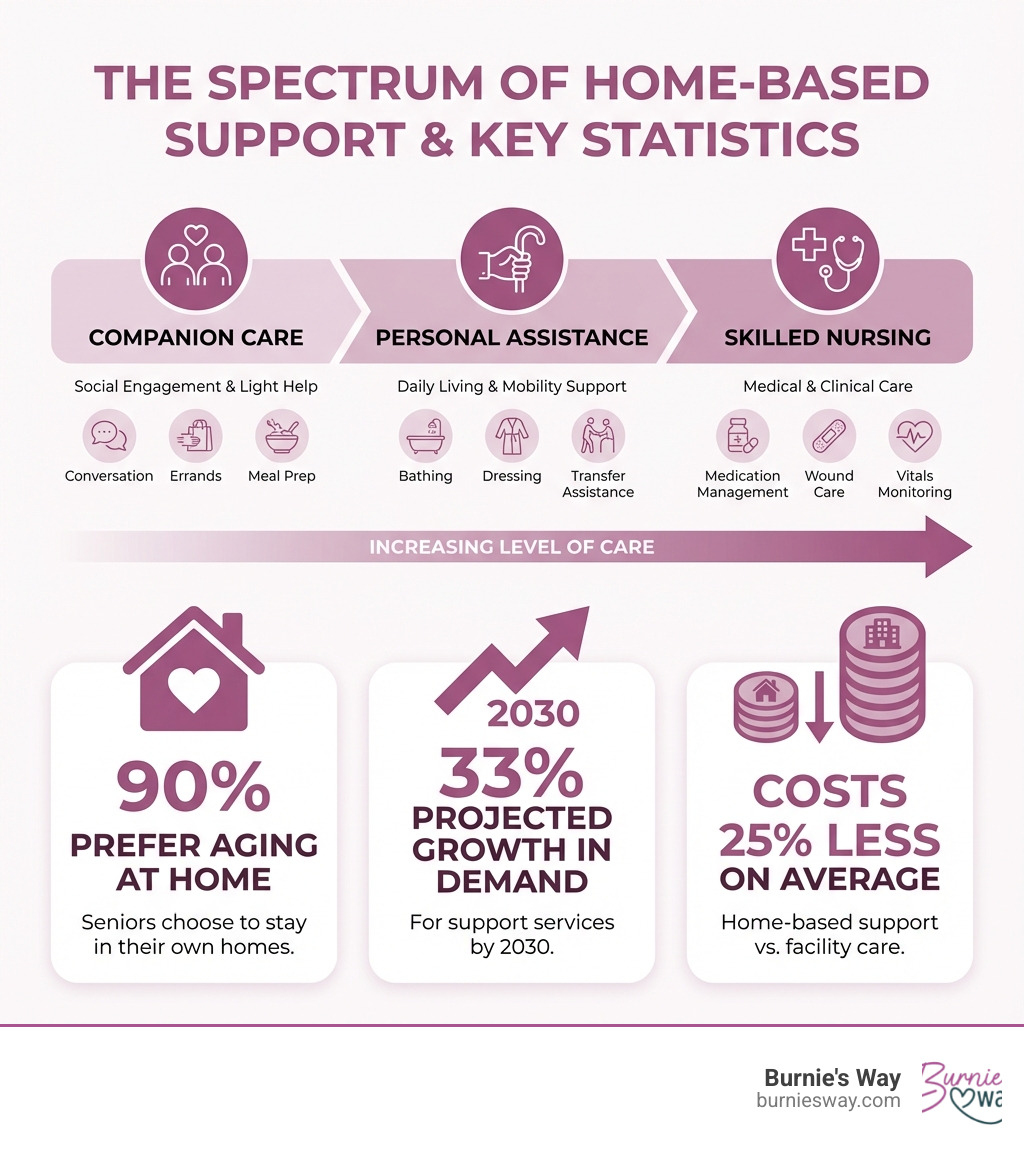
Infographic showing the spectrum of home-based support services from companion care and personal assistance through skilled nursing, including key statistics: 90% of seniors prefer aging at home, 33% projected growth in demand for support by 2030, and home-based support costs 25% less than facility care on average - reliable home care infographic

Understanding the Spectrum of Home-Based Support Services

The journey to finding reliable home care begins with understanding the diverse types of support available. It's not a one-size-fits-all solution; rather, it's a spectrum designed to meet varying needs, from daily tasks to specialized medical attention. At Burnie's Way, we focus on empowering individuals to live comfortably and confidently at home by coordinating personal support and lifestyle services. We help you steer these choices and find the perfect fit.

When we talk about home-based support, we often differentiate between two main categories of activities that seniors might need help with:

  • Activities of Daily Living (ADLs): These are fundamental self-care tasks crucial for independent living. They include bathing, dressing, eating, toileting, and transferring (moving from bed to chair, for example).
  • Instrumental Activities of Daily Living (IADLs): These are more complex activities that support independent living but aren't strictly personal care. Examples include meal preparation, managing finances, shopping, housekeeping, medication management (reminders, not administration), and using transportation.

Understanding these distinctions is key to determining the level and type of support that will truly make a difference for your loved one. Our approach at Burnie's Way is all about making daily life easier and more enjoyable. You can learn more about how we work and our commitment to personalized support on our How We Work page.

Personal Support and Companionship

This category aligns closely with the kind of assistance Burnie's Way helps coordinate, focusing on maintaining independence and quality of life. These services are vital for those who need a helping hand with daily routines but do not require medical intervention.

Our personalized support can include:

  • Assistance with Routines: Gentle encouragement and coordination for morning and evening routines, helping maintain a sense of normalcy and structure.
  • Encouragement for Independence: We believe in fostering self-reliance. Our support focuses on enabling individuals to do as much as they can for themselves, providing assistance only where needed.
  • Meal Coordination: From planning nutritious meals to coordinating grocery shopping and even arranging meal delivery services, we ensure your loved one enjoys healthy and delicious food without the stress of preparation.
  • Light Household Help: Keeping a tidy and comfortable living space is important for well-being. We can coordinate light housekeeping tasks to ensure the home remains a welcoming sanctuary.
  • Medication Reminders (Non-Clinical): We can help set up systems for medication reminders, ensuring that prescriptions are taken on time, without administering them. This is a crucial non-clinical support that promotes health and safety.
  • Social Connection: Loneliness can be a significant challenge for seniors. We facilitate companionship, engaging in conversations, hobbies, and activities that foster mental stimulation and emotional well-being.
  • Transportation Coordination for Errands: Whether it's a trip to the grocery store, a doctor's appointment, or a social outing, we arrange reliable transportation to keep your loved one connected to their community and personal commitments.

These services are designed to address the practical and emotional needs of aging adults, making sure they can continue to live fulfilling lives in the comfort of their own homes.

While Burnie's Way specializes in personal support and lifestyle coordination, we understand that some individuals may require medical or skilled health care services. It's important to differentiate these, as they are typically provided by licensed medical professionals through Medicare-certified agencies. We can help you understand these options and coordinate with other trusted providers if such services are needed.

If your loved one requires more intensive medical care, such as skilled nursing or therapy, seek providers that offer:

  • Skilled Nursing Care: This involves services like wound care, medication administration (injections, IVs), monitoring vital signs, and managing chronic conditions, all performed by a licensed nurse.
  • Physical, Occupational, and Speech Therapy: These therapies help restore function, improve mobility, and improve communication skills after an illness, injury, or surgery.
  • Chronic Condition Support: For conditions like diabetes, heart disease, or post-stroke recovery, skilled home health agencies provide specialized monitoring and education to manage health at home.

To qualify for Medicare-covered home health care services, patients must typically be under an established plan of care reviewed by a physician, require intermittent skilled nursing or therapy, be cared for by a Medicare-approved agency, and be considered homebound. Medicare and most Medicare Advantage Plans often cover 100% of these services when a skilled need exists following an acute episode, and income is not a factor for this coverage.

When considering options for skilled medical care, we recommend thorough research. An excellent starting point is the official Medicare tool that can help you find and compare Medicare-certified home health agencies: Medicare Care Compare.

Specialized Support Services

Beyond daily personal assistance and medical care, there are other specialized services that contribute significantly to the well-being of seniors and their families. While Burnie's Way helps coordinate access to these resources, they are typically provided by external organizations.

  • Respite and Family Support: Caring for an aging loved one can be rewarding but also demanding. Respite services offer short-term relief for primary caregivers, allowing them to rest and recharge. This can range from a few hours to several weeks, provided at home, in a facility, or at an adult day care center. For resources, you can explore the ARCH National Respite Locator.
  • Comfort-Focused Options: For individuals nearing the end of life, hospice care provides comfort, pain management, and emotional support, focusing on quality of life rather than curative treatment.
  • Dementia and Memory Support Resources: Specialized programs and resources exist to support individuals with dementia and their families, offering cognitive engagement activities, structured environments, and caregiver education. Adult day care centers, for instance, can provide social activities, exercise, meals, and basic health care services. You can find more information through the National Adult Day Services Association.

To determine the exact level of support needed, we encourage families to ask themselves a comprehensive set of questions:

  • Does our loved one need 24/7 assistance or just a few hours a day?
  • Do they require help with personal care like bathing and dressing, or primarily with household tasks and errands?
  • Is companionship a priority to combat loneliness?
  • Are there specific medical needs that require a licensed professional?
  • How often do they need transportation assistance?
  • Do they have memory challenges that require specialized attention or supervision?
  • Are there specific language or cultural preferences for any support staff?
  • What is the current family caregiver's capacity, and do they need respite?

Answering these questions will provide a clearer picture of your loved one's needs, guiding you toward the most appropriate solutions.

What Makes for Reliable Home Support? Key Pillars of Trust

A support coordinator and senior smiling and talking - reliable home care

When it comes to inviting someone into your home or your loved one's home, trust is paramount. What truly defines reliable home care isn't just the services offered, but the integrity, professionalism, and consistency of the people providing those services. At Burnie's Way, we understand this deeply, and while we don't provide direct caregiving, we emphasize these pillars when coordinating or recommending any in-home service.

The importance of vetting any in-home service cannot be overstated. Whether you're considering a home health agency or an independent provider (which often places more employer responsibilities on the family), diligence is key.

  • Background Checks: Reputable agencies and careful independent hires conduct thorough background checks, including criminal history and abuse registries, for all staff.
  • Insurance and Bonding: Agencies should be insured and bonded. This protects you and your loved one from liability in case of accidents or theft.
  • Communication Protocols: A reliable provider will have clear communication channels, ensuring you're informed about schedules, any changes in your loved one's condition, and how to reach them for concerns or emergencies.

Finding a Truly Reliable Support Provider

Finding a provider you can count on takes careful consideration. Here’s what we suggest looking for:

  • Provider History and Experience: How long has the agency or individual been offering services? A long-standing presence often indicates stability and experience. For example, some home care providers have been in business since 1999, demonstrating a strong track record.
  • Client Testimonials: Ask for references from current and past clients. Hearing directly from others about their experiences can offer invaluable insights into the quality and reliability of the service.
  • Staff-to-Client Ratio (where applicable): For agencies, understanding how they manage their staff and client assignments can give an idea of how much dedicated attention your loved one will receive.
  • Continuity of Support: One of the biggest concerns families often have is a revolving door of staff. A truly reliable provider strives to send the same coordinator or support person each time, fostering trust and a consistent routine. Ask about their procedures for when a designated individual is sick or on vacation.
  • Turnover Rates: High staff turnover can be a red flag. Inquire about an agency’s retention rates for their support professionals.
  • Checking References: Always check references, whether for an agency or an independent hire. Contacting the Better Business Bureau is also a good practice to check for any complaints in your area.
  • Emergency Procedures: What happens in an emergency? A reliable provider will have clear protocols for medical emergencies, unexpected staff absences, and other unforeseen circumstances.

The Importance of Qualified and Compassionate Staff

The people who interact with your loved one daily are the heart of any home support service. Their qualifications, training, and demeanor are crucial.

  • Qualifications for Support Staff: While medical qualifications are for healthcare providers, for personal support roles, look for individuals who are experienced or certified Home Care Aides (HCAs). These professionals should be able to pass background checks and meet health requirements.
  • Training Programs: Reputable agencies invest in continuous training for their staff. This can include CPR/First Aid certification, prevention of abuse/neglect, and positive behavioral support techniques.
  • Experience with Specific Needs: If your loved one has particular conditions, such as mobility challenges or mild cognitive decline, inquire about staff experience in those areas.
  • Personality Matching: A good personality match between your loved one and their support person can significantly improve the experience. Many services strive to match individuals based on temperament and shared interests.
  • Ongoing Supervision: Agencies should provide supervision for their staff, ensuring adherence to standards and offering a point of contact for feedback or concerns.

At Burnie's Way, we believe in a philosophy centered on compassion, respect, and fostering independence. We encourage you to learn more about Our Philosophy and how it guides our approach to coordinating support.

Creating and Managing a Personalized Support Plan

A truly reliable home care experience isn't static; it evolves with your loved one's needs. This requires a dynamic and personalized approach to support planning.

A family member discussing a plan with a coordinator - reliable home care

  • Initial Needs Assessment: The process should always begin with a thorough assessment of your loved one's situation. This involves understanding their physical abilities, cognitive state, social preferences, and daily routines. Ideally, this assessment is conducted in the home environment to get a holistic view.
  • Developing a Support Approach: Based on the assessment, a customized support approach is developed. This is not a rigid "care plan" but a flexible framework outlining the services to be provided, schedules, and specific preferences. For instance, if your loved one enjoys gardening, the plan might include coordinating assistance with outdoor activities.
  • Client and Family Involvement: Your loved one and your family should be central to this process. Your input is invaluable in tailoring support that respects personal dignity and promotes comfort. We believe in continuous support and partnerships for comprehensive daily life management.
  • Regular Check-ins: Needs can change over time. A reliable provider will schedule regular check-ins and reassessments to ensure the support remains appropriate and effective.
  • Flexibility to Adjust Support: The best support plans are adaptable. If there's a change in health, a new preference, or an evolving situation, the plan should be easily modifiable to reflect these shifts.

Our 50 years of experience have taught us that a personalized approach, continuously supported and managed in partnership with families, is the cornerstone of truly effective home support.

The Practical Steps to Finding and Funding Support

Navigating the landscape of home support options can feel like a daunting task. However, with a clear roadmap, finding reliable home care becomes much more manageable. We're here to help you understand the practical steps involved in both finding and funding the right support for your loved one.

You don't have to go it alone. There are many resources available to help you begin your search:

  • Doctor Referrals: Your loved one's physician or other healthcare providers often have a network of trusted home health agencies and support services they can recommend.
  • Hospital Discharge Planners: If your loved one is transitioning home from a hospital stay, the discharge planner is an excellent resource for connecting with local services.
  • Online Directories: Websites like Medicare's Care Compare tool (for certified health agencies) or broader directories can help you find services in your area.
  • Local Area Agency on Aging (AAA): These agencies are invaluable community resources. They can provide information on local services, support programs, and even financial assistance options. The Eldercare Locator is a national service that can connect you to your local AAA: Eldercare Locator.

How to Vet and Choose a Provider

Once you have a list of potential providers, the real work of vetting begins. This involves asking insightful questions and thoroughly checking their credentials.

Here's a list of essential questions to ask any agency or individual you are considering:

  • Is the agency Medicare certified (if seeking skilled health care)?
  • Does the agency offer the specific services your loved one needs (e.g., personal support, companionship, meal coordination, transportation)?
  • Does the agency conduct thorough background checks on all staff?
  • How does the agency assess needs and develop a support approach?
  • What is the training and experience of their support staff?
  • How does the agency ensure continuity of support, and what are their procedures for substitutes?
  • What are their communication protocols with families?
  • What are their emergency procedures?
  • Can they provide references from other clients or healthcare professionals?
  • Are they insured and bonded?

When hiring an independent caregiver, you'll take on more employer responsibilities. We highly recommend reviewing guides on hiring in-home caregivers, such as this one: Hiring an In Home Caregiver Guide. Understanding service agreements and contracts is also crucial to avoid misunderstandings down the line. We also cover many common questions in our FAQ section.

Understanding the Costs and Payment Options

The cost of home-based support can vary significantly depending on the type and intensity of services needed. It's crucial to understand these financial aspects upfront.

  • Hourly Rates vs. Live-in Costs: Most personal support services are charged hourly, with rates varying by region and the specific tasks involved. Live-in support, where a person resides in the home, typically has a different pricing structure.
  • Medicare Coverage Limitations (Educational Context): Medicare generally provides limited coverage for short-term, skilled health care services from Medicare-certified agencies, but typically does not cover long-term personal support or companionship.
  • Medicaid Rules (Educational Context): Medicaid programs, which vary by state, may cover some in-home care services for eligible individuals. It's essential to check your state's specific requirements. You can learn more at Medicaid.gov.
  • Private Health Insurance: Most private health insurance plans do not cover the majority of non-medical home support services. It's important to review your specific policy.
  • Long-Term Care Insurance: This type of insurance is designed to cover services like in-home personal support, adult day care, and assisted living. If your loved one has a long-term care policy, review it carefully to understand what is covered.
  • Private Pay: Many families pay for home support services out-of-pocket, either entirely or for services not covered by insurance.

It's always wise to get a clear, written breakdown of all costs, including any potential additional fees for holidays or weekends, before signing an agreement. For comprehensive information on long-term care options and associated costs, we recommend visiting LongTermCare.gov.

Coordinating a Full Circle of Support for Independent Living

Reliable home care extends beyond just addressing immediate needs; it's about fostering a lifestyle of independence, engagement, and well-being. At Burnie's Way, we excel at coordinating this "full circle of support," acting as a personal concierge to manage the nuances of daily life and connect your loved one to a vibrant, confident existence at home.

Our role as a support coordinator is to integrate various services and resources seamlessly. We focus on:

  • Holistic Well-being: This encompasses physical comfort, mental stimulation, and emotional contentment. We believe in supporting the whole person, not just their tasks.
  • Social Engagement: Combating loneliness is a priority. We can coordinate social outings, connect with community groups, or facilitate virtual connections to keep spirits high.
  • Lifestyle Management: From managing appointments to organizing personal interests and hobbies, we help ensure that life continues to be rich and fulfilling, just the way your loved one wants it.

Integrating Essential Lifestyle Services

As part of our comprehensive daily life management, we help connect and coordinate a range of essential services:

  • Meal Delivery Services: Ensuring nutritious and appealing meals is crucial. We can help arrange meal delivery services, including those that cater to specific dietary needs or offer low-cost options. Meals on Wheels America is a fantastic resource for finding local programs.
  • Transportation Coordination: Maintaining mobility and access to the community is key for independence. We coordinate reliable home care transportation for medical appointments, social events, or errands, ensuring your loved one gets where they need to go safely.
  • Home Safety Modifications: We can help identify and coordinate home modifications that improve safety and accessibility, such as grab bars, ramps, or improved lighting.
  • Emergency Alert Systems: For peace of mind, we can help set up emergency medical alert systems that provide quick access to help in case of a fall or other emergency.
  • Financial Management Help: Managing bills, insurance forms, and other financial tasks can become challenging. We can help coordinate trusted assistance for money management, ensuring financial affairs are handled responsibly. The Consumer Financial Protection Bureau offers resources on this topic.

Finding Professional Guidance and Support

Beyond direct services, there are professionals and resources designed to guide families through the complexities of elder support.

  • Geriatric Care Managers (Educational Context): These professionals, often licensed nurses or social workers, specialize in geriatrics. They can assess needs, create comprehensive care plans, and coordinate services. They are a valuable resource for navigating complex situations. You can find more information through the Aging Life Care Association.
  • Family Caregiver Support: Being a family caregiver is a demanding role. Support groups, counseling, and educational resources can provide much-needed assistance. The Caregiver’s Handbook offers a wealth of information for those getting started.
  • Respite Services Locator (Educational Context): As mentioned earlier, respite care is vital for caregiver well-being. Locators like ARCH National Respite Locator can help you find services in your area.

If you're feeling overwhelmed or unsure where to start, we're always here to help. Contact us for a consultation to discuss how we can partner with you.

Conclusion: Building a Foundation for Confident and Independent Aging

Finding reliable home care is more than just a search for services; it's about building a foundation for confident and independent aging. We've explored the diverse spectrum of available support, from personal assistance and companionship to the educational overview of skilled medical services and specialized resources. We've highlighted the crucial pillars of trust, emphasizing the importance of vetting providers, ensuring qualified staff, and creating personalized support plans that adapt over time.

The goal is to empower your loved one to live safely and happily in the comfort of their own home, surrounded by familiarity and cherished memories. This guide aims to equip you with the knowledge and practical steps needed to steer this journey with greater ease and peace of mind.

At Burnie's Way, we are proud to be your partner in coordination. With a personalized approach backed by 50 years of experience, we provide continuous support and partnerships for comprehensive daily life management. We are not a caregiving or healthcare provider, but a personal concierge dedicated to helping aging adults live the way they want, with support in key areas of daily life. We focus on enhancing independence, facilitating social connections, and coordinating trusted services that make life easier and more fulfilling.

We believe that every individual deserves to age with dignity, comfort, and the freedom to choose how they live. By understanding your options and choosing the right support, you can ensure a higher quality of life for your loved one.

Ready to explore how we can help you coordinate a life of continued independence and joy? Explore our personal concierge services today.
Unlocking Support: Essential Private Elder Care Services for Seniors

10 min read

Unlocking Support: Essential Private Elder Care Services for Seniors

Why Understanding Your Options Matters Now Private elder care services are non-medical and specialized support options that help seniors live...

Read More
The Complete Guide to Elderly In-Home Care Options

9 min read

The Complete Guide to Elderly In-Home Care Options

Why Understanding In-Home Support Matters for Your Family Elderly in-home care includes a range of services that help older adults maintain...

Read More
Beyond the Walls: Finding Your Perfect Home Care Solution

12 min read

Beyond the Walls: Finding Your Perfect Home Care Solution

The Comfort of Home and the Path to Independence Home care solutions are the services and support that help aging adults live safely, comfortably,...

Read More