

When You Search for an Alzheimer's Center Near Me, Here's Where to Start
Finding an Alzheimer's center near me is one of the most important — and most overwhelming — steps a family can take. More than 6 million Americans are living with Alzheimer's disease right now. If your parent is one of them, you already know how fast things can change.
The right local center can mean the difference between feeling lost and feeling supported.
Here's a quick look at your main options:
| Type of Center | Best For |
|---|---|
| Memory clinic / neurology office | Diagnosis, treatment plans, infusion therapy |
| Adult day program | Daytime supervision, social engagement, caregiver respite |
| Memory care assisted living | 24/7 support in a residential setting |
| Skilled nursing facility | Advanced-stage or medically complex needs |
| Hospice program | End-of-life comfort and family support |
You don't have to figure this out alone — and you don't have to have all the answers today. This guide walks you through exactly how to find, evaluate, and choose the right local support for your loved one, at every stage.
How to Find the Right alzheimer's center near me
When we begin the search for an alzheimer's center near me, it helps to think of it as building a "care team" rather than just looking for a building. In May 2026, the landscape of memory support is more diverse than ever, offering everything from high-tech diagnostic clinics to cozy, community-based day programs.
The first step is often the most local one. Your primary care physician or a neurologist is usually the best starting point for a referral. However, many families find great success by reaching out to the Alzheimer's Association, which maintains deep roots in local communities and can point you toward reputable providers.
Another vital resource is the Eldercare Locator, a public service that connects you to services for older adults and their families. If you are specifically looking for cutting-edge medical care or clinical trials, you can find an Alzheimer's Disease Research Center (ADRC). These federally funded centers are at the forefront of translating research into actual patient care.
Where to search for an alzheimer's center near me
If you are just starting your search, don't feel like you have to visit twenty places in one week. Start with these reliable avenues:
- Area Agency on Aging (AAA): These are local government-affiliated offices that provide information on state-specific resources, especially in Virginia.
- Hospital Systems: Many large health systems have dedicated memory clinics that offer a "one-stop shop" for diagnosis and initial treatment.
- State Resources: In Virginia, the Department for Aging and Rehabilitative Services (DARS) offers specific dementia services and guidance for residents.
- Support Groups: Sometimes the best "reviews" come from other families who have walked this path. Local support groups are goldmines for honest feedback about facility quality.
What types of local Alzheimer’s services families may find
Not every center does the same thing. Depending on where you are in the journey, you might need:
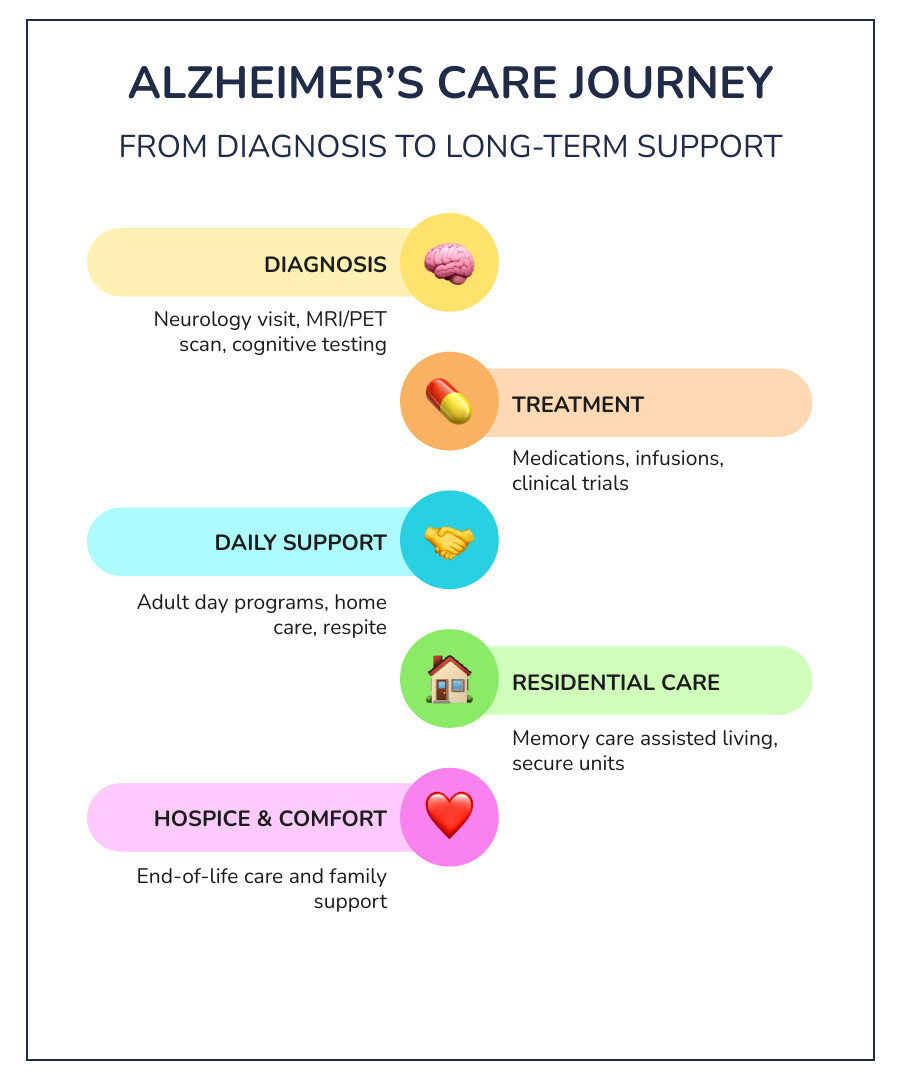
- Memory Assessments: Specialized clinics that use MRI, PET scans, and cognitive testing to provide an accurate diagnosis.
- Adult Day Centers: Perfect for families who want to keep their loved one at home but need safe, engaging supervision during the workday.
- Respite Care: Short-term stays at a residential facility to give primary caregivers a much-needed break.
- Home Care Education: Resources that teach you how to manage daily life safely. For those looking for specialized knowledge, you can find more info about Alzheimer's home care or explore memory care for elderly to understand the full spectrum of support available.
What Services an alzheimer's center near me should offer by stage
Alzheimer's is not a "one size fits all" condition. The number of people with the disease doubles for every 5-year interval beyond age 65, and the care required changes significantly as the years pass. A high-quality center should offer "person-centered care"—an approach that sees the human being behind the diagnosis and adapts to their changing needs.

Early-stage support: diagnosis, treatment, and cognitive engagement
In the early stages, the goal is often "disease modification" and maintaining independence. Local centers specializing in early-stage care often focus on:
- Advanced Diagnostics: Using the latest imaging tools to distinguish between Alzheimer’s and other forms of dementia, like Lewy body or vascular dementia.
- Infusion Therapies: Many private neurology centers are now certified to administer the latest FDA-approved biologic infusions, such as Leqembi or Kisunla, which aim to slow cognitive decline.
- Cognitive Stimulation: Programs like "Minds in Motion" or "Art Express" help keep the brain engaged. You can find more info about cognitive stimulation activities to see how these can be integrated into daily life.
- Clinical Trials: Research centers often look for early-stage volunteers to test new interventions. You can learn more about Alzheimer’s specialists and treatment options through specialized medical clinics.
Middle- and late-stage support: safety, supervision, and comfort
As the disease progresses, the focus shifts toward safety and preserving dignity. Middle-stage care often involves managing "wandering"—which affects 35% to 60% of people with dementia—and helping with daily tasks like bathing and dressing.
In the later stages, specialized nursing becomes essential. This includes:
- Secure Environments: Living spaces designed to be soothing and safe, preventing disorientation.
- Geriatric Psychiatry: Helping manage mood swings, anxiety, or aggression that can sometimes accompany late-stage dementia.
- Hospice Coordination: Ensuring that end-of-life care is focused on comfort and family support.
For families navigating these difficult transitions, more info about dementia home care and advanced dementia care at home can provide a roadmap for maintaining a high quality of life in a familiar setting.
How to compare local Alzheimer’s centers and choose with confidence
Choosing a center is a big decision, and it’s okay to be picky! We recommend visiting at least three different locations to get a feel for the "vibe" and the level of care.
| Feature | Memory Clinic | Adult Day Center | Memory Care (AL) | Skilled Nursing |
|---|---|---|---|---|
| Primary Goal | Diagnosis & Meds | Social/Respite | Residential Life | Medical/24-7 Care |
| Medical Staff | Neurologists/MDs | Nurses/Aides | LPNs/Med-Techs | RNs/Physicians |
| Environment | Clinical/Office | Social/Activity Hall | Apartment-style | Hospital-like |
What to ask on a tour or initial consultation
When you walk into an alzheimer's center near me, bring a notebook. Don't be afraid to ask the "tough" questions:
- What is the staff-to-resident ratio? (Especially during the night shift).
- How do you handle "sundowning" or behavioral challenges? (Look for answers that emphasize redirection over medication).
- Can we see a recent state survey or inspection report?
- What is the process for care transitions? (If my loved one gets worse, do they have to move?)
- How do you communicate with families? (Is there a portal or a weekly call?)
Signs of a high-quality or state-recognized center
In Virginia, look for centers that have strong ties to the Virginia Alzheimer's Disease Center or those that have received "zero deficiency" ratings in state and federal surveys. A high-quality center often feels more like a home and less like a facility. You’ll notice:
- Soothing Design: Circular hallways (to prevent getting stuck in corners), soft lighting, and clear signage.
- Multidisciplinary Teams: They have neurologists, social workers, and therapists all working together.
- Dementia-Specific Training: Every staff member, from the receptionist to the chef, should understand how to communicate with someone who has memory loss.
Costs, insurance, and payment help for Alzheimer’s support near you
Let’s talk about the elephant in the room: cost. Alzheimer’s care can be expensive, but there are more resources available than many families realize.

What families usually pay for different Alzheimer’s care settings
Costs vary wildly based on the level of care and your location in Virginia. Generally:
- Diagnostic Visits: Often covered by Medicare Part B, though specialized imaging might have out-of-pocket costs.
- Adult Day Services: Usually charged by the day or half-day, making it one of the most affordable options for supervision.
- Memory Care Assisted Living: Often a flat monthly fee that covers room, board, and care.
- Infusion Therapy: These are high-cost biologic drugs; coverage depends heavily on Medicare’s latest rulings and your supplemental insurance.
Financial aid and public programs that can reduce out-of-pocket costs
You don't have to foot the bill entirely on your own. Here are some programs to explore:
- Medicare: Covers "medically necessary" care like doctor visits, some home health, and hospice, but generally not long-term residential room and board.
- Medicaid: For those who meet income requirements, Medicaid can pay for nursing home care and sometimes assisted living through "waiver" programs.
- PACE (Program of All-Inclusive Care for the Elderly): This is a fantastic program that coordinates all your medical and social services to help you stay in the community.
- Veterans Benefits: If your loved one served, they may be eligible for "Aid and Attendance" benefits to help pay for care.
- Compassionate Allowances: The Social Security Administration can sometimes expedite benefit claims for people with early-onset Alzheimer's.
For more practical tips on managing these expenses, more info about dementia care at home can help you weigh the financial pros and cons of different settings.
Local caregiver support, respite, and coordinated medical care
Taking care of yourself is just as important as taking care of your loved one. Caregiver burnout is real, and it’s one of the leading reasons families eventually transition to residential care.
Support services families should ask about right away
When you contact an alzheimer's center near me, ask what they do for you. Look for:
- Memory Cafés: Social gatherings where both the patient and the caregiver can relax in a judgment-free zone.
- Caregiver Skills Training: Learning how to handle difficult behaviors can reduce your stress significantly.
- Respite Scheduling: Knowing you have a guaranteed break every Tuesday can be a lifesaver.
We have gathered 10 tips for dementia caregivers and memory care support resources to help you navigate the emotional toll of this journey.
How Alzheimer’s centers coordinate with doctors and specialists
The best centers don't operate in a vacuum. They maintain "referral loops" with your primary care doctor and specialists. For example, if your loved one is at a state-designated center, the staff will often coordinate directly with neurologists to monitor the effectiveness of medications or infusions.
This level of coordinated care ensures that everyone is on the same page, from the physical therapist helping with mobility to the geriatrician managing heart health. It prevents medication errors and ensures that if a hospitalization is needed, the transition back home or to the center is seamless.
Conclusion
Finding the right alzheimer's center near me is about finding a partner for the long haul. Whether you need a one-time diagnostic assessment, a weekly day program, or a permanent residential home, the resources in Virginia are designed to support your family's dignity and peace of mind.
At Burnie’s Way, we believe that independence is a team effort. While we aren't a medical facility or a caregiving agency, we act as a personal concierge and companion for aging adults. We help coordinate the "stuff" of daily life—from errands and social outings to finding the right local specialists—so that you can focus on being a daughter, a son, or a spouse again.
If you are feeling overwhelmed by the choices, you only need to take the next right step. Whether that’s calling a local memory clinic or exploring more info about elder care specialists, help is closer than you think.
For more information on how we can help your family stay connected and confident at home, visit our services page. We’ve been helping families find their way for 50 years, and we’d be honored to help you find yours.