

Why Keeping Your Mind Active Matters More Than Ever
Cognitive stimulation activities are exercises and tasks that challenge your brain — like puzzles, reading, learning new skills, cooking, or socializing. They help maintain memory, thinking skills, and independence as we age.
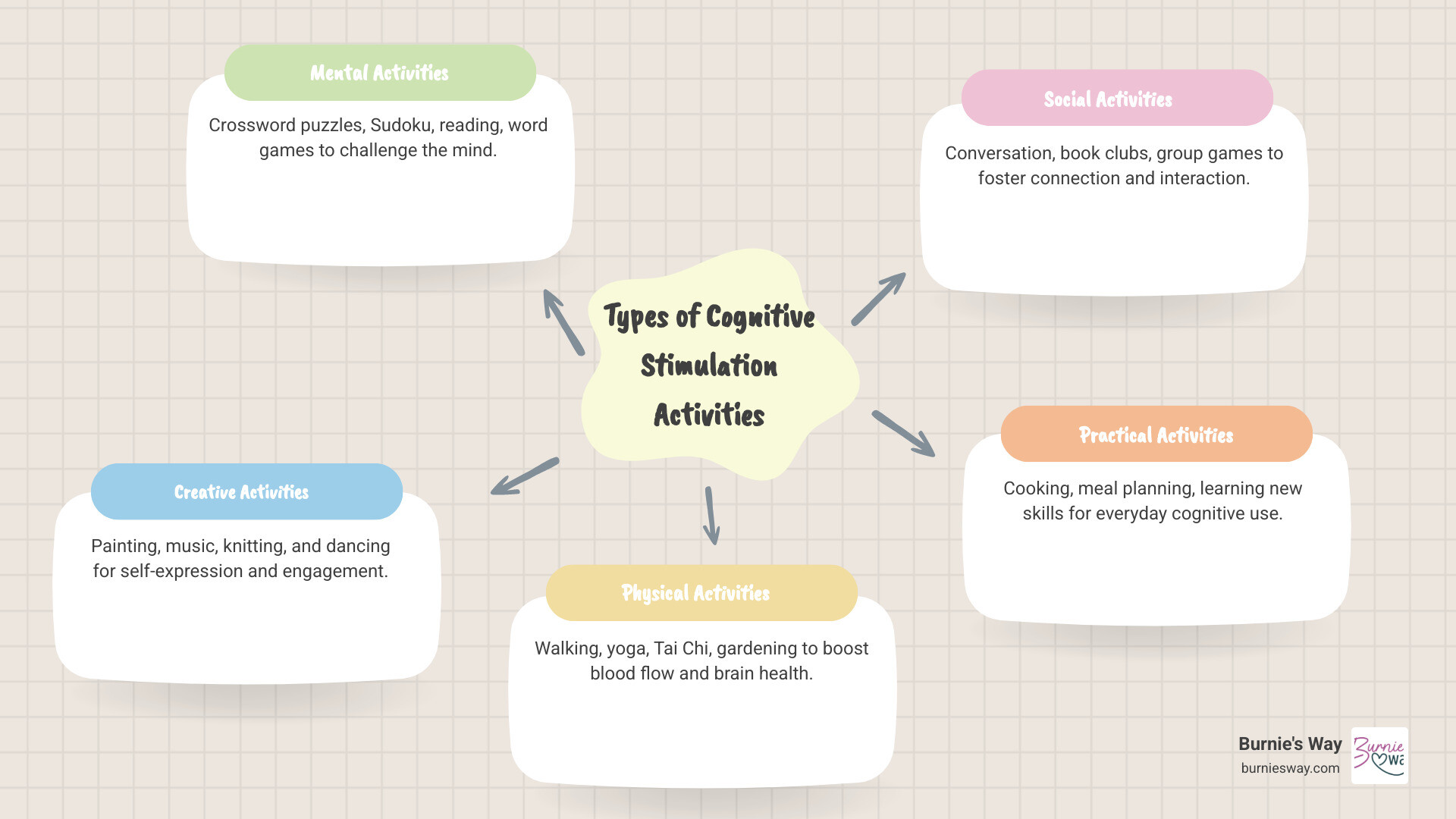
Quick Overview: Types of Cognitive Stimulation Activities
- Mental Activities: Crossword puzzles, Sudoku, reading, word games
- Creative Activities: Painting, music, knitting, dancing
- Physical Activities: Walking, yoga, Tai Chi, gardening
- Social Activities: Conversation, book clubs, group games
- Practical Activities: Cooking, meal planning, learning new skills
If you're caring for an aging parent, you've probably noticed small changes. Maybe they repeat stories more often. Perhaps they struggle to remember where they put their keys. Or they seem less interested in hobbies they once loved.
These moments can feel overwhelming — especially when you're juggling your own responsibilities and trying to figure out how to help from afar.
Here's the good news: keeping the brain active can make a real difference. Research shows that people who regularly engage in mentally stimulating activities experience cognitive decline about 15% slower than those who don't. And activities like crossword puzzles can delay memory decline by roughly 2.5 years.
This isn't about turning your parent into a student again or forcing them through endless brain training apps. It's about finding meaningful, enjoyable ways to keep their mind engaged — whether that's through conversation, cooking together, listening to music, or taking a walk in the park.
Cognitive stimulation isn't just about preventing decline. It's about improving quality of life, maintaining independence, and helping your loved one feel like themselves. When someone stays mentally active, they often feel more confident, connected, and capable in their daily life.
And it's not just crossword puzzles. Cognitive stimulation includes creative activities like painting or playing music, physical activities like dancing or gardening, and social activities like chatting with friends or joining a club. The variety matters — because a healthy brain needs a variety of challenges.
Explore more about cognitive stimulation activities:
- bathing assistance seniors
- help aging parents
Everyday Activities to Engage Your Mind
Keeping our minds sharp doesn't have to feel like homework. In fact, some of the most effective cognitive stimulation activities are those we can weave seamlessly into our daily routines. These activities tap into our logic, language, and strategy skills, often without us even realizing we're giving our brains a workout!
At-Home Cognitive Stimulation Activities for Daily Engagement
One of the simplest yet most powerful cognitive stimulation activities we can accept is reading. Whether it's a gripping novel, an intriguing non-fiction book, or even a daily newspaper, engaging with text stimulates cognitive skills, helps preserve memory, and can actively reduce the decline in brain power. Studies demonstrate that individuals who regularly immerse themselves in mentally stimulating activities like reading experience cognitive decline at an estimated rate of 15% slower than those who don't.
If reading aloud isn't comfortable, reading abilities can vary greatly during different stages of cognitive changes. It's helpful to adapt the material to suit the individual's comfort level and interests. To boost memory and further slow cognitive decline, we can try retelling the main points of what we've read to someone else. This act of recall and verbalization adds an extra layer of brain engagement. Consider using a habit tracker to schedule reading times and celebrate progress!
Word games are another fantastic way to keep the brain buzzing. Crossword puzzles, for instance, are more than just a pastime; research indicates that participation in crossword puzzles improves cognitive reserve and can slow down accelerated memory decline by approximately 2.5 years. A 2022 study even found that computerized crossword puzzles can significantly improve cognitive function in individuals with mild cognitive impairment. Playing these games helps us focus, process information quickly, and improve language and communication skills.
Sudoku and jigsaw puzzles offer similar benefits. These numerical and visual challenges require sustained attention, problem-solving, and logical reasoning. A 2018 study highlighted that completing jigsaw puzzles activates multiple cognitive functions, including perception, mental rotation, working memory, and reasoning. Furthermore, a 2019 study showed that older adults who frequently engaged in number puzzles tended to exhibit better cognitive function. So, the next time you're looking for a brain boost, consider picking up a puzzle!
Using Board and Card Games for Brain Health
Who doesn't love a good game night? Beyond the fun and laughter, board and card games are excellent cognitive stimulation activities. These engaging pastimes offer multiple pathways to improve cognitive skills, fostering neural communication in brain areas linked to logical thinking, attentional control, working memory, and problem-solving. They also naturally encourage communication and social interaction, as players strategize, plan moves, assess options, remember rules, and process information.
Games like chess and checkers demand strategic foresight, challenging us to think several moves ahead. Card games such as Rummy or Bridge require memory, calculation, and adapting to changing scenarios. Even simpler games like Bingo can help with memory, thinking, orientation, and language skills, while also promoting social engagement when played in a group. Adaptations, such as using large-print cards or cards with fewer numbers, can make these games accessible and enjoyable for everyone.
A 2023 article even established a clear link between playing games and a slower rate of cognitive decline in older adults. What's more, studies suggest that individuals who regularly play board games may have a 15% lower risk of developing cognitive decline. So, gathering around a table for a friendly game isn't just about winning; it's about giving our brains a delightful workout and fostering connection.
We are committed to helping our clients find engaging ways to stay mentally active, and sometimes, that means exploring familiar and fun activities like board games. To learn more about how we work with families to coordinate supportive activities, you can explore More info about How We Work.
Creative and Sensory Cognitive Stimulation Activities
Engaging our senses and releaseing our creativity provides a powerful, often non-verbal, avenue for brain stimulation. These cognitive stimulation activities allow for personal expression, connect us with cherished memories, and can even help us process emotions, all while giving our minds a fantastic workout.
The Power of Art, Music, and Dance
Our brains truly "love" arts and crafts! Based on scientific research, art therapy has been shown to help prevent rapid cognitive decline in older adults. Creative pursuits like painting, drawing, knitting, and photography are powerful ways to stimulate the mind and improve cognitive skills. They also provide a wonderful outlet for self-expression, allowing personalities to shine through even when verbal communication might be challenging. These activities can be adapted to various skill levels, focusing on the process and enjoyment rather than a perfect outcome.
Music is another incredible tool for cognitive stimulation. Whether listening to favorite tunes, singing along, or even trying to play an instrument, music engages multiple parts of the brain. Studies indicate that listening to music we enjoy connects different brain regions, potentially leading to improvements in cognitive function. For those who enjoy a more hands-on approach, playing a musical instrument exercises parts of the brain responsible for coordination and can even lead to a decreased risk of cognitive decline among older adults. Even just tapping along to a rhythm with simple instruments like bongo drums or maracas can improve memory, attention, and even math skills.
And then there's dance! What better way to combine physical activity, social interaction, and mental engagement? Dancing isn't just great exercise; a 2022 meta-analysis found that it can benefit older adults with mild cognitive impairment by improving global cognition, cognitive flexibility, memory, visuospatial function, and balance. It's a joyful way to keep the body moving and the mind active.
Practical Skills as Brain Boosters
Everyday practical skills, often taken for granted, are actually fantastic cognitive stimulation activities. Think about cooking, baking, or gardening – these aren't just chores; they're rich opportunities for brain engagement.
Cooking, for example, is one of those activities that can spark vivid memories and potentially help ward off cognitive decline. Research conducted during brain-activating rehabilitation programs for older adults demonstrated that cooking not only helps maintain executive function but also decreases symptoms of cognitive decline. The process of following a recipe, measuring ingredients, and sequencing tasks stimulates attention, decision-making, and information processing. Whether it's decorating cookies or tackling a more complex family recipe, the sensory experience and problem-solving involved are incredibly beneficial.
Similarly, gardening involves planning, problem-solving, and physical activity, all of which contribute to cognitive health. From deciding what to plant, to remembering watering schedules, to observing the growth of plants, gardening provides continuous mental stimulation. These practical activities offer a sense of purpose and accomplishment, reinforcing independence and engagement in daily life.
The Mind-Body Connection: Physical and Social Engagement
We often think of cognitive stimulation as purely mental, but a healthy brain thrives when supported by a healthy body and strong social connections. These next cognitive stimulation activities combine physical movement and social interaction for a truly holistic approach to well-being.
How Physical Activity Supports Brain Health
It turns out that what's good for the body is often great for the brain! Regular physical activity is a cornerstone of cognitive health. Simple activities like walking, gentle yoga, and Tai Chi are incredibly beneficial. Exercise improves blood flow to the brain, ensuring it gets the oxygen and nutrients it needs to function optimally. It also triggers the release of a crucial chemical called Brain-Derived Neurotrophic Factor (BDNF), which stimulates learning and memory.
Studies show that regular exercise can help protect aging brains from cognitive decline. A 2023 review and meta-analysis confirmed that exercise can improve cognitive function in older adults, with moderate-intensity aerobic exercise and resistance training being particularly effective. The Centers for Disease Control and Prevention (CDC) emphasizes that regular physical activity can prevent or delay the onset of conditions like dementia.
Tai Chi, with its gentle movements, rhythmic breathing, and meditative aspects, is a fantastic example of a mind-body exercise. A 2019 study found that practitioners of Tai Chi showed improved connectivity between different regions of the brain, leading to improved cognition and a decreased rate of memory loss. Even if it's just a daily stroll around the neighborhood, encouraging physical activity is one of the most impactful cognitive stimulation activities we can accept.
The Importance of Lifelong Learning and Socializing
Our brains are designed to learn and connect, and nurturing these aspects throughout life is paramount for cognitive health. Lifelong learning, whether formal or informal, provides continuous cognitive stimulation. This could involve learning a new language, which a study showed strengthens connections between different brain areas and delays cognitive decline. A 2019 review further noted that bilingualism increases and strengthens connectivity between different brain areas, potentially delaying the onset of Alzheimer's disease and other forms of dementia.
Taking a class, picking up a new hobby like quilting or photography, or even just exploring a new topic online are all excellent ways to keep the mind engaged. A 2014 study found that older adults who learned a new, cognitively demanding skill showed improved memory function. Moreover, a 2023 article suggests that engaging in hobbies promotes healthy aging and improves mental well-being. The joy of findy and the challenge of mastering something new are powerful brain boosters.
Equally important is socializing. We are social creatures, and meaningful connections are vital for cognitive health. Joining a book club, having regular phone calls with friends, or simply engaging in stimulating conversations all contribute to preserving cognitive function. A 2019 study revealed that individuals with more frequent social contact were less likely to experience cognitive decline and dementia. Social interaction provides emotional support, reduces feelings of isolation, and keeps our communication and reasoning skills sharp. At Burnie's Way, we understand the importance of fostering these connections and helping our clients integrate engaging social activities into their lives.
Frequently Asked Questions about Cognitive Stimulation
We often get questions about the best ways to keep the mind active and healthy. Here are some of the most common inquiries regarding cognitive stimulation activities:
What are the best cognitive stimulation activities for seniors?
There isn't a single "best" activity, as variety is truly the spice of life – and brain health! The most effective approach involves a mix of activities that are enjoyable, challenging, and personalized to individual interests and abilities. The goal is to keep the brain engaged across different domains.
Think about combining:
- Mental challenges: Puzzles, reading, learning something new.
- Physical movement: Walking, gentle exercise, dancing.
- Social interaction: Conversations, group games, community events.
- Creative expression: Art, music, writing.
- Practical tasks: Cooking, gardening, daily chores with a mindful approach.
Multiple studies show that individuals who participate in Cognitive Stimulation Therapy (CST) demonstrate better performance across all cognitive areas, including memory, thinking, reasoning, attention, and problem-solving, compared to those who don't. This reinforces the idea that a broad range of activities is key. The best activities are those that bring joy and purpose, making it easier to stick with them.
How often should you do brain exercises?
Consistency trumps intensity when it comes to brain exercises. Instead of rare, long, and exhausting sessions, aim for regular, shorter bursts of engagement. Daily engagement is ideal. Integrating cognitive stimulation activities into a routine helps make them a sustainable part of life.
For instance, you could:
- Spend 15-30 minutes each morning reading or doing a crossword.
- Take a short walk after lunch.
- Dedicate an hour in the afternoon to a hobby or social call.
- Engage in a practical task like cooking dinner mindfully.
The idea is to keep the brain continuously stimulated throughout the day, much like consistent physical activity benefits the body more than sporadic, intense workouts.
Do brain training apps really work?
Brain training apps have certainly captured a lot of attention, with many claiming to improve attention, memory, and mental agility with just a few minutes a day. The research, however, presents a mixed picture.
Some studies do indicate that brain training games, such as those offered by apps like Lift, Lumosity, Peak, Fit Brains Trainer, and NeuroNation, may help improve cognitive performance. A 2021 study, for example, suggested that these apps can boost cognitive performance in older adults.
However, the Global Council on Brain Health (GCBH) and other experts caution that while these games can be fun, the evidence regarding their benefits for improving real-world cognitive abilities or daily functioning is often weak or non-existent. There is still insufficient evidence to suggest that improvements in game performance translate effectively to general cognitive skills or everyday tasks. As one study notes, there's "no evidence that training one skill can help with other skills."
So, while brain training apps can be a fun supplementary tool, they should not replace the rich, varied, and real-world cognitive stimulation activities that involve physical exercise, social interaction, and learning new skills. Think of them as a warm-up, not the entire workout.
Building a Brain-Healthy Lifestyle
Building a brain-healthy lifestyle isn't about rigid adherence to a prescribed list of tasks; it's about cultivating a rich and varied existence. It’s about finding cognitive stimulation activities that genuinely bring joy, purpose, and a sense of connection. The brain thrives on novelty, challenge, and engagement with the world around us.
At Burnie's Way, we understand that supporting independence means more than just managing daily tasks. It means helping our clients live the way they want, with a life full of engaging activities and social connections that nourish their minds and spirits. We believe in empowering older adults to pursue their passions, explore new interests, and maintain vibrant social lives, all contributing to their overall well-being and cognitive health.
It's not just about ticking off a list; it's about fostering a lifestyle where every day offers opportunities for learning, laughter, and meaningful interaction. We are here to coordinate the support that makes this possible, giving families peace of mind that their loved ones are living confidently and staying connected.
To find how our personalized approach can help you or your loved one build a life rich in engaging activities and support, we invite you to explore Learn more about our personal support services.