

Why Understanding Memory Care for Elderly Matters Now
Memory care for elderly individuals provides specialized, secure environments for people living with Alzheimer's disease and other forms of dementia. As dementia progresses, providing safe, appropriate support at home often becomes overwhelming for families.
Quick Answer: What You Need to Know
- What it is: A specialized type of long-term care with 24/7 supervision, secure layouts, and dementia-trained staff
- Who it's for: Individuals with Alzheimer's or dementia who need constant supervision and specialized support
- Average cost: $6,200 per month nationally (varies by location and services)
- Key difference: More secure and specialized than assisted living; staff trained specifically in dementia care
- When to consider: When safety concerns, wandering, or caregiver burnout make home care difficult
Living with someone who has Alzheimer's or another form of dementia becomes more difficult as the condition progresses. For adult children watching a parent struggle, the decision to seek specialized support can feel paralyzing.
This guide explains what memory care offers, how to know when it's needed, and how to evaluate your options. You'll find practical guidance for exploring care communities or coordinating support to help your loved one remain independent.
Important note: This guide focuses on memory care communities, but staying at home longer is often possible with the right support. Personal assistance and lifestyle coordination can help individuals with early-stage cognitive decline maintain independence in familiar surroundings.
Memory care for elderly terminology:
- emergency aged care respite
- emergency elderly care help
- private elder care services
Understanding the Essentials of Memory Care for Elderly
This section defines memory care, differentiating it from other senior living options, and details the unique environment and supportive services available.
What is Memory Care and How Does It Differ?
Memory care for elderly individuals is a specialized form of long-term care for people with Alzheimer's disease and other forms of dementia. Unlike other senior living options, memory care provides a structured, secure environment custom to the needs of those with cognitive decline.
The goal is to offer a safe setting that promotes dignity, engagement, and consistent support. This includes managing behaviors, ensuring safety, and providing a soothing routine for those with memory impairment.
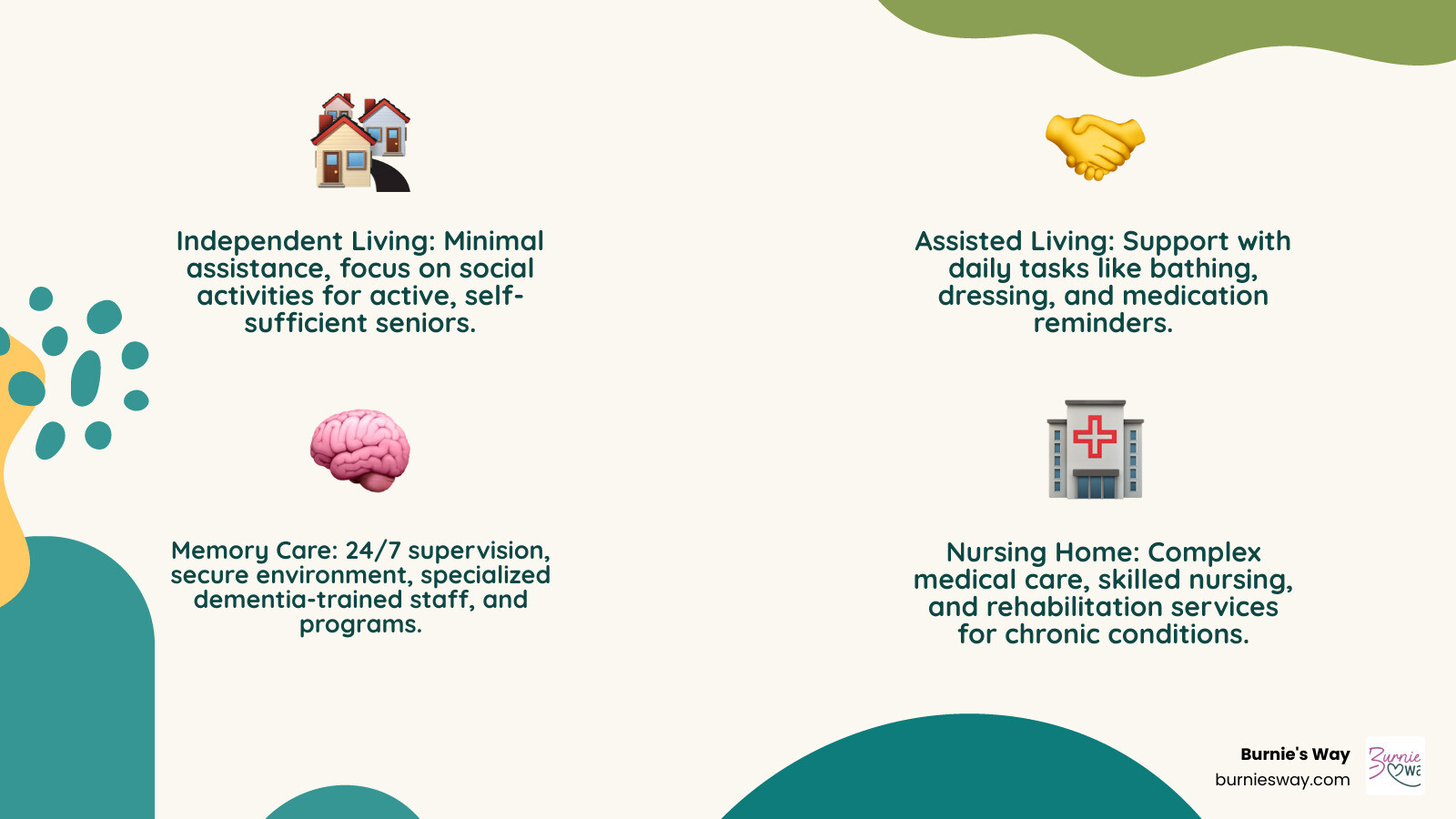
Here’s a quick overview of how memory care for elderly individuals typically differs from other senior living options:
| Feature | Independent Living | Assisted Living | Memory Care | Nursing Home |
|---|---|---|---|---|
| Focus | Active, independent seniors | Help with daily tasks | Specialized dementia support | 24/7 skilled nursing care |
| Medical Needs | Minimal | Basic medication management | Medication management, some health monitoring | Extensive medical care, rehabilitation |
| Security | Standard residential | Standard residential, some oversight | Secured environment, alarms, wandering prevention | Secured, often hospital-like |
| Staff Training | General | General senior care | Dementia-specific training | Medical professionals (RNs, LPNs) |
| Activities | Social, recreational, independent | Group activities, social events | Dementia-specific, structured, therapeutic | Therapeutic, medical-focused |
| Supervision | Minimal | As needed for ADLs | 24/7, high staff-to-resident ratio | 24/7 medical supervision |
| Cost | Lower end of senior living | Mid-range | Higher due to specialization and security | Highest, extensive medical services |
Memory care typically has a higher staff-to-resident ratio for better supervision. The environment is designed for cognitive needs, with features like easy-to-steer layouts and secure perimeters to prevent wandering while allowing safe outdoor access.
Key Features and Supportive Elements in Memory Care for Elderly
Memory care communities are designed to promote comfort, safety, and engagement for individuals with cognitive impairments. Key services and amenities include:
- 24/7 Supervision and Assistance: Around-the-clock monitoring and support with Activities of Daily Living (ADLs) like bathing, dressing, and grooming, ensuring immediate response to any needs.
- Medication Management: Trained staff manage complex medication schedules to ensure residents receive correct dosages at the right times.
- Structured Daily Routines: Consistent daily schedules for meals, activities, and personal care create a predictable and calming environment.
- Dementia-Friendly Programs and Activities: Therapeutic activities designed to engage cognitive abilities, encourage social interaction, and provide a sense of purpose. Examples include cognitive games, art and music therapy, and reminiscence activities.
- Safe and Secure Layouts: The physical environment is carefully planned with clear signage and circular hallways to reduce confusion and anxiety.
- Enclosed Outdoor Spaces: Secure courtyards or gardens allow residents to enjoy the outdoors without the risk of wandering. Our research shows that seven out of ten memory care units have enclosed courtyards and locked exit doors.
- Nutritional Support: Communal meals encourage social interaction, with staff available to help residents with eating difficulties and accommodate special diets.
For families exploring ways to support a loved one's independence at home, understanding these specialized environments can help inform decisions. Our approach at Burnie's Way focuses on coordinating personalized support that helps individuals thrive in their preferred environment. More info about our approach to senior support
Safety, Security, and Staff Expertise
The safety and security of residents are paramount in memory care for elderly facilities. This encompasses environmental design, staff training, and proactive protocols.
- Specially Trained Staff: Caregivers receive specialized education in dementia care, including strategies for calming residents, redirecting behaviors, and communicating effectively. In federally funded facilities, the Hand in Hand training series is required. Our research indicates seven out of ten memory care units have specially trained staff.
- Secure Exits with Alarms: To prevent wandering, units have secure entry and exit points with alarms that alert staff if a resident tries to leave unsupervised. According to our data, 90% of dementia special care units have doors with alarms.
- Wandering Prevention: Beyond physical barriers, facilities use personalized strategies like engaging activities and consistent routines to prevent wandering.
- Abuse Prevention Protocols: Facilities have strict protocols and training to prevent and identify signs of abuse or neglect, as mandated by the Affordable Care Act (ACA).
- Person-Centered Support Philosophy: Excellent memory care is person-centered, tailoring support to each resident's life story, preferences, and abilities to minimize stress and promote dignity.
Recognizing the Need and Embracing the Benefits
This section helps families identify the signs that memory care for elderly individuals may be necessary and outlines the advantages for both the individual and their loved ones.

Signs It Might Be Time for Memory Care for Elderly
Deciding when a loved one needs specialized memory care is challenging. It often involves a gradual accumulation of signs that the current living situation is no longer safe or sustainable. Here are key indicators that memory care for elderly individuals might be beneficial:
- Increased Confusion and Disorientation: Frequent confusion about time, place, or people, even in familiar surroundings.
- Wandering: A major safety concern where a loved one attempts to leave home or gets lost. This is a critical sign.
- Safety Concerns at Home: Forgetting to turn off appliances, misusing medications, or frequent falls. The Alzheimer's Association's Cognitive Impairment Safety Assessment Checklist can help assess these risks.
- Neglecting Personal Care: A decline in hygiene, appearance, or nutrition, such as forgetting to bathe or eat properly. Uncontrolled incontinence is another common challenge.
- Family Stress and Caregiver Burnout: When the physical and emotional demands of caregiving compromise the caregiver's own health, professional support is needed.
- Social Isolation and Lack of Engagement: Withdrawal from social activities, hobbies, or conversations, leading to isolation.
- Behavioral Changes: Increased anxiety, agitation, aggression, or depression that is difficult to manage at home.
Not all forgetfulness indicates dementia. Occasional memory lapses are often normal parts of aging. However, consistent memory problems that interfere with daily life warrant medical evaluation. For more on differentiating normal forgetfulness from dementia, we encourage further reading.
Key behavioral changes to watch for include:
- Difficulty performing familiar tasks
- Problems with language (e.g., stopping mid-conversation)
- Disorientation to time and place
- Poor or decreased judgment
- Problems with abstract thinking
- Misplacing things and being unable to retrace steps
- Changes in mood or personality
- Withdrawal from work or social activities
Benefits for the Individual
Moving to memory care for elderly individuals can profoundly improve their quality of life. The specialized environment offers benefits often unattainable at home:
- Improved Safety: 24/7 supervision and a secure environment reduce the risk of wandering and accidents.
- Social Engagement: Structured activities and communal living combat loneliness and isolation. Our research shows 91% of dementia units offer dementia-specific activities.
- Cognitive Stimulation: Custom activities like art therapy and cognitive games help maintain cognitive function.
- Professional Support: Access to staff who are experts in managing dementia-related challenges with empathy.
- Improved Nutrition: Regular, nutritious meals are provided, ensuring residents maintain a healthy diet.
- Sense of Routine and Calm: A structured schedule reduces anxiety and fosters a sense of security.
Benefits for the Family and Loved Ones
The positive impact of memory care for elderly individuals extends to their families. The decision to seek professional care can bring immense relief:
- Peace of Mind: Knowing a loved one is in a safe, secure environment with professional care.
- Reduced Family Stress and Burnout: Alleviates the intense demands of full-time caregiving, allowing family members to focus on their own well-being.
- More Quality Time Together: Visits can become about connection and shared joy, rather than caregiving tasks.
- Access to Support Networks: Many facilities offer support groups and educational resources for families.
- Resuming Family Roles: Allows caregivers to return to their roles as spouses or children, restoring relationships.
How to Choose the Right Memory Care Community
Selecting the right memory care for elderly loved ones is a critical decision that requires careful research. It’s about finding a place where your loved one will not only be safe but also thrive.
Factors to Consider When Choosing a Community
When evaluating potential memory care communities, look beyond aesthetics to the quality of care and environment. Here are key factors to consider:
- Location: Proximity to family and friends makes visits easier.
- Staff Training and Interaction: Observe if staff are patient, kind, and engaged. Ask about their dementia-specific training and staff-to-resident ratios.
- Cleanliness and Maintenance: A clean, well-kept facility reflects high standards of care.
- Activity Calendar: Review the schedule for varied, engaging activities custom to dementia stages. Look for music, art, and reminiscence therapy.
- Meal Quality and Dining Experience: Observe a mealtime. Is the food appealing? Do staff offer assistance? Are dietary needs met? We suggest having a meal at any residence you’re considering.
- The Importance of Memory Care Certification: Look for certifications like The Joint Commission Memory Care Certification, which indicates advanced staff training and a safe, evidence-based care model.
- Continuing Care Availability: Ask about the policy for residents whose needs progress. What might require a move to a higher level of care?
- Family Communication: How does the facility keep families informed about a resident's condition?
Questions to ask during a tour:
- What is your staff-to-resident ratio, particularly during evenings and weekends?
- What specialized training do your staff receive in dementia care?
- How do you personalize activities to residents' interests and abilities?
- What is your policy on managing challenging behaviors?
- How often are residents assessed for changes in their condition?
- What is included in the monthly fee, and what services cost extra?
- What are your visitation policies?
- Do you have an emergency plan in place for residents with dementia?
Preparing for the Transition
The transition to memory care for elderly individuals is a significant life change. Thoughtful preparation can help ease the process:
- Emotional Preparation: Acknowledge that this is a difficult decision. It's normal to feel guilt, sadness, and relief. Talk to trusted friends or a counselor.
- Logistical Planning: Start researching communities early. Gather necessary medical, legal, and financial documents.
- Involving the Senior in Decisions (if appropriate): If possible, involve your loved one. Focus on positive aspects like new friends or activities.
- Personalizing Their New Space: Bring familiar items, photos, and cherished belongings to make their new room feel like home.
- Working with Community Staff: Collaborate with staff by sharing your loved one's life story, preferences, and habits to enable person-centered support.
- Regular Visits and Advocacy: After the move, visit regularly and maintain open communication with staff to advocate for your loved one's needs.
At Burnie's Way, we understand that supporting an aging loved one involves many complex decisions. Our philosophy is rooted in compassion and a deep understanding of individual needs, helping families steer these waters with confidence. More info about our philosophy
Navigating the Costs and Payment Options
Understanding the financial aspects of memory care for elderly individuals is crucial, as these specialized services represent a significant investment. Costs vary widely, and families often need to explore multiple funding avenues.
Typical Costs Associated with Memory Care
Memory care for elderly individuals is typically more expensive than standard assisted living due to the higher level of specialized care, staffing, and security required.
- Median National Cost: The median national cost of memory care is $6,200 per month, according to our research.
- Average Monthly Rent: The average memory care monthly rent in the U.S. is $8,399, according to 2023 NIC statistics.
- Cost Variations: Costs vary by state, city, and facility, influenced by location, amenities, and the level of care required.
- Comparison to Other Care Types:
- The average monthly cost of assisted living is $6,694.
- The average annual cost for memory care in a U.S. nursing home is $116,800 for a private room and $104,025 for a semi-private room.
- The estimated monthly cost of a nursing home is $12,240.
- All-Inclusive vs. A la Carte Pricing: Some communities offer an all-inclusive fee, while others use an a la carte model. It's essential to understand what is covered in the base cost versus what costs extra.
How to Pay for Memory Care
Paying for memory care for elderly loved ones often requires a combination of strategies. Most families pay out-of-pocket, but several options can help offset the costs:
- Private Pay: Using personal savings, pensions, retirement accounts, or income from selling assets like a home.
- Long-Term Care Insurance: Policies can be a significant aid, though many have a waiting period before benefits begin.
- Medicaid Waivers: Medicaid may cover memory care costs for eligible individuals who meet income, asset, and care-level requirements. State-specific 1915(c) Home & Community-Based Services (HCBS) waivers may cover services but not always room and board.
- VA Aid and Attendance Benefits: Veterans and surviving spouses who meet certain criteria may qualify for VA Aid and Attendance benefits. These funds can help pay for services like medication management and assistance with ADLs.
- Selling a Home: A common way for families to fund memory care.
- Elder Law Attorney Consultation: Highly recommended for help with asset protection and Medicaid qualification.
- BenefitsCheckUp: A free service from the National Council on Aging, BenefitsCheckUp helps find benefit programs to save money.
- Life Insurance Policies: Some policies offer "living benefits" or allow cash-outs to cover long-term care.
For local resources and benefits, the Eldercare Locator is a valuable tool to connect with services in your community.
Exploring Supportive Alternatives and Coordination
While memory care for elderly facilities offer specialized environments, many families prefer to support their loved ones in their own homes for as long as possible. This section explores alternatives and how Burnie's Way helps coordinate support for continued independence.
Personalized Support and Lifestyle Coordination at Home
For individuals in the earlier stages of cognitive decline, a personalized approach to support and lifestyle coordination can make a significant difference.
- Aging in Place: Many seniors wish to remain in their homes, which is a fulfilling option with the right support.
- Companion Services and Personal Assistants: Burnie's Way specializes in coordinating reliable companion and personal assistant services. These professionals can ease loneliness, help with light housekeeping, errands, and provide a consistent, friendly presence.
- Modifying the Home for Safety: We help families connect with trusted services for home modifications like installing grab bars or improving lighting to prevent falls.
- Maintaining Independence: Our focus at Burnie's Way is empowering individuals to live independently by coordinating a network of trusted services and routines. We act as your personal concierge, ensuring daily life is smoothly managed.
Burnie's Way helps families coordinate trusted services and routines that make life easier and more enjoyable for their loved ones. We act as a guide and a helper, ensuring that the necessary supports are in place so that individuals can continue to live the way they want, in the comfort of their own home.
Community-Based Programs and Resources
Beyond in-home support, many community-based programs can complement efforts to support memory care for elderly individuals, particularly in the early to mid-stages of dementia.
- Adult Day Programs: These programs provide therapeutic and social activities in a safe, supervised environment, giving family caregivers a break. Evidence suggests they can help maintain cognition.
- Respite Opportunities: Respite care offers temporary relief for primary caregivers, either in-home or through short stays in a facility.
- Dementia Support Groups: These groups offer invaluable emotional support, shared experiences, and practical advice for individuals with dementia and their caregivers.
- Local Area Agency on Aging Resources: Your local Area Agency on Aging is a great resource for services like adult day care, transportation, and meal programs.
Burnie's Way can help connect families to these valuable local options, navigating the various resources and coordinating their integration into a holistic support plan. We ensure that individuals have access to the community engagement and assistance they need to maintain a vibrant and connected life.
Frequently Asked Questions about Memory Care
What is the main difference between assisted living and memory care?
The main difference is the level of specialization and security. Assisted living helps with daily activities for largely independent seniors. Memory care for elderly individuals offers specialized, 24/7 support and security for those with dementia, including a secured environment, dementia-trained staff, and therapeutic activities.
Does Medicare pay for memory care?
No, Medicare does not typically cover long-term room and board in memory care for elderly communities. It is for acute medical care. However, it may cover some eligible medical services received in memory care, like doctor visits or physical therapy. Families often use private pay, long-term care insurance, or Medicaid (if eligible).
How do I talk to a loved one about moving to memory care?
Approach this conversation with empathy and patience. Focus on your loved one's safety and quality of life. Frame the move as a way to get more support and social connection. Involving their doctor can help. Be prepared for resistance and allow them time to process the change.
Conclusion: Making an Informed and Compassionate Choice
Navigating the journey of memory care for elderly loved ones is a significant challenge. This guide has provided a roadmap to understand its essentials, recognize when it's needed, evaluate options, and manage the costs.
The key is a person-centered approach that prioritizes the dignity, safety, and well-being of the individual. Planning ahead, even in the early stages, provides more choices and reduces stress when more support is needed.
For families exploring ways to support a loved one's independence at home, Burnie's Way offers personalized coordination to help manage daily life with confidence. As your trusted partner, we connect you with services and resources that empower your loved one to live comfortably and familiarly at home. Our aim is to foster connection, independence, and ease, giving you peace of mind.