

Why Doctor Visit Prep Can Make or Break Your Appointment
Doctor visit prep is the single most important thing you can do before seeing your doctor. Here's a quick overview of what it involves:
Quick-start checklist for your next appointment:
- Write down your top concerns and questions — most important first
- List all medications, vitamins, and supplements with dosages
- Note your symptoms: when they started, how long they last, and what triggers them
- Gather your insurance card, photo ID, and any relevant medical records
- Consider bringing a trusted family member or friend to take notes
- Request an interpreter or inform staff of any hearing or vision needs in advance
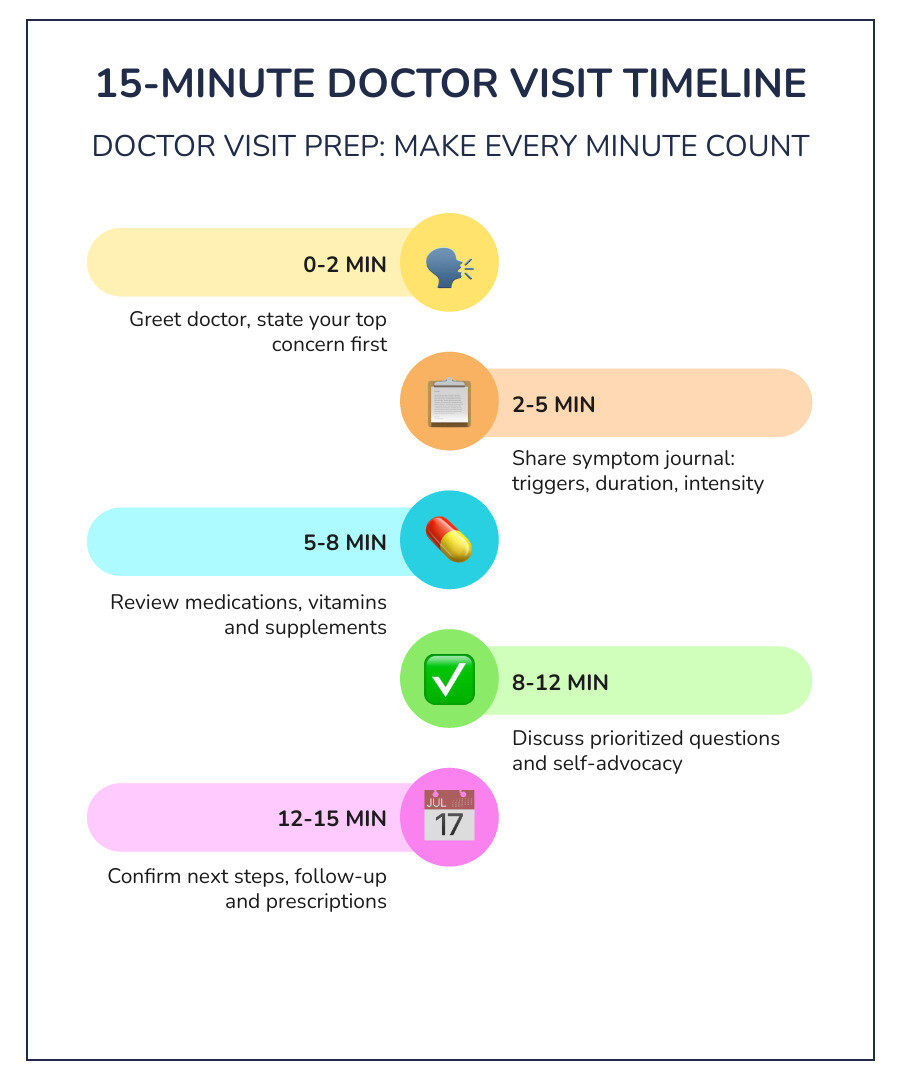
Think about this: the average doctor's visit lasts just 15 minutes. And in 67% of encounters, doctors interrupt patients after only about 11 seconds.
That's not a lot of time. And yet most people walk in unprepared.
According to a study in JAMA Network Open, 81% of people have withheld medically relevant information from their doctor. That's information that could change a diagnosis, a prescription, or an entire treatment plan.
For adult children helping an aging parent navigate their health, the stakes are even higher. A poorly prepared appointment can mean missed diagnoses, confusion over medications, and unanswered questions that pile up until the next visit — months later.
The good news? A little preparation goes a long way. This guide walks you through everything you need to know to make every appointment count.
Doctor visit prep word list:
Essential Steps for Your Doctor Visit Prep
Preparing for a medical appointment is much like prepping for an important business presentation. You wouldn't walk into a big meeting without your notes, and you certainly shouldn't walk into an exam room without a clear plan.
To get started, we need to gather the essentials. This includes your identification, insurance cards, any recent test results, and a clear list of what you want to achieve. Taking the time to do this the night before helps reduce "white coat syndrome"—that very real spike in blood pressure and anxiety many of us experience when sitting in a medical office.
If you are coordinating care for an older adult, logistics can be half the battle. Arranging a ride, finding parking, and getting from the car to the office can be exhausting. For those who need extra help getting to and from their appointments, exploring senior transportation services can take a massive weight off your shoulders, ensuring your loved one arrives calm, collected, and on time.
To learn more about the complete clinical checklist of what to bring, you can read this detailed guide on Preparing for a doctor's appointment.
How to Track Symptoms and Health Changes
When a doctor asks, "How have you been feeling lately?" our default response is often a polite, "Fine, thank you." But "fine" doesn't help a physician diagnose a lingering issue.
To provide actual, actionable data, we recommend keeping a symptom journal for at least one to two weeks leading up to your appointment. Don't rely on memory alone—when we are put on the spot, our brains have a funny way of blanking out. Your symptom journal should track:
- The exact symptom: Be as descriptive as possible (e.g., "a sharp, burning pain" rather than just "it hurts").
- Timing and frequency: When does it happen? Is it worse in the morning, after eating, or during physical activity?
- Duration: How long does each episode last? Five minutes? Three hours?
- Triggers: Did you notice the symptom after a specific meal, a stressful event, or a change in your sleep pattern?
- Intensity: Rate the pain or discomfort on a scale of 1 to 10.
- Impact on daily life: Does it prevent you from climbing stairs, sleeping through the night, or enjoying your favorite hobbies?
By presenting this structured information, you help your doctor spot patterns that might otherwise go unnoticed.
Organizing Your Medications and Supplements
One of the most common—and potentially dangerous—mistakes patients make is failing to accurately report what they are taking. This includes not just prescription drugs, but also over-the-counter (OTC) medicines, vitamins, herbal remedies, and dietary supplements.
The easiest way to handle this is to gather all your physical pill bottles, put them in a bag, and bring them directly to the office. If that isn't practical, create an up-to-date, written medication list. For every single item, make sure to write down:
- The exact name of the drug (brand and generic, if known)
- The dosage (e.g., 50 mg, 100 mcg)
- How often you take it (e.g., once daily in the morning, twice a day with food)
- The reason you take it
This level of detail is crucial because different brands can look different, and dosages can easily be confused. If you or your loved one struggles to keep track of multiple prescriptions, learning about professional medication management services can provide a safe, organized framework to prevent medication errors and ensure compliance.
Maximizing Your 15 Minutes: Prioritizing Questions and Self-Advocacy
15-minute average? It flies by. To make sure you get the answers you actually need, you must prioritize.
Before you step into the clinic, separate your questions into high-priority and low-priority categories. High-priority questions deal directly with your immediate health, diagnoses, and treatment plans. Low-priority questions—while still important—can often be answered by administrative staff, a patient portal, or saved for a follow-up call.
| High-Priority Questions (Ask the Doctor First) | Low-Priority Questions (Save for Staff or Later) |
|---|---|
| What is causing my main symptom? | How do I update my billing address? |
| What are the side effects of this new medication? | Is this test covered by my specific insurance plan? |
| Are there alternative treatment options available? | Can I get a copy of my vaccine records for travel? |
| When should I expect to see results from this treatment? | How do I set up my online patient portal account? |
To explore more ways to make the most of every precious minute, check out this guide on how to Make the most of your doctor visit: MedlinePlus Medical Encyclopedia.
Creating a Prioritized List for Doctor Visit Prep
When you sit down to write your list of concerns, try to limit it to your top three items. At the very beginning of the appointment, hand a physical copy of this list to your doctor or the nurse. You can say something like: "I know our time today is limited, so I wrote down my top three concerns. I'd love to make sure we address these today."
This simple act sets a collaborative agenda for the visit. It prevents the doctor from spending 12 minutes talking about a minor issue, only for you to bring up a major concern ("Oh, by the way, I've been having chest pains") as they are walking out the door. Active, polite communication is your greatest tool for ensuring nothing gets missed.
Overcoming Communication Barriers During Doctor Visit Prep
Communication barriers can severely impact the quality of care you receive. If you have hearing or vision difficulties, please do not try to "tough it out." Ensure you wear your hearing aids (with fresh batteries!) and bring your reading glasses to the appointment. Let the staff know immediately if you are struggling to hear them.
For those who speak English as a second language, or for whom medical terminology is overwhelming, you have a legal right to clear communication. Do not rely on a family member to translate complex medical terms if you aren't comfortable. Instead, request a professional interpreter when you schedule the appointment.
For more tips on navigating these barriers, refer to the resources provided by the National Institute on Aging on How To Prepare for a Doctor's Appointment | National Institute on Aging.
Bringing Support: The Role of a Family Member or Companion
You do not have to go through this alone. In fact, we highly recommend bringing a trusted family member, close friend, or personal companion to your appointment.

A companion serves several vital purposes:
- Note-taking: When you are receiving a diagnosis or complex instructions, it is incredibly difficult to remember everything. A companion can write down exactly what the doctor says, freeing you up to focus on the conversation.
- Emotional support: Medical visits can be stressful. Having a familiar, friendly face next to you can keep your anxiety levels down.
- Advocacy: If you forget to bring up a symptom, or if you hesitate to speak up when you don't understand something, your companion can gently prompt you or ask the doctor for clarification.
To understand more about how a companion can assist during these clinical interactions, you can read about Making the Most of a Health Care Visit - Special Subjects - Merck Manual Consumer Version. If you are currently caring for an aging parent and feeling overwhelmed by these responsibilities, explore our resources on assistance caring for elderly parents to find the personal support and guidance you need.
Preparing Children vs. Older Adults for Appointments
Preparation looks very different depending on who is going to the doctor.
For children, the goal is to minimize fear. Use simple, honest language to explain what will happen. You can use "comfort positioning" (like holding them securely in your lap during a vaccine) and bring a favorite toy or book to distract them. Keep the experience as positive and low-stress as possible.
For older adults, the focus is on maintaining dignity, supporting memory, and managing complex health histories. Ensure they are actively involved in the conversation rather than talked "about" by the doctor and companion. If you are in the process of coordinating long-term support for an aging loved one, incorporating medical visit preparation into your broader elderly care planning strategy is an excellent way to ensure their ongoing comfort and independence.
Common Mistakes to Avoid and Post-Visit Follow-Up
Even with the best intentions, it is easy to fall into common traps during a doctor's visit. The biggest mistake is withholding information. Whether due to embarrassment, fear of a diagnosis, or simply not wanting to "bother" the doctor, keeping secrets about your health only hurts you. Doctors are trained professionals; they have heard it all, and their goal is to help, not to judge.
Another common pitfall is spending precious face-to-face time with your physician discussing insurance coverage, copays, or billing. Doctors typically have no control over—or deep knowledge of—the financial aspects of their practice. Save those questions for the administrative and billing staff at the front desk.
Finally, do not leave the office without a clear understanding of your next steps. If you are transitioning back home after a medical event or hospital stay, having a structured plan is essential. For detailed guidance on managing this transition safely, refer to our guide on post hospitalization care.
What to Do After Your Appointment
Your doctor visit prep doesn't end when you walk out the clinic doors. The post-visit phase is where the actual healing and health management happen. Make sure to complete these essential steps:
- Review your after-visit summary: Many offices provide a printed or digital summary of your visit. Review it to ensure it matches your understanding of the conversation.
- Fill prescriptions immediately: Don't wait until you run out of your current medications to fill new ones.
- Schedule follow-up appointments: If the doctor wants to see you back in three weeks or six months, book that appointment before you leave the building.
- Track your results: If you had blood work or imaging done, find out how and when you will receive the results. If you don't hear back within the expected timeframe, call the office to follow up.
Frequently Asked Questions about Doctor Visit Prep
Do I need to fast before my appointment?
It depends entirely on what tests are scheduled. Standard check-ups usually do not require fasting, but specific blood tests—such as a lipid panel (cholesterol) or a fasting blood glucose test—require you to avoid food and drink (except water) for 8 to 12 hours beforehand. Always call the office the day before to confirm if fasting is necessary.
What if I feel rushed or interrupted by my doctor?
Remember the 11-second rule! If your doctor interrupts you, politely but firmly advocate for yourself. You can say: "I understand we are on a tight schedule, but I have one more crucial symptom I need to share so we can make the most accurate decision today." You have a right to be heard and to understand your care plan.
Should I bring my actual medication bottles or just a list?
If it is your first time seeing a new doctor, or if your medications have recently changed, bringing the actual bottles in a bag is highly recommended. This allows the clinical team to verify the exact brand, dosage, and refill instructions directly from the label, eliminating any room for transcription errors.
Conclusion
Taking charge of your health starts long before you sit down on the exam table. By dedicating just a little time to doctor visit prep, you can transform a rushed, stressful 15-minute appointment into a highly productive, collaborative conversation that supports your long-term well-being.
At Burnie's Way, we believe that staying healthy and independent at home should be as seamless as possible. While we are not a medical or caregiving provider, we act as a dedicated personal concierge, virtual companion, and lifestyle assistant for aging adults. Whether it is helping you organize your symptom logs, keeping your calendar on track, arranging trusted transportation to the clinic, or simply providing the peace of mind that comes with having a dedicated helper by your side, we are here to support your journey toward confident, independent living.
Ready to make daily life a little easier and a lot more organized? Explore our personal concierge and lifestyle coordination services today.