

Why Falls at Home Are the Real Threat to Your Parent's Independence
A senior safety checklist is one of the most practical tools a family can use to protect an aging parent at home. If you're worried your mom or dad's home might be hiding risks you haven't noticed yet, you're not alone — and you're right to look closer.
Quick answer: What should a senior safety checklist cover?
| Area | Key Hazards to Check |
|---|---|
| Bathroom | Slippery floors, no grab bars, high tub entry |
| Bedroom | Poor lighting, clutter near the bed, low bed height |
| Kitchen | Hard-to-reach items, wet floors, unsafe appliances |
| Stairs & hallways | Loose railings, dim lighting, no handrails |
| Living room | Loose rugs, cords, unstable furniture |
| Outdoors & entry | Uneven paths, poor lighting, no handrails at door |
| General | Smoke/CO detectors, medication storage, emergency contacts |
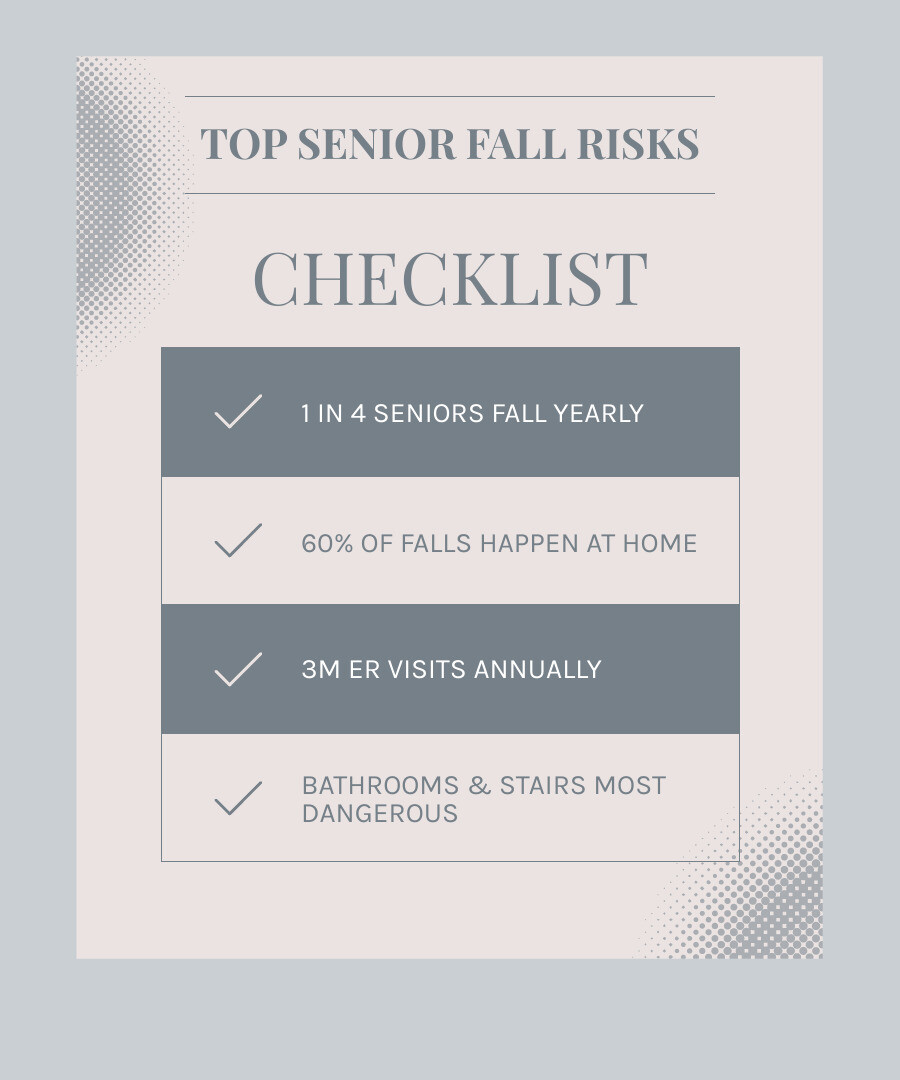
The numbers are hard to ignore. Over 14 million older adults — that's 1 in 4 — fall every year. And 60% of those falls happen right at home, in the rooms they know best. Three million seniors end up in emergency departments every year because of fall-related injuries.
It often starts small. A dim hallway. A throw rug that shifts underfoot. A bathroom with nothing to hold onto. These aren't dramatic dangers — they're everyday ones. And that's exactly what makes them so easy to miss until something goes wrong.
This guide walks you through every room, every risk, and every fix — so you can feel confident your parent's home is working for them, not against them.
Senior Safety Checklist: Start With the Biggest Risks First
When we sit down to create a Senior safety checklist, it’s easy to feel overwhelmed. Where do you even start? The answer is always: start where the gravity is strongest. Falls are the leading cause of injury for adults aged 65 and older, and they often trigger a "fear of falling" cycle. This cycle is sneaky; a senior falls once, becomes afraid of falling again, stops being active to "stay safe," and then becomes weaker—which actually increases their risk of another fall.
Why fall prevention is the top priority in any Senior safety checklist
We cannot emphasize this enough: fall prevention is the cornerstone of independent living. According to the CDC, nearly 29% of adults aged 65 and above reported experiencing a fall at least once within the preceding year. That is nearly one out of every three people you know in that age group.
Even more striking is that 60% of these falls occur within the home. The place where we feel safest is often where we are most at risk because we let our guard down. For those over 85, the stakes are even higher—38% of bathroom injuries in this age group require hospitalization. By focusing your Senior safety checklist on fall prevention, you aren't just preventing a bruise; you're preserving their ability to live on their own terms. You can find more detailed guidance on this in the Scientific research on home fall prevention.
The most common home safety risks for seniors and how to prevent them
Most home hazards are hiding in plain sight. Here are the "usual suspects" we look for when helping families in Virginia coordinate a safer living environment:
- Loose Rugs and "Trip Hazards": Throw rugs are beautiful, but they are essentially traps for slippers. Remove them or secure them with heavy-duty double-sided tape.
- The "Cord Jungle": Extension cords snaking across a walkway are a recipe for disaster. Coil them and tape them to the wall.
- Dim Lighting: As we age, our eyes need more light to see the same level of detail. A hallway that looks "fine" to a 40-year-old might look like a dark tunnel to an 80-year-old.
- The "Invisible" Spill: In the kitchen or bathroom, a single drop of water on a tile floor can be as slippery as ice.
- Poor Footwear: Walking in socks or loose slippers increases slip risk. Encourage sturdy, non-slip shoes even inside the house.
Warning signs a senior may need more support than living alone
Sometimes, the house is safe, but the person inside is struggling with the routines of daily life. As a lifestyle concierge service, we often notice these subtle shifts before a major accident happens. Keep an eye out for:
- Missed Routines: Is the mail piling up? Are there dishes from three days ago in the sink?
- Mysterious Bruises: If you notice bruises on their arms or hips, they may be "furniture walking" (holding onto walls and tables to move) or have had minor falls they haven't mentioned.
- Confusion with Medication: Are pills being skipped or doubled up?
- Changes in the Kitchen: Finding expired food in the fridge or noticing they’ve stopped cooking because it feels "too much" can indicate a need for a helping hand.
- Hesitation: Watch them approach a set of stairs. If they pause or look visibly anxious, their confidence in their mobility is wavering.
Room-by-Room Senior Safety Checklist for a Safer Home
To make your audit manageable, we recommend a room-by-room approach. Grab a clipboard, print out this Senior safety checklist, and walk through the home as if you were seeing it for the first time.
Bathroom Senior safety checklist
The bathroom is statistically the most dangerous room in the house. Between the water, the hard surfaces, and the frequent transitions (sitting to standing), it’s where 80% of senior home injuries occur.
- Grab Bars: These are non-negotiable. They must be anchored into the wall studs—suction cup versions are not reliable. Place them near the toilet and inside the shower/tub.
- Non-Slip Surfaces: Use non-slip mats or adhesive strips inside the tub. Place a non-skid rug outside the tub to catch water.
- The 120°F Rule: Set the water heater to 120°F (48.9°C) to prevent accidental scalding, which can happen more easily as skin becomes thinner with age.
- Raised Toilet Seat: If the toilet is low, it requires a lot of leg strength to get up. A raised seat with handles can make a world of difference.
- Shower Chair: Standing in a slippery shower can be exhausting. A sturdy chair and a handheld showerhead allow for a safer, more relaxing experience.
For more specialized ideas, check out our guide on Elderly Home Modifications.
Bedroom and hallway Senior safety checklist
The path from the bed to the bathroom at 2:00 AM is a high-risk zone.
- Bed Height: Their feet should be able to touch the floor flat when they are sitting on the edge of the bed. If it's too high or too low, it’s hard to stand up safely.
- Lighting the Path: Install motion-sensor nightlights in the hallway and bathroom. Glow-in-the-dark light switches are also a fantastic, low-cost upgrade.
- Clear the Floor: Remove any books, shoes, or clutter from the walking path.
- Bedside Essentials: Ensure a lamp, a phone, and their glasses are within easy reach of the bed so they aren't fumbling in the dark.
Kitchen, stairs, entryway, and outdoor checklist
- The "Waist-to-Shoulder" Rule: Move frequently used items (like the heavy cast-iron skillet or the daily coffee mug) to shelves between waist and shoulder height. No more reaching for the stars or crouching for the floor.
- Stair Visibility: Mark the edge of each step with a strip of contrasting tape (like bright yellow or white) so the "drop" is clearly visible.
- Dual Handrails: Stairs should have sturdy handrails on both sides that extend slightly past the top and bottom steps.
- Exterior Lighting: Ensure the porch and walkways are brightly lit. In Virginia, we have to think about early sunsets in the winter!
- Visible House Numbers: In an emergency, first responders need to find the house fast. Ensure the numbers are large, reflective, and not blocked by bushes.
For more tips on navigating these areas, see our Fall Prevention Home Tips Guide.
Smart Modifications, Safety Devices, and Technology That Help Seniors Live Independently
In May 2026, we have access to incredible technology that makes staying at home safer than ever without feeling like a "nursing home." We believe in using tech to empower, not to intrude.
Essential safety products for seniors living alone
If your loved one lives alone, certain items should be on your Senior safety checklist as "must-haves":
- Medical Alert Systems: Whether it's a traditional pendant or a modern smartwatch with fall detection, having a "help" button is vital.
- Automatic Shut-off Devices: You can install devices on stoves that turn the heat off if no motion is detected for a certain period.
- Smart Smoke and CO Detectors: These can send an alert to your phone if they go off, so you know there's trouble even if you aren't there.
- GFCI Outlets: Ensure all outlets near water (kitchen/bathroom) are Ground Fault Circuit Interrupters to prevent electric shock.
How lighting, grab bars, and non-slip surfaces reduce fall risk
It's all about physics and confidence.
- Lighting reduces the "processing time" the brain needs to understand an obstacle.
- Grab bars provide a "third point of contact," which is essential for balance during transitions.
- Non-slip surfaces increase friction, compensating for changes in gait or balance. When a senior knows their environment is stable, they move more confidently, which actually keeps their muscles more engaged and healthy.
Technology solutions that add safety without taking away dignity
We are big fans of the "Digital Safety Net." This includes:
- Video Doorbells: Allows them to see who is at the door without having to rush to open it, reducing the risk of a fall and increasing scam protection.
- Smart Plugs: These can be programmed to turn on lamps at sunset, so they never have to walk into a dark room.
- AI Fall Detection: Modern systems use radar waves (no cameras!) to detect if someone has fallen. This respects their privacy while ensuring they aren't left on the floor for hours.
Explore more of these options in our Senior Safety Solutions guide.
How to Assess Whether a Home Is Still Safe for Independent Living
Assessment isn't a one-time event; it’s an ongoing conversation. As our needs change, our environment needs to keep up.
How families can do a practical home safety assessment
Don't just look at the house—watch the person in the house.
- The Walkthrough: Ask your parent to make a cup of tea or go to the bedroom to get a sweater. Watch where they struggle. Do they lean on the walls? Do they struggle to reach a high cabinet?
- The Routine Map: Think about their day. Where do they spend 90% of their time? Focus your safety budget there first.
- The "Fix-It" List: Write down everything you find. Some are "Fix Today" (like moving a rug) and some are "Schedule This Week" (like installing a grab bar).
For more professional insights, refer to the Home safety tips for older adults from the National Institute on Aging.
Medication management and emergency preparedness checklist
Safety isn't just about physical trips and falls; it's about what happens in an emergency.
- The Fridge List: Keep a list of all current medications and dosages on the refrigerator. Emergency responders are trained to look there first.
- Pill Organizers: Use a high-quality, easy-to-open pill organizer to prevent double-dosing.
- Emergency Contacts: Post names and numbers in large print near every phone.
- Evacuation Plan: In the event of a fire or a Virginia summer power outage, where do they go? Who picks them up?
Special considerations for seniors with dementia or mobility issues
If cognitive decline is a factor, the Senior safety checklist needs to be even more robust.
- Visual Cues: Use labels on drawers (e.g., "Socks," "Spoons") to reduce frustration.
- Safety Knobs: Use covers on stove knobs so they can't be turned on accidentally.
- Simplified Layout: Remove excess furniture to create wide, clear paths for walkers or wheelchairs.
- Wandering Prevention: Consider door alarms that chime when an exterior door is opened, so you know if they’ve stepped outside.
For more on this, see our resource on Elderly Home Modifications.
How to Create and Maintain a Senior Safety Checklist That Actually Gets Used
A checklist is only useful if it leads to action. We’ve found that the best way to keep a home safe is to make it a shared project, not a "lecture" from children to parents.
A simple 4-step system to build your checklist
- Inspect: Use the room-by-room guide above.
- Prioritize: Fix things that cause falls first (rugs, lighting, grab bars).
- Assign: Who is doing the work? Can you do it this weekend, or do we need to coordinate a handyman?
- Reassess: Set a calendar alert for three months from now to do it all again.
How often to review the checklist and what to update each season
We recommend a quarterly review. Why? Because seasons change the risks.
- Winter: Check for ice-melt supplies and ensure heaters aren't near curtains.
- Spring: Check for pollen/slip risks on the porch and ensure screens are secure.
- Summer: Check the A/C filters and ensure they have plenty of easy-access hydration.
- Fall: Clear those wet, slippery leaves from the walkways immediately!
How to improve safety while preserving independence and dignity
This is the most important part. No one wants to feel like their home is being "raided" or that they are being treated like a child.
- Use "We" Language: "Let's look at the bathroom together to see if we can make it more comfortable for you."
- Offer Choices: "Would you prefer the silver grab bar or the white one that matches the tile?"
- Start Small: Changing a lightbulb is easier to accept than installing a ramp. Build trust with small improvements first.
Frequently Asked Questions About a Senior Safety Checklist
What are the most dangerous rooms for seniors?
Statistically, the bathroom is #1 due to slips. The kitchen is #2 due to burns, spills, and reaching for high items. Stairs are #3, as they are the site of the most serious, high-impact falls.
How often should a senior home safety assessment be done?
A formal walkthrough should happen every 3 to 6 months. However, you should do an immediate reassessment if there is a change in health, a new medication, or after a hospital stay.
When should a family look beyond home modifications alone?
If you’ve made every modification possible and your loved one is still falling, forgetting to eat, or feeling deeply isolated, it might be time to look into personal support. This doesn't necessarily mean leaving home; it might just mean bringing in a concierge or companion to help coordinate daily life.
Conclusion
Creating a Senior safety checklist isn't about highlighting what your parent can't do—it's about making sure they can keep doing what they love in the place they love. A few grab bars, better lightbulbs, and a clear hallway are small prices to pay for the peace of mind that comes with knowing "Grandma isn't going to trip."
At Burnie's Way, we understand that maintaining a home is a big job. We offer a personalized approach to at-home senior support, acting as a lifestyle concierge to help coordinate these very tasks. Whether it’s finding a trusted contractor for modifications or just being that extra set of eyes to ensure everything is running smoothly, we’re here to help Virginia families navigate the journey of aging with heart and competence.
Ready to see how we can help your family stay connected and confident? Learn more about our services and how we help elders live life on their own terms.