

Why Planning Now Protects Independence Later
Elderly care planning is the process of preparing for the support needs of aging adults before a crisis forces difficult decisions. It involves assessing current and future needs, coordinating resources, and documenting preferences to ensure seniors can live with dignity and independence.
Quick Guide to Getting Started:
- Assess needs - Evaluate daily activities, safety, health, and social connections
- Build your team - Include the senior, family, friends, and trusted professionals
- Document preferences - Create a written plan covering daily routines, emergency contacts, and care wishes
- Address legal and financial matters - Establish Power of Attorney, advance directives, and funding strategies
- Review regularly - Update the plan as needs change, typically every 6-12 months
Nearly 53 million adults in the United States are family or informal caregivers, according to AARP. That's 1 in 5 Americans helping aging loved ones with daily activities, medical tasks, or coordination. For many adult children, the reality hits suddenly: Mom forgot to take her medication again. Dad's not eating properly. How do I keep them safe without taking away their independence?
The good news? Proactive planning reduces stress, prevents emergencies, and honors your loved one's wishes. Research shows that personalized support plans directly improve quality of life and health outcomes for seniors.
This guide walks you through each step of creating a comprehensive elderly care plan. You'll learn how to assess needs, coordinate support, handle legal and financial matters, and adapt as circumstances change. Whether your parent is thriving independently or beginning to need help, the right plan gives everyone confidence and peace of mind.
The First Step: Assessing Needs and Building Your Support Team
Starting the elderly care planning journey can feel overwhelming, but it doesn't have to be. Our first step is always about understanding the unique individual at the heart of it all. We begin by assessing their specific needs and then building a robust support team around them.

What is a Senior Care Plan and Why is it Important?
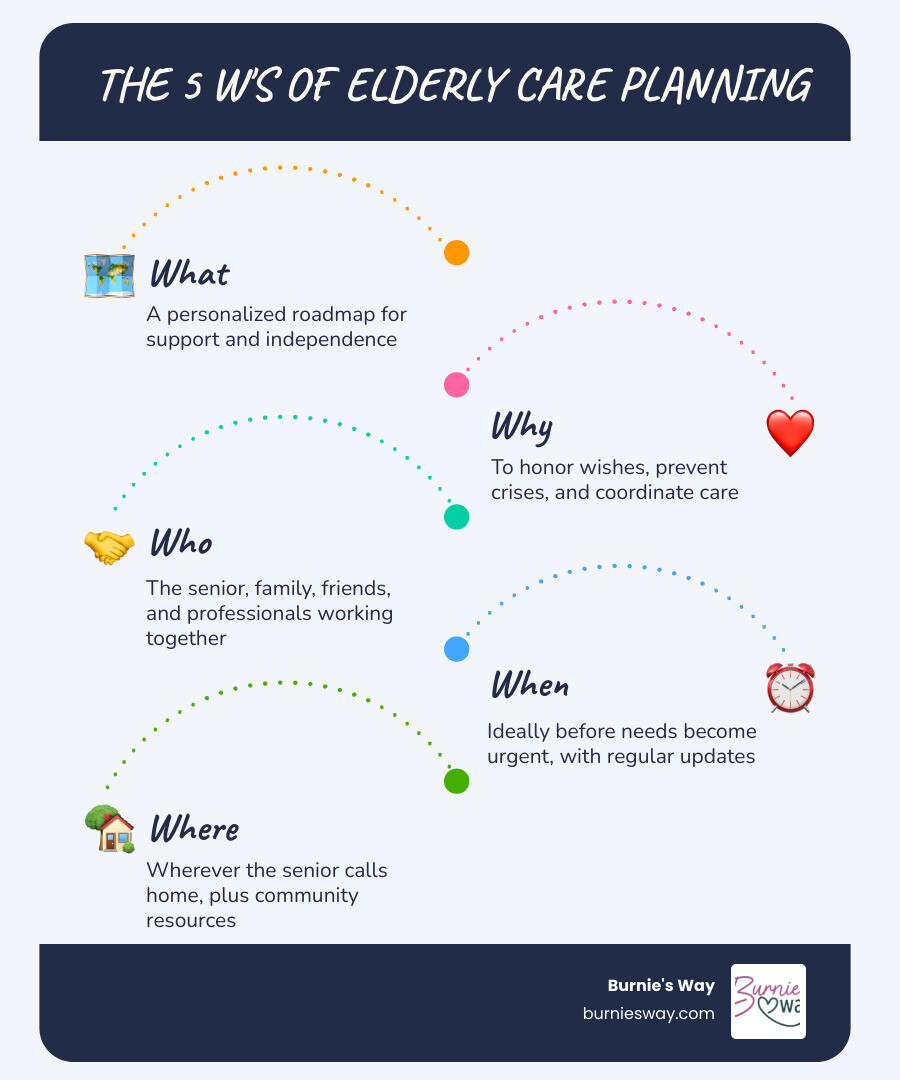
A senior care plan is more than just a checklist; it's a living document, a personalized roadmap designed to identify an older adult's needs and coordinate their support. It summarizes a person's health conditions, specific personal assistance needs, and current routines. The importance of this plan cannot be overstated. It keeps vital information in one place, helps organize and prioritize daily activities, provides a sense of control and confidence, and ensures consistent support, especially when multiple people are involved. Research has shown that personalized care plans have a significant impact on quality of life and positive health outcomes. The more complete a plan is, and the more the support team collaborates, the better the individual manages daily life and chronic health conditions. This proactive approach can even reduce emergency room visits and hospitalizations.
How Does One Assess the Specific Needs of an Elderly Individual for a Care Plan?
Assessing needs is the cornerstone of effective elderly care planning. This involves a holistic look at various aspects of an individual's life:
- Activities of Daily Living (ADLs): These are basic personal care tasks like bathing, dressing, eating, toileting, and transferring (moving from bed to chair). Can your loved one perform these independently?
- Instrumental Activities of Daily Living (IADLs): These are more complex tasks essential for independent living, such as managing finances, preparing meals, managing medications, shopping, using transportation, and communicating by phone or computer. Are they able to handle these effectively?
- Home Safety Check: Is their living environment safe and accessible? We look for potential hazards like loose rugs, poor lighting, or stairs that have become difficult to steer. Are there modifications that could improve their safety and independence?
- Emotional & Social Needs: Beyond physical needs, we consider their emotional well-being. Are they experiencing loneliness or isolation? Do they have opportunities for social interaction and engagement? What hobbies or interests bring them joy?
- Cognitive Function: Are there any concerns regarding memory, decision-making, or problem-solving? This helps tailor support to ensure their cognitive comfort and safety.
By carefully evaluating these areas, we gain a clear picture of where support is needed and where independence can be maintained and encouraged.
Who Should Be Involved in the Creation and Implementation of a Senior Care Plan?
Creating a comprehensive senior care plan is a team effort, and the core of this team is the senior themselves. Their preferences, wishes, and values must always be central to the plan.
The ideal support team includes:
- The Senior: Their input is paramount. We want to empower them to maintain control over their life and choices.
- Family Members: Adult children, spouses, and other close relatives often play crucial roles. They bring deep understanding of the senior's history, personality, and desires.
- Friends & Neighbors: These individuals can provide invaluable social connection, companionship, and sometimes practical assistance like transportation or running errands.
- Trusted Professionals: This might include their primary doctor, specialists, social workers, financial advisors, or elder law attorneys. For lifestyle coordination, a personal concierge service like Burnie's Way can be a vital part of this team.
We recommend holding a family meeting to openly discuss concerns, share observations, and collaboratively make decisions. Resources like The Conversation Project offer excellent guides for initiating these important discussions. Our goal is to turn hard conversations into helpful ones, grounded in support and respect. With a checklist in hand, you can jump-start your journey to amazing coordination and support.
A Comprehensive Guide to Elderly Care Planning
The detailed support plan acts as a central hub for all relevant information. It should be carefully organized and easily accessible to all members of the support team.
Key components to include:
- Important Information: Full name, date of birth, contact information, health insurance details.
- Health Conditions: List all current health conditions, specific treatments, and a detailed medication schedule (dosages, timing, method).
- Daily Routines: Outline typical daily schedules, preferred meal times, sleep patterns, and personal hygiene routines.
- Social Preferences: What activities do they enjoy? Who are their close friends? How do they prefer to stay connected?
- Emergency Contacts: A clear list of who to call in an emergency, including family, doctors, and any emergency response systems.
- Documenting Responsibilities: Clearly assign who is responsible for each task, what the task is, and by when it should be completed. This prevents confusion and ensures nothing falls through the cracks.
- Using Technology for Coordination: We accept technology to streamline communication and organization. Shared digital documents, calendars, or even mobile apps can help minimize confusion and ensure shared understanding among the support team. This is where a personal concierge service can excel in coordinating these efforts.
At Burnie's Way, we understand the importance of seamless coordination. Our approach is built on clear communication and continuous support, as outlined in How We Work. We act as a central point of contact, ensuring everyone on the team is on the same page.
Adapting the Plan as Needs Evolve
Life is dynamic, and so too must be our approach to elderly care planning. A support plan is never truly "finished"; it's a living document that requires regular review and adaptation.
- Dynamic Planning: We recognize that needs can change suddenly (e.g., after a fall or illness) or gradually (e.g., with the progression of a chronic condition). Our plan is designed to be flexible, allowing for adjustments without causing disruption.
- Regular Reviews: We recommend reviewing the plan at least annually, or more often if significant health changes occur. These reviews are opportunities to assess what's working, what isn't, and what new needs have emerged.
- Triggers for Updates: Be alert to changes in physical abilities, cognitive function, medication regimens, living situations, or even personal preferences. These are all signals that an update to the plan is due.
- Maintaining Flexibility: The goal is to provide consistent support while allowing for spontaneity and personal choice. A rigid plan can be counterproductive.
- Creating Backup Plans: What happens if a primary family supporter gets sick or needs to travel? Having short-term and long-term backup plans in place for essential tasks is crucial for peace of mind. This might involve designating substitutes or exploring temporary support services.
research has shown that personalized support plans have an impact on quality of life and positive health outcomes. By adapting the plan, we ensure it continues to meet the evolving needs of our loved one, promoting their independence and well-being.
Exploring the Spectrum of Senior Support Options
Once we've assessed needs and built our initial support team, the next step in elderly care planning is to explore the wide array of available support options. The goal is to find solutions that best suit the senior's preferences, lifestyle, and level of independence.

What are the Different Types of Long-Term Support Services Available, and How Do They Fit into a Support Plan?
When we talk about long-term support, we're referring to a variety of services designed to meet a person’s personal assistance needs when they can no longer perform everyday activities on their own. The need for this support can arise suddenly (like after a stroke) or gradually (with age or chronic illness).
Here are some common types of support services and how they integrate into a comprehensive plan:
- Aging in Place and Home Modifications: Many seniors express a strong desire to remain in their own homes. "Aging in place" emphasizes modifying the home environment to improve safety and accessibility. This might include installing grab bars, improving lighting, adding ramps, or adjusting kitchen layouts. These modifications can significantly prolong independence at home.
- Personal Support Services: These services focus on assisting with ADLs. They can be provided by family, friends, or professional personal assistants. This might include help with bathing, dressing, meal preparation, medication reminders, or even light housekeeping. These services are crucial for maintaining dignity and comfort at home.
- Community-Based Resources: These are local programs designed to support seniors and their families. They include:
- Adult Day Care Programs: Offer supervised activities, social engagement, meals, and personal assistance during the day, providing respite for family members.
- Senior Centers: Provide opportunities for social interaction, recreation, education, and sometimes meals or transportation.
- Transportation and Errand Assistance: For seniors who no longer drive, reliable transportation to appointments, shopping, and social events is vital. This can be arranged through family, volunteers, or specialized services.
- Home-Delivered Meals: Programs like Meals on Wheels ensure seniors receive nutritious food, especially if meal preparation is a challenge.
- Lifestyle Coordination: This is where a service like Burnie's Way truly shines. We act as a personal concierge, coordinating various aspects of a senior's daily life to ensure convenience, connection, and peace of mind. This can include managing schedules, arranging social outings, coordinating errands, and ensuring all personal support services are running smoothly. Our focus is on empowering seniors to live the way they want, with seamless support.
- Residential Options (for educational context only): While our focus is on supporting independence at home, it's important to understand the spectrum. If aging in place becomes unsustainable or unsafe, other options include:
- Assisted Living Facilities: Offer a balance of independence and support, with help for ADLs, meals, and social activities in a community setting.
- Nursing Homes: Provide 24-hour skilled medical care and supervision for those with complex health needs.
- Specialized Dementia Care Units: Designed for individuals with Alzheimer's or other dementias, offering a secure environment and custom programs.
To explore the broader definition of these services, we often refer to resources like What Is Long-Term Care?. Our role at Burnie's Way is to help families steer these choices and coordinate the personal support that fits best, ensuring a life of continued independence and connection. You can learn more about how we support these areas through Our Services.
The Essential Legal and Financial Side of Elderly Care Planning
Beyond daily support, a robust elderly care planning strategy must encompass crucial legal and financial considerations. Addressing these aspects proactively can prevent future crises, protect assets, and ensure wishes are honored.
What Legal and Financial Considerations Should Be Addressed in a Senior Care Plan?
Navigating the legal and financial landscape of senior support can be complex, but it's an essential part of the journey.
- Financial Planning:
- Estimating Costs: We need to understand the potential costs associated with various support options, whether it's home modifications, personal assistance, or other lifestyle coordination services.
- Exploring Insurance Options: Does the senior have long-term care insurance? What does it cover? How can it be used?
- Government Programs: Many families rely on federal and state programs for financial assistance. These include:
- Medicare: Primarily covers hospital stays and medical expenses, but generally has limited coverage for long-term personal assistance.
- Medicaid: A joint federal and state program that can cover long-term personal assistance for those who meet specific income and asset criteria.
- U.S. Department of Veterans Affairs (VA): Offers a range of support services and financial assistance for eligible veterans and their spouses.
- Personal Savings and Investments: How can existing assets be best used to fund future support needs? This might involve consulting with a financial advisor.
- Legal Preparations:
- Power of Attorney (POA): This legal document allows a designated person (the agent) to make financial or legal decisions on behalf of the senior if they become unable to do so. There are different types, including a durable POA that remains in effect if the senior becomes incapacitated.
- Elder Law Attorneys: These specialized attorneys can provide invaluable guidance on estate planning, asset protection, Medicaid planning, guardianship, and other legal matters specific to older adults. Their expertise ensures all documents are legally sound and reflect the senior's wishes.
Understanding these elements gives us a clear picture of how to best protect and use resources. At Burnie's Way, while we don't provide legal or financial advice, we can help coordinate appointments with trusted professionals and ensure that the practical aspects of daily life align with these important plans. We believe in being a comprehensive resource, much like the commitment embodied in Who is Burnie.
Integrating Advance Care Planning into Your Strategy
Beyond financial and legal documents, advance care planning is a profound way to ensure a senior's voice is heard, even if they can no longer speak for themselves.
- What is Advance care planning? It's the process of discussing and preparing for future decisions about medical care if an individual becomes seriously ill or unable to communicate their wishes. The most important part is having meaningful conversations with loved ones.
- Living Wills: This legal document specifies a person's wishes regarding medical treatments at the end of life, such as the use of life support, artificial nutrition, or pain management.
- Healthcare Proxy (or Durable Power of Attorney for Healthcare): This document designates a trusted individual to make medical decisions on the senior's behalf if they become incapacitated. It's crucial to choose someone who understands their values and preferences.
- Importance of Documenting Wishes: You might assume your loved ones know what you would want, but that’s not always true. In one study, people guessed nearly one out of three end-of-life decisions for their loved one incorrectly. Documenting these wishes prevents guesswork and emotional distress for families during difficult times.
- How to Get Started:
- Reflect on personal values and wishes for end-of-life care.
- Talk with their doctor about potential future health decisions.
- Choose a trusted healthcare proxy and discuss values and preferences with them.
- Complete living will and healthcare proxy forms, which can often be found for free through state resources or organizations like AARP and the American Bar Association.
- Share copies of these documents with the healthcare proxy, doctors, and other loved ones.
- Keep the conversation ongoing and update documents as needed, especially after major life events or health changes.
The National Institute on Aging offers excellent resources, including a guide to help facilitate these conversations. You can Download the PDF Advance Care Planning: A Conversation Guide to help structure these discussions.
Finding Support and Resources for Your Journey
We understand that elderly care planning is a significant undertaking, and no one should have to steer it alone. Fortunately, a wealth of support and resources is available to assist families every step of the way.
What Resources Are Available to Assist Families in Developing and Managing a Senior Care Plan?
Finding the right support can make all the difference in creating a successful and sustainable support plan. Here are some key resources we recommend:
- National Resources:
- Eldercare Locator: A public service of the U.S. Administration for Community Living, this tool connects older Americans and their families with trustworthy local support resources. It's an excellent starting point for finding services in your area.
- Local Support:
- Area Agency on Aging (AAA): Every state has at least one AAA that provides specially trained staff and connections to community resources. They can offer guidance on everything from home-delivered meals to adult day programs and transportation.
- State and Local Offices on Aging or Social Services: These agencies often have lists of available services and may offer financial aid programs for home repairs or safety updates.
- Professional Guidance:
- Geriatric Care Managers (Aging Life Care Professionals): These specially trained professionals can help assess needs, form a support plan, and find necessary services. They are particularly helpful when family members live far apart. You can find more information through the Aging Life Care Association.
- Social Workers: Often affiliated with hospitals or healthcare systems, social workers can help connect families with community resources and support groups.
- Support for Family and Friends:
- The Caregiver's Handbook: Caregiving can be demanding. The National Institute on Aging offers a comprehensive guide to getting started with supporting, finding assistance, and taking care of oneself. You can Download or order for free The Caregiver’s Handbook.
- Support Groups: Connecting with others who are facing similar challenges can provide emotional support, practical advice, and a sense of community.
- Respite Services: These services offer temporary relief for primary family members, allowing them to rest and recharge. This can include in-home personal assistance, adult day care, or short stays in residential facilities.
- Preventing Burnout: It's critical for family members to prioritize their own well-being. Asking for help, utilizing available resources, and taking regular breaks are not luxuries, but necessities. We encourage families to explore the resources above and consider how a personal concierge service can alleviate some of the daily coordination burdens.
At Burnie's Way, we often hear questions from families about how to best support their loved ones. Our FAQ section addresses many common concerns, offering insights into our approach to personal support and lifestyle coordination.
Conclusion: Your Partner in Creating a Confident Future
We've covered a lot on our journey through elderly care planning, from the initial assessment of needs to understanding the spectrum of support options and navigating crucial legal and financial considerations.
Let's recap the key steps:
- Assess: Start by thoroughly understanding the senior's individual needs, preferences, and desires.
- Plan: Develop a comprehensive, personalized support plan that outlines routines, contacts, and responsibilities.
- Communicate: Foster open and honest dialogue among all members of the support team, including the senior, family, friends, and professionals.
- Adapt: Recognize that the plan is a living document, requiring regular reviews and adjustments as needs evolve.
Elderly care planning is indeed a journey, not a destination. It's a continuous process of understanding, adjusting, and ensuring our loved ones can live with dignity, independence, and joy. The peace of mind this thoughtful planning brings to families is immeasurable, knowing that their senior is safe, supported, and living life on their own terms.
At Burnie's Way, we are proud to be a partner in this journey. We are not a caregiving or healthcare provider, but rather a personal concierge service dedicated to empowering aging adults to live comfortably and confidently at home. We help them live the way they want, with seamless support in key areas of daily life, and give families peace of mind that everything’s okay. Our personalized approach, backed by experience, provides continuous support and lifestyle coordination for comprehensive daily life management. We act as a virtual companion, events coordinator, and personal assistant—all wrapped into one. Compassionate, competent, and full of heart, we're here to help coordinate trusted services and routines that make life easier.
We believe that every senior deserves a life filled with connection, independence, and ease. Our story is one of dedication to enhancing the lives of aging adults and their families, and we invite you to learn more about Our Story.
Explore how personalized support can make a difference in your family's journey. Learn more about our services.