
Beyond Bingo: How Elderly Social Interaction Boosts Brains and Bliss

Why Social Connection Matters More Than Ever for Aging Adults
Elderly social interaction isn't just about filling time or staying busy. It's a fundamental pillar of healthy aging that impacts everything from brain function to longevity. If you're worried about an aging parent living alone or struggling to stay connected, you're not alone—and the science shows your concern is valid.
Quick Answer: Key Benefits of Elderly Social Interaction
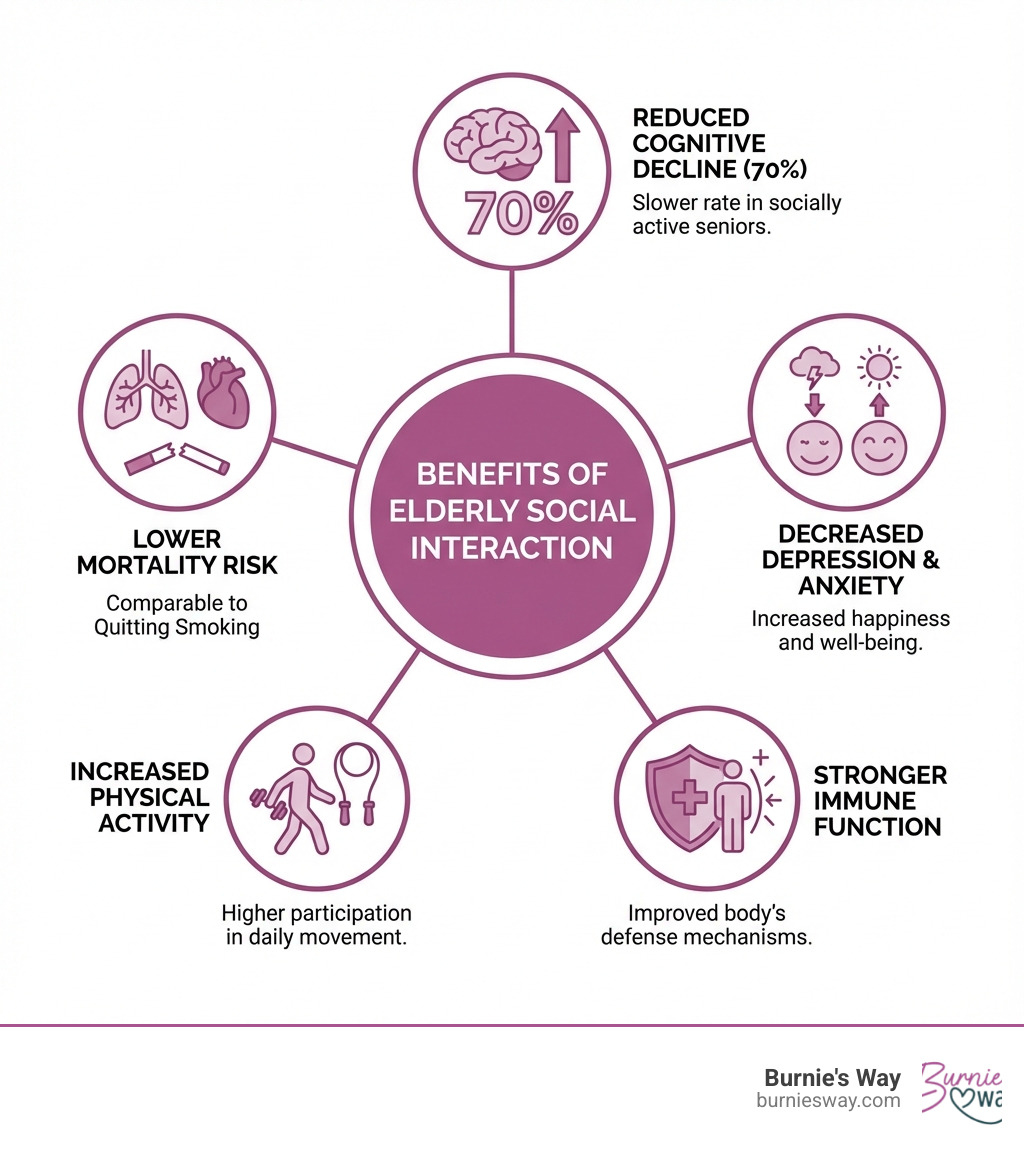
- Cognitive Health: 70% slower rate of cognitive decline in socially active seniors
- Physical Health: Lower risk of heart disease, stroke, and premature death
- Mental Health: Reduced depression and anxiety, increased happiness
- Longevity: Social isolation increases mortality risk as much as smoking 15 cigarettes daily
Here's the reality: up to one-third of adults over 45 feel lonely, and 22% of people ages 50-plus socialize less than once a week. The health consequences are serious. Studies show that loneliness and social isolation are associated with higher risks for health problems such as heart disease, depression, and cognitive decline.
But here's the good news—social connection is something we can actively improve, even in later years. Whether your parent lives independently or needs coordination support, there are proven ways to foster meaningful connections that boost both brain function and overall happiness.
The research is clear: seniors who interact with people beyond their usual circle of family and close friends tend to have higher levels of physical activity, more positive moods, and better cognitive function. This isn't about forcing introverts to attend endless social events—it's about finding the right kinds of connection that work for each individual.
We'll explore the science-backed benefits of social interaction for older adults, identify the common barriers that lead to isolation, and share practical strategies you can implement today. Whether you're an adult child coordinating care or helping an aging parent maintain independence, you'll find actionable guidance to help your loved one stay connected and thriving.
The Hidden Epidemic: Understanding Loneliness in Seniors
When we talk about seniors feeling disconnected, it's important to understand two distinct, yet often intertwined, concepts: loneliness and social isolation. While they might sound similar, they represent different experiences with unique implications for well-being.
What is the difference between loneliness and social isolation in older adults? Loneliness is a subjective, often distressing, feeling of being alone or separated from others. It's a perception that your social connections are lacking in quality or quantity. You can be surrounded by people and still feel profoundly lonely. Social isolation, on the other hand, is an objective state—it refers to the actual lack of social contacts and having few people to interact with regularly. Someone can live alone and not feel lonely if they have meaningful connections, while someone living in a busy community might feel lonely if those interactions aren't fulfilling.
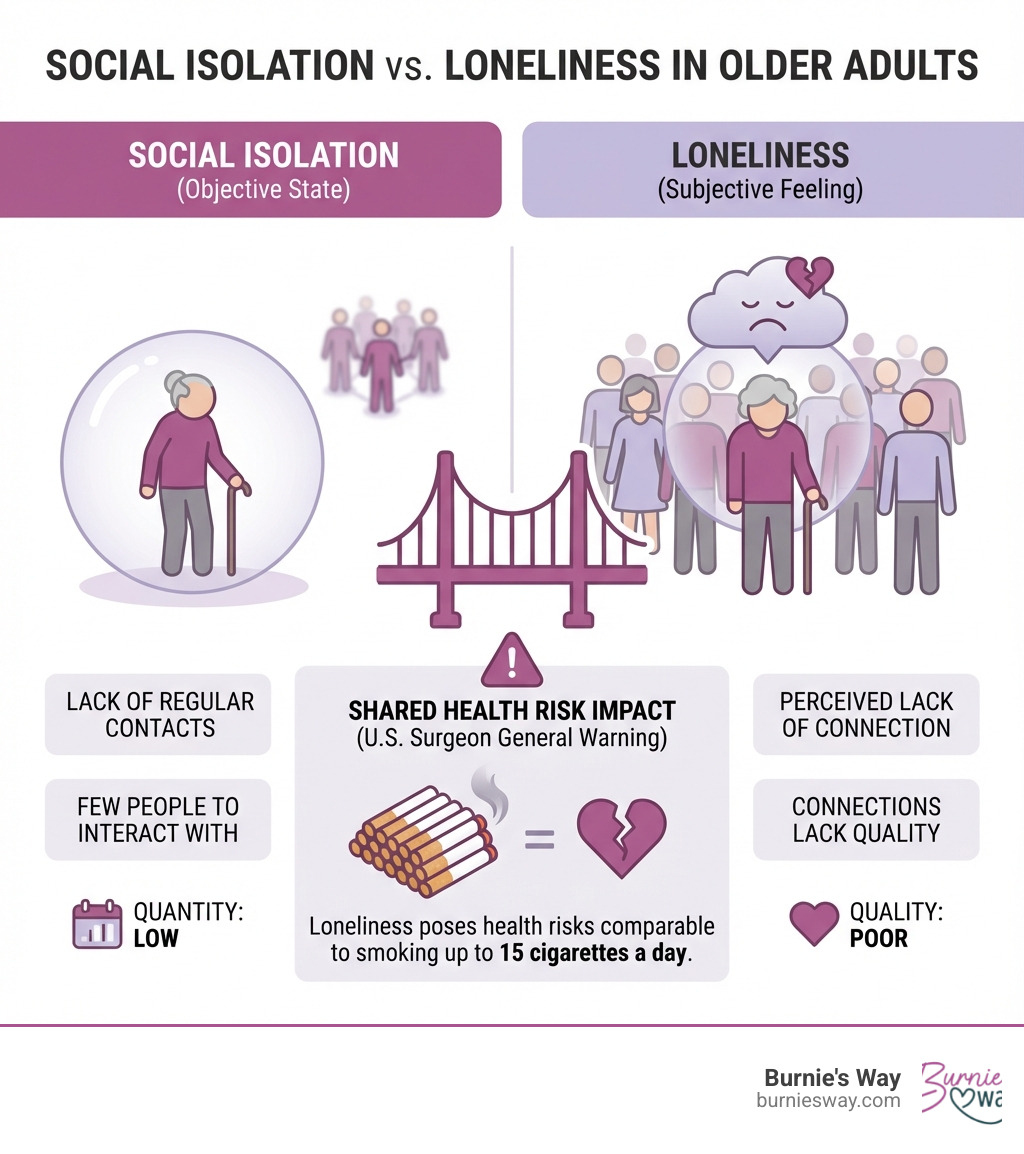
The distinction is crucial because both states can significantly impact health. As the U.S. Surgeon General has warned, loneliness poses health risks as deadly as smoking up to 15 cigarettes a day. This isn't just a fleeting feeling; it's a serious public health concern.
Consider these statistics from a 2024 AARP survey:
- 44% of adults ages 50-plus in the United States report becoming happier over time.
- Despite this, 22% of people ages 50-plus socialize less than once a week.
- Over one-third of adults over the age of 45 in the United States feel lonely.
These numbers highlight a paradox: many older adults report increasing happiness, yet a significant portion also experiences infrequent social interaction and loneliness. This suggests that while general well-being might improve with age for some, the need for meaningful connection remains vital. The World Health Organization (WHO) reports that up to one in three older people feel lonely in some countries and regions, including the USA, underscoring the global scale of this issue.
The Powerful Health Benefits of Social Connection
The impact of social connection on our overall health is undeniable. Conversely, social isolation and loneliness don't just feel bad; they actively erode our well-being. Studies show that these conditions are associated with higher risks for health problems such as heart disease, depression, and cognitive decline. Adults who are lonely or socially isolated tend to be less healthy, experience longer hospital stays, are readmitted to the hospital more often, and are more likely to die earlier than those with meaningful and supportive social connections. In fact, the effect of social isolation and loneliness on mortality has been compared to that of other well-established risk factors like smoking, obesity, and physical inactivity.
The National Academies of Sciences, Engineering, and Medicine have conducted extensive research on The Health and Medical Dimensions of Social Isolation and Loneliness in Older Adults, confirming the profound negative consequences. Loneliness can manifest physically through symptoms like high blood pressure, heart disease, obesity, and a weakened immune system, as highlighted by Mayo Clinic research on the risks associated with loneliness. For more information on the link between social isolation and increased mortality risk, you can explore resources discussing all-cause mortality.
Sharper Mind, Slower Cognitive Decline
One of the most compelling benefits of elderly social interaction is its profound effect on brain health. Our brains thrive on stimulation, and social engagement provides a rich environment for this.
How does social interaction benefit seniors' cognitive health? Engaging in conversations, sharing stories, and participating in group activities all require mental effort—processing information, recalling memories, and problem-solving. This acts as a workout for the brain, helping to build cognitive reserve. Research has shown remarkable results: a study measuring how social activity affected cognitive decline found that the rate of cognitive decline was 70 percent less in people with frequent social interactions than those with low social interactions over a 12-year period. This insightful Research on social activity and cognitive decline underscores the power of connection.

Beyond just slowing decline, social interaction also plays a role in maintaining memory function and overall mental sharpness. The NIH highlights that addressing factors like higher rates of cognitive decline can involve improving social engagement, often by addressing underlying issues like hearing loss that can hinder participation.
A Stronger Body and Immune System
While the mental benefits are clear, elderly social interaction also has a significant positive impact on physical health. It's not just about feeling good; it's about living healthier and longer.
How does social interaction benefit seniors' physical health? Social connections often serve as a powerful motivator for physical activity. When we have plans with friends or participate in group activities, we're more likely to get out and move. This could be anything from a leisurely walk in the park to joining a senior fitness class. Research published by Harvard Health notes that Broader social interaction keeps older adults more active, showing that interacting with a wider range of people beyond close family and friends can lead to higher levels of physical activity.
The Centers for Disease Control and Prevention (CDC) emphasizes the importance of being physically active for older adults, and social interaction can be the catalyst. Regular physical activity, encouraged by social engagement, leads to reduced health risks such as heart disease, stroke, and obesity.
Furthermore, strong social ties are linked to a more robust immune system. Chronic loneliness and isolation can lead to increased stress, which in turn can weaken the body's ability to fight off illness. Socially connected individuals tend to have lower blood pressure and better sleep patterns, both of which contribute to overall physical resilience. The PBS Newshour reiterates that Loneliness carries health risks comparable to significant lifestyle factors, reinforcing the idea that social connection is a vital component of a healthy lifestyle.
Key Benefits of elderly social interaction for Emotional Health
Perhaps the most intuitive benefit of elderly social interaction is its positive influence on emotional well-being. We are, after all, social creatures, and connection nourishes our souls.
How does social interaction benefit seniors' emotional health? Regular and meaningful social connections are powerful antidotes to feelings of sadness and worry. They significantly reduce the risk of depression and lower anxiety levels. When we feel connected, we experience increased happiness and a greater sense of purpose. This leads to higher life satisfaction and a more positive outlook on aging.
Research consistently demonstrates that loneliness is a risk factor that contributes to the development of major depressive disorder. However, studies on social interventions show significant evidence that social support and feeling connected can mitigate depression and improve overall mental health. A study led by Dr. Denis Gerstorf indicates that living a socially active life and prioritizing social goals are associated with higher late-life satisfaction and enjoyment.
The AARP's "Social Connections Are a Key to Happiness" survey found that 74% of adults cited in-person socializing as key to their happiness, and 49% said virtual socializing was a factor. This clearly illustrates the strong link between social engagement and positive emotions.
Here's a snapshot of how social activity can influence emotional states:
| Emotional Aspect | Socially Active Seniors | Socially Isolated Seniors |
|---|---|---|
| Happiness & Enjoyment | Higher levels of positive moods and enjoyment | Increased feelings of sadness and emotional pain |
| Depression Risk | Significantly reduced risk of developing depression | Higher risk of major depressive disorder |
| Anxiety Levels | Lower levels of stress and anxiety | Heightened levels of stress, anxiety, and social apprehension |
| Sense of Purpose | Stronger sense of belonging, value, and meaning | Feelings of purposelessness and decline in self-esteem |
| Life Satisfaction | Greater overall satisfaction with life and sense of fulfillment | Lower quality of life and diminished emotional well-being |
Common Causes of Social Isolation in Older Adults
Understanding the profound benefits of social interaction makes it even more critical to address the factors that often lead to its decline in later life. Social isolation among seniors isn't usually a choice; it's often a consequence of various life changes and challenges.
What are the primary causes of social isolation and loneliness among the elderly? Many factors contribute to seniors becoming socially isolated or feeling lonely. These can range from natural life transitions to physical and logistical problems. The National Institute on Aging (NIA) provides comprehensive insights into Loneliness and Social Isolation — Tips for Staying Connected, highlighting many of these risk factors.
Navigating Major Life Transitions
Life is a series of transitions, and for older adults, some of these can profoundly disrupt social networks.
- Retirement: While often anticipated with joy, retirement can create a significant social void. The daily interactions with colleagues, the shared purpose of work, and the routine of leaving the house all vanish. As noted by the Mayo Clinic in "A Surprising Key to Healthy Aging: Strong Social Connections," Retirement often reduces the number of social contacts an individual has, requiring conscious effort to build new social structures.
- Loss of a Spouse or Friends: This is perhaps one of the most devastating causes of isolation. The death of a life partner removes a primary source of companionship and support, often leaving a gaping hole in daily life. Similarly, as friends pass away, a senior's social circle can shrink dramatically.
- Adult Children Moving Away: As children establish their own lives, careers, and families, they may move to different cities or states, reducing the frequency of in-person visits and a sense of immediate family connection.
- Downsizing a Home: Moving from a long-time family home to a smaller residence, or even a different neighborhood, can mean leaving behind familiar neighbors, community groups, and established routines.
Overcoming Physical and Logistical Problems
Beyond life events, physical changes and practical challenges can also act as significant barriers to elderly social interaction.
- Mobility Challenges: Difficulty walking, balancing, or navigating stairs can make it hard to leave the house, attend events, or even visit friends.
- Giving Up Driving: Loss of independent transportation is a major hurdle. It limits access to social gatherings, errands, and community activities, leading to increased reliance on others or staying home.
- Hearing or Vision Loss: These sensory impairments can make social situations frustrating and isolating. Difficulty hearing conversations in a noisy room, for instance, can lead to withdrawal. The NIH notes that addressing higher rates of cognitive decline often involves correcting hearing issues, as the brain can "stop listening" when it can't hear.
- Chronic Illness: Managing ongoing health conditions can drain energy, require frequent medical appointments, and make social outings feel overwhelming or impossible.
These factors, alone or in combination, can make it incredibly difficult for seniors to maintain the vibrant social lives they once enjoyed. Recognizing these causes is the first step toward finding effective solutions.
Practical Strategies for Robust Elderly Social Interaction
The good news is that while social isolation presents significant challenges, there are many practical and effective strategies seniors and their families can implement to foster robust elderly social interaction. It's about being proactive and creative in building and maintaining connections.
What practical strategies and activities can seniors and their families implement to stay socially connected? From engaging in community events to leveraging modern technology, the options are diverse. The National Institute on Aging offers excellent Loneliness and Social Isolation — Tips for Staying Connected, providing a wealth of actionable advice.
Finding Your Tribe: Activities and Groups for elderly social interaction
For many seniors, the key to staying connected lies in finding groups and activities that align with their interests and provide a sense of belonging.
- Hobby Classes: Whether it's painting, pottery, creative writing, or learning a new language, classes offer a structured way to meet like-minded individuals.
- Book Clubs: A wonderful way to engage intellectually and socially, book clubs provide a regular opportunity for discussion and camaraderie.
- Walking Groups: Combining physical activity with social interaction, walking groups are a low-impact way to stay fit and make friends.
- Volunteer Opportunities: Giving back to the community can provide immense purpose and countless social interactions. This could be at a local hospital, library, animal shelter, or food bank.
- Senior Centers: These community hubs often offer a wide array of activities, from bingo and card games to fitness classes, dances, and day trips. SeniorLiving.org's "What Are the Benefits of Social Interaction for Seniors?" article highlights the value of Senior living communities and their built-in social activities.
- Faith-Based Groups: Churches, synagogues, mosques, and other religious organizations often have active senior groups that provide spiritual enrichment and a strong social network.
The Mayo Clinic also suggests that joining groups related to hobbies or physical activities can be a great way to build connections, as highlighted in "A Surprising Key to Healthy Aging: Strong Social Connections."
The Joy of Intergenerational Connections
Connecting with younger generations offers unique benefits, providing seniors with a fresh perspective, a sense of purpose, and opportunities to share their wisdom.
What role does intergenerational interaction play in the lives of older adults? Intergenerational programs bridge age gaps, creating mutually beneficial relationships. Seniors can find immense joy and fulfillment in:
- Mentoring Youth: Sharing life experiences and professional knowledge with younger individuals can provide a profound sense of value and contribution.
- Reading to Children: A "successful program in Baltimore" saw older adults reading to children in public schools. This not only benefited the children but also provided the seniors with a meaningful activity that got them out of the house, boosting their physical and social engagement. This example is cited in research found via A successful program in Baltimore.
- Sharing Skills with Younger Generations: Teaching a craft, cooking, gardening, or a musical instrument allows seniors to pass on valuable skills and connect over shared passions.
- Family Gatherings: Encouraging regular multi-generational family events, from holiday dinners to casual barbecues, reinforces family bonds and provides a natural environment for intergenerational interaction. SeniorLiving.org emphasizes the importance of intergenerational interaction in "The Importance of Social Interaction for Seniors," noting it fosters understanding and empathy.
Leveraging Technology to Bridge Distances
Technology, often seen as a tool for the young, has become an invaluable asset for fostering elderly social interaction, especially for those with mobility challenges or distant family members.
How can technology be leveraged to facilitate social connections for seniors?
- Video Calls: Platforms like Zoom, FaceTime, or Google Meet allow seniors to see and speak with family and friends, no matter the distance. This visual connection can significantly reduce feelings of isolation.
- Social Media: While some seniors may be hesitant, platforms like Facebook can be custom to connect with family, old friends, and groups sharing common interests.
- Online Classes and Virtual Book Clubs: Many organizations, including AARP, offer online learning opportunities. The AARP's "Staying Sharp: Happiness and Making Connections" initiative actively promotes engaging programs like their Staying Sharp AARP program that can be accessed virtually. These provide mental stimulation and social interaction from the comfort of home.
- Virtual Gaming: Online games, particularly those that are turn-based or cooperative, can be a fun way to interact with others.
The NIA's tips for staying connected also highlight the use of communication technologies like video chat and smart speakers. For those who aren't tech-savvy, many local libraries and community centers offer free classes to help seniors learn these new skills, making the digital world accessible. AARP's survey also found that 49% of adults 50+ cited virtual socializing as a factor in their happiness, proving its significant role.
Frequently Asked Questions about Elderly Social Interaction
We understand that you might have specific questions about fostering social connections for older adults. Here, we address some common inquiries to provide further clarity and practical advice.
What is the difference between loneliness and social isolation?
This is a crucial distinction. As we discussed earlier, loneliness and social isolation are not the same thing.
- Loneliness is a subjective feeling of being alone or disconnected. It's an emotional state where you perceive a gap between the social connections you have and the social connections you desire. You can be surrounded by people and still feel lonely if those interactions aren't meaningful to you.
- Social Isolation is an objective state characterized by a lack of social contacts and having few people to interact with regularly. It's a measurable absence of social ties. You can be socially isolated (e.g., live alone, rarely leave the house) but not feel lonely if you are content with your level of social interaction.
Essentially, loneliness is about the quality of your connections, while social isolation is about the quantity and frequency of your interactions. Both, however, can have significant negative impacts on health and well-being.
How often should a senior socialize?
There's no single "magic number" for how often a senior should socialize, as individual needs and preferences vary greatly. The focus should be on quality over quantity and finding interactions that are meaningful and fulfilling for the individual.
However, research does offer some insights:
- AARP data indicates that 22% of people ages 50-plus socialize less than once a week. Given the health benefits of social interaction, this suggests that many could benefit from more frequent engagement.
- Studies, like those highlighted by Harvard Health on Broader social interaction keeps older adults more active, suggest that interacting with people beyond your usual circle of family and close friends can lead to higher levels of physical activity and more positive moods. This implies that varied social engagements are beneficial.
We generally recommend aiming for meaningful connection several times a week. Even brief, positive interactions—like a chat with a neighbor, a phone call with a friend, or a quick video call with family—can make a difference. The goal is consistent, positive social engagement that prevents prolonged feelings of isolation or loneliness.
What if a senior is an introvert and doesn't enjoy large groups?
It's absolutely essential to respect an individual's personality and preferences. Not everyone thrives in large, busy social settings, and that's perfectly normal! The benefits of elderly social interaction aren't exclusive to extroverts.
For introverted seniors, the focus should shift to:
- One-on-One Interactions: Encourage regular visits, phone calls, or video chats with one or two close friends or family members. These deeper, more intimate connections can be far more fulfilling for an introvert than superficial group interactions.
- Small Group Settings: Instead of large parties, suggest smaller gatherings like a quiet dinner with a few friends, a bridge club, or a book discussion group.
- Purpose-Driven Socializing: Introverts often enjoy social interactions that revolve around a shared activity or purpose. This could be a specialized hobby class (e.g., a painting workshop), volunteering for a cause they care about, or even attending lectures or workshops on topics of interest. The social aspect is secondary to the activity itself, making it less overwhelming.
- Online Communities: Virtual platforms can be ideal for introverts, allowing them to engage in discussions and connect with others from the comfort and privacy of their own home, on their own terms.
The key is that the quality of connection matters most. Even a few strong, supportive relationships can provide all the benefits of social interaction without requiring an introvert to step too far outside their comfort zone. It's about finding what feels good and authentic for them.
Conclusion: Building a Life Rich with Connection
As we've explored, elderly social interaction is far more than just a pleasant pastime. It's a critical component of healthy aging, offering profound benefits for mental, emotional, and physical well-being. From sharper minds and stronger bodies to reduced risks of depression and increased happiness, the evidence is overwhelming: connection truly is a cornerstone of a fulfilling later life.
We understand that life changes, physical limitations, and logistical challenges can make maintaining these vital connections difficult. But the good news is that with proactive planning, community engagement, and leveraging technology, there are countless ways to foster meaningful social interactions. Whether it's finding a new hobby group, connecting with younger generations, or simply making a regular video call to a loved one, every step toward connection makes a difference.
At Burnie's Way, we believe that every individual deserves to live a life rich with purpose, independence, and connection. While we don't provide in-home care or medical services, we act as a personal concierge and trusted partner, helping to coordinate activities and find resources that foster independence and connection. Our personalized approach is designed to help your loved one live the way they want, with support in key areas of daily life, and giving families peace of mind that everything’s okay.
We're here to help you steer the landscape of options and ensure your loved one stays engaged and thriving. Let's work together to build a life full of joyful connections.
Learn how Burnie's Way can help you or your loved one stay connected