
Healthy and Prepared: Your Guide to Home Food Delivery for Seniors

When Getting a Good Meal Becomes a Daily Challenge
Home food delivery for seniors is one of the most practical ways to make sure an aging parent eats well, stays independent, and doesn't fall through the cracks — even when family can't be there every day.
Here's a quick look at the main options available:
| Type | Best For | Cost Range |
|---|---|---|
| Meals on Wheels (local programs) | Homebound seniors 60+, low income | Free to sliding scale |
| Medically tailored meal delivery (e.g., Mom's Meals) | Seniors with diabetes, renal disease, heart conditions | ~$9.50/meal or covered by Medicaid/Medicare Advantage |
| Meal kit delivery (e.g., HelloFresh) | Seniors who enjoy cooking and want fresh ingredients | Varies by plan |
| In-home personal chef (e.g., Chefs for Seniors) | Seniors wanting customized, freshly cooked meals | Comparable to delivery services |
| Grocery delivery (phone-based concierge) | Seniors without smartphones who need flexible shopping help | Service fee + groceries |
| Community/government food programs (CSFP, food banks) | Low-income seniors 60+ | Free |
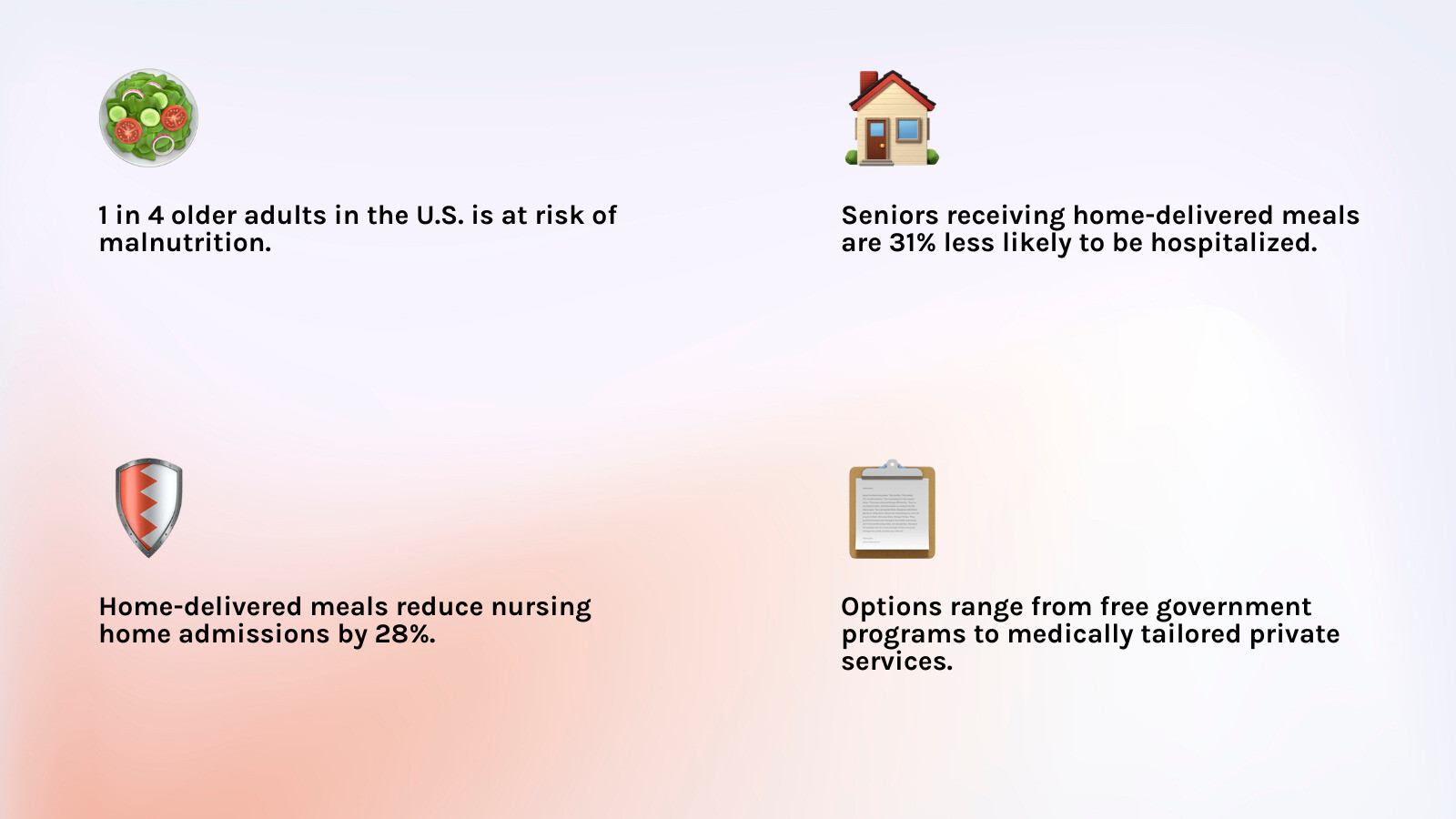
Nearly 1 in 4 older adults in the U.S. is at risk of malnutrition. And yet, eating well is one of the most powerful things a senior can do to stay health at home. Research shows that seniors who receive home-delivered meals are 31% less likely to be hospitalized and 28% less likely to enter a nursing home.
For many adult children, the worry isn't just whether Mom or Dad is eating — it's whether they're eating enough of the right things, consistently, without needing help they're reluctant to ask for.
The good news: there are more options than ever, across every budget and lifestyle.
This guide breaks down every major type of service, how to find what's available near you, and how to set things up — even from across the country.
Understanding Home Food Delivery for Seniors
As we look at the landscape of healthy aging in June 2026, the demand for reliable food solutions is higher than ever. Preparing fresh meals every single day requires physical strength, cognitive focus, and reliable transportation—things that can become challenging as our loved ones age.
When shopping and cooking become overwhelming, nutrition is often the first thing to suffer. Seniors might resort to highly processed convenience foods, skip meals entirely, or eat repetitive diets that lack essential nutrients.

This nutritional decline can quickly lead to fatigue, muscle loss, and a weakened immune system. By establishing a reliable routine for Home Food Delivery for Elderly relatives, families can protect their loved ones' health while preserving their treasured independence. State-level programs, such as those coordinated via Nutrition & Meals - DARS, emphasize that consistent access to balanced meals is a cornerstone of community-based support for older adults.
The Nutritional Importance of Home Food Delivery for Seniors
A balanced diet is a powerful shield against the progression of chronic conditions. For older adults, nutritional needs change significantly. The body requires fewer calories but needs more nutrient-dense options to maintain bone density, muscle mass, and cognitive function. Key dietary elements that seniors must focus on include:
- Vitamin B12 and Vitamin D: Essential for nerve function, red blood cell production, and bone health. Absorption of these vitamins naturally declines with age.
- Dietary Fiber: Crucial for digestive health and heart health, helping to manage cholesterol and blood sugar levels.
- Sodium Reduction: Crucial for managing hypertension and reducing the strain on the heart and kidneys.
- Hydration Support: Because the natural sense of thirst diminishes with age, eating foods with high water content (like vegetables and stews) helps prevent dehydration.
When a senior utilizes a tailored meal delivery service, these complex nutritional calculations are handled by registered dietitians. This takes the guesswork out of healthy eating and ensures that every bite supports their overall well-being.
How to Choose the Right Home Food Delivery for Seniors
Finding the perfect food delivery match requires looking at a senior’s unique physical abilities, health goals, and living situation. Consider these three main factors:
- Dietary and Medical Needs: Does the senior require strict sodium limits, a diabetic-friendly menu, or soft foods that are easy to chew?
- Preparation and Physical Ability: Can they safely use a microwave or oven? If they have severe arthritis or cognitive decline, opening complex plastic packaging or operating kitchen appliances might be difficult. In these cases, families often explore options like Meal Preparation Assistance as part of an Elderly In-Home Care plan.
- Kitchen Storage: Do they have enough freezer and refrigerator space to store a week's worth of meals at once? Many prepared meal services deliver 7 to 14 meals in a single shipment, which can quickly crowd a standard refrigerator.
Types of Meal and Grocery Delivery Services
The world of home food delivery has expanded far beyond the traditional "foil tray" deliveries of the past. Today, services range from highly clinical, medically tailored programs to premium culinary experiences.

Seniors can mix and match these options depending on their energy levels and appetite. For example, some may prefer a few fully prepared meals for low-energy days, supplemented by a Senior Grocery Delivery service to keep their kitchen stocked with fresh fruit and milk.
Fully Prepared and Medically Tailored Meals
For seniors managing chronic health conditions, medically tailored meals (MTMs) are an absolute game-changer. These meals are designed by registered dietitians to align with specific clinical guidelines, helping to manage illness and speed up recovery after a hospital stay.
Providers of prepared meals typically offer menus categorized by medical necessity:
- Diabetic-Friendly: Carefully portioned carbohydrates and high fiber to prevent blood sugar spikes.
- Renal Support: Strictly controlled levels of phosphorus, potassium, and sodium for kidney health.
- Low-Sodium & Heart-Healthy: Flavorful meals crafted with herbs and spices instead of salt to protect cardiovascular health.
- Easy-to-Chew / Soft Foods: Designed for individuals with dysphagia or dental challenges.
These meals are fully cooked, flash-frozen or refrigerated, and delivered right to the door. To learn more about how prepared meals support long-term wellness, you can read about Home Delivered Meals: Helping Caregivers Support Their Loved Ones.
Typically, these prepared meals have a refrigerator shelf life of up to 14 days, or they can be stored in the freezer for several months. Reheating is incredibly simple—usually requiring just 3 to 5 minutes in a microwave or a short cycle in a conventional oven.
Grocery Delivery and Meal Kits
For older adults who still love the ritual of cooking but want to skip the physical exhaustion of walking through giant supermarkets, grocery delivery and meal-kit subscriptions are fantastic options.
Meal kits provide pre-portioned fresh ingredients along with step-by-step recipe cards. This eliminates the stress of meal planning and food waste, allowing seniors to enjoy a fresh, home-cooked dinner in about 30 minutes.
For standard grocery shopping, mobile apps can sometimes be confusing or frustrating for older adults. Fortunately, modern phone-based concierge services now allow seniors to order groceries, household essentials, and prescriptions using a simple, traditional phone call. Services like Grocery Delivery For Seniors & Disabled People Made Easy connect seniors directly to local stores without requiring a smartphone or tablet.
This hybrid approach keeps seniors actively involved in their food choices, whether they are ordering fresh ingredients for themselves or coordinating with family members through Grocery Shopping Assistance or Grocery Shopping for Elders programs.
Navigating Eligibility, Costs, and Funding
One of the biggest hurdles families face is figuring out how to pay for these services. Fortunately, depending on a senior's income, geographic location, and health status, there are multiple pathways to secure free, subsidized, or private-pay food delivery.
Government and Non-Profit Programs
For seniors on limited budgets, government-funded and non-profit programs provide an essential safety net. The Older Americans Act Nutrition Program funds local community nutrition resources across the country, ensuring that older adults have access to healthy food regardless of their financial situation.
- Meals on Wheels: Serving millions of seniors annually, this program provides hot or frozen meals directly to homebound individuals aged 60 and older. Meals are often provided on a voluntary donation basis or a sliding scale. You can find your local branch using the Find Meals and Services Near You | Local Provider Search tool.
- Commodity Supplemental Food Program (CSFP): This federal program provides monthly boxes of nutritious, shelf-stable foods to low-income seniors.
- Local Community Resources: In Virginia, regional organizations like Home Delivered Meals - Encompass Community Supports deliver fresh, diet-approved meals to eligible individuals, while offering a friendly face and a quick check-in at the door. Some local programs even publish monthly calendars in advance, such as the Home Delivered Menus December | Age Well Senior Services archive, which serves as a great example of how these programs maintain dietary variety.
Seniors and their families can explore these options to secure reliable Help for Seniors Living at Home.
Private Pay and Insurance Coverage
If a senior does not qualify for low-income public programs, there are still ways to reduce out-of-pocket expenses. Many Medicare Advantage (Part C) plans and state Medicaid waivers now recognize "Food as Medicine" and cover the cost of home-delivered meals—especially for those transitioning home after a hospital discharge or managing severe chronic illnesses.
For example, eligible residents can learn about qualifying for state-backed nutrition plans via Virginia Medicaid Home-Delivered Meal Plans - Mom's Meals. Additionally, you can check your eligibility for insurance-reimbursed nutrition programs at Free Meals for Seniors on Medicare or Medicaid | Home-Delivered.
| Program Type | Primary Target | Typical Cost to Senior | How to Apply |
|---|---|---|---|
| Meals on Wheels | Homebound seniors 60+ | Free or small suggested donation | Local Area Agency on Aging (AAA) |
| Medicaid/Medicare Advantage | Seniors with eligible health plans or chronic conditions | $0 out-of-pocket (if fully covered) | Contact insurance provider or case manager |
| Private Pay (Prepared Meals) | Any senior wanting convenience | $7.00 - $12.00 per meal | Direct signup with provider |
| Private Pay (Meal Kits) | Active seniors who enjoy cooking | $9.00 - $14.00 per serving | Direct signup with provider |
Frequently Asked Questions about Senior Meal Delivery
How long do home-delivered meals stay fresh?
Fully prepared, refrigerated meals typically stay fresh in the refrigerator for up to 14 days from the delivery date. Each meal container is individually sealed and labeled with a "use-by" or "freeze-by" date. If your loved one cannot finish the meals within that two-week window, most prepared meals can be placed directly into the freezer to extend their shelf life for several months. Always ensure that frozen meals are reheated thoroughly according to the package instructions to maintain food safety.
Can long-distance family members set up these services?
Yes, absolutely! Managing care from afar is one of the most common challenges for modern families. Most private meal delivery companies and local non-profits allow adult children to act as the primary account managers. You can easily set up recurring payments, select weekly menus online, track delivery dates, and receive notifications when a shipment has arrived.
For families who want an extra layer of reassurance, coordinating these deliveries alongside Daily Life Assistance is a wonderful way to ensure that someone is physically present to help put the meals away, check expiration dates, and offer warm companionship.
What if a senior cannot use a smartphone to order?
Technology should never be a barrier to good nutrition. Many senior-focused delivery programs offer offline solutions, including:
- Phone-Based Ordering: Allowing seniors or their designated helpers to place orders over the phone with a live customer service representative.
- Standing Weekly Orders: Setting up a "Subscribe & Save" or recurring order that automatically delivers a pre-selected variety of meals every week without requiring any online interaction.
- Paper Brochures: Some services provide printed physical menus and order forms that can be mailed back or handed directly to delivery drivers.
Conclusion
Ensuring that an older adult has access to delicious, healthy, and safe meals does not have to be a source of stress. Whether through a medically tailored meal program, a local volunteer-led initiative, or a flexible grocery delivery service, the right solution can transform a senior's daily routine, giving them energy and keeping them safely in the home they love.
While meal delivery solves the equation of what to eat, maintaining a vibrant, independent life at home often involves a few other daily logistics. When families need an extra hand coordinating these moving parts, we are here to help.
At Burnie's Way, we act as a personal concierge and companion for aging adults. While we do not provide clinical healthcare or medical caregiving services, we specialize in helping seniors manage their daily routines, coordinate trusted household services, and stay connected to their communities. If your family is navigating the transition to aging in place, we invite you to explore how we can bring you peace of mind.
Learn more about our companion services and Assistance with Daily Activities by visiting us at Explore Burnie's Way Services.