
Why Home Food Delivery for Elderly Matters More Than You Think
Home food delivery for elderly adults is one of the most practical ways to help an aging parent stay independent, well-nourished, and safe at home — without adding more to your already full plate.
Here is a quick look at your main options:
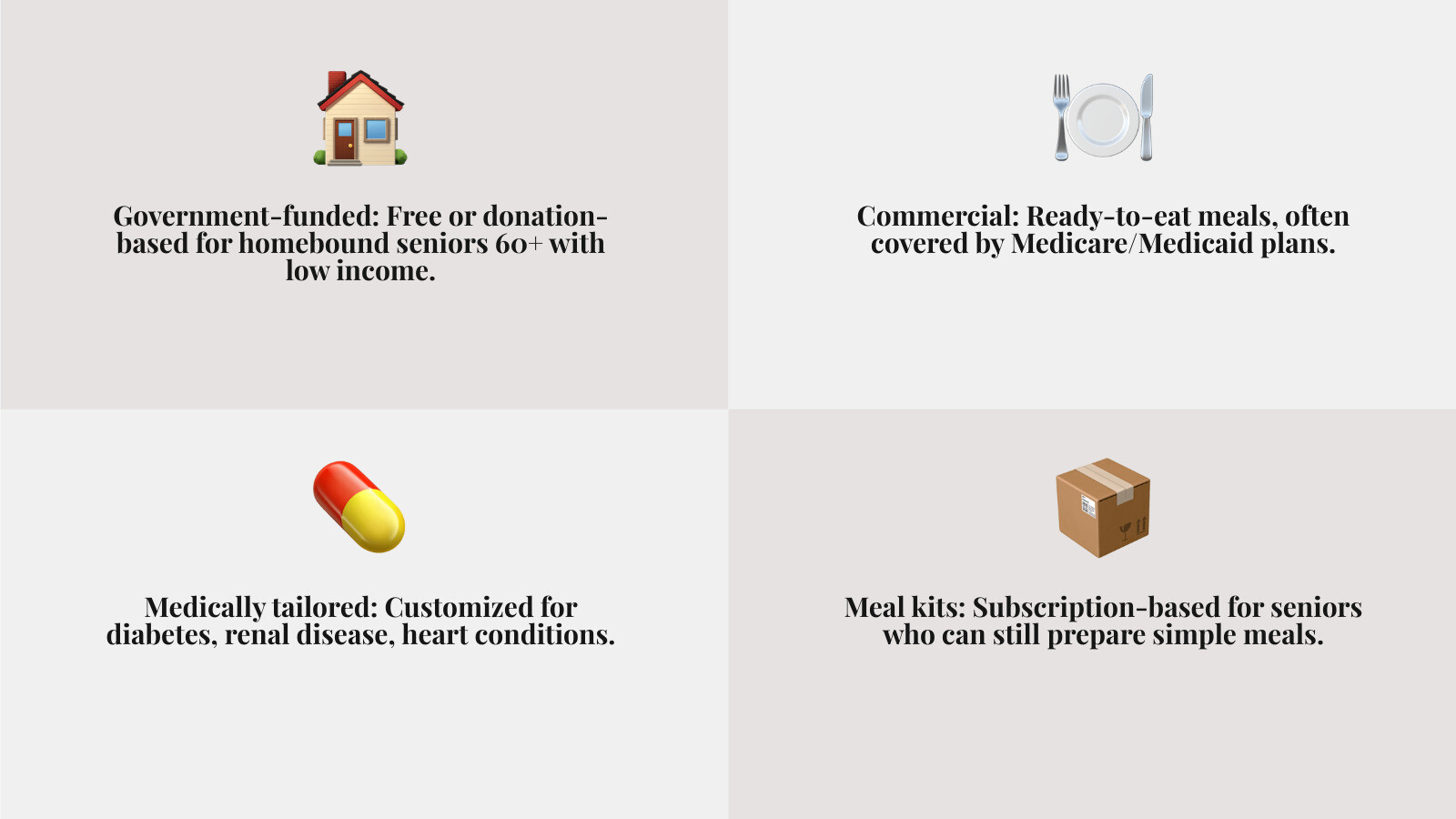
| Type | Cost | Best For |
|---|---|---|
| Government-funded (e.g., Meals on Wheels) | Free or suggested donation | Homebound seniors 60+, low income |
| Commercial meal delivery (e.g., Mom's Meals) | Varies; some free via Medicare/Medicaid | Seniors needing ready-to-eat meals |
| Medically tailored meals | Often covered by health plans | Seniors with diabetes, renal disease, etc. |
| Meal kit services (e.g., HelloFresh) | Paid subscription | Seniors who can still cook |
| Local fresh meal delivery | Pay per meal, no subscription | Seniors wanting fresh, flexible options |
The need is real and growing. Every day, around 900,000 home-delivered meals are served through the federal Home-Delivered Nutrition Program alone — and that still isn't enough. Food insecurity among older adults is widespread, and for many, the challenge isn't just what to eat. It's the physical difficulty of shopping, standing at a stove, or even opening a can.
For adult children trying to keep a parent safe at home, meal delivery can feel like a lifeline. But the options are genuinely confusing — government programs, commercial services, medically tailored meals, meal kits, phone-based concierge ordering — each with different eligibility rules, costs, and coverage.
This guide cuts through all of that. Whether you're looking for free meals through a local program or a fresh, chef-prepared delivery service, you'll find clear, honest answers here.
The Landscape of Home Food Delivery for Elderly in 2026
As we navigate May 2026, home food delivery for elderly residents has evolved into a sophisticated network of care. It is no longer just about a hot tray dropped at the door; it is about providing a foundation for a dignified life. For many of our neighbors in Virginia and across the United States, the kitchen—once a place of joy—can become a source of stress due to mobility issues or cognitive decline.
We see a diverse range of services filling this gap. Some providers offer fresh-chilled meals that only require two minutes in the microwave, while others deliver frozen boxes designed to last a full week. There are even services that bypass the need for a smartphone entirely, allowing seniors to order from local restaurants or grocery stores simply by picking up the phone and speaking to a friendly operator.
For those who still enjoy the process of cooking but find the "heavy lifting" of shopping too much, meal kits provide pre-measured ingredients and 30-minute recipes. This variety ensures that whether a senior needs daily life assistance or just a little help with assistance with daily activities, there is a solution that fits their lifestyle.

Nutritional Benefits of Home Food Delivery for Elderly
Malnutrition in older adults is often a silent issue, frequently caused by "meal fatigue" or the physical exhaustion of food prep. Specialized delivery services combat this by offering nutritious meals delivered to your doorstep that are designed by registered dietitians. These meals focus on:
- Nutrient Density: As we age, we often need fewer calories but more nutrients. High-quality services prioritize fiber, Vitamin D, Calcium, and B12.
- Portion Control: Pre-portioned meals prevent overeating while ensuring the senior receives enough protein to maintain muscle mass.
- Dietary Variety: Rotating menus with dozens of options prevent the boredom that leads to seniors skipping meals.
Navigating Costs for Home Food Delivery for Elderly
One of the most common questions we hear is: "What does this cost?" The answer depends largely on the provider type. Government-funded programs often operate on a "suggested donation" or sliding scale basis, meaning no one is turned away regardless of their ability to pay.
On the other hand, commercial services and grocery delivery for seniors made easy usually involve a per-meal price or a subscription fee. However, in 2026, many seniors on Medicare Advantage or Medicaid in states like Pennsylvania and Virginia may find that their plans cover the cost of medically tailored meals entirely, especially following a hospital discharge.
Government-Funded Programs and Eligibility
The backbone of senior nutrition in the U.S. is the Home-Delivered Nutrition Program, established under the Older Americans Act. This program supports thousands of local partner organizations that serve nearly a million meals a day.
To qualify for these programs, there are generally strict criteria to ensure the food reaches those in the greatest social and economic need. Common requirements include:
- Age: Typically, the individual must be 60 years of age or older.
- Residency: Must live within the service area of the local agency.
- Homebound Status: The senior must be unable to shop for food or prepare meals due to physical or cognitive impairments and have no "reliable support person" available to help.
- Spousal Eligibility: Interestingly, the spouse of an eligible senior often qualifies for the meals as well, even if they do not meet the age or disability requirements themselves.
If you are looking for help, you can find local providers and services by using a ZIP code search or contacting the Eldercare Locator.
Eligibility Comparison Table
| Feature | Federal (OAA) Programs | State/Local Programs (e.g., Virginia) |
|---|---|---|
| Primary Goal | Reduce hunger and isolation | Specific local needs/recovery support |
| Assessment | Required caseworker evaluation | Often requires doctor's referral |
| Cost | Low-cost or suggested donation | May be free via Medicaid waivers |
| Waitlists | Common in high-density areas | Varies by county funding |
Commercial Options and Medically Tailored Meals
For many families, commercial services offer a level of customization that government programs cannot match. This is particularly vital for seniors managing chronic conditions. "Food as medicine" is a growing trend in 2026, where meals are specifically engineered to manage health outcomes.
Common medically tailored options include:
- Heart-Friendly: Low-sodium and low-fat recipes.
- Diabetes-Friendly: Controlled carbohydrate counts and high fiber.
- Renal Diets: Specific Phosphorus, Potassium, and Sodium levels for kidney health.
- Pureed Meals: For those with dysphagia or dental issues, these meals provide the right texture without sacrificing flavor or nutrition.
These services often provide meal preparation assistance by taking the guesswork out of complex dietary restrictions. Some commercial providers even offer "emergency kits"—shelf-stable meals that don't require refrigeration, perfect for power outages or snowstorms.

Benefits for Health, Independence, and Social Connection
The impact of home food delivery for elderly adults goes far beyond the calories on the plate. Research shows that 89 percent of recipients report that these meals help them maintain their autonomy and stay in their own homes longer.
One of the most overlooked benefits is the wellness check. For many isolated seniors, the delivery person is the only person they see all day. These "smiling faces" provide a vital link to the outside world. If a senior doesn't answer the door, many programs have protocols to alert family members or emergency services, providing immense peace of mind for caregivers.
Furthermore, these services offer much-needed respite for the 21 percent of Americans who provide unpaid care for a family member. By outsourcing the grocery shopping and cooking, caregivers can focus on quality time and emotional support. For a deeper dive into how this fits into a broader care plan, see our daily living assistance complete guide or our tips on grocery shopping for elders.
Frequently Asked Questions about Home Food Delivery for Elderly
Navigating these services can feel like learning a new language. Here are the most common questions families ask us.
How do I apply for home-delivered meals?
The process usually begins with a phone call. You can contact your local Area Agency on Aging or use the Eldercare Locator at 800-677-1116. A caseworker will typically conduct an assessment—either over the phone or in person—to determine eligibility based on health, mobility, and social support. Medical providers or discharge planners can also make referrals if a senior is leaving a hospital or rehab center.
Does Medicare or Medicaid cover these services?
"Original" Medicare (Parts A and B) generally does not cover home-delivered meals. However, many Medicare Advantage (Part C) plans have added this as a supplemental benefit, especially for short-term recovery after a hospital stay. Medicaid may also cover meals through various "Home and Community-Based Services" (HCBS) waivers designed to keep seniors out of nursing homes.
What happens if I am not home for a delivery?
Reliability is a top priority for these services. If a senior isn't home, providers usually cannot leave the food on the porch due to safety and temperature concerns. Most services allow you to schedule deliveries for specific windows. If a senior has a doctor's appointment, they can usually "skip" a week or reschedule with 48 to 72 hours' notice. Some commercial services use insulated cooler boxes that can keep food safe for several hours if a drop-off is pre-arranged.
Conclusion
At Burnie's Way, we believe that the "Golden Years" should be defined by comfort and confidence, not by the struggle to put a healthy meal on the table. While we are not a healthcare provider or a meal delivery company, we act as a personal concierge and guide for families navigating these very choices.
Our mission is to provide independence-focused assistance and lifestyle coordination. Whether that means helping you find the right medically tailored meal service or coordinating the daily routines that keep your loved one safe, we are here to ensure everything is okay. By integrating professional meal delivery with our compassionate support, seniors can truly live the way they want.
To find out more about how we can help you or your loved one live safely and independently at home, learn more about our personal support services.