

Why Daily Life Assistance Matters for Independence and Peace of Mind
Daily life assistance helps people of all ages maintain their independence at home when everyday tasks become challenging due to aging, disability, chronic conditions, or recovery from illness.
What daily life assistance includes:
- Personal support - Help with bathing, dressing, grooming, eating, and moving around safely
- Household management - Meal preparation, cleaning, laundry, and home maintenance
- Lifestyle coordination - Managing appointments, errands, transportation, and social activities
- Financial and administrative help - Bill paying, medication reminders, and organizing paperwork
- Companionship and social connection - Friendly visits, conversation, and activities to prevent isolation
Nearly 3,000 seniors have avoided placement in long-term residential communities by receiving the right support at home. The key is finding the combination of services that fits your situation, budget, and goals.
Whether you're concerned about an aging parent's safety at home, recovering from surgery yourself, or supporting a family member with a disability, understanding your options is the first step. Some people need just a few hours of help each week with errands and companionship. Others benefit from daily support with personal routines and household tasks. Many families find that coordinating these services - and knowing what's happening day-to-day - brings the peace of mind they've been missing.
This guide walks you through the types of support available, how to access them, what they cost, and how to build a plan that works for you and your loved ones.
Daily life assistance terms made easy:
- aged care aides
- body hygiene in aged care
- adapting to aging
Understanding Activities of Daily Living (ADLs) and Instrumental ADLs (IADLs)
When we talk about daily life assistance, we're often referring to support with Activities of Daily Living (ADLs) and Instrumental Activities of Daily Living (IADLs). These are the fundamental tasks we perform every day to take care of ourselves and manage our households. The ability to perform these tasks is a key indicator of someone's independence and overall well-being. When these activities become challenging, it's a sign that support might be needed.
People might need assistance with ADLs or IADLs for a variety of reasons. Aging is a natural process that can bring about changes in physical strength, balance, cognitive function, and stamina, making routine tasks more difficult. Chronic conditions like arthritis, diabetes, heart disease, or neurological disorders can also impair a person's ability to complete these activities safely and independently. Furthermore, recovery from surgery, injury, or a serious illness can lead to temporary or long-term needs for support. A disability, whether present from birth or acquired later in life, is another common reason individuals seek daily life assistance.
Basic Activities of Daily Living (ADLs)
Basic ADLs are the fundamental self-care tasks that are essential for independent living. These are often the first areas where individuals or their families notice a need for support. They include:
- Bathing: Getting in and out of the shower or tub, washing and drying oneself.
- Dressing: Selecting appropriate clothing and putting it on and taking it off.
- Toileting: Using the toilet, maintaining hygiene, and managing incontinence.
- Transferring: Moving from one position to another, such as getting out of bed, rising from a chair, or moving to and from a wheelchair.
- Continence: The ability to control bladder and bowel functions.
- Feeding: Bringing food and drink to the mouth, chewing, and swallowing. While preparing food is an IADL, the act of eating itself is an ADL.
- Personal hygiene: Brushing teeth, combing hair, shaving, and nail care.
When someone struggles with one or more ADLs, it can significantly impact their quality of life and put their safety at risk. For instance, difficulty with bathing can lead to poor hygiene and skin issues, while problems with transferring can increase the risk of falls.
Instrumental Activities of Daily Living (IADLs)
IADLs are more complex activities that are vital for living independently in the community. In addition to basic physical functioning, they are crucial for managing one's environment and interacting with the world. These include:
- Transportation: Driving, using public transport, or arranging rides to appointments and social events.
- Meal preparation: Planning menus, grocery shopping, cooking, and serving meals.
- Housekeeping: Performing light and heavy household chores, such as cleaning, laundry, and maintaining a tidy living space.
- Shopping: Purchasing groceries, clothing, and other household necessities.
- Managing finances: Paying bills, budgeting, and handling banking.
- Communication: Using the phone, mail, or computer to stay connected.
- Managing medications: Remembering to take medications on time, understanding dosages, and refilling prescriptions.
Challenges with IADLs can indicate a need for daily life assistance that extends beyond basic personal care. For example, difficulty with medication management can lead to serious health complications, and an inability to manage finances can result in financial instability. Addressing these needs with coordinated support can help individuals maintain their independence and continue to thrive in their homes.
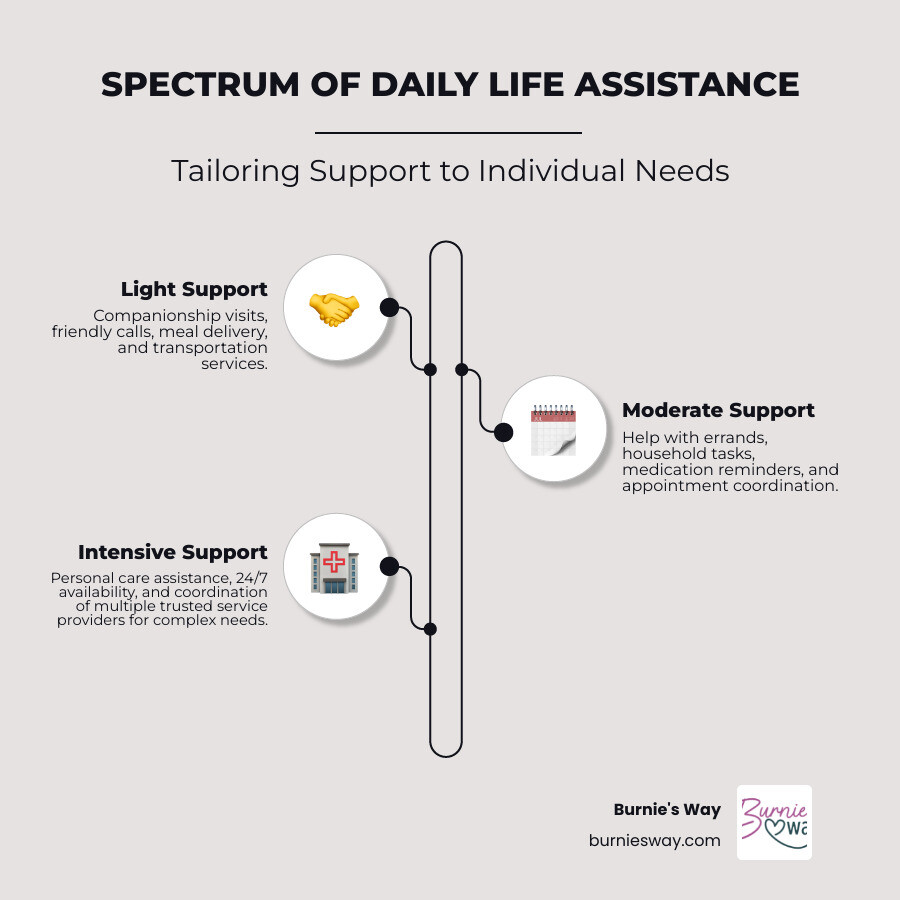
The Spectrum of Daily Life Assistance Services
When it comes to daily life assistance, there's a wide range of services designed to meet varying needs. From simple lifestyle coordination to more hands-on personal support, the goal is always to empower individuals to live as independently and comfortably as possible in their own homes. We believe in a personalized approach, understanding that everyone's situation is unique. Our role at Burnie's Way is to be your personal concierge, helping you steer these options and coordinate the trusted services that fit your specific needs and preferences.
The benefits of receiving assistance at home versus in a facility are significant for many. Staying in a familiar environment allows for greater personal freedom, maintains social connections, and often leads to a higher quality of life. It also means avoiding the potentially higher costs of residential care, as we'll discuss later.

Lifestyle and Community Support
Many aspects of daily life assistance involve leveraging community resources and coordinating everyday tasks. These services are often non-medical and focus on enhancing quality of life and preventing isolation.
- Companionship: Sometimes, what's needed most is a friendly face and engaging conversation. Many organizations offer friendly visitor programs where volunteers or paid companions provide social interaction, play games, or simply share a cup of tea. This can combat loneliness and provide peace of mind for families.
- Meal Delivery Services: For those who find meal preparation challenging, services like Meals on Wheels America can deliver nutritious meals directly to their homes. These programs often cater to specific dietary needs and can include a friendly check-in with the delivery.
- Transportation Services: Losing the ability to drive can be a major blow to independence. Various services, from local agencies to specialized ride-sharing options, help individuals get to appointments, run errands, or visit friends. Medicare and Medicaid may offer some coverage for medical transportation, while other options might be out-of-pocket.
- Homemaking: Light housekeeping, laundry, and grocery shopping can become physically demanding. Homemaking services provide assistance with these tasks, ensuring a clean and organized living environment.
- Money Management Assistance: Dealing with bills, insurance forms, and budgeting can be overwhelming. Trusted relatives, financial counselors, or trained volunteers can help. The Consumer Financial Protection Bureau offers resources for finding reliable assistance.
- Adult Day Programs: These centers offer a safe and engaging environment for older adults during the day, providing social activities, supervision, and sometimes meals and personal care. They offer caregivers a much-needed break while ensuring their loved ones are well-cared for. You can find more about these services through the National Adult Day Services Association.
- Local Community Resources: Connecting with local services is crucial. Organizations like 211.org provide confidential help and connect individuals with essential community resources, including housing assistance, utility bill support, and caregiver resources. In 2024 alone, the 211 network made over 18 million referrals to help and resources, with 8.5 million specifically for housing, homelessness, and utility bills.
Personal Support and At-Home Coordination
Beyond community resources, many individuals require more direct, hands-on personal support for daily routines and specialized coordination. This is where Burnie's Way steps in, offering comprehensive support for managing the complexities of daily living.
- Personal Support for Daily Routines: This includes assistance with ADLs like bathing, dressing, grooming, and mobility. While Burnie's Way focuses on coordinating these services, we understand the profound impact they have on maintaining dignity and independence. We help connect you with trusted providers who can offer this vital support.
- Hands-on Help with Errands: Our personal concierge services extend to running errands, whether it's picking up prescriptions, returning library books, or handling dry cleaning. We're here to lighten your load.
- Coordination of Trusted Service Providers: Finding reliable help for home maintenance, specialized therapies, or even pet care can be a challenge. We leverage our network and 50 years of experience to connect you with vetted professionals, ensuring you receive quality service.
- Assistance with Appointments: From scheduling to providing reminders and even arranging transportation, we can manage all aspects of your appointments, ensuring you never miss an important engagement.
- Organizing Home Life: A well-organized home contributes to peace of mind. We can assist with decluttering, organizing paperwork, and setting up systems that make daily living smoother and safer.
Our personalized approach means we work with you to understand your needs and preferences, then coordinate a seamless plan. Learn more about our coordination services.
Comparing Support Options: At-Home Support and Residential Living
Deciding where to receive daily life assistance is a significant decision. Here's a comparison to help illustrate the differences:
| Feature | At-Home Support (e.g., Burnie's Way coordinated services, in-home care) | Assisted Living Facilities | Residential Communities (Nursing Homes) |
|---|---|---|---|
| Average Monthly Cost | $2,253 - $4,957 (for 20-44 hours/week of one-to-one care) | $4,500 | $7,908 - $9,034 |
| Level of Independence | High (maintains personal routines, familiar environment) | Moderate (private or semi-private living, some shared amenities) | Low (24/7 skilled nursing care, highly structured environment) |
| Type of Support Provided | Personalized, one-to-one assistance with ADLs/IADLs, homemaking, companionship, coordination of services. | Personal care, meals, housekeeping, medication management, social activities, some medical supervision. | Comprehensive medical care, personal care, therapies, room & board, supervision. |
| Social Environment | Maintains existing social circles, community engagement, custom companionship. | Group activities, communal dining, opportunities for new friendships within the facility. | Limited social interaction, often with other residents, structured activities. |
Source: Genworth.com Cost of Care Survey
As you can see, in-home support, especially when coordinated effectively, allows for a greater degree of independence and often a more cost-effective solution compared to residential facilities, particularly when only certain levels of assistance are needed. The average monthly cost for in-home care in the US is between $2,253 and $4,957 for 20-44 hours of one-to-one care per week, significantly less than assisted living ($4,500/month) or nursing homes ($7,908 - $9,034/month). This allows individuals to age safely and independently in the comfort of their own home, which is invaluable for peace of mind.
Navigating Costs and Funding for Daily Life Assistance
Understanding the financial aspects of daily life assistance is crucial for effective planning. The costs can vary widely depending on the type and intensity of services needed, as well as geographic location. We believe in transparency and helping you explore all available options for managing these expenses.
Understanding the Costs of Different Types of Daily Life Assistance
The financial outlay for daily life assistance can range from a few hundred dollars a month for light support to several thousand for extensive, daily help.
- At-Home Support Costs: As mentioned, the average monthly cost for in-home care in the US is between $2,253 and $4,957 for 20-44 hours of one-to-one care per week. These services are typically charged by the hour, with rates varying based on the type of service (e.g., companionship vs. personal care) and local market conditions. Burnie's Way focuses on coordinating these services, and you can learn more about our coordination fees.
- Assisted Living Costs: These facilities provide a blend of independence and support, with an average cost of $4,500 per month. This typically includes housing, meals, personal care, and some social activities.
- Residential Community (Nursing Home) Costs: These offer the highest level of care, including 24/7 skilled nursing. The average monthly cost ranges from $7,908 to $9,034, making them the most expensive option.
When evaluating costs, it's important to consider not just the sticker price, but the value of personalized, one-to-one support that allows someone to remain in their cherished home environment.
Exploring Funding and Financial Support Options
Fortunately, there are various avenues to help cover the costs of daily life assistance:
- Government Programs:
- Medicare: Primarily covers short-term, skilled nursing or therapy services at home if deemed medically necessary, but generally does not cover long-term personal care or homemaking.
- Medicaid: A joint federal and state program that can cover a broader range of in-home services for eligible low-income individuals, including personal care and some homemaking. Eligibility and covered services vary significantly by state. You can find more information at Medicaid's official website and Medicare's official website.
- Veterans Benefits: The U.S. Department of Veterans Affairs (VA) offers programs that can help eligible veterans and their spouses pay for daily life assistance at home or in facilities.
- Long-Term Care Insurance: Policies purchased years in advance can help cover the costs of home care, assisted living, or nursing home care. The specifics depend on the individual policy.
- Private Pay Options: Many families choose to pay for services out-of-pocket, especially for non-medical support or when government programs don't cover specific needs.
- Non-Profit Grants and Aid: Some charitable organizations and foundations offer financial assistance or subsidies for certain types of daily life assistance.
- Checking for Benefits: For general information on government benefits and financial support, you can visit USAGov.
Navigating these funding options can be complex, but understanding what's available is a crucial step in ensuring sustainable support. We can help you understand these options and integrate them into a comprehensive plan.
How to Access Support and Create a Plan
Accessing daily life assistance can feel like navigating a maze, but with the right approach, it becomes a clear path. Our process at Burnie's Way is designed to explain this journey, ensuring you get the support you need without unnecessary stress. The typical process involves a thorough assessment, careful planning, and diligent vetting of service providers.
The Assessment and Planning Process
The first step in accessing daily life assistance is understanding the specific needs and preferences of the individual requiring support.
- Self-Assessment and Family Involvement: Begin by observing daily routines and identifying areas where help is needed. What tasks are becoming difficult? Are there safety concerns? Involving family members in this discussion is vital, as they often have valuable insights into the individual's daily life and emotional state. This collaborative approach ensures that the plan is person-centered and respects the individual's wishes.
- Professional Guidance: For a more objective and comprehensive evaluation, consulting with a professional is highly recommended. A geriatric care manager (also known as an aging life care expert) can conduct a thorough assessment, identify appropriate services, and help coordinate care. They can be particularly helpful when family members live far away or when needs are complex. You can find a geriatric care manager through organizations like the Aging Life Care Association.
- Creating a Personalized Support Plan: Based on the assessment, a detailed support plan is developed. This plan outlines the specific services needed, their frequency, and who will provide them. It should be flexible, allowing for adjustments as needs change over time. At Burnie's Way, our approach is all about creating these personalized plans, focusing on what truly matters to you and your loved ones. We take pride in our coordination process, which ensures that every aspect of your daily life assistance is custom to your unique situation.
Finding and Vetting Service Providers
Once a plan is in place, the next critical step is finding and selecting reliable service providers. This requires diligence to ensure quality and trustworthiness.
- Doctor Referrals: Your physician or other healthcare professionals can often provide valuable referrals to reputable home health agencies or personal support services.
- Local Resource Directories: Community organizations, senior centers, and local Area Agencies on Aging are excellent sources for lists of local providers. For a broad range of community services, you can also call 211 for local services, a national resource that connects people to essential local support.
- Interview Questions: When speaking with potential providers, prepare a list of questions. Ask about their experience, training of their staff, insurance, emergency protocols, and how they handle scheduling and communication.
- Checking References: Always ask for and contact references from current or past clients. This provides invaluable insight into the provider's reliability and quality of service.
- Online Resources: Websites like Medicare's Care Compare can help you find and compare Medicare-certified home health agencies, while the Better Business Bureau can provide information on a company's reputation and any filed complaints.
Taking these steps ensures that the daily life assistance you receive is not only effective but also delivered by compassionate and competent professionals.
The Role of Technology and Family in Daily Living
Technology plays an increasingly significant role in supporting independence, and the family remains the bedrock of emotional and logistical support. Integrating these two elements effectively can greatly improve the quality of daily life assistance.
Technology That Improves Independence
Technology can be a powerful ally in promoting safety, managing tasks, and maintaining connections for individuals receiving daily life assistance.
- Medical Alert Systems: These systems, often worn as a pendant or bracelet, provide immediate access to help in an emergency, such as a fall. Many include fall detection and GPS tracking. While Medicare typically doesn't cover these, Medicaid or private insurance might.
- Smart Home Devices: Voice-activated assistants can set reminders for medications, turn lights on/off, or even call family members. Smart thermostats can maintain comfortable temperatures, and smart locks can improve security. These devices can simplify daily routines and provide peace of mind.
- Automatic Medication Dispensers: These devices organize and dispense medications at programmed times, often with audible reminders, significantly reducing the risk of missed or incorrect doses.
- Telehealth Appointments: For routine check-ups or consultations, telehealth allows individuals to connect with healthcare providers from the comfort of their home, saving time and transportation challenges.
- Video Calls with Family: Staying connected with loved ones is crucial for emotional well-being. Simple video calling apps on tablets or smartphones enable regular face-to-face interaction, reducing feelings of isolation.
While Burnie's Way doesn't provide these technologies directly, we can help coordinate their implementation and ensure they integrate seamlessly into a person's daily life assistance plan.
The Family's Role: Challenges and Rewards
Family members often play a central role in providing or coordinating daily life assistance. This role comes with both unique challenges and profound rewards.
- Emotional Support: The emotional connection and understanding that family provides are irreplaceable. Being present, listening, and offering reassurance are vital forms of support.
- Coordination Help: Family members often take on the role of coordinating various services, managing schedules, and communicating with providers. This can be a significant time commitment, but it ensures that their loved one receives comprehensive care. This is where Burnie's Way can step in, acting as your personal concierge to lighten this load, allowing you to focus on simply being a family member again.
- Preventing Caregiver Burnout: While rewarding, providing daily life assistance can be demanding, leading to stress and burnout. It's crucial for family caregivers to prioritize their own well-being.
- Respite Options: Respite care services offer temporary relief for family caregivers, allowing them to take a break while their loved one is cared for in their absence. This can range from a few hours of in-home support to short stays in adult day care centers or residential facilities. The ARCH National Respite Locator can help families find these vital services. Adult day care services also provide a structured environment for older adults, giving caregivers a break, and you can find centers through the National Adult Day Services Association.
- Rewarding Connections: Despite the challenges, many family members find deep satisfaction and strengthened bonds through their involvement in providing daily life assistance. Witnessing a loved one maintain their independence and quality of life is a powerful reward.
Our own journey at Burnie's Way began with a personal experience, shaping our personal story and our commitment to supporting families through these very challenges. We understand that being a family member often means wearing many hats, and we aim to alleviate the burden of coordination so you can cherish your time together.
Conclusion: Your Partner in Navigating Daily Life Assistance
Navigating the landscape of daily life assistance can initially seem daunting, but as we've explored, a wealth of options exists to support independence and improve quality of life. From understanding the nuances of ADLs and IADLs to exploring the diverse spectrum of services, managing costs, and leveraging technology, building a comprehensive support plan is an achievable goal.
The key lies in finding the right mix of services that align with individual needs, preferences, and financial realities. Whether it's companionship, meal delivery, personal care, or complex coordination, the ultimate aim is to empower individuals to live confidently and comfortably in their own homes for as long as possible. The benefits of aging in place – maintaining familiarity, independence, and cherished social connections – are immeasurable.
At Burnie's Way, we are dedicated to being your trusted partner in this journey. We understand that our clients seek personal support, lifestyle coordination, and independence-focused assistance, not medical care. We act as your personal concierge, helping you make sense of the options, connecting you with vetted service providers, and coordinating all aspects of your daily life assistance plan. Our personalized approach, backed by decades of experience, ensures that everything is managed with compassion, competence, and heart, giving you and your family unparalleled peace of mind.
We invite you to learn more about how we can help you coordinate your personal support plan by exploring Our Services. Let us help you live the way you want, confidently and independently at home.