

Why Understanding How to Get a Carer for an Elderly Person Matters Now
Figuring out how to get a carer for an elderly person can feel overwhelming. You're not alone. In the U.S., in-home support from a paid professional can cost from $20 to $35 an hour, and families often struggle to understand their options and find trusted help.
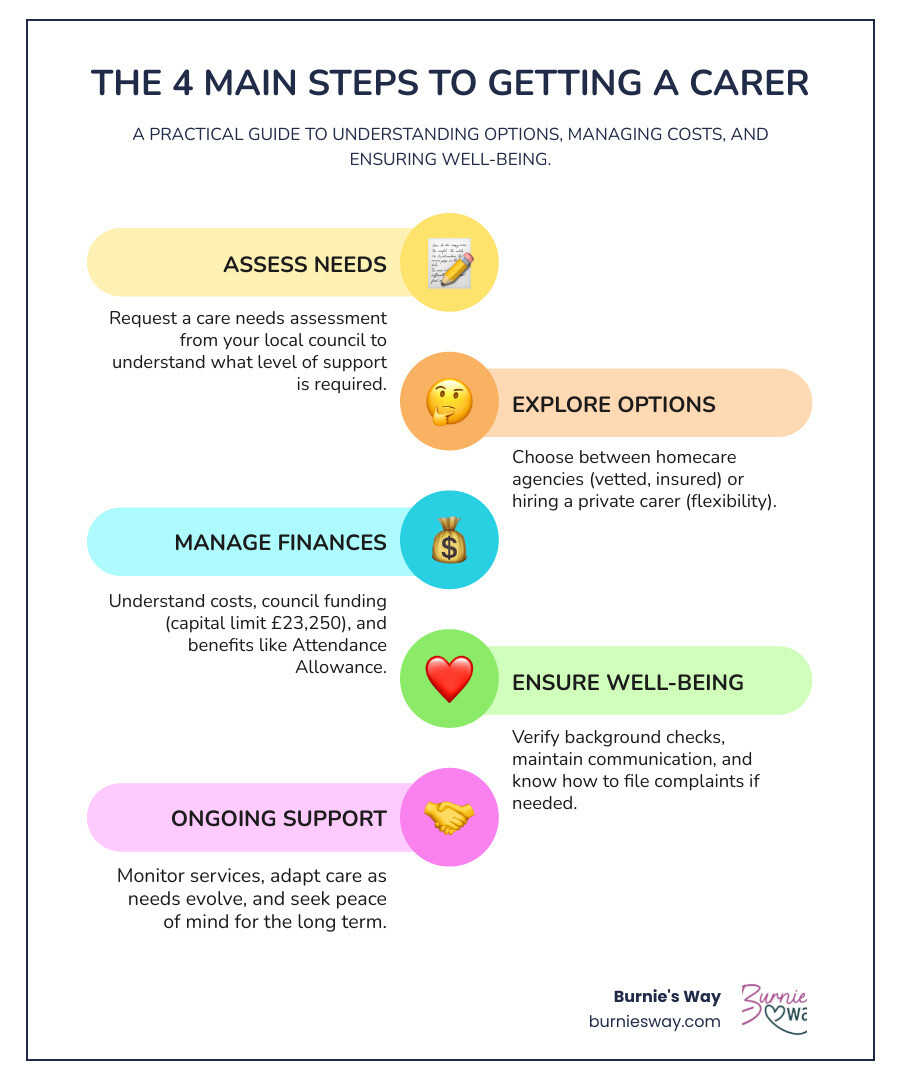
Quick Answer: The 4 Main Steps
- Assess Needs — Request a care needs assessment from your local Area Agency on Aging to understand what level of support is required.
- Explore Options — Choose between homecare agencies (vetted, insured) or hiring a private individual (more flexibility, but you become the employer).
- Manage Finances — Understand costs, potential funding through programs like Medicaid, and benefits like VA Aid and Attendance.
- Ensure Well-being — Verify background checks, maintain communication, and know how to file complaints if needed.
Many people don't realize that getting the right support starts with a formal assessment. As many elder care experts note, if you think someone needs help to cope day-to-day, the first step is to get a professional needs assessment.
This guide walks you through each step in simple language. Whether your loved one needs help with daily routines, companionship, or more specialized support, you'll learn how to find the right fit, what it costs, and where to get financial help.
The goal isn't just finding a carer. It's finding the right support that helps your loved one stay independent at home with dignity and gives you peace of mind.
Step 1: Understanding and Assessing Support Needs

Before you can figure out how to get a carer for an elderly person, you need to understand what kind of support is truly needed. Needs are often categorized into two main areas:
- Activities of Daily Living (ADLs): These are fundamental self-care tasks like bathing, dressing, eating, and moving from a bed to a chair. Difficulty with ADLs often indicates a need for personal, hands-on support.
- Instrumental Activities of Daily Living (IADLs): These are more complex tasks needed for independent community living, such as managing finances, preparing meals, shopping, and managing medications. Difficulty here might suggest a need for help with household management.
What Types of In-Home Support Are Available?
In-home support covers a spectrum of services. Burnie's Way focuses on personal support, lifestyle coordination, and independence-focused assistance, helping you understand and steer these options.
- Personal Support: Hands-on assistance with ADLs like bathing, dressing, and mobility.
- Companionship: Focuses on social engagement, emotional well-being, and light assistance.
- Respite Support: Provides temporary relief for family caregivers. Burnie's Way can help coordinate reliable respite options.
- Live-in Assistance: For those needing continuous supervision, a live-in arrangement provides someone in the home around the clock. Burnie's Way can help families explore and coordinate these arrangements with specialized providers.
- Coordinating with Nursing or Palliative Care Professionals: While Burnie's Way doesn't provide medical care, we assist families in coordinating with qualified healthcare professionals to ensure specialized needs are met.
How to Determine the Level of Support Needed
Determining the right level of support starts with observation and open communication. Pay attention to daily routines, consult with healthcare professionals, and have empathetic conversations with your loved one about their challenges and preferences. A professional needs assessment is the best way to get a clear picture.
In the United States, you can get a formal assessment through your local Area Agency on Aging, state health department, or a private geriatric care manager. These assessments identify eligible services and what is needed for safe, independent living.
Family caregivers can also experience stress and burnout. In the US, resources like the Family Caregiver Alliance or local support groups offer assessments and guidance to help family members identify their own needs for respite, training, or emotional support. This ensures that the primary support system remains healthy and sustainable.
At Burnie's Way, we believe in a holistic approach. We help families steer these assessments, understand the results, and then coordinate the personal support that truly fits. Learn about our approach to personalized support and how we can bring ease and connection to your loved one's daily life.
Step 2: How to Get a Carer for an Elderly Person – Exploring Your Options
Once you have a clear picture of the support needed, the next step in how to get a carer for an elderly person is exploring the different avenues for finding that support. Generally, you have two main choices: working with a homecare agency or hiring a private individual directly. Both have their pros and cons, and we're here to help you weigh them.
| Feature | Working with a Homecare Agency | Hiring a Private Carer Directly |
|---|---|---|
| Cost | Generally higher hourly rate (covers agency overhead, insurance, etc.) | Often lower hourly rate (you pay the individual directly) |
| Legal/Employer Responsibility | Agency is the employer; handles payroll, taxes, insurance, training. | You become the employer; responsible for payroll, taxes, insurance, scheduling, backup. |
| Vetting & Screening | Agency typically conducts thorough background checks, reference checks, and verifies qualifications. | You are solely responsible for all vetting, background checks, and reference checks. |
| Backup & Continuity | Agency provides substitute if primary carer is sick or on holiday, ensuring continuous support. | You must arrange for backup cover for illness, holidays, or emergencies. |
| Training & Supervision | Carers receive ongoing training and supervision from the agency. | You are responsible for any training and direct supervision. |
| Flexibility | May have less flexibility in scheduling or specific task requests due to agency policies. | Offers maximum flexibility in scheduling and tailoring tasks to specific needs. |
| Paperwork | Minimal paperwork for you; agency handles most administrative tasks. | Significant administrative burden as you manage all employment-related paperwork. |
Finding reputable support providers is paramount for peace of mind. In the United States, you can look for state licensing boards, professional associations, or use resources like the National Association for Home Care & Hospice (National Association for Home Care and Hospice Caring for a parent, spouse, or someone else you love can be a tough balancing act. Help from home health workers is one way to make it work. But before you hire someone, figure out what services you need, and what services you can afford. For an overview of home health care services available and a...) to find reputable agencies.
Key Questions to Ask a Potential Carer or Support Provider
Choosing the right support person or agency is a big decision. We recommend asking these questions to ensure you find a good fit:
- Experience and Qualifications: What is your experience working with elderly individuals, particularly those with similar needs to my loved one? What certifications or training do you have?
- Background Checks: What is your process for background checks and vetting? Can you provide references?
- Services Offered: What specific services do you provide? How flexible are you in adapting to changing needs?
- Costs and Fees: What are your hourly rates or service packages? Are there any additional fees?
- Emergency Procedures: What is your protocol in case of an emergency?
- Staffing and Continuity of Support: If it's an agency, how do you ensure continuity of support if the primary carer is unavailable? If it's a private individual, what is your plan for backup?
At Burnie's Way, we believe in transparency and trust. We can guide you through these conversations, helping you ask the right questions and evaluate the answers. Learn more about our story and values.
How to get a carer for an elderly person with specific needs
Many elderly individuals have specific conditions that necessitate specialized knowledge. When considering how to get a carer for an elderly person with particular needs, look for providers who demonstrate expertise in these areas:
- Experience with Dementia Support: Look for carers trained in dementia communication techniques and creating a safe environment. Specialized programs often involve partnerships with experts in geriatric care.
- Training for Parkinson’s or Mobility Challenges: Carers should be trained in safe transfer techniques, fall prevention, and assisting with exercises recommended by therapists.
- Post-Hospital Recovery Coordination: After a hospital stay, seniors often need focused support. This might include medication reminders and assistance with follow-up appointments. Burnie's Way can be instrumental in coordinating these aspects.
- Compassionate End-of-Life Support: While Burnie's Way does not provide direct medical end-of-life care, we can help coordinate compassionate support services that focus on comfort and dignity.
We understand that specialized needs require specialized solutions. Burnie's Way helps families identify these requirements and connect with the right external providers who can offer the necessary expertise.
Step 3: Navigating Costs and Financial Support

One of the most pressing questions when considering how to get a carer for an elderly person is, "How can we pay for it?" Understanding the financial landscape is a crucial step.
In the United States, in-home support can range from $20 to $35 per hour, or even more for specialized services, depending on your location and the type of support needed.
Paying for Support Options
- Self-Funding: Many families use personal savings, pensions, or other assets to pay for in-home support. It's important to create a realistic budget.
- Long-Term Care Insurance: If your loved one has a long-term care insurance policy, review it to see what services, including in-home personal support, are covered.
- Veterans Affairs (VA) Benefits: For eligible veterans and their spouses, the VA offers programs that can help cover the cost of in-home assistance, such as Aid and Attendance or Housebound benefits.
- Medicaid: This federal and state program provides healthcare coverage for low-income individuals. Many states offer programs that cover in-home personal care services, often through Home and Community-Based Services (HCBS) waivers. Eligibility is based on strict income and asset limits.
Check our FAQ for more details on how Burnie's Way can help you coordinate with these different payment methods for the services we assist with.
Are There Government Programs to Help Pay for Support?
Yes, in the United States, several government programs and tax benefits can help offset the cost of in-home support. While we cannot provide specific tax advice, we can point you in the right direction:
- Medicaid: As mentioned, this is a primary source of funding for in-home care for low-income individuals. Contact your state's Medicaid agency or Area Agency on Aging to learn about eligibility.
- Veterans Affairs (VA) Programs: The VA's Aid and Attendance benefit can provide a significant monthly payment to help veterans and their surviving spouses cover the costs of in-home personal care.
- Tax Credits and Deductions: The IRS offers several tax benefits that may help, such as deductions for medical expenses or the Credit for Other Dependents. We encourage you to consult with a tax professional or visit the IRS website for the most current information.
- State-Specific Programs: Many states offer their own programs to support seniors aging in place. Your local Area Agency on Aging is an excellent resource for finding these localized options.
Navigating these financial avenues can be complex. Burnie's Way can help you organize the necessary documentation and coordinate with financial advisors or program administrators as you explore these options for external care services.
Step 4: Ensuring Safety, Well-being, and Ongoing Support
Once you've decided how to get a carer for an elderly person and have chosen a provider, the work isn't over. Ensuring safety, well-being, and quality of support is an ongoing process of vigilance and communication.
Ensuring Safety Through Vetting
Safety starts before anyone steps foot in the home. If you're hiring privately, you are responsible for conducting thorough background checks and contacting references. Agencies should provide assurance of their comprehensive vetting processes. The home itself also needs to be safe, which might involve installing grab bars, improving lighting, or removing tripping hazards. Burnie's Way can help coordinate assessments for home modifications.
Monitoring Support and Maintaining Open Communication
Regular communication is key to addressing concerns promptly. Establish clear lines of communication with the carer or agency and schedule regular check-ins. Most importantly, encourage your loved one to share their experiences and feelings about the support they are receiving. Their comfort and trust are paramount.
Handling Complaints with a Provider
Despite best efforts, issues can arise. Know how to address them:
- Direct Communication: First, communicate your concerns directly with the carer or the agency supervisor. Often, issues can be resolved quickly.
- Formal Complaint Process: If direct communication fails, follow the provider's formal complaint procedure. Document everything in writing.
- External Oversight: If you remain unsatisfied, you can escalate your complaint. In the United States, contact your state's licensing board for home care agencies, your local Area Agency on Aging, or a long-term care ombudsman program.
Technology in Senior Support
Technology is a valuable tool for enhancing safety and well-being. Burnie's Way can help families explore and integrate solutions like personal alert systems, medication reminders, and video calling apps to help seniors stay safe and connected.
How to get a carer for an elderly person when you live far away
Being a long-distance family member adds unique challenges. The National Institute on Aging offers valuable Resources for long-distance supporters. Consider hiring a Geriatric Care Manager (also known as an Aging Life Care Manager) to act as your eyes and ears on the ground. Use technology for regular video calls and establish clear communication channels with everyone involved.
Burnie's Way understands these challenges. We can act as your trusted partner, helping coordinate local resources and providing that "boots on the ground" presence to ensure your loved one's daily life is managed with care and confidence.
Frequently Asked Questions about Getting a Carer
Here are some common questions we hear when families are trying to figure out how to get a carer for an elderly person:
What's the difference between homecare and home help?
This can be a bit confusing because the terms are sometimes used interchangeably. In general:
- Homecare (or Personal Care): This involves hands-on personal assistance with Activities of Daily Living (ADLs) such as bathing, dressing, grooming, eating, and mobility. It's about direct support for personal needs.
- Home Help (or Homemaker Services): This focuses on assistance with Instrumental Activities of Daily Living (IADLs) and domestic tasks. This includes things like light housekeeping, laundry, meal preparation, grocery shopping, and running errands.
Burnie's Way primarily provides personal support and lifestyle coordination, which overlaps significantly with the companionship and home help aspects, assisting with daily life management and fostering independence. For hands-on personal care, we help you coordinate with external homecare providers.
Do I have legal responsibilities if I hire a private carer?
Oh, absolutely! If you hire a private carer directly in the United States, you typically become their employer. This comes with several legal responsibilities, including:
- Employer Duties: You are responsible for withholding and paying federal and state taxes (Social Security, Medicare, unemployment taxes). You'll need to issue a W-2 form at the end of the year.
- Insurance: It's crucial to have appropriate insurance, such as workers' compensation (required in some states) and liability insurance, to protect yourself in case of injury to the carer or damage they cause.
- Arranging Cover: You'll need to manage their schedule, including arranging for substitute support when your private carer is ill, on holiday, or takes personal leave.
Hiring through a reputable agency often offloads these responsibilities, as the agency acts as the employer. Burnie's Way helps you understand these distinctions and can assist in navigating the complexities of coordinating support, whether through an agency or a private hire.
What should I do if I'm unhappy with the support service?
It's important to address concerns promptly. Our advice is:
- Communicate Directly: First, try to resolve the issue by speaking directly with the carer. If it's an agency, contact the supervisor or manager. Clearly explain your concerns, provide specific examples, and suggest desired outcomes.
- Follow Formal Complaint Procedures: If the issue isn't resolved informally, inquire about the agency's formal complaint process. Put your concerns in writing, keep copies, and document all communications.
- Seek External Assistance: If you're still not satisfied, you can reach out to external oversight bodies in the United States. This might include your state's Department of Health and Human Services, the Area Agency on Aging, or a local consumer protection agency. These entities can investigate complaints and ensure compliance with regulations.
We believe that open communication and advocacy are key. Burnie's Way can provide guidance and support as you steer these conversations, helping to ensure your loved one receives the quality personal support they deserve.
Your Partner in Navigating Senior Support
Deciding how to get a carer for an elderly person is a journey filled with important decisions. We've walked through the essential steps: understanding and assessing needs, exploring the various support options available, navigating the financial landscape, and ensuring ongoing safety and well-being. Each step is a building block towards creating a supportive environment where your loved one can thrive independently at home.
The goal is not just to find someone to help, but to find the right support that respects their dignity, improves their quality of life, and gives you, the family, true peace of mind. While the process of finding the right support can be complex, you don't have to steer it alone.
Burnie's Way helps people understand their options and coordinates the personal support that fits best. We're here to be your guide, your helper, and your companion in this journey, ensuring your loved one lives comfortably and confidently.
Contact Us to learn how we can help coordinate support and Explore how our personalized support services can bring you peace of mind.