
Bringing the Store to the Door with Virginia Elder Grocery Services
Why Getting Groceries Is Harder Than It Looks for Virginia Seniors
Virginia elder grocery service options exist across the state — from volunteer programs to commercial delivery to personalized concierge support. Here's a quick look at the main types available:
| Service Type | Examples | Best For |
|---|---|---|
| Volunteer programs | Local community initiatives | Seniors 60+ with limited mobility |
| Commercial delivery | Instacart, store curbside pickup | Tech-comfortable seniors |
| Phone-based services | Community hotline programs | Seniors without smartphones |
| Personalized concierge | Burnie's Way | Families wanting full coordination |
Grocery shopping is one of those tasks that seems simple — until it isn't.
For millions of aging adults across Virginia, a weekly trip to the store can mean navigating parking lots with a walker, lifting heavy bags, reading small-print labels, or simply finding a ride. One real example from local senior listings describes a 90-year-old woman who needed weekly grocery transportation because macular degeneration had taken away her ability to drive.
That's not unusual. It's everyday life for a growing number of Virginia seniors.
And for adult children managing their parent's care from a distance, food access is often the worry that keeps them up at night. Is Mom eating well? Did Dad run out of basics again? Who's checking?
This guide walks through every major option for senior grocery support in Virginia — what's available, who it's for, and how to find the right fit.
Challenges Seniors Face with Food Access in Virginia
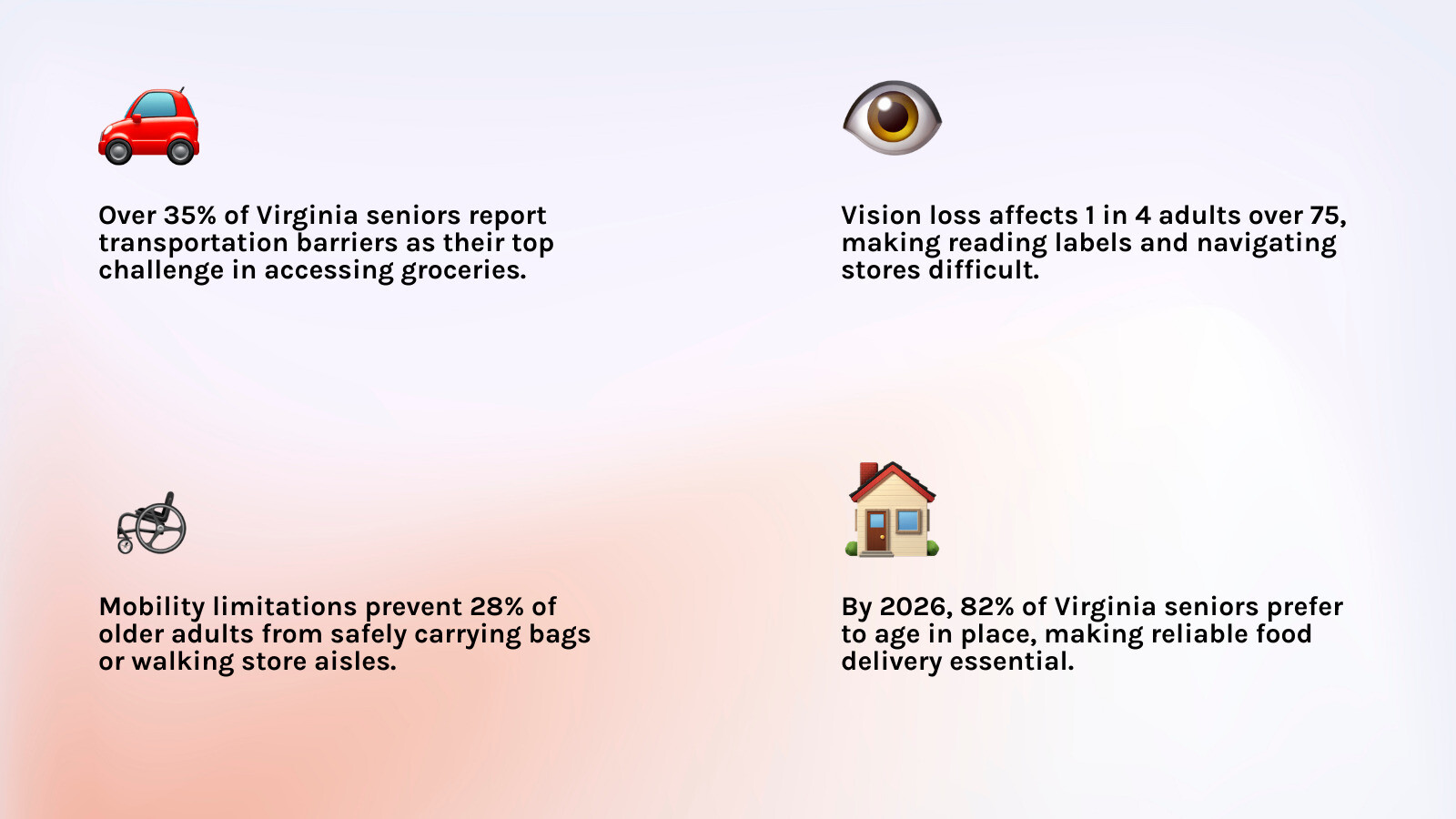
As our loved ones blow out more candles on their birthday cakes, the simple chore of keeping the pantry stocked morphs into a complex logistical challenge. In June 2026, we are seeing an aging population in Virginia that increasingly values staying in their own homes. However, aging in place successfully requires reliable access to fresh, nutritious food.
Without a reliable Virginia elder grocery service or local support system, several challenges quickly turn a routine errand into a major safety risk:
- Physical and Mobility Limitations: Severe arthritis, balance issues, and reduced physical stamina make walking down long supermarket aisles exhausting. Reaching for top-shelf items or bending down to grab a carton of milk becomes a fall risk.
- Transportation Barriers: When an older adult stops driving, their world shrinks. While public transit exists in urban pockets like Richmond or Northern Virginia, it is rarely senior-friendly for carrying heavy paper bags. In rural or suburban counties, options are incredibly sparse.
- Vision and Cognitive Changes: Vision impairment, such as macular degeneration or cataracts, makes reading tiny nutrition labels, price tags, and expiration dates nearly impossible.
- The Processed Food Pitfall: When shopping is too difficult, seniors often resort to shelf-stable, highly processed convenience foods. These meals are notoriously high in sodium, sugar, and preservatives, which can aggravate chronic conditions like hypertension and diabetes.
Maintaining physical wellness is key to avoiding hospital stays. Did you know that at least half of all elderly adults who are hospitalized will develop hospital-induced delirium? This startling statistic underscores why keeping seniors safe, well-nourished, and out of the hospital is so critical.
When families begin researching options to keep their loved ones healthy, they often look into educational resources regarding Virginia Senior Care to understand the landscape of support. Part of that landscape includes finding reliable ways to manage Grocery Shopping for Elders before nutrition levels decline.
Fortunately, Virginia offers a variety of community resources. For example, families can search the Grocery Ordering/Delivery - 4 results - 211 Virginia database to discover local food assistance programs operating in their specific zip codes.
Types of Virginia Elder Grocery Service Options Available
No two seniors have the exact same needs. Some older adults love the social aspect of wandering the aisles but just need a steady arm to lean on and a ride home. Others prefer to stay comfortable on the couch while someone else handles the entire process from list to pantry.
To meet these diverse needs, Virginia offers several types of grocery assistance:

Volunteer-Led Virginia Elder Grocery Service Programs
For budget-conscious seniors, volunteer-driven programs are a godsend. These initiatives rely on the kindness of local community members to bridge the gap between the supermarket and the senior's kitchen.
Many local municipalities and non-profit organizations across Virginia offer specialized volunteer programs. These services typically pair local volunteers with residents who are at least 60 years old and need assistance getting their weekly essentials.
Here is how these volunteer programs typically work:
- The Match: The senior is matched with a screened and trained volunteer from their community.
- The Order: Every week or two, the volunteer calls the senior to take their custom grocery list.
- The Shop: The volunteer travels to local partner supermarkets to purchase the items using the senior's payment method.
- The Delivery: The volunteer delivers the groceries directly to the senior’s home. There are typically no delivery fees or minimum order requirements.
- The Extra Touch: If requested, volunteers will even help put the groceries away in the pantry and loosen tight jar lids.
These community-focused programs provide more than just food; they deliver vital human connection. Regular deliveries reduce social isolation and give families peace of mind knowing a friendly face is checking in on their loved one.
For those looking for localized, low-cost assistance, exploring a volunteer-led Senior Grocery Delivery program is an excellent starting point.
Commercial Delivery vs. Personalized Grocery Support
With the rise of smartphone apps like Instacart, Shipt, and direct store delivery, getting food delivered has never been easier for the general public. However, for many older adults, these commercial services fall short.
- The Digital Divide: Many seniors do not own smartphones or feel comfortable navigating complex mobile apps to build a virtual cart.
- The Doorstep Barrier: Commercial drivers are paid for speed. They drop boxes or plastic bags on the front porch or in the lobby and immediately drive away. For a senior with a walker, getting those heavy bags from the porch into the kitchen is an insurmountable obstacle.
- Zero Personalization: A gig-economy driver will not unpack the milk, check the expiration dates on the existing eggs, or stop to chat.
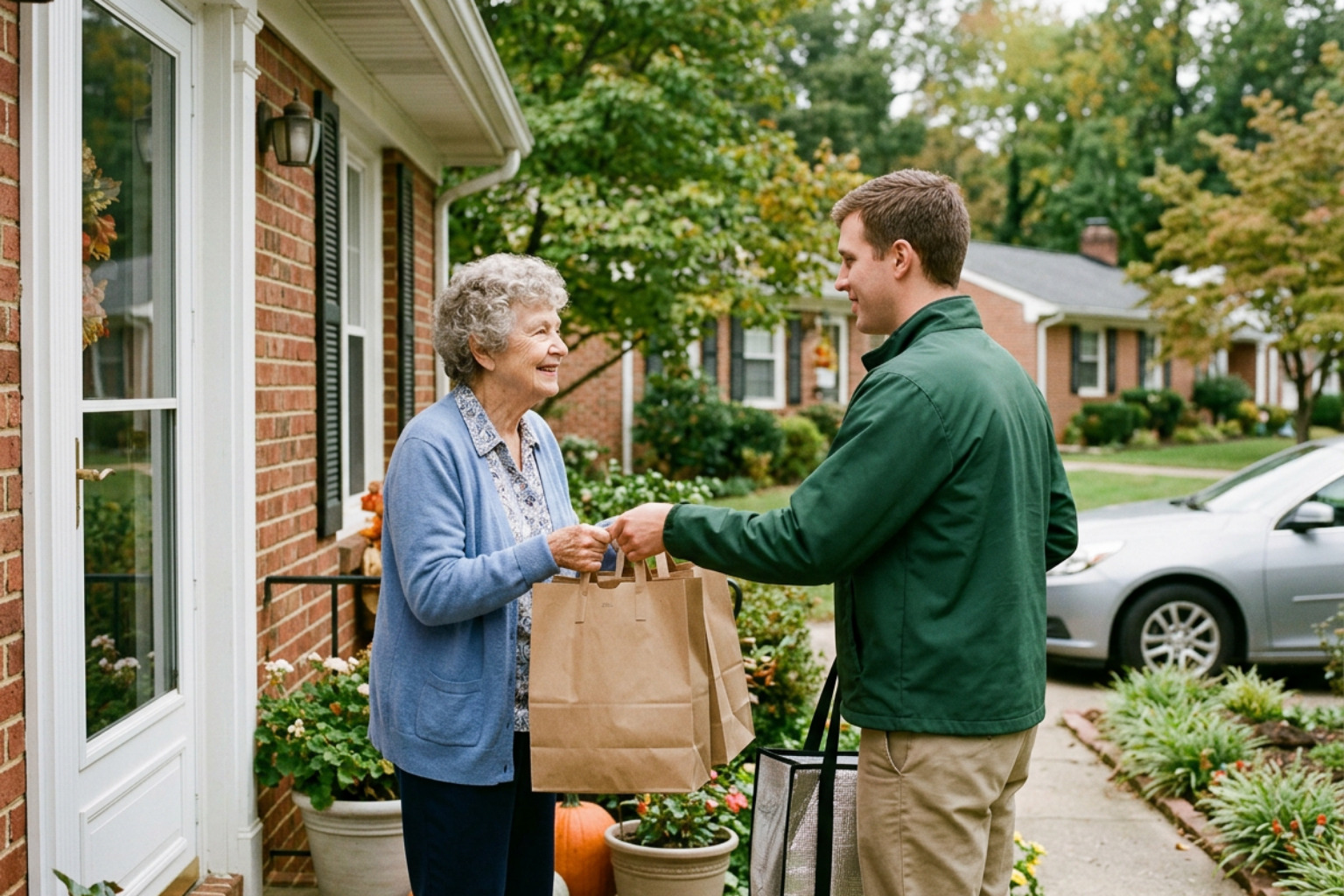
This is where personalized concierge support makes a world of difference. Rather than relying on a nameless delivery driver, a dedicated companion can handle the entire process. They can sit down with the senior, help plan a menu, drive them to the store as a fun outing, or do the shopping on their behalf.
For seniors who require this level of care, exploring Home Food Delivery for Elderly solutions that offer in-home unpacking and organization is essential.
Integrating Grocery Support with Lifestyle and Errand Coordination
A full pantry is only half the battle. For a senior to stay truly healthy and independent at home, grocery shopping must be integrated into their daily routines. Having fresh vegetables in the fridge does little good if an older adult lacks the physical strength or motivation to chop, cook, and clean up afterward.
This is why we focus on lifestyle and errand coordination. While traditional home care agencies offer clinical or physical caregiving, we believe in a warm, concierge-style approach that focuses on companion-style help with everyday life.
Families often research Assistance with Daily Activities to find ways to make their loved one's days run smoother. By combining grocery shopping with daily lifestyle coordination, we can create a seamless circle of support:
- Menu Planning & List Creation: We can sit down with our members to write out balanced, budget-friendly shopping lists that align with any doctor-recommended dietary guidelines.
- Companion-Led Kitchen Support: We offer Meal Preparation Assistance to help turn those fresh groceries into delicious, easy-to-heat meals. This companionship makes time in the kitchen fun and engaging, rather than a tiring chore.
- Pantry and Fridge Management: We can help check for expired items, wipe down counters, and organize the pantry so that frequently used items are always within safe, easy reach.
By looking at daily life through a holistic lens—as outlined in our Daily Living Assistance Complete Guide—we help seniors maintain their cherished independence without the stress of managing a home alone.
Frequently Asked Questions About Virginia Senior Grocery Support
How do volunteer grocery programs work in Virginia?
Volunteer programs are typically designed for residents aged 60 and older who can pay for their own groceries but struggle to physically shop. Screened volunteers take orders over the phone, shop at local partner supermarkets, deliver the items on a regular schedule, and can even help put them away. These programs generally do not charge delivery fees or require minimum orders.
Can seniors get help with unpacking and meal prep?
Yes! While commercial delivery drivers will only leave bags at the door, personalized concierge services and companion programs are designed to help with the "last mile." Companions can bring the groceries inside, unpack them, organize the pantry, and assist with light meal preparation so your loved one has healthy, ready-to-eat options.
Are there phone-only grocery services for seniors who don't use smartphones?
Yes. Recognizing the digital divide, some community organizations and specialized services in Virginia offer phone-based ordering. These programs allow seniors or their families to coordinate grocery deliveries, rides, and other essential errands over a standard phone call—no smartphone apps or internet access required.
Conclusion: Empowering Independence at Home
At Burnie's Way, we believe that aging in place shouldn't feel like a series of compromises. It should be about living comfortably, confidently, and safely in the home you love.
By utilizing a dedicated Virginia elder grocery service or coordinating with a personal lifestyle concierge, you can take the stress out of meal planning and food access. We offer a compassionate, personalized approach backed by 50 years of experience, focusing on lifestyle coordination, companionship, and daily life management to give your family true peace of mind.
If you are ready to make daily routines easier and more enjoyable for your loved one, explore our specialized Grocery Shopping Assistance options today. Let us bring the store to your door—and a helping hand into your home!