9 min read

In-Depth Guide to Adapting to Aging Strategies

In-Depth Guide to Adapting to Aging Strategies

Why Adapting to Aging Matters for You and Your Loved Ones

Adapting to aging is about making proactive choices that help you or your loved ones stay healthy, independent, and confident through life's natural transitions. It's not about fighting the clock—it's about working with your body and mind to age well.

Key strategies for adapting to aging include:

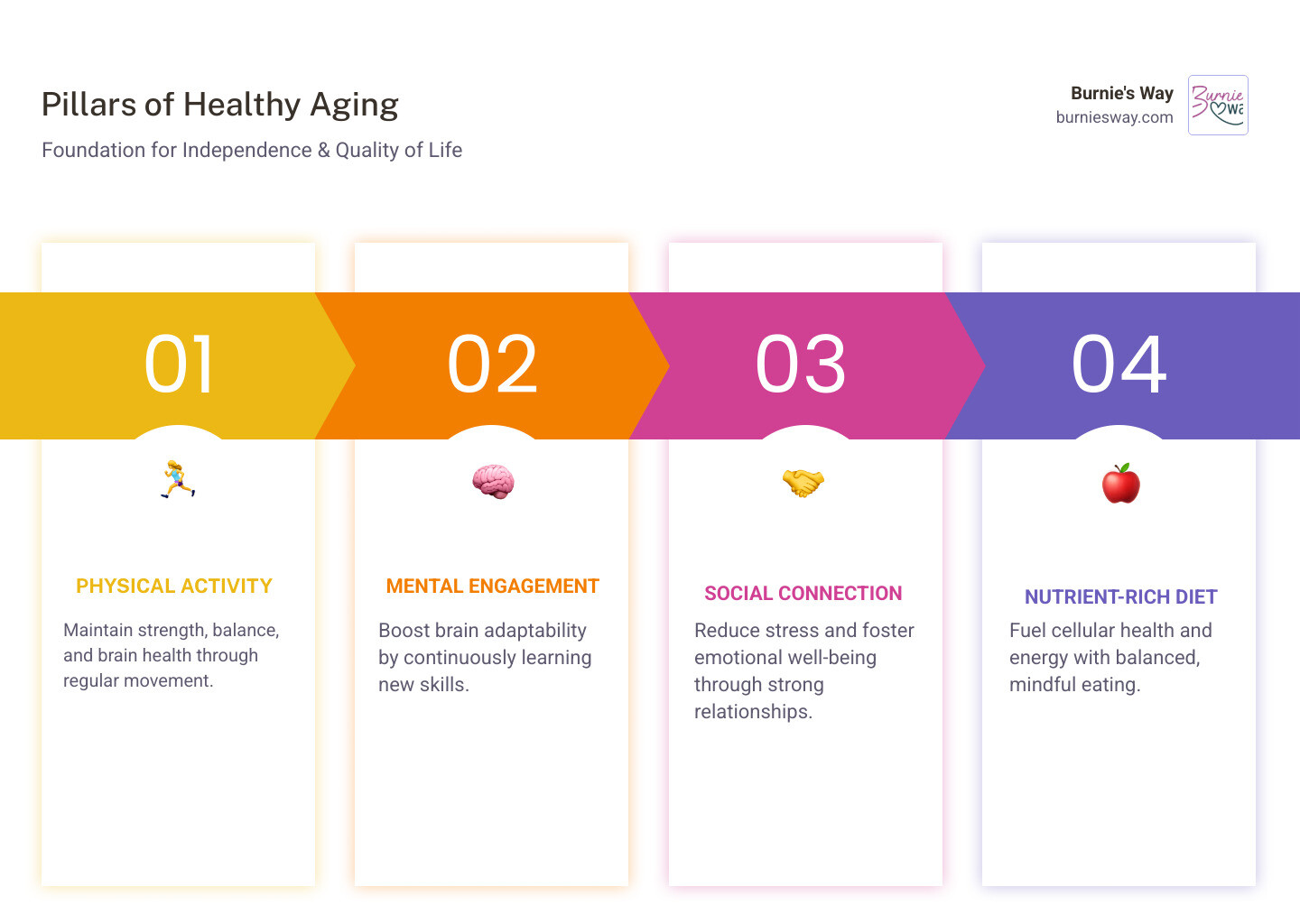
  1. Stay physically active - Regular movement maintains strength, balance, and brain health
  2. Keep learning - Mental engagement and new skills boost brain adaptability
  3. Eat well - Nutrient-dense foods support cellular health and energy
  4. Stay connected - Social relationships reduce stress and support emotional well-being
  5. Plan ahead - Coordinate support systems before challenges arise

Aging is a natural journey we all face. But here's what many people don't realize: how you age isn't set in stone. Your body and brain are constantly adapting to the world around them, and the choices you make today shape that adaptation.

The science is clear. Physical activity, mental engagement, good nutrition, and strong social ties aren't just "nice to have"—they're the foundation of healthy aging. These strategies help your body make beneficial adaptations that protect your health and independence, rather than harmful ones that accelerate decline.

For families supporting aging parents, understanding this process changes everything. It shifts the conversation from "managing decline" to "supporting independence." It gives you practical ways to help your loved ones stay confident at home, and it offers peace of mind that you're taking the right steps together.

Infographic showing the four pillars of healthy aging: a person walking for physical activity, a person reading for mental engagement, people gathered together for social connection, and colorful fruits and vegetables for nutrition, with arrows showing how each contributes to independence and quality of life - adapting to aging infographic pillar-4-steps

Understanding the Science of Aging: A Game of Adaptation

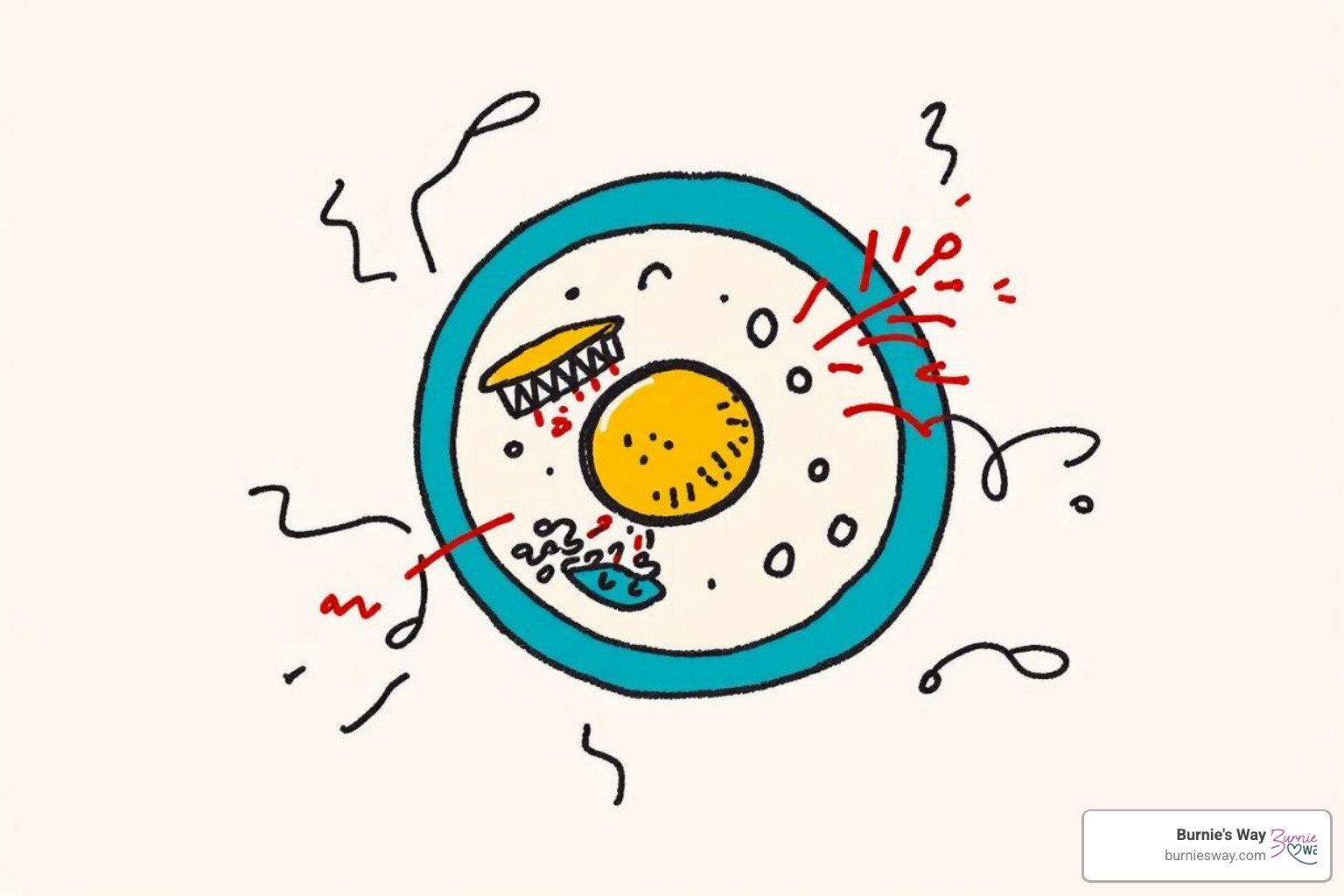
Aging isn't just about the passage of time; it's a dynamic biological process where our bodies are constantly making adjustments. Think of it like a very complex game where your cells and systems are always trying to keep things running smoothly. This constant adjustment is what we call adaptation. Understanding this fundamental concept is key to truly mastering adapting to aging.

simplified diagram showing a cell responding to stress - adapting to aging

From a scientific perspective, our bodies undergo a myriad of physiological changes as we age. Our cells accumulate damage, their energy-producing factories (mitochondria) become less efficient, and our immune systems can become less effective. These changes are inevitable, but how our bodies respond to them determines our health trajectory.

This brings us to the "Adaptation-Maladaptation Framework." Imagine your body has two main types of responses to age-related challenges:

  • Beneficial Adaptation (Ab): These are responses that help maintain function, repair damage, and promote resilience. For example, when you exercise, your muscles adapt by growing stronger, and your cardiovascular system becomes more efficient. These are positive changes.
  • Harmful Adaptation (Ah): These are responses that might offer a short-term fix but lead to long-term detriment. For instance, chronic low-grade inflammation might initially help fight off pathogens, but over time, it can damage tissues and contribute to chronic diseases.

The goal in adapting to aging is to maximize the Ab (beneficial adaptations) and minimize the Ah (harmful adaptations), improving the Ab/Ah ratio. Our bodies are incredibly resilient, but they can sometimes make choices that, while adaptive in one context, become maladaptive in another. This is the "paradox of adaptation."

A classic example of a complex age-related adaptation is cellular senescence. These are cells that have stopped dividing but remain metabolically active, often secreting inflammatory molecules. While senescent cells play a role in wound healing and tumor suppression in younger individuals, their accumulation with age contributes to a state called "inflammaging"—chronic, low-grade inflammation that drives many age-related conditions. Research, such as that on the DNA-damage response, helps us understand these intricate cellular processes and how they contribute to our overall health as we get older.

The Tipping Point: When Good Adaptations Turn Bad

The line between beneficial and harmful adaptation can be surprisingly thin. What starts as a protective mechanism can, under different circumstances or over prolonged periods, become detrimental. This is the tipping point where good adaptations turn bad.

Consider insulin resistance. Initially, it might be a way for cells to protect themselves from over-nutrition. However, chronic insulin resistance leads to higher blood sugar levels, increasing the risk of type 2 diabetes and cardiovascular disease. Similarly, chronic inflammation, while essential for fighting acute infections, becomes a driver of conditions like arthritis, heart disease, and even some cancers when it persists unchecked. Cancer cells themselves are masters of harmful adaptation, evolving resistance to therapies and finding new ways to grow and spread. Even our immune system, in its efforts to protect us, can sometimes turn against our own tissues, leading to autoimmunity, which can become more prevalent with age.

The challenge, therefore, lies in differentiating between these beneficial and maladaptive responses. Our proactive lifestyle choices can profoundly influence which path our bodies take. We want to support the systems that promote healthy, resilient adaptations and mitigate those that lead to long-term harm.

The Molecular Drivers of Adapting to Aging

Beneath these physiological changes are intricate molecular mechanisms. Our genes don't just dictate our destiny; they are constantly interacting with our environment, leading to "adaptive transcription." This means that genes are turned on or off in response to various stimuli, influencing how our cells function and adapt.

For example, a molecule called CREB (cAMP response element-binding protein) plays a crucial role in memory formation and neuronal plasticity. Its activity is a key part of how our brains adapt and learn throughout life. Chromatin plasticity, the ability of our DNA structure to change, also influences which genes are accessible and active. Modifications like H4K12 acetylation are markers that can indicate changes in gene expression, impacting how our cells respond to stress and age. Even specific proteins, like Dnmt3a2, are involved in epigenetic modifications that can alter gene activity without changing the underlying DNA sequence.

However, even at the molecular level, adaptation can come with a cost. The very processes designed to repair and maintain our cells can sometimes lead to "molecular damage from adaptation." For instance, DNA double-strand breaks (DSBs) are severe forms of DNA damage that, while triggering repair mechanisms, can also contribute to cellular senescence if not properly fixed. Understanding these molecular drivers gives us a deeper appreciation for the delicate balance involved in adapting to aging and highlights the importance of supporting these systems through healthy living.

Proactive Strategies for Adapting to Aging Successfully

The good news is that we have a significant say in how our bodies adapt to the aging process. By embracing proactive strategies, we can actively work to increase our Ab/Ah ratio, promoting beneficial adaptations and minimizing harmful ones. This isn't about halting aging; it's about taking control of your journey to ensure a vibrant, independent, and fulfilling life.

Boost Your Brain and Body with Physical Activity

Physical activity is arguably one of the most powerful tools we have for adapting to aging successfully. It's not just about staying fit; it's about sending clear signals to your body to adapt beneficially.

One of the most common age-related changes is sarcopenia, the gradual loss of muscle mass and strength. Regular physical activity directly counteracts this, helping to maintain "movement-dependent muscle strength." Our muscles don't just help us move; they are metabolic powerhouses that influence everything from blood sugar regulation to bone density.

Beyond the physical, exercise is a potent brain booster. Studies consistently show improved memory performance and overall cognitive function in individuals who remain physically active. Aerobic activities, like brisk walking, swimming, or dancing, improve blood flow to the brain, delivering vital oxygen and nutrients. Strength-building exercises, using weights or resistance bands, not only maintain muscle but also support bone health and improve balance, reducing the risk of falls. Don't forget flexibility and balance exercises, like yoga or tai chi, which improve mobility and stability, crucial for everyday independence. When we move, we tell our bodies to stay strong, sharp, and adaptable.

Sharpen Your Mind: The Power of Environmental Enrichment

Just as our bodies need exercise, our brains thrive on stimulation. "Environmental enrichment" refers to engaging with novel, challenging, and socially interactive experiences. This keeps our brains pliable and responsive, a concept known as "metaplasticity"—the ability of our brain to change its own ability to change. In simpler terms, a brain that's regularly challenged becomes more adaptable to future stimuli.

Brain training, learning new skills (a new language, an instrument, a complex hobby), and engaging in social activities all contribute to this mental sharpening. These activities build cognitive reserves, create new neural pathways, and improve brain health. Lifelong learning isn't just a pleasant pastime; it's a critical strategy for maintaining cognitive function and increasing our capacity for adapting to aging. When we continuously learn and engage, we signal to our brains that they need to stay active, flexible, and ready for whatever comes next.

Fueling Longevity: Nutrition and Mindful Eating

What we eat directly impacts our cellular health and, consequently, our ability to adapt beneficially to aging. The benefits of balanced nutrition are profound, providing the building blocks and energy our bodies need to repair, regenerate, and resist age-related decline.

Focusing on "nutrient-dense diets"—rich in fruits, vegetables, whole grains, lean proteins, and healthy fats—helps to increase the Ab/Ah ratio. These foods provide antioxidants that combat cellular damage, essential vitamins and minerals that support metabolic processes, and fiber that promotes gut health. For older adults, specific "key vitamins and minerals" like Vitamin D, calcium (for bone health), B12 (for nerve function), and Omega-3 fatty acids (for brain and heart health) become even more crucial. Mindful eating, paying attention to what and how we eat, further improves these benefits, ensuring our bodies receive optimal nourishment to support healthy adaptation throughout our lives.

The Future of Healthy Aging: Emerging Science and Approaches

The field of longevity research is booming, and scientists are constantly uncovering new insights into the aging process and how we can better facilitate adapting to aging. While lifestyle choices remain paramount, future possibilities offer exciting glimpses into extending not just lifespan, but more importantly, "healthspan"—the period of life spent in good health.

Using Your Body's Potential for Better Adapting to Aging

We're learning more about how our bodies can be coaxed into better adaptation. For example, "metaplasticity in muscle" refers to how our muscles can become more responsive to training over time, making future workouts even more effective at building strength and resilience. Supporting adaptive molecules like CREB through lifestyle interventions, such as exercise and cognitive stimulation, can improve memory and learning, keeping our brains sharp.

The role of epigenetics, the study of how environmental factors can turn genes on or off without changing the DNA sequence itself, is also a key area of exploration. Our daily habits can influence these epigenetic tags, potentially promoting beneficial adaptations and influencing our biological age. Understanding cellular senescence, as highlighted in scientific research on cellular senescence, is critical. If we can find ways to clear these problematic cells, it could significantly impact age-related inflammation and disease.

Promising Developments on the Horizon

The scientific community is buzzing with "promising developments on the horizon." Researchers are actively exploring methods for "clearing senescent cells," often referred to as "zombie cells," from the body. Early studies in animal models have shown remarkable results, extending healthspan and delaying the onset of age-related diseases. While human trials are still in early stages, the potential is enormous.

Another exciting area is "understanding biological age." Unlike chronological age, which is just the number of years we've lived, biological age reflects the true health of our cells and tissues. Scientists are developing "epigenetic clocks," such as GrimAge and DunedinPACE, which analyze patterns of "DNA methylation" to estimate biological age. These tools could one day help us track the effectiveness of interventions and provide personalized insights into our aging process. How science may shape future strategies involves not only therapeutic interventions but also a deeper understanding of personalized lifestyle recommendations based on our unique biological profiles, further empowering us in adapting to aging.

Frequently Asked Questions about Adapting to Aging

We often hear many questions when discussing the natural journey of getting older. Let's address some of the most common ones to provide clarity and empower you or your loved ones on this path.

Is aging just about decline, or can we truly adapt?

It's a common misconception that aging is solely about decline. While some physiological changes are inevitable, our understanding of the adaptation-maladaptation framework clearly shows that we can profoundly influence how we age. Aging is a process of continuous change, and our bodies are constantly making adjustments. The choices we make daily—from what we eat to how much we move and engage our minds—can promote beneficial adaptations that lead to resilience, vitality, and independence. It's not about stopping the clock, but about making the most of every moment by making proactive choices that support healthy aging. We can absolutely adapt, and adapt well!

What is the single most important thing I can do to adapt well to aging?

This is a fantastic question, but the truth is, there's no single magic bullet. If there were, we'd all be doing it! The most effective approach to adapting to aging is a holistic one. Think of it as a symphony where all instruments play together. The synergy of consistent physical activity, continuous mental engagement, strong social connections, and balanced nutrition provides the greatest benefit. Each component supports the others, creating a powerful foundation for healthy, independent living. Rather than seeking one "most important" thing, we encourage embracing a balanced lifestyle that incorporates all these elements.

Are "anti-aging" supplements effective?

The market is flooded with "anti-aging" supplements, and it's easy to be swayed by their promises. However, for the vast majority of these products, rigorous scientific backing is often lacking. While some compounds are being researched for their potential roles in longevity, they are not yet ready for general use and often require more studies to confirm efficacy and safety.

Our recommendation is always to focus on evidence-based lifestyle changes first. These are proven strategies for promoting healthspan and well-being. Before considering any supplement, we strongly advise consulting with a trusted professional who can provide personalized guidance based on your individual needs and health profile. What works for one person may not work for another, and some supplements can even interact with medications. Prioritize proven strategies for adapting to aging before turning to unverified solutions.

Conclusion: Accept Your Journey of Aging with Confidence

As we've explored, adapting to aging is not a passive process; it's an active, empowering journey. By understanding the science of adaptation, recognizing the difference between beneficial and harmful responses, and embracing proactive lifestyle strategies, we can shape our aging experience for the better. The key lies in making intentional choices that support our physical and mental well-being, fostering independence, and promoting a vibrant healthspan.

We've learned that our bodies are incredibly resilient and capable of positive adaptation when given the right tools: regular physical activity, continuous mental stimulation, nourishing nutrition, and strong social connections. These are the pillars upon which a fulfilling later life is built. It's about empowering ourselves and our loved ones to live confidently at home, enjoying each day to the fullest.

At Burnie's Way, we understand that navigating life's transitions can sometimes feel overwhelming. That's why we're here to offer personalized support and lifestyle coordination. We believe in helping you or your loved ones live the way you want, providing assistance in key areas of daily life, and giving families peace of mind that everything’s okay. We act as your virtual companion, events coordinator, and personal assistant, ensuring you have the support you need to thrive.

To find out how we can help you or your loved ones on this journey of adapting to aging with confidence and independence, learn more about our services.

Clean Sweep: Your Guide to Getting Help with Household Chores

11 min read

Clean Sweep: Your Guide to Getting Help with Household Chores

Why Finding the Right Household Chores Help Changes Everything Household chores help can transform your daily life, whether you're managing a busy...

Read More
Home Sweet Home: Unlocking Senior Care Services in Your City

10 min read

Home Sweet Home: Unlocking Senior Care Services in Your City

Why Senior Care at Home in San Diego Matters for Your Family Senior care at home San Diego is a broad term that covers many types of support—from...

Read More
The Ultimate Guide to At-Home Elder Care: Services, Specialists, and Support

12 min read

The Ultimate Guide to At-Home Elder Care: Services, Specialists, and Support

Why Finding the Right Support Matters Most Reliable home care starts with understanding what you need and knowing where to find trustworthy help....

Read More