10 min read

How to Find Qualified Elder Care Specialists in Less Than an Hour a Day

How to Find Qualified Elder Care Specialists in Less Than an Hour a Day

Why Elder Care Specialists Matter for Families Today

elder care specialist - elder care specialists

Elder care specialists (also known as Aging Life Care Professionals or Geriatric Care Managers) are trained professionals who help older adults and their families steer the complexities of aging. They coordinate services, advocate for your loved one's needs, and create personalized support plans to maintain independence and quality of life at home.

Quick Answer: What Elder Care Specialists Do

Service Area What They Provide
Assessment Comprehensive review of needs, strengths, and current situation
Coordination Connect families to trusted services and monitor quality of care
Advocacy Represent your loved one's wishes with doctors, service providers, and community resources
Planning Create personalized support plans that adapt as circumstances change
Crisis Support Available 24/7 for unexpected situations or emergencies
Family Guidance Educate and support family members through difficult decisions

If you're an adult child watching your parent struggle with daily tasks, coordinating multiple appointments, or simply wondering if they're safe at home, you're not alone. The number of Americans aged 65 and older is projected to more than double, from 54 million in 2019 to 83.6 million by 2050. That means millions of families are facing the same questions right now.

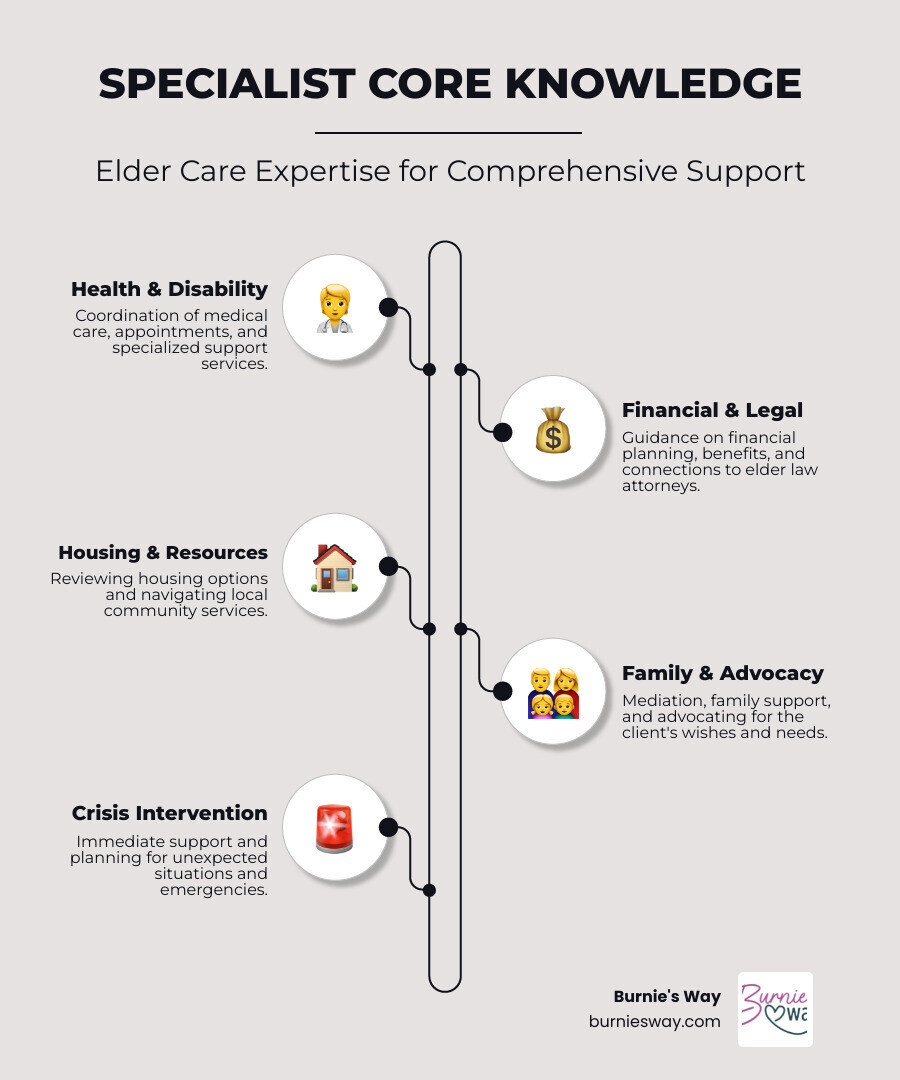
Finding the right support doesn't have to take weeks of research or endless phone calls. Elder care specialists bring expertise across eight key areas: health and disability coordination, financial guidance, housing options, family mediation, local resources, advocacy, legal connections, and crisis intervention. They act as your guide through a complex landscape, saving you time and reducing the overwhelming stress that comes with managing everything alone.

The best part? These professionals are trained to focus on what matters most: keeping your loved one independent, comfortable, and connected while giving you peace of mind that everything's handled.

infographic showing the eight core knowledge areas of elder care specialists: health and disability coordination, financial planning assistance, housing options guidance, family support and mediation, local community resources, advocacy and representation, legal referrals and coordination, and crisis intervention services - elder care specialists infographic infographic-line-5-steps-elegant_beige

Elder care specialists vocabulary:

What is an Elder Care Specialist? A Guide for Families

An elder care specialist, often referred to as a Geriatric Care Manager or an Aging Life Care Professional, is a dedicated expert who helps individuals and families steer the complexities that can come with aging or living with disabilities. Their core mission is to provide holistic, client-centered support that champions the independence, comfort, and overall quality of life for older adults.

Imagine a trusted advisor who understands the intricate web of needs an aging loved one might have – from their daily routines and social engagement to more complex considerations like housing, finances, and legal matters. That's the role of an elder care specialist. They don't just "manage" care; they work alongside families to create personalized strategies that empower seniors to live the way they want, with dignity and confidence. This approach is all about finding solutions that prioritize the individual's wishes and well-being, ensuring they remain as independent and connected as possible. For more insights into how this personal support works, you can explore what you need to know about personal support for aging adults.

The Different Names and What They Mean

You might encounter several terms when looking for professional support for an aging loved one, such as "elder care specialist," "Aging Life Care Professional®," or "Geriatric Care Manager." While these titles are often used interchangeably, they all point to a similar, invaluable role: a professional dedicated to a holistic, client-centered approach to planning and supporting older adults or others facing ongoing health challenges.

The term "Aging Life Care Professional" is a trademarked designation used by members of the Aging Life Care Association (ALCA), which emphasizes a proactive, life-focused approach rather than merely "managing" issues. These professionals are educated and experienced in fields related to aging and elder care, with a specialized focus on issues associated with aging and disabilities. They aim to guide individuals and families toward actions and decisions that ensure quality support and an optimal life, ultimately reducing worry and stress for family caregivers. Essentially, whether referred to as an elder care specialist or a Geriatric Care Manager, the focus remains on providing comprehensive, expert guidance.

How They Differ from Other Providers

Elder care specialists differ significantly from other elder care providers you might encounter. While a home health aide might assist with daily tasks, a nurse provides medical care, or a doctor diagnoses and treats illnesses, an elder care specialist acts as a central coordinator, advocate, and guide.

Their distinction lies in their comprehensive, overarching perspective. They are typically not direct healthcare providers in the clinical sense, but rather health and human services specialists. Their emphasis is on personal support, lifestyle coordination, and guidance. They help connect families to the right services, overseeing the bigger picture rather than providing hands-on care themselves.

What truly sets them apart is their adherence to professional standards and a strict code of ethics. For example, Aging Life Care Professionals who are members of the Aging Life Care Association (ALCA) commit to Standards of Practice and a Code of Ethics built on Integrity, Loyalty, and Dignity. This commitment ensures that they act as trusted advocates, providing objective advice and prioritizing the client's best interests. They are there to ensure all pieces of the puzzle fit together, creating a seamless and supportive environment for your loved one.

The Comprehensive Services Offered by Elder Care Specialists

Elder care specialists offer a wide array of services designed to address every facet of an aging individual's life, as well as support their families. Their primary goal is to empower seniors to live independently and comfortably, helping them coordinate their daily lives with ease. These services typically include a comprehensive assessment of needs, personalized support planning and coordination, an essential advocacy role, and crucial guidance during unexpected life changes. They also extend support to family members, help steer community resources, and assist with organizing important documents and daily routines.

Assessment, Planning, and Coordination

The journey with an elder care specialist often begins with a comprehensive assessment. This isn't just a checklist; it's a meticulous review of an individual's current situation, including their health (from a coordination perspective), living environment, social engagement, cognitive abilities, and personal preferences. This comprehensive assessment is vital for understanding the unique needs and strengths of your loved one, forming the bedrock of all subsequent planning.

Based on this assessment, the specialist then creates a personalized support plan. This plan is dynamic, designed to evolve as circumstances change, and focuses on coordinating various aspects of daily life. This could involve arranging transportation for appointments, organizing home support, or connecting your loved one with social activities and community programs that align with their interests. We work to ensure these plans maximize independence and improve quality of life, making sure every detail is thoughtfully considered and coordinated.

Advocacy and Support During Life Changes

A crucial role of elder care specialists is advocacy. They act as a strong voice for your loved one, ensuring their wishes and needs are heard and respected in various settings, whether with service providers, medical professionals, or community organizations. This is particularly invaluable for families who live at a distance, as the specialist can serve as a trusted liaison, providing regular updates and ensuring consistent support.

Beyond day-to-day advocacy, these specialists are instrumental during unexpected life changes or crises. Imagine a sudden illness requiring a hospital stay, or an unexpected change in living arrangements. In such moments of crisis, an elder care specialist can step in to coordinate immediate needs, communicate with medical teams, and help steer the path forward, providing crucial support and reducing family stress. Their ability to respond quickly and effectively in these situations can make an enormous difference, offering peace of mind when you need it most.

The financial, legal, and housing aspects of aging can be incredibly complex. Elder care specialists are not typically attorneys or financial advisors themselves, but they possess a deep understanding of these areas and can expertly connect families to trusted professionals. This includes referring you to elder law attorneys for estate planning or power of attorney documents, or to financial planners who specialize in long-term care funding.

When it comes to housing, they can help review a spectrum of options, from implementing modifications to allow for safe and comfortable aging in place, to exploring new communities that might better suit changing needs. They can also assist with organizing the extensive paperwork often required for accessing government benefits, insurance claims, or other services, helping to streamline processes that can otherwise feel overwhelming. Their expertise in these areas can be instrumental in ensuring your loved one's well-being and stability. Many elder care specialists can also help families steer complex systems and understand the government benefits available, acting as guides to ensure your loved one receives all the support they are entitled to.

Key Signs It's Time to Hire an Elder Care Specialist

stressed family member looking at a pile of paperwork - elder care specialists

Recognizing when to bring in an elder care specialist can be a game-changer for both your loved one and your family. It's often not a single event, but a series of accumulating signs that suggest professional guidance would be beneficial. These signs might include family members feeling overwhelmed, complex needs or changing circumstances that are difficult to manage, geographic distance between loved ones, or even family disagreements on support decisions. If you have concerns about your loved one's comfort or independence at home, or if you simply feel the need for expert direction and resources, it's a good indication that a specialist could help.

For Families Feeling Overwhelmed or Burnt Out

Caring for an aging loved one is a profound act of love, but it can also be incredibly challenging. Many families experience significant stress, feeling overwhelmed or even burnt out by the sheer volume of tasks and decisions involved. The learning curve for managing an elder's needs can be steep, and the emotional toll can be immense.

If you find yourselves constantly juggling appointments, struggling to understand complex medical information, or feeling like you have limited time or expertise to manage everything effectively, it might be time to consider an elder care specialist. They can provide an objective, professional perspective, offering guidance and strategies that reduce family conflict and alleviate the burden on primary caregivers. Their support allows families to shift from being overwhelmed managers to simply being loving family members, confident that their loved one is receiving comprehensive and coordinated support.

When Your Loved One's Needs Become Complex

As individuals age, their needs can become increasingly complex. What might start as occasional help with errands can evolve into managing multiple health considerations, coordinating numerous appointments, or addressing memory and behavioral changes. If your loved one has multiple needs or their routines are constantly changing, or if you're noticing cognitive shifts that require specialized knowledge, an elder care specialist can be invaluable.

Perhaps you or your loved one are dissatisfied with current support arrangements, or you have growing concerns about their ability to live independently and safely at home. These are all clear signals that a specialist's expertise is needed. They can assess the situation, identify gaps in support, and implement solutions that help your loved one maintain their independence and quality of life, even as their needs evolve.

How to Find and Vet Qualified Elder Care Specialists

Finding a qualified elder care specialist might seem like a daunting task, but with the right approach, it can be straightforward and efficient. We recommend focusing on professional organizations, looking for key certifications, and understanding their areas of expertise. It's also wise to inquire about typical costs and payment structures upfront. To get started, you can often find a qualified professional through trusted directories or local resources.

Key Qualifications and Certifications to Look For

When searching for an elder care specialist, their professional background is a strong indicator of their expertise. Many come from fields such as social work, gerontology, nursing, or counseling. These diverse educational backgrounds provide them with a specialized focus on issues associated with aging and disabilities.

Beyond education, look for specific certifications. The Care Manager Certified (CMC) designation is one such credential, indicating a high level of expertise and commitment to the profession. Membership in professional bodies like the Aging Life Care Association (ALCA) is also a strong signal of quality. ALCA members, for instance, must meet stringent education, experience, and certification requirements and adhere to a strict Code of Ethics and professional standards. This commitment ensures they are not only knowledgeable but also dedicated to ethical practices and client-centered support.

Where to Find Reputable Elder Care Specialists

There are several reliable avenues for finding reputable elder care specialists:

  • Professional Organizations: The Aging Life Care Association (ALCA) offers a searchable directory to help you find an Aging Life Care Professional near you. You can visit their website at www.aginglifecare.org to search for experts in your area.
  • Eldercare Locator: This is a public service of the Administration for Community Living, connecting you to services for older adults and their families. You can use their online tool or call 1-800-677-1116. Visit the Eldercare Locator for assistance.
  • Local Agencies: Your local Area Agency on Aging (AAA), hospitals, rehab centers, and community service centers can often provide referrals to qualified specialists.
  • Referrals: Ask your loved one's doctor, attorney, or other trusted professionals for recommendations. Personal referrals can often lead to excellent matches.

Understanding the Costs and What to Expect

The cost of elder care specialist services typically operates on an hourly rate. While rates can vary significantly based on location and the specialist's experience, in 2008, you could expect to pay from $90–$200 an hour out-of-pocket for assessments and ongoing support. This statistic is from 2008, so current rates are likely higher.

Services through publicly subsidized programs may be free or offered on a sliding scale, but private elder care specialists are typically paid directly by the client or their family. Most private health insurance plans, Medicare, and Medicaid generally do not cover these services, though some long-term care insurance policies might. We recommend discussing the fee structure, including initial assessment costs versus ongoing support fees, during your first consultation to ensure clarity and avoid surprises. Understanding the costs upfront allows you to plan accordingly and make informed decisions.

Frequently Asked Questions About Elder Care Specialists

Can they assist younger adults with disabilities?

Absolutely. While the majority of their clients are older adults, many elder care specialists also assist younger adults who face the challenges of disability or serious illness. This can include individuals with physical disabilities, developmental disabilities, brain injuries, mental health problems, or chronic illnesses. In these cases, specialists help families plan for the current and future needs of their adult child, ensuring they have the necessary support to live as independently and confidently as possible.

What are the key areas of expertise for elder care specialists?

Elder care specialists, particularly those affiliated with the Aging Life Care Association, are recognized for their expertise across eight professional knowledge areas. These areas ensure a comprehensive and integrated approach to supporting individuals and families:

  • Health and Disability Coordination: While not providing direct medical care, specialists help coordinate healthcare services, communicate with medical teams, and ensure understanding of health conditions and support needs.
  • Financial: They offer guidance on financial planning for long-term support, assist with organizing bills, and connect families to financial experts.
  • Housing: This includes evaluating options for aging in place, recommending home modifications, or exploring suitable residential communities.
  • Families: Specialists act as mediators, helping families steer difficult conversations and resolve conflicts regarding support decisions.
  • Local Resources: They connect clients to valuable community programs, services, and support networks.
  • Advocacy: They champion the client's wishes and best interests in all settings.
  • Legal: Specialists provide referrals to elder law attorneys and other legal experts for estate planning, guardianship, and other legal matters.
  • Crisis Support: They offer crucial intervention and coordination during unexpected emergencies, hospitalizations, or sudden changes in circumstances.

What are the benefits of a holistic, client-centered approach?

The benefits of a holistic, client-centered approach in elder care are profound. This method ensures that support is highly personalized, respecting the individual's unique wishes, values, and life story. By focusing on the complete individual—their social, psychological, and physical well-being—specialists help maximize independence and autonomy.

This approach leads to an improved overall quality of life, as it prioritizes what truly matters to the individual, ensuring they remain engaged, connected, and purposeful. For family members, it significantly reduces stress and worry, knowing that their loved one is receiving comprehensive, coordinated, and compassionate support custom specifically to them. It helps seniors maintain independence and quality of life by addressing all aspects of their well-being, fostering a sense of control and dignity.

Final Thoughts

Finding the right support for an aging loved one doesn't have to be an overwhelming journey. We believe that engaging an elder care specialist is an achievable and empowering step for your family. These professionals are invaluable guides who bring clarity, expertise, and a compassionate approach to what can often be a complex and emotional landscape. They help ensure your loved one can live safely and independently, with the peace of mind that comes from coordinated, personalized support.

For families seeking a partner to help steer daily life and maintain independence at home, services like Burnie's Way offer personalized concierge support to make life easier and more connected. We’re here to help you steer daily routines, coordinate trusted services, and ensure your loved one lives confidently and stays connected, just the way they want. Learn more about our personalized support services and how we can support your family's unique needs.