11 min read

Clean Sweep: Your Guide to Getting Help with Household Chores

Clean Sweep: Your Guide to Getting Help with Household Chores

Why Finding the Right Household Chores Help Changes Everything

Household chores help can transform your daily life, whether you're managing a busy family home or coordinating care for an aging parent. If you're feeling overwhelmed by the endless cycle of cleaning, organizing, and maintaining a household, you're not alone—and there are practical solutions available.

Quick Answer: Types of Household Chores Help Available

  • Family-based systems: Age-appropriate chore charts and shared responsibility schedules
  • Technology solutions: Apps, smart home devices, and automated services
  • Professional services: Cleaning services, errand runners, and personal support coordinators
  • Personal concierge support: For older adults, services like Burnie's Way provide lifestyle coordination and daily life management

Nobody liked chores as a child, and they don't get much more appealing as adults. But here's what we know from research: working parents face 18-hour days when caregiving responsibilities pile on top of work. Women typically shoulder more of the household burden. And clutter isn't just annoying—studies show that people living in cluttered homes have higher levels of cortisol, the stress hormone.

The good news? There's a powerful truth emerging from recent research: people who spend money creating more time for themselves are happier than those who spend it on material possessions. The boost in happiness from investing in household help often outweighs the financial cost.

This guide will walk you through practical strategies for getting help with household chores—from building family systems that actually work, to knowing when it's time to bring in outside support. Whether you're looking to lighten your own load or help an aging parent maintain their independence at home, you'll find actionable solutions here.

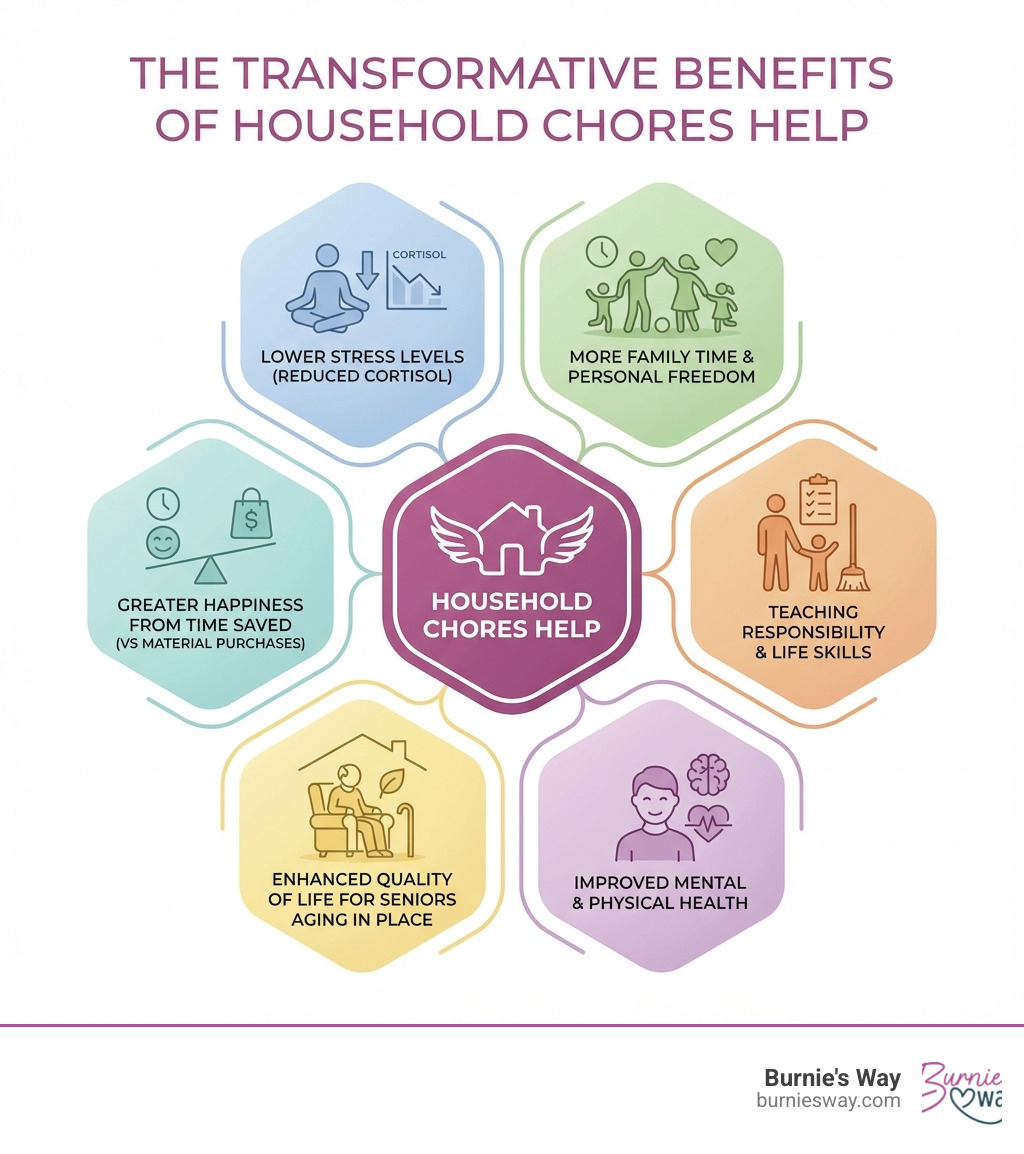
Infographic showing the benefits of household chores help: Reduced stress levels (lower cortisol), More family time and personal freedom, Teaching responsibility and life skills to children, Improved mental and physical health, Enhanced quality of life for seniors aging in place, Greater happiness from time saved versus material purchases - household chores help infographic

The Foundation of a Tidy Home: Routines and Shared Responsibility

family cleaning kitchen - household chores help

Establishing a household chore routine isn't just about keeping your home sparkling clean; it’s about nurturing a harmonious environment and fostering invaluable life skills within your family. We've all felt the weight of an ever-growing to-do list, especially when juggling work and family life. One study found that working parents effectively have 18-hour days when factoring in caregiving responsibilities on top of their jobs. Add to that the fact that women disproportionately carry the load of housework, and it's clear why many households are seeking solutions.

A well-structured chore routine can significantly reduce family stress and free up precious time for connection and self-care. When everyone contributes, the burden is lightened, and a sense of shared accomplishment replaces individual overwhelm. Sue Atkins, a renowned Family Parenting Expert, agrees, stating that "Setting chores gives children responsibility, which in turn teaches them to become responsible. As parents, our job is to nurture and guide our children towards responsibility." This shared effort builds competence, communication, negotiation, cooperation, and teamwork – essential relationship skills for everyone involved.

Why a Chore System Matters

Imagine a home where tasks don't pile up, where everyone knows their role, and where arguments over who does what are minimized. That's the promise of an effective chore system.

  • Reduced Stress: A study found that those who lived in cluttered homes had higher levels of cortisol, the stress hormone. A routine helps prevent clutter, directly contributing to a calmer home environment. When chores are predictable, the mental load—that exhausting background hum of things that need to be done—is significantly reduced.
  • More Free Time: When tasks are distributed and completed efficiently, we reclaim hours that would otherwise be spent catching up on neglected duties. This allows for more quality family time, hobbies, or simply relaxing.
  • Shared Workload: Fairly dividing tasks ensures no single person feels overburdened. This is especially crucial given that statistics consistently show women often do more housework than men. A clear system promotes equity.
  • Sense of Contribution: Every family member, regardless of age, feels a sense of belonging and value when they contribute to the household's well-being.
  • Preventing Arguments: Clear expectations and assignments minimize conflict and resentment, leading to a more peaceful home atmosphere.

Chores as a Tool for Teaching Life Skills

Beyond cleanliness, chores are a powerful pedagogical tool. They are practical lessons in real-world living.

  • Responsibility: Children learn that living in a shared space comes with shared duties. They understand the consequences of neglecting tasks and the rewards of fulfilling them.
  • Self-Sufficiency: From making their bed to preparing a simple meal, children acquire the practical skills needed to care for themselves and their future homes. As Sue Atkins puts it, our goal is "to give them the ability to look after themselves so they are not helpless when they go out into the world."
  • Time Management: Integrating chores into their daily or weekly schedule teaches children how to prioritize tasks, estimate completion times, and manage their schedules effectively.
  • Practical Skills: Chores introduce children to basic home maintenance skills like cleaning, organizing, cooking, and even gardening, which are essential for independent living.
  • Problem-Solving: When faced with a challenging chore, children learn to think critically, break down tasks, and find solutions, fostering resilience and adaptability.

Creating Your Family's Chore System

Developing a household chore system that genuinely works for your family involves planning, communication, and a willingness to adapt. The goal is to create a sustainable routine where everyone feels empowered and contributes effectively.

We recommend starting by making a comprehensive list of all household chores, from daily tidying to seasonal deep cleans. Once you have this master list, you can begin the process of task division, assigning chores based on age, ability, and even personal preference. Chore charts can be invaluable visual aids, helping everyone keep track of their responsibilities and progress. The best chore chart is one your family can actually follow!

Age-Appropriate Chores for Everyone

Involving everyone in household chores is key to a harmonious home. The trick is to assign tasks that match each person's developmental stage and physical capabilities. Here's a general guide for age-appropriate chores, but adjust based on your family's unique dynamics:

  • Toddlers (2-3 years): At this age, the focus is on simple habits and participation.
    • Put toys in a bin or basket.
    • Help put laundry in the washing machine.
    • Fill a pet’s water bowl (with supervision).
    • Wipe up small spills with a cloth.
    • Help put books back on a shelf.
  • Preschoolers (4-5 years): They can handle slightly more complex tasks and contribute more actively.
    • Set the table (with plastic plates/cups).
    • Help prepare meals (e.g., wash vegetables, stir ingredients, with supervision).
    • Help sort clean clothes by color or family member.
    • Help put away groceries (light, non-breakable items).
    • Make their bed (pull up covers, arrange pillows).
  • School-age Children (6-11 years): These children can manage multi-step tasks and take on more responsibility for their own space.
    • Water plants.
    • Feed pets and clean their bowls.
    • Help hang out and fold washing.
    • Take out the rubbish.
    • Help choose meals and shop for groceries.
    • Help prepare and serve meals.
    • Vacuum or sweep floors in common areas.
    • Clean bathroom sinks and wipe kitchen benches.
    • Mop floors (with appropriate tools).
    • Empty the dishwasher.
    • Keep their room tidy (make bed, put away clothes, organize desk).
  • Teenagers (12-18 years): Teenagers are capable of most adult chores and can take ownership of larger tasks or entire cleaning zones.
    • Do younger children's chores independently.
    • Do their own laundry from start to finish (wash, dry, fold, put away).
    • Clean the bathroom and toilet thoroughly.
    • Mow lawns or do other yard work.
    • Stack and empty the dishwasher.
    • Do basic grocery shopping.
    • Cook a simple family meal once a week.
    • Wash the family car.
    • Manage their own schedule for chores and personal responsibilities.
  • Adult Responsibilities: Adults typically handle tasks requiring specialized knowledge, physical strength, or dealing with chemicals.
    • Deep cleaning tasks (e.g., oven, windows, gutters).
    • Home maintenance and repairs.
    • Bill payment and financial management.
    • Coordinating and overseeing the chore system.
    • More info about how we work: How We Work.

A Practical Chore Schedule: Daily, Weekly, and Monthly Tasks

To avoid feeling overwhelmed, we find it incredibly helpful to categorize chores by frequency. This allows us to break down the monumental task of "cleaning the house" into manageable chunks.

  • Daily Upkeep: These are quick tasks that prevent clutter from accumulating and keep your home guest-ready.
    • Make beds.
    • Put things back in their place (clothes in hampers, toys away, books on shelves).
    • Clean up spills and messes as needed.
    • Wash dishes after every meal; load/unload the dishwasher.
    • Wipe kitchen countertops and stovetop.
    • Deal with mail (sort, recycle junk, file important papers).
    • Quick wipe-down of bathroom surfaces (sink, counter, toilet).
    • Take out trash, compost, and recycling as needed.
  • Weekly Deep Cleans: These tasks maintain a good level of hygiene and organization throughout the week. We often assign these to specific days or rotate them among family members.
    • Wash clothes and put them away.
    • Wash and replace bed sheets.
    • Vacuum or sweep all floors.
    • Mop hard floor surfaces.
    • Clean out the refrigerator and freezer (toss old food, wipe shelves).
    • Wipe down kitchen cabinets and appliance handles.
    • Dust all surfaces.
    • Thoroughly clean bathrooms (toilet, shower, mirror, floor).
    • Replace and wash bathroom rugs and towels.
  • Monthly Maintenance: These are less frequent but important tasks that ensure deeper cleanliness and functionality. We like to spread these out, perhaps tackling one extra monthly chore each week.
    • Thoroughly clean and organize drawers and closets.
    • Vacuum under furniture.
    • Clean the inside of the oven and microwave.
    • Clean trash cans and recycle bins.
    • Clean out the dishwasher.
    • Clean furniture (vacuum cloth, wipe wood, condition leather).
    • Wash bedding like comforters and duvets.
    • Wash ceiling light fixtures and wipe fan blades.
    • Wipe down light switches, door handles, and surrounding wall areas.
    • Clean the inside of washer and dryer machines.
    • Dust, vacuum, or wash window coverings.
    • Wipe down baseboards, moldings, doors, and door frames.
  • Seasonal Projects: Typically done twice a year (spring and fall), these are larger tasks that prepare your home for changing seasons and allow for significant decluttering.
    • Clean out closets and donate unused items.
    • Store out-of-season clothes.
    • Wash pillows and some stuffed toys.
    • Vacuum mattresses.
    • Deep clean the fridge, freezer, and pantry.
    • Vacuum window screens.
    • Wash windows inside and out.
    • Run a carpet cleaner and clean rugs.
    • Clear out gutters.
    • Clean fireplace and chimney.
    • Vacuum and clean out air vents and their covers.

You can download a helpful checklist to get started: Free Printable Chore Checklist.

Overcoming Common Chore Challenges

Even with the best intentions, implementing a chore system can hit a few bumps in the road. We've all faced them: the eye rolls, the forgotten tasks, the outright refusal. But with the right strategies, we can overcome these common challenges.

  • Lack of Motivation: This is probably the biggest hurdle. To combat it, we suggest making chores fun. Play upbeat music, turn it into a game (who can finish their tasks first?), or even offer small, immediate rewards. For younger children, a sticker chart works wonders. For teens, extra pocket money or screen time can be powerful motivators. Parents, remember to set a good example and participate alongside your family. Praise effort, not just perfection, and acknowledge everyone's contribution.
  • Procrastination: The "I'll do it later" trap. One effective strategy is the "timer method." Set a timer for 15-20 minutes and focus on one task. Often, starting is the hardest part, and knowing there's an end in sight can make it easier. Breaking down large tasks into smaller, less daunting steps also helps.
  • Handling Resistance: Instead of dictating, involve your family in the decision-making process. For older children, let them choose which chores they prefer or rotate tasks to prevent boredom. Explain why chores are important – for cleanliness, health, and family harmony. For persistent resistance, consider natural consequences (e.g., no clean clothes if laundry isn't done).
  • Keeping the System Flexible: Life happens! There will be busy weeks, vacations, and unexpected events that throw your schedule off. Don't let perfection be the enemy of good. Build in flexibility. It's okay to adjust the schedule or temporarily lighten the load. The goal is consistency over rigidity.
  • Making Chores Fun: This ties back to motivation. Can you listen to an audiobook while folding laundry? Can you have a "family cleaning party" with snacks afterward? Can you turn vacuuming into a race? Even small shifts in perspective can make a big difference. The goal is to raise responsible, self-sufficient individuals, and making the journey a little more enjoyable benefits everyone.

Smart Strategies for Household Chores Help

Even with a well-established family system, there are times when we all need a little extra help. Whether it's simplifying tasks to lighten the load or leveraging external resources, smart strategies can make a significant difference in maintaining a tidy home and a peaceful mind.

neatly organized pantry - household chores help

Leveraging Technology for household chores help

Technology isn't just for entertainment; it can be a powerful ally in the battle against household chaos. We've found several ways technology can provide invaluable household chores help:

  • Chore Management Apps: Apps can help assign tasks, set reminders, and track completion for family members. Many offer gamification features that can motivate children.
  • Smart Home Devices: Robotic vacuums and mops can handle daily floor cleaning, freeing up significant time. Smart speakers can be programmed for reminders or to play chore-friendly music.
  • Meal Planning Apps: Services like eMeals offer weekly meal plans that can be customized to your family's needs. They then generate a grocery list, which can often be sent directly to grocery delivery services. This dramatically reduces the mental load of "what's for dinner?"
  • Automated Subscription Services: For household basics like toilet paper, laundry detergent, and pet food, services like Amazon's Subscribe and Save automate restocking. This saves us trips to the store and ensures we never run out of essentials. Amazon can even refill prescriptions and mail them to your doorstep, saving a trip to the pharmacy.
  • Digital Calendars: Shared digital calendars can be used to schedule larger tasks, assign responsibilities, and send reminders to all family members, ensuring everyone is on the same page.

When to Consider Professional household chores help

Sometimes, despite our best efforts, we simply need to call in reinforcements. Recognizing when to seek professional household chores help isn't a sign of failure; it's a smart decision that can significantly improve your quality of life.

  • Recognizing the Need for Support: A study found that working parents have 18-hour days when caregiving responsibilities are factored in. If you're consistently feeling overwhelmed, constantly behind, or finding that chores are eroding your family's peace, it's time to consider external support. The boost in happiness you get from investing in household help can often outweigh the financial cost. As Ashley Whillans, a Harvard professor, notes, "The less control you feel you have over your daily experience, the less happy you feel... Money is a tool that allows you to purchase that control."
  • Assistance for Seniors: For older adults, maintaining independence at home is paramount. However, physical or mental limitations can make keeping up with simple daily chores incredibly difficult. While Burnie's Way does not provide direct caregiving or medical services, we specialize in offering personalized support to coordinate daily life management for aging adults. This can include finding and coordinating external services like homemaker services, errand runners, or organizing support. Our role is to help our clients live the way they want, comfortably and confidently at home, by ensuring their personal support needs are met.
  • Homemaker Services: These services can provide light housekeeping, laundry, and meal preparation. They are particularly valuable for individuals who are recovering from illness or who have physical limitations.
  • Errand Runners: From grocery shopping to picking up dry cleaning or even returning packages (Uber now offers a package return feature!), errand services can free up valuable time.
  • Maintaining Independence: For seniors, the ability to stay in their own home is often deeply tied to their dignity and well-being. Services like Burnie's Way focus on empowering this independence by providing the lifestyle coordination and personal support needed to manage daily tasks, ensuring that our clients have the resources and assistance to live comfortably and confidently.

We understand that the range of options can be daunting. We are happy to help our clients understand these choices and coordinate the personal support that fits best. You can learn more about how we can help you steer these options by exploring Our Services.

The Value of Reclaiming Your Time

In our world, time has become one of our most precious commodities. We often hear the phrase "time is money," but research suggests that for happiness, time might be even more valuable than money. This is where the true power of household chores help comes into play.

We've already discussed the statistic that working parents can face 18-hour days, and women often bear a disproportionate amount of the household burden. This relentless cycle of tasks can lead to chronic stress and burnout. However, there's good news: research consistently shows that investing in services that reclaim your time can significantly boost your overall happiness. People who spend their money on creating more time for themselves are happier than those who spend it on material possessions.

  • Time vs. Money: It's a common misconception that spending money on help is a luxury. However, studies highlight that the boost in happiness you get from investing in household help can often outweigh the financial cost. This isn't about being lazy; it's about making a conscious decision to prioritize your well-being and mental health. We believe that by offloading low-joy, time-consuming tasks, you create space for activities that genuinely energize and fulfill you.
  • Reducing Mental Load: The "mental load" of managing a household—the endless planning, remembering, and organizing—is often more exhausting than the physical tasks themselves. When you delegate chores or implement efficient systems, you reduce this cognitive burden. This frees up mental energy, allowing you to be more present and engaged in other areas of your life, whether it's with your family, your work, or your personal passions.
  • The 18-Hour Day: For many, particularly working parents, the sheer volume of daily responsibilities can feel like an unending marathon. When you factor in professional obligations, childcare, and household management, an 18-hour day can become the norm. Seeking household chores help is a direct way to carve out much-needed time for self-care, rest, and connection, preventing that constant feeling of depletion. The benefits of this reclaimed time—less stress, more energy, greater happiness—are invaluable.

We encourage you to consider the profound impact that strategically investing in household chores help can have on your life. It's not just about a cleaner home; it's about a happier, more balanced you. For more insights on this topic, we found this research on happiness and buying time to be particularly compelling: Research on happiness and buying time and The boost in happiness from outsourcing.

Conclusion

We've covered a lot of ground in this guide, from the profound benefits of establishing a household chore routine to the diverse ways technology and external services can provide invaluable household chores help. We believe a clean home is achievable, and more importantly, a peaceful home life is within reach when we approach household tasks with intention, teamwork, and smart strategies.

The key takeaways are clear:

  • Establishing a chore routine reduces stress, fosters responsibility, and frees up time.
  • Dividing chores effectively and making them age-appropriate empowers every family member.
  • Overcoming challenges requires flexibility, motivation, and open communication.
  • Simplifying tasks and leveraging technology can dramatically lighten the load.
  • Knowing when to seek professional household chores help is a sign of strength, not weakness.
  • Investing in household chores help is an investment in your happiness and well-being, reclaiming precious time that might otherwise be lost to the endless cycle of tasks.

Teamwork and support are at the heart of a well-managed home. For older adults seeking to maintain their independence at home, services like Burnie's Way offer personalized support to coordinate daily life management, making it easier to enjoy a comfortable and confident lifestyle. We help our clients live the way they want, with support in key areas of daily life, and give families peace of mind that everything’s okay.

Learn more about how we can help you create a supportive and independent living environment by exploring Our Services.

The Ultimate Guide to At-Home Elder Care: Services, Specialists, and Support

12 min read

The Ultimate Guide to At-Home Elder Care: Services, Specialists, and Support

Why Finding the Right Support Matters Most Reliable home care starts with understanding what you need and knowing where to find trustworthy help....

Read More
Home Sweet Home: Unlocking Senior Care Services in Your City

10 min read

Home Sweet Home: Unlocking Senior Care Services in Your City

Why Senior Care at Home in San Diego Matters for Your Family Senior care at home San Diego is a broad term that covers many types of support—from...

Read More
Beyond the Walls: Finding Your Perfect Home Care Solution

12 min read

Beyond the Walls: Finding Your Perfect Home Care Solution

The Comfort of Home and the Path to Independence Home care solutions are the services and support that help aging adults live safely, comfortably,...

Read More