

Why Choosing the Right Home Care Agency Feels So Hard (And What You Actually Need to Know)
A home care agency is an organization that arranges trained caregivers to help older adults live safely and independently in their own homes — without moving to a facility.
Here's a quick breakdown of what that means in practice:
- What they do: Help with daily tasks like bathing, dressing, meal prep, transportation, and companionship
- Who they serve: Seniors who want to age in place, and families who need peace of mind
- Two main types of care:
- Non-medical home care — help with daily living activities (no medical license required)
- Home health care — clinical, physician-prescribed services like skilled nursing
- How to get started: Most agencies offer a free consultation and can begin services within 48 hours
- Who pays: Private pay, long-term care insurance, veterans benefits, Medicaid waivers, or Medicare Advantage (standard Medicare rarely covers non-medical care)
According to AARP, 8 out of 10 people want to stay in their own home as they age. That's the goal. But figuring out how to make that happen — which agency to trust, what services are actually needed, and what it will all cost — can feel completely overwhelming.
If you're an adult child trying to figure out what your parent needs, you're not alone. The home care world is full of similar-sounding names, vague promises, and confusing licensing terms.
This guide cuts through the noise. We'll explain exactly what home care agencies do, how to compare them, what questions to ask, and how to avoid costly mistakes — so you can make a confident, informed decision for your family.
What a Home Care Agency Actually Does
At its simplest, a home care agency helps older adults remain at home by arranging support with everyday life. That support often falls into two buckets:
- Activities of daily living, or ADLs, such as bathing, dressing, toileting, grooming, and mobility
- Instrumental activities of daily living, or IADLs, such as meal prep, shopping, housekeeping, transportation, reminders, and companionship
This is what people mean by "aging in place": staying in a familiar home instead of moving just because daily life got harder.
For many families, the real value is not only the task list. It is the relief that comes from knowing someone reliable is showing up, routines are being supported, and one family member does not have to become the entire plan.
What in-home senior care means for older adults
In-home senior care is often less about "doing everything" and more about helping someone keep doing as much as possible on their own. Good support should preserve dignity, routines, and independence.
That can look like:
- Help getting ready in the morning
- Support with safe meals and hydration
- Rides to appointments and errands
- Friendly conversation and social engagement
- Help keeping the home tidy and manageable
- Supervision or cueing for memory-related challenges
For families, this can reduce burnout and provide breathing room. For older adults, it can mean staying near familiar neighbors, favorite chairs, and the kitchen drawer where everything has apparently been in the "right place" since 1987.
How non-medical home care differs from home health care
This is one of the biggest points of confusion.
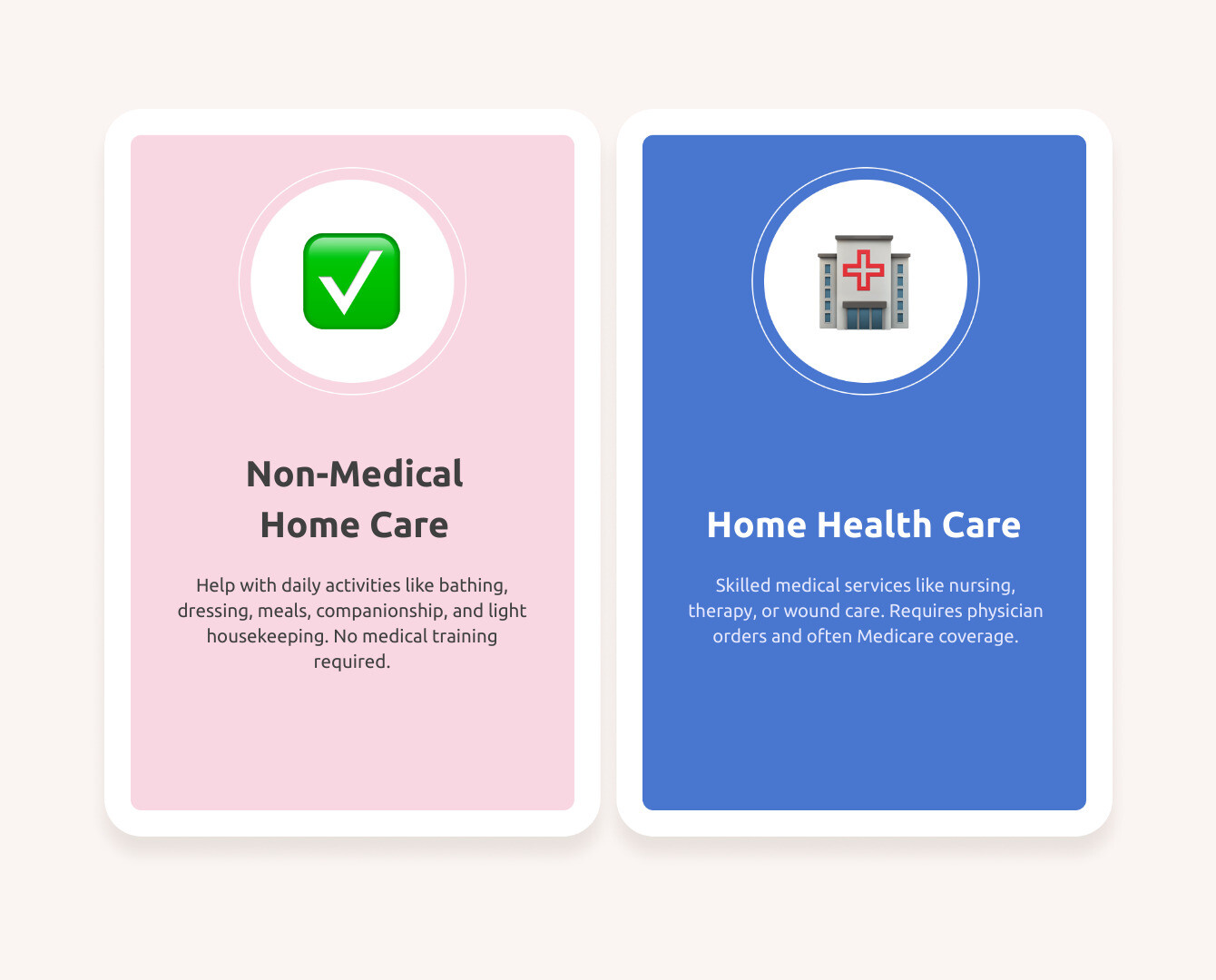
Non-medical home care focuses on daily living support. Home health care focuses on clinical services ordered by a physician.
Here is the practical difference:
| Service type | Non-medical home care | Home health care |
|---|---|---|
| Main purpose | Help with daily living | Clinical treatment and recovery |
| Examples | Bathing, dressing, meals, rides, companionship, housekeeping | Skilled nursing, therapy, wound care, injections |
| Physician order needed | Usually no | Usually yes |
| Medicare coverage | Usually not under Original Medicare | Often yes, if eligibility rules are met |
| Best for | Ongoing help at home | Short-term medical needs at home |
If you are looking for clinical providers, Medicare's comparison tool can help: Find home health services near me - Medicare.
Services You Can Expect From a Home Care Agency

Most agencies offer a menu of services that can be mixed and matched. Some clients need a few hours a week. Others need daily help, overnight support, or around-the-clock coverage.
Core day-to-day services families ask for most
The most common non-medical services include:
- Bathing and showering assistance
- Grooming, hair care, and dressing
- Toileting and incontinence support
- Mobility and transfer assistance
- Meal planning and meal preparation
- Grocery shopping and errands
- Medication reminders
- Light housekeeping and laundry
- Appointment transportation
- Companionship, conversation, walks, and activities
These are often the first signs a family notices: missed meals, wrinkled clothes, unopened mail, a fridge full of yogurt from 2024, or a growing fear of driving. A good home care agency can step in before these "small things" turn into a crisis.
If you are still sorting through options, our guides to Private Elder Care Services and How to Get Elderly Carer Guide can help you compare what kind of support may fit best.
Specialized support for memory loss, recovery, and family breaks
Many agencies also offer more tailored services for situations that are harder than everyday errands.
These can include:
- Alzheimer's and dementia support
- Post-hospital or post-surgery transitional support
- Respite care for family caregivers
- Overnight monitoring
- 24/7 care arrangements
- End-of-life or hospice-related non-medical support
- Supplemental support in assisted living communities
Memory support is especially important. Dementia care at home often includes cueing, redirection, routine-building, companionship, and help reducing confusion or agitation. The home setting itself can be calming because it is familiar.
Transitional support after a hospital stay is another major need. An older adult may not need a nurse every hour, but they may absolutely need help getting meals, moving safely, getting to follow-up appointments, and keeping the household functioning while they recover.
Respite care matters too. Family caregivers are heroic, but even heroes need a nap, a dentist appointment, or one uninterrupted grocery run.
How to Compare Agencies Without Getting Overwhelmed
Once you have called two or three agencies, they can start sounding very similar. Everyone says they are compassionate. Everyone says they personalize. Everyone says they care deeply. Great. But how do they operate?
That is where the real comparison starts.
Questions to ask about caregiver quality and fit
Ask direct questions. The best agencies will answer clearly.
Use this checklist:
- How are caregivers screened?
- Are background checks performed?
- What training is required before someone begins working with clients?
- Is there ongoing training, especially for dementia support?
- How are caregivers matched with clients?
- Can families meet or speak with a caregiver before services begin?
- Who supervises the case?
- What happens if the regular caregiver is sick or unavailable?
- How are concerns documented and communicated to families?
- Is there a minimum number of hours?
You are not being difficult. You are being smart.
Good agencies usually talk about both competence and compatibility. Skills matter, but so does fit. A caregiver may be experienced, but if your dad loves quiet routines and the caregiver talks like a morning radio host at 6:30 a.m., that match may not last long.
What really sets one agency apart from another
Several things can separate a strong agency from an average one:
- Fast response time for new inquiries
- Clear scheduling policies
- Flexible hours, from a few weekly visits to 24/7 support
- No-pressure consultation process
- Strong caregiver supervision and backup staffing
- Specialized dementia or chronic-condition training
- Family updates and communication
- Helpful technology, such as care coordination tools or remote check-in options
- Honest reviews that mention reliability, not just friendliness
Some agencies now use assessment tools or remote support technology to track routines, improve communication, or support family visibility from a distance. That does not replace human judgment, but it can improve consistency.
At Burnie's Way, this is also where our role is different. We are not a medical or caregiving provider. We help families make sense of their options, coordinate independence-focused support, and build a practical plan for everyday life at home. If you want to understand our approach, visit How We Work.
Costs, Coverage, and Paying for Care
Talking about cost is uncomfortable, but not talking about it is usually worse.
What in-home care typically costs in 2026
In 2026, in-home care costs still vary widely based on:
- Your location
- Number of hours needed
- Time of day
- Weekend or holiday coverage
- Level of hands-on support required
- Whether care is part-time, overnight, or 24-hour
In general:
- Part-time support costs less overall, but hourly rates may be higher if an agency has minimum visit lengths
- Daily care adds up quickly when multiple visits are needed
- Overnight awake care costs more than sleep-in support
- 24-hour care is usually significantly more expensive than a few hours a day
- Live-in arrangements may be priced differently from hourly rotating shifts
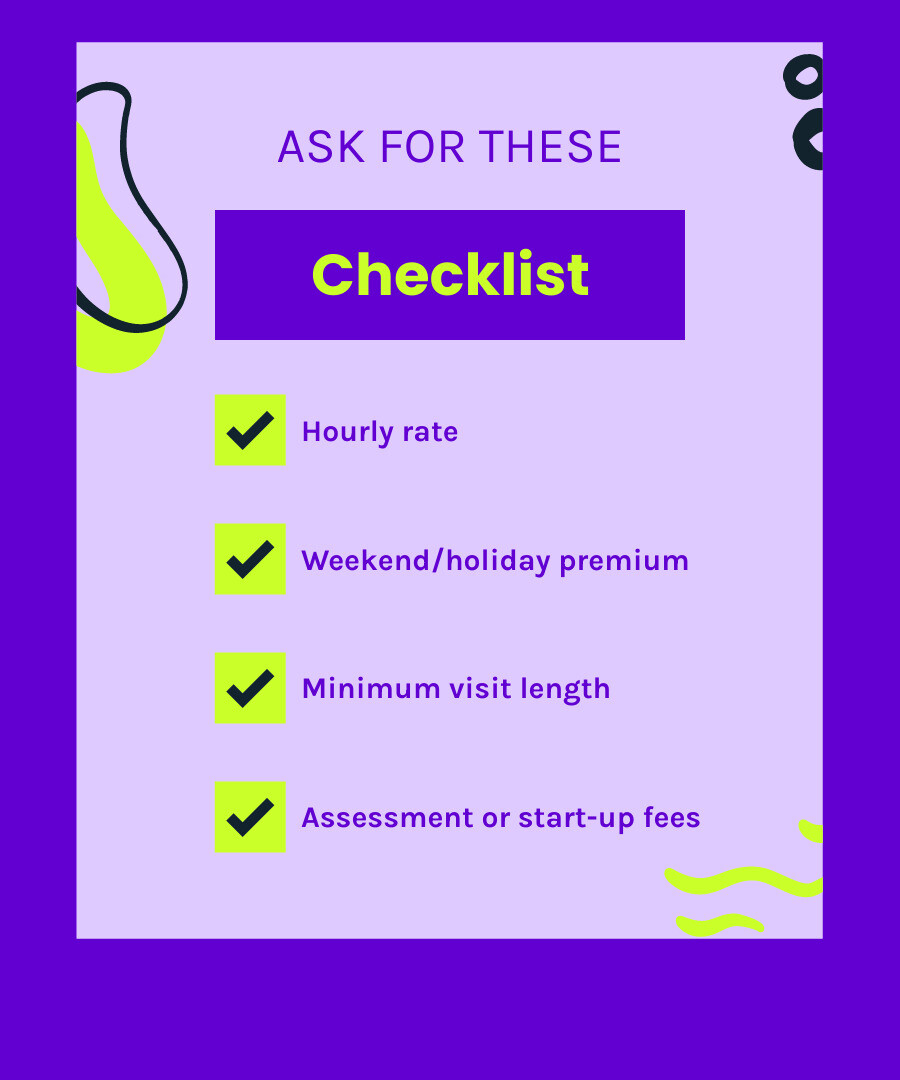
Always ask for:
- The hourly rate
- Any weekend or holiday premium
- Minimum visit length
- Assessment or start-up fees
- Cancellation policy
- Billing schedule
- Contract terms
If you want a practical starting point for budgeting, visit our Pricing and FAQ pages.
What Medicare, Medicaid, VA benefits, and insurance may cover
This is the short version families usually need:
- Original Medicare generally does not cover ongoing non-medical home care such as bathing help, meal prep, or companionship
- Medicare may cover eligible home health services when they are medically necessary and ordered by a physician
- Medicaid may help through state waiver programs, depending on eligibility and program rules
- Veterans may qualify for programs such as Aid and Attendance, depending on service history and financial criteria
- Long-term care insurance may reimburse some non-medical support if the policy includes home care benefits
- Some Medicare Advantage plans may offer limited supplemental benefits, but details vary
If you are researching licensed medical providers and coverage data, this federal resource can help: Home Health Care Agencies | Provider Data Catalog
The key takeaway: do not assume coverage. Verify it before services begin.
Licensing, Rules, and Red Flags Families Should Know
Licensing rules matter because they tell you what an agency is allowed to provide and what standards it is expected to meet.
For families in Virginia and elsewhere in the United States, requirements vary by state. That is why it is important to verify current licensing with the appropriate state authority and not just trust a nice brochure and a reassuring phone voice.
Class A vs. Class B home care agency licenses in Colorado
Even though Burnie's Way serves Virginia and the United States more broadly, families often run into these terms while researching national providers, so it helps to understand them.
In Colorado:
- Class A home care agency licenses allow an agency to provide skilled health care services and personal care services
- Class B home care agency licenses allow an agency to provide personal care services only
That means Class A covers both clinical and personal support services, while Class B is limited to non-clinical personal care.
The lesson for families is broader than Colorado: ask what the agency is licensed to do in your state, and do not assume every agency can legally provide every service it advertises.
Warning signs of a poor-fit agency
Red flags usually show up early if you know what to watch for.
Look out for:
- No clear license information when licensing should apply
- Vague pricing or reluctance to discuss rates
- No written service agreement
- No explanation of screening or training
- No supervision structure
- Poor communication during the sales process
- Pressure to sign quickly
- Unrealistic promises like "we can do everything"
- Consistent complaints in reviews about no-shows or turnover
- No backup plan if a scheduled worker cannot come
A good agency should be able to explain its process in plain English. If every answer sounds like a cloud wearing a blazer, keep looking.
How to Get Started and Choose the Right Path for Your Family
Families often delay the first call because they think they need all the answers first. You do not.
Usually, you just need enough information to start the conversation.
The usual process from first call to first visit
Most agencies follow a version of this path:
- Initial call or inquiry
- Free consultation
- Home assessment or discussion of routines and needs
- Service recommendations and schedule options
- Written agreement
- Caregiver matching
- Start of services
- Check-ins during the first week and ongoing adjustments
Many agencies say services can begin within 48 hours, and urgent situations may move faster depending on staffing and location.
During the consultation, be ready to discuss:
- What tasks are becoming difficult
- When help is needed most
- Mobility issues
- Memory concerns
- Recent hospitalizations
- Transportation needs
- Family availability
- Pets, home setup, and preferences
This is also a good time to think beyond the agency itself. At Burnie's Way, we help clients stay independent through personal support, coordination, and practical day-to-day guidance. That might include helping families organize routines, plan next steps, and connect the dots between services. You can explore more through our Resources.
Smart next steps for families in Virginia and beyond
If you are in Virginia, build your plan in layers:
- Identify the actual need
- Separate medical needs from daily living support
- Compare at least two or three local options
- Check licensing and reviews
- Ask about scheduling flexibility
- Review the agreement before signing
- Improve home safety for aging in place
For local research, this Virginia directory can be a useful starting point: Virginia State List: Home Care Services
And because the best care plan still benefits from a safer home, review Elderly Home Modifications before services begin. Better lighting, grab bars, reduced trip hazards, and smarter furniture layout can make a huge difference.
Frequently Asked Questions about Home Care Agency Choices
How fast can services usually begin?
Many agencies can begin within 48 hours after consultation and agreement. Some urgent situations can be arranged sooner, but availability depends on your area, schedule needs, and caregiver staffing.
If speed matters, ask:
- What is the fastest possible start date?
- Can you do same-day or next-day starts in urgent cases?
- What paperwork is required before the first visit?
- Do you have backup staff available?
Can home care be provided in assisted living or after a hospital stay?
Yes, often it can.
Some agencies provide supplemental non-medical support in assisted living communities when a resident needs more one-on-one attention than facility staff can provide.
After a hospital stay, transitional support is common. This may include help with meals, mobility, errands, transportation, and settling safely back into routine. If clinical care is also needed, that may require a separate home health provider.
Are long-term contracts always required?
Not always.
Many agencies offer flexible arrangements, such as:
- Short-term recovery support
- Respite care
- Ongoing weekly schedules
- Month-to-month service agreements
- 24/7 arrangements when needed
Always ask about notice periods, cancellation rules, minimum hours, and whether the schedule can be adjusted as needs change.
Conclusion
A home care agency can be a powerful way to help an older adult remain safe, supported, and independent at home. But choosing the right one takes more than a quick search and a friendly phone call. It takes clear questions, a basic understanding of services and licensing, and a realistic look at cost and fit.
That is exactly where we believe families deserve better guidance.
At Burnie's Way, we focus on personal support and coordination that helps older adults live confidently at home and helps families feel less overwhelmed. We are here to make daily life more manageable, more connected, and a lot less confusing.
If you are ready to explore next steps, visit Our Services or Contact.