
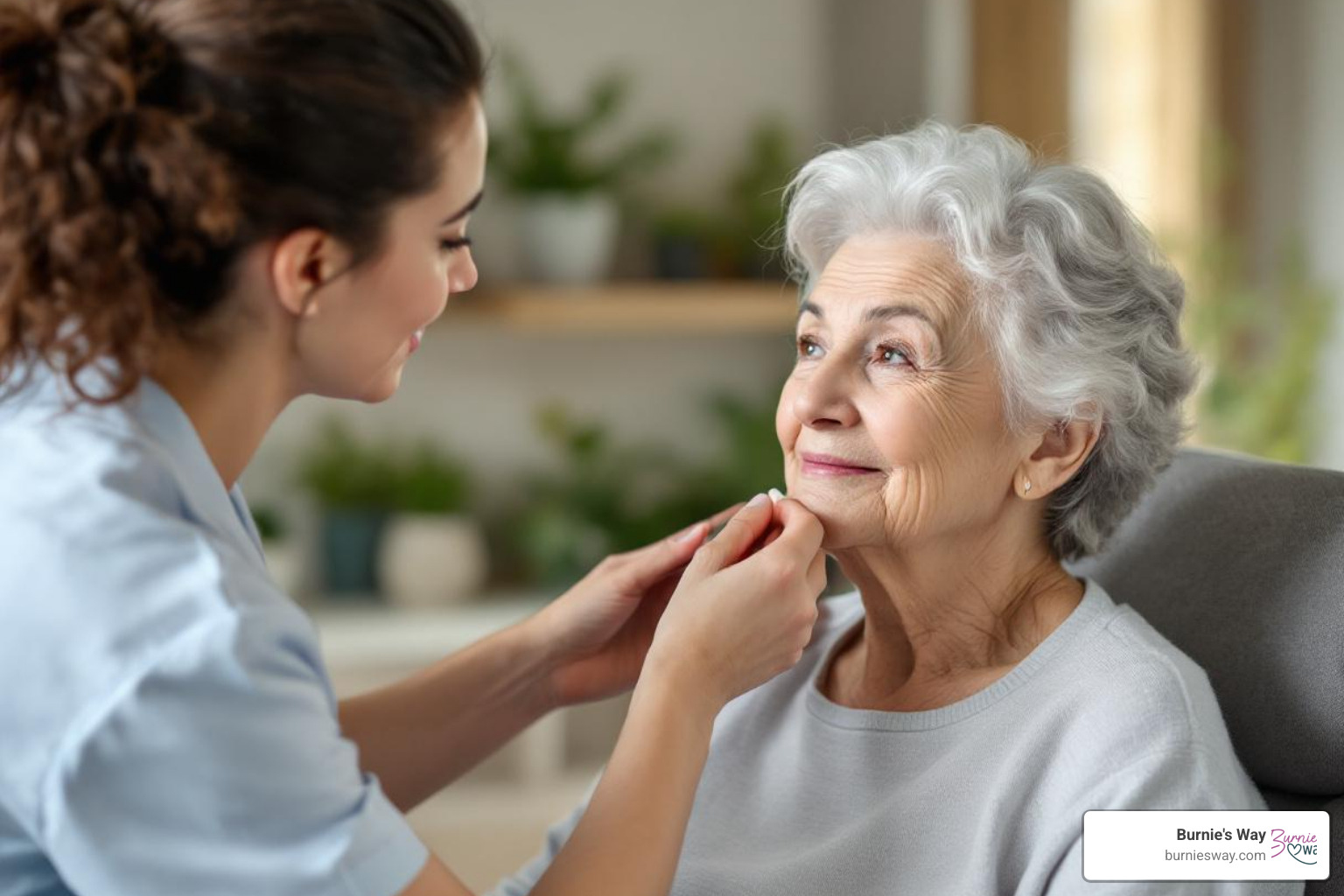
Why Personal Support at Home Matters for Aging Adults
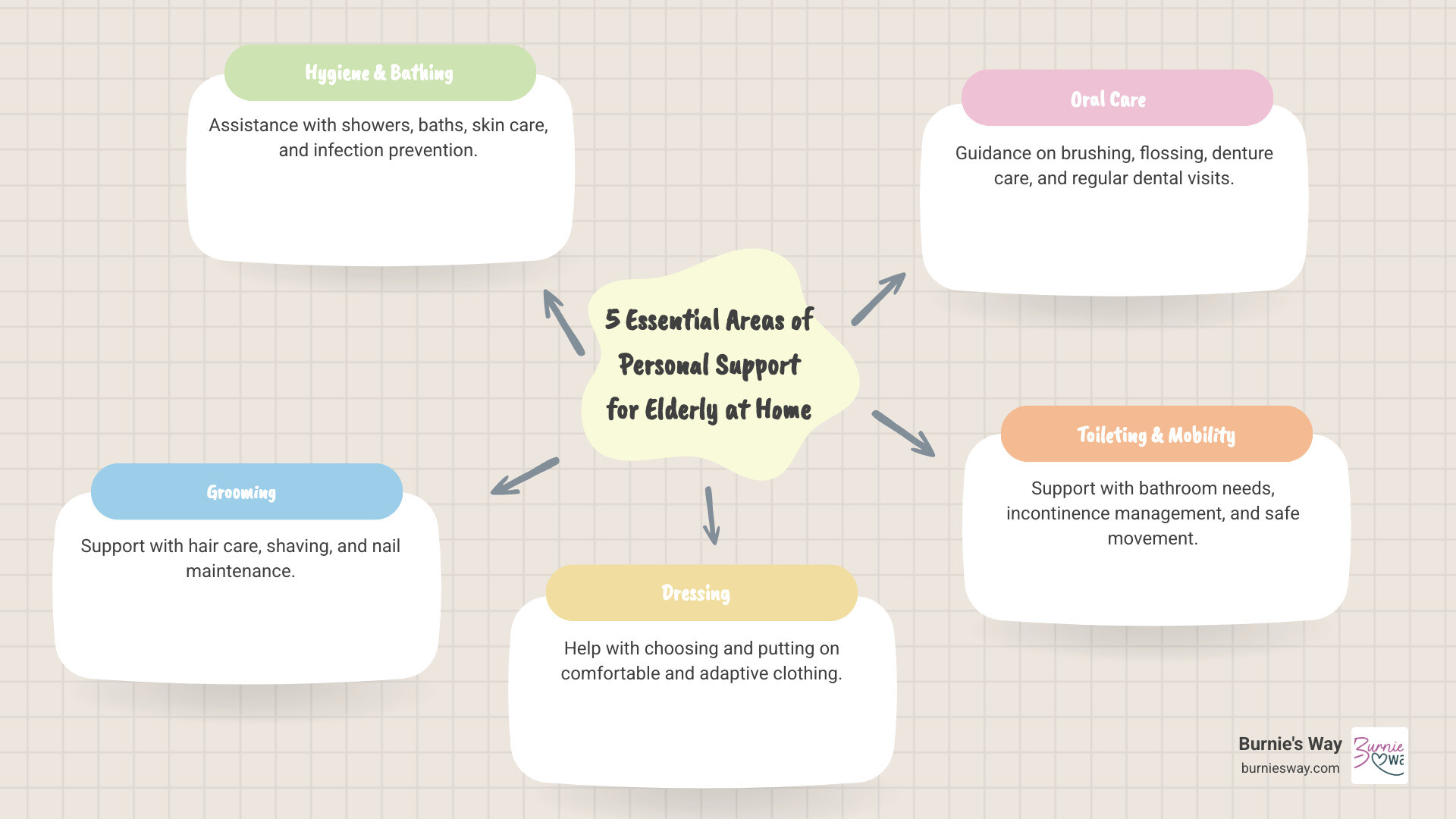
Personal care for elderly at home includes essential daily activities that help seniors maintain their health, comfort, and independence while aging in place. These activities—often called Activities of Daily Living (ADLs)—encompass:
- Hygiene and bathing - Helping with showers, baths, or bed baths
- Grooming - Assistance with hair care, shaving, and nail care
- Dressing - Support with choosing and putting on clothes
- Oral care - Brushing teeth and denture maintenance
- Toileting - Help with bathroom needs and incontinence management
- Mobility assistance - Support with moving safely around the home
The numbers tell a powerful story. By 2050, the number of people aged 65 or older worldwide will nearly double to 1.5 billion. Most seniors prefer to receive support in their own homes—they want to stay where their memories live and they feel most themselves.
But here's what many families find: helping someone with personal routines isn't just about the physical tasks. It's about preserving dignity, maintaining independence, and creating moments of connection during vulnerable times.
As one family member shared: "The connection my parents have with their helper is that of a close friend, not an employee that provides a service."
Understanding the right approach makes all the difference. It's not always easy—40% of fatal injuries among seniors are due to falls, many happening during personal routines, and poor hygiene can lead to infections and other health complications.
The good news? With the right knowledge, tools, and support, you can help your loved one maintain their independence and quality of life at home—while protecting their dignity every step of the way.
Must-know personal care for elderly at home terms:
- adapting to aging
- aged care aides
- home care solutions
The Core Components of At-Home Personal Support
This section covers the fundamental routines and tasks involved in personal support, offering practical tips for each area to help seniors feel comfortable and confident at home.
Essential Hygiene and Bathing Routines
Maintaining good hygiene is paramount for a senior's health and well-being, preventing skin infections and boosting self-esteem. As skin thins with age, proper care becomes crucial. Bathing can be challenging due to mobility issues or fear of falling, which is where thoughtful assistance with personal care for elderly at home truly shines.
Bathing Frequency: For many seniors, a full shower or bath two to three times a week is often sufficient. On other days, sponge baths or targeted cleaning can maintain freshness. The key is to adapt to individual needs and preferences.
Shower vs. Bath vs. Bed Bath:
- Showers: Many seniors prefer showers, especially with safety modifications like a shower seat and grab bars. A handheld showerhead can make rinsing much easier.
- Baths: Baths can be relaxing but pose greater fall risks. If a senior enjoys them, ensure the water level is low and assistance is available.
- Bed Baths & Sponge Baths: For those with very limited mobility, bed baths are essential. A sponge bath is a great option for in-between full baths. When giving one, keep the lower body covered to maintain modesty and warmth, and explain each step as you go.
Skin Care Techniques: After bathing, gentle skin care is vital.
- Pat Dry, Don't Rub: Always pat the skin dry thoroughly, especially in skin folds, to prevent moisture buildup that can lead to infections.
- Moisturize: Apply a gentle, non-scented moisturizer to damp skin. Moisturizers with antioxidants and vitamins C and E are beneficial for dry, aging skin. A soothing massage during application is also comforting.
- Prevent Rashes: For individuals with incontinence, apply a protective barrier ointment to sensitive areas to prevent skin irritation. Regularly check for any signs of redness or rashes.
Good hygiene is about comfort and preventing serious health issues. For more detailed advice, you can refer to resources like the American Academy of Dermatology Association's guide on how to care for your skin in your 60s and 70s. For general guidance, the NHS offers practical tips on how to help someone you care for keep clean - Care and support guide.
Daily Dressing and Grooming Assistance
Helping seniors with dressing and grooming is another cornerstone of personal care for elderly at home. It impacts their appearance, confidence, and ability to participate in social activities. The goal is always to maximize independence and dignity.
Choosing Comfortable Clothes:
- Loose-fitting and Easy to Wear: Opt for clothing that is easy to put on and take off, such as garments with elastic waistbands, Velcro closures, or magnetic buttons. Avoid restrictive clothing.
- Simplify Choices: To reduce decision fatigue, lay out clothes or offer a few simple choices. If they prefer one outfit, consider buying multiples.
- Comfortable Fabrics: Choose soft, breathable fabrics that won't irritate sensitive skin.
Dressing Techniques for Mobility Issues:
- Dress the Weaker Side First: When assisting someone with a weaker side (e.g., after a stroke), always put clothing on the weaker limb first. This makes the process smoother.
- Lay Out Clothes: Lay out clothes in order to streamline the process.
- Sit Down: Encourage the senior to sit while dressing to prevent falls and conserve energy.
Hair Care:
- Regular Washing and Styling: Assist with washing and styling hair as needed. For difficult shampooing, use a hair washing tray at the sink or no-rinse shampoo caps.
- Gentle Brushing: Use a soft brush to gently comb hair, preventing tangles and stimulating the scalp.
Shaving Safety:
- Electric Razors: An electric razor is often safer and easier to use than a traditional blade, especially with tremors or mobility issues.
- Warm Towels: Apply warm, damp towels before shaving to soften the skin and hair for a more comfortable experience.
Nail Care:
- Regular Trimming: Keep fingernails and toenails clean and trimmed to prevent scratches and infections. Use easy-grip nail clippers for better control.
- Professional Help: For toenails, especially if the senior has diabetes or circulation issues, consider regular visits to a podiatrist.
Best Practices for Senior Oral Hygiene
Oral hygiene is a critical aspect of personal care for elderly at home, directly impacting overall health. Poor oral health has been linked to other conditions, including heart disease.
Brushing and Flossing:
- Twice Daily: Encourage brushing twice daily for at least two minutes.
- Fluoride Toothpaste: Use toothpaste with fluoride. A dentist might recommend high-fluoride toothpaste for those at higher risk of cavities.
- Assistive Devices: An electric toothbrush or one with a modified handle can make brushing easier for those with arthritis. If needed, guide their hand to help them participate.
- Flossing: Flossing daily helps remove plaque. Floss holders can simplify this task.
Denture Care:
- Rinse After Meals: Dentures should be rinsed after every meal.
- Daily Cleaning: Brush dentures daily with a soft-bristled brush and denture cleaner (not regular toothpaste).
- Soak Overnight: Dentures should be removed and soaked overnight in a cleaning solution.
- Oral Tissue Care: Even with dentures, gently clean the gums, tongue, and roof of the mouth daily to remove bacteria and stimulate circulation.
Dry Mouth Solutions: Many medications cause dry mouth, increasing the risk of cavities.
- Hydration: Encourage frequent sips of water.
- Saliva Substitutes: Over-the-counter saliva substitutes or lozenges can help.
- Avoid Irritants: Limit caffeine, alcohol, and tobacco.
Importance of Regular Dental Visits: Seniors should see their dentist every six months, or more often if they have specific health concerns. Regular check-ups are essential to:
- Monitor Oral Health: Detect issues like cavities, gum disease, and oral cancer early.
- Denture Fit: Ensure dentures fit properly, as ill-fitting ones can cause sores.
- Professional Cleanings: Remove plaque and tartar buildup.
For comprehensive information, the American Dental Association provides valuable insights on aging and dental health.
Ensuring Dignity, Safety, and Comfort in Personal Support for Elderly at Home
Providing personal support is about more than routines; it's about creating a respectful, safe, and positive experience for your loved one.
Upholding Dignity and Respect
Receiving help with intimate tasks can be embarrassing for seniors. Our role is to create an environment where their dignity and self-worth remain intact.
Communication Strategies:
- Be Direct and Respectful: Instead of asking, "Do you want a bath?" try, "It's time for a bath now." This sets a clear, gentle expectation.
- Explain Each Step: Explain each step before you do it, even with cognitive impairment, to reduce anxiety and build trust.
- Listen Actively: Pay attention to verbal and non-verbal cues. If they seem uncomfortable, pause and reassess.
Offering Choices:
- Empowerment: Wherever possible, offer choices like, "Do you want to wear the blue shirt or the green one?" This helps them maintain a sense of control.
- Preferred Products: Use their favorite soaps, shampoos, or lotions. Familiar scents can be comforting.
Respecting Privacy:
- Modesty is Key: During bathing, keep body parts covered that are not being washed. Have towels and clean clothes ready to minimize exposure.
- Bathroom Locks: For safety, you may need to disable door locks, but always respect privacy by knocking before entering.
- Sensitive Topics: Be discreet when discussing personal hygiene needs.
Encouraging Independence:
- "As Much As They Can": Allow your loved one to do as much as they can for themselves, even if it takes longer. This fosters a sense of accomplishment.
- Participation: Hand them a washcloth or toothbrush and guide their hand if needed. This makes them feel involved.
Building Trust:
- Patience and Understanding: Personal support requires immense patience. Resistance often stems from fear or embarrassment, so be understanding.
- Consistency: A consistent routine, delivered by a trusted individual, builds rapport and makes the process smoother.
For more helpful strategies, BrightFocus Foundation provides excellent helpful tips for assisting your loved one with personal hygiene.
Creating a Safe and Accessible Environment
Safety is paramount, especially during personal care tasks where falls are a significant risk. We understand that ensuring a safe home environment is crucial for personal care for elderly at home.
Bathroom Safety Checklist: The bathroom is often the most hazardous room for seniors.
- Grab Bars: Install grab bars inside and outside the shower/tub and next to the toilet.
- Non-Slip Surfaces: Use non-slip mats or adhesive strips in the shower/tub and on the floor.
- Shower/Bath Seat: A shower chair or transfer bench makes bathing safer for those with balance or mobility issues.
- Raised Toilet Seats: These reduce the distance a senior needs to lower themselves, making toileting safer.
- Handheld Showerhead: This allows seniors to wash while seated, reducing risk.
- Clear Pathways: Keep the bathroom clutter-free to prevent tripping.
- Emergency Access: As mentioned, disabling bathroom door locks is vital for emergency access.
Preventing Falls:
- Proper Lighting: Ensure good lighting in all areas, especially hallways and bathrooms. Use nightlights to prevent disorientation at night.
- Remove Rugs: Loose rugs are major tripping hazards. Remove them or secure them with non-slip backing.
- Clear Clutter: Keep floors clear of cords, newspapers, and other obstacles.
- Footwear: Encourage wearing well-fitting, supportive shoes or non-slip socks indoors.
Water Temperature: Always check water temperature before bathing to prevent scalding, as a senior's skin is more sensitive and their reaction time may be slower.
Falls are a serious concern; 40% of fatal injuries among seniors are due to falls. Understanding these risks and implementing preventative measures is a key part of personal care for elderly at home. You can find more information on preventing slip-and-fall accidents to ensure a safer environment.
Fostering a Relaxing and Positive Atmosphere
The atmosphere during personal care influences a senior's cooperation and well-being. We help families create a comfortable, low-anxiety setting for personal care for elderly at home.
Establishing a Consistent Routine:
- Predictability: Seniors, especially those with cognitive decline, thrive on routine. A consistent schedule for personal care can reduce confusion and resistance.
- Preparation: Have all supplies ready beforehand—towels, soap, clean clothes—to make the process efficient.
Using Sensory Comforts:
- Music: Play calming classical music or their favorite songs to soothe and distract.
- Aromatherapy: Pleasant scents from toiletries or a diffuser can improve the experience. Ensure they are not overpowering.
- Warmth: Make sure the room is comfortably warm before undressing your loved one.
Maintaining a Calm Demeanor:
- Patience is Key: Your calm, gentle approach will be mirrored by your loved one. Rushing can heighten their anxiety.
- Casual Conversation: Engage in light conversation to make the interaction feel less like a task.
Making the Process a Positive Interaction:
- Positive Reinforcement: Offer praise and encouragement for their cooperation.
- Focus on the Benefits: Remind them how good they will feel after being clean and fresh.
- Flexibility: Be flexible. If your loved one is having a difficult day, sometimes a sponge bath is a kinder option than a full bath.
Adapting Routines and Using Helpful Aids
Tailoring support to specific needs and using the right tools can make personal routines easier and more effective. This is a crucial aspect of providing thoughtful personal care for elderly at home.
Adapting personal support for elderly at home with specific conditions
Every senior's needs vary based on their health. Adapting your approach is key to providing effective, compassionate support.
Dementia and Confusion:
- Simplified Instructions: Use short, clear, one-step commands.
- Visual Cues: Show them the soap or towel.
- Familiarity: Stick to familiar routines, products, and environments.
- Distraction and Redirection: If agitation occurs, redirect their attention with a favorite song. A mirror can be frightening for someone with dementia; consider covering it.
- Patience: People with dementia may resist personal care due to fear or confusion. Approach them gently, explaining what you are doing. The Alzheimer's Society provides insightful tips on how dementia affects washing and dressing.
Arthritis and Joint Pain:
- Gentle Movements: Move joints slowly and gently. Avoid pulling or twisting.
- Warmth: Warm water and a warm room can help ease stiff joints.
- Adaptive Tools: Use tools like long-handled sponges to reduce bending or reaching.
- Comfortable Positions: Encourage sitting during dressing and bathing.
Mobility Limitations:
- Assistive Devices: Rely on shower chairs, grab bars, and transfer benches.
- Supportive Footwear: Ensure non-slip footwear is worn when moving around.
- Caregiver Positioning: Use proper body mechanics when assisting with transfers to protect both of you.
Post-Stroke Recovery:
- Address Weakness: As mentioned, dress the weaker side first and use adaptive clothing.
- Speech and Communication: Be mindful of communication difficulties. Use simple language and allow time for responses.
- Fatigue: Stroke survivors may tire easily. Break down tasks into smaller steps or plan for rest periods.
Essential Hygiene Aids and Tools That Make a Difference
The right tools can make personal care for elderly at home safer and more comfortable for everyone.
- Handheld Showerheads: Invaluable for seated bathing, allowing targeted rinsing.
- Long-Handled Brushes and Sponges: Help reach difficult areas, reducing bending and straining.
- No-Rinse Shampoos and Soaps: Excellent for quick clean-ups or when a full bath isn't feasible.
- Electric Toothbrushes: Easier to grip and more effective for those with limited dexterity.
- Dressing Aids:
- Button Hooks: Help fasten buttons with minimal finger dexterity.
- Sock Aids: Allow seniors to put on socks without bending far.
- Long-Handled Shoe Horns: Assist with putting on shoes.
- Raised Toilet Seats: Essential aids for easier and safer toileting.
- Bedside Commodes: A convenient and safe toileting option, especially at night.
- Adult Underwear for Incontinence: Offers dignity and protection.
- Hair Washing Trays: Allow hair to be washed in a sink while seated.
- Easy-Grip Nail Clippers: Designed for better control, especially for those with arthritis.
These aids empower seniors to maintain independence and make routines less daunting. We can help you steer the options and see how we can help coordinate solutions for your loved one.
Navigating Support and Resources
Providing comprehensive personal care for elderly at home is a demanding role. Recognizing when you need additional support and knowing where to find it is crucial for both the senior's well-being and your own.
Recognizing the Signs You Need More Support
Many families provide support themselves, but often more help is needed. Recognizing the signs can prevent burnout and ensure your loved one receives the best support.
Family Stress and Burnout: Caregiving can be exhausting. Feeling overwhelmed, irritable, neglecting your own health, or feeling resentful are clear signs of caregiver burnout. Increasing Support Needs: Is your loved one's condition progressing? If personal care tasks are becoming too difficult or risky for you to handle alone, it's time to seek additional help. Complex Situations: Managing conditions like advanced dementia or severe mobility issues can require specialized skills. If your loved one's needs are becoming medically complex or require constant supervision, professional support is often necessary. When a Senior Prefers Additional Help: Some seniors are more comfortable receiving intimate care from a professional helper. This can preserve family dynamics and privacy. Honest conversations about these preferences are helpful.
Recognizing these signs is not a failure; it's a responsible step towards ensuring sustainable, high-quality support. We understand these challenges. Check our FAQ for more information on navigating these decisions.
Finding Resources for personal care for elderly at home
Once you need more support, knowing where to turn can be overwhelming. Fortunately, many resources exist to assist with personal care for elderly at home.
Government-Funded Programs: Many regions offer government-funded programs to help seniors stay in their homes. These programs often provide assistance with daily tasks like bathing, dressing, and meal preparation, depending on eligibility. Eligibility often involves an assessment of needs and sometimes income.
Community Support Services: Beyond direct personal care, numerous community services can help seniors maintain independence:
- Information & Referral Services: Organizations like 211 offer 24/7 service, connecting people with local agencies for various needs, from home maintenance to social support.
- Housekeeping and Meal Services: Many community programs or private services can assist with light housekeeping, laundry, and meal preparation. In some areas, these can be subsidized for low-income seniors.
- Exercise and Falls Prevention Classes: These classes help seniors stay active, improve balance, and prevent injuries.
- Caregiver Support Groups: Connecting with other caregivers can provide emotional support and practical advice.
How to Coordinate Trusted Services: Navigating these options can be complex. This is where a knowledgeable partner becomes invaluable. We act as your personal concierge, helping you steer resources and coordinate the support your loved one needs. We can help you identify local resources, understand eligibility criteria, and connect you with trusted providers for a seamless experience.
Conclusion: A Partnership in Compassionate Support
Providing personal care for elderly at home is a journey of compassion that prioritizes their dignity, safety, and independence. While routines can be managed with the right techniques and tools, coordinating everything can be complex. Burnie’s Way acts as your personal concierge and partner, helping you steer resources and coordinate the support your loved one needs to live confidently and comfortably. We help you manage the details so you can focus on what matters most—cherishing your time together. Explore Our Services to see how we can support you.