

Why Senior Transportation Is One of the Biggest Challenges Families Face Today
Senior transportation is a broad term for the services, programs, and options that help older adults get where they need to go — safely and without relying on a car.
Here's a quick overview of the most common options:
| Type | Best For | Typical Cost |
|---|---|---|
| Public paratransit | Seniors with disabilities | $1.50–$6.00 per trip |
| Community shuttles | Medical, grocery, social trips | Free or small donation |
| Volunteer driver programs | Flexible, local errands | Free or donation-based |
| Ridesharing (Uber/Lyft) | On-demand travel | Varies; some subsidized |
| Private concierge coordination | Full-service scheduling support | Varies by provider |
For most families, the moment a parent stops driving marks a major turning point.
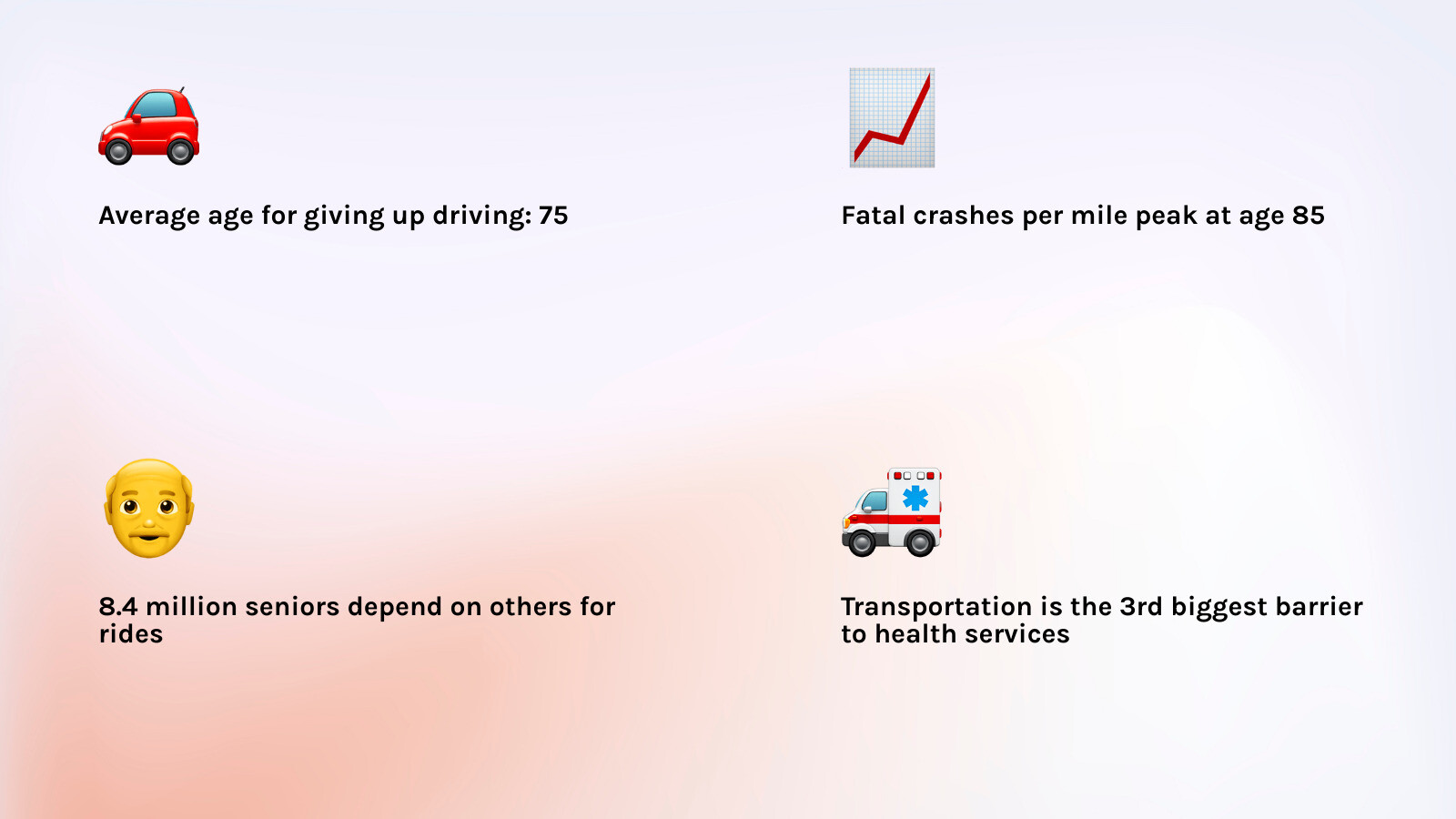
The average person gives up driving around age 75. After that, the challenge isn't just getting around — it's maintaining independence, staying connected, and keeping up with health and wellness appointments.
And it affects more people than most realize. Today, 8.4 million seniors in the United States depend on others for transportation. Yet transportation remains the third-most common barrier to accessing health services for older adults.
For adult children already balancing work, family, and worry, coordinating rides for an aging parent can feel like a part-time job. The system is fragmented. Eligibility rules vary. Schedules don't always line up. And the stakes feel high every time something falls through the cracks.
This guide is here to cut through that confusion — with 10 practical, actionable tips to help your family navigate senior transportation with more confidence and less stress.
The Growing Need for Senior Transportation
As we navigate through May 2026, the landscape of mobility for older adults has shifted significantly. We are seeing a massive increase in the number of individuals reaching "driving retirement." While giving up the keys is a safety-conscious decision, it often leaves a void that family members struggle to fill.
The statistics are sobering: fatal crashes per mile driven begin to creep up around age 70 and reach their peak at age 85. This reality makes senior transportation more than just a convenience; it is a vital safety intervention. However, when we remove the car, we must replace it with a reliable system, or we risk the physical and emotional health of our loved ones.
Without a way to get out, many seniors face "life-space constriction," where their world shrinks to the four walls of their home. This leads to social isolation and depression. Furthermore, missing wellness appointments or pharmacy trips can cause manageable health issues to spiral. By utilizing resources like the National Aging and Disability Transportation Center, families can begin to piece together a mobility plan that works.
In Virginia, where many of our members reside, the need is particularly acute in both bustling Northern Virginia hubs and more rural reaches like the Shenandoah Valley. Whether it's a trip to a specialist in Fairfax or a grocery run in Augusta County, having a plan is the first step toward aging well.

Common Types of Senior Transportation Services
Understanding the "menu" of options is essential for effective coordination. Here is what we typically see available:
- Paratransit: These are specialized, door-to-door or curb-to-curb services for individuals with disabilities who cannot use standard fixed-route buses. They often use lift-equipped vans.
- Community Shuttles: Often run by local municipalities or senior centers, these shuttles follow specific routes to high-traffic areas like grocery stores or senior centers.
- Volunteer Driver Programs: These are heart-forward initiatives where local residents use their own vehicles to take seniors to appointments. In Virginia, programs like the Shepherd’s Center of Northern Virginia or the Valley Program for Aging Services (VPAS) rely heavily on these dedicated individuals.
- Ridesharing: Services like Uber and Lyft are increasingly popular. Some specialized tiers, like "Uber Assist," provide extra help for those with walkers or folding wheelchairs.
- Door-to-Door vs. Door-through-Door: This is a critical distinction. Curb-to-curb means the driver stays at the vehicle. Door-through-door means the assistant helps the senior get dressed, gathers their insurance cards, and physically walks them into the doctor’s office.
At Burnie’s Way, we act as a personal concierge to help manage these moving parts. We don't just give you a phone number; we help coordinate the logistics so you don't have to spend your lunch break on hold with a dispatch office. You can learn more about how we integrate these services on our Senior Transportation Services page.
Navigating Eligibility and Application Processes
One of the most frustrating aspects of senior transportation is the paperwork. Most programs aren't "on-demand" in the way a taxi is; they require an enrollment process.
Typically, eligibility is based on:
- Age: Most programs start at age 60, though some paratransit services are available to younger adults with documented disabilities.
- Residency: You generally must live within the specific county or city limits providing the service (e.g., Fairfax County or the City of Waynesboro).
- Mobility Status: Some programs are reserved for those who cannot drive themselves or have no other means of transport.
The application process usually involves an intake form where you'll need to provide a date of birth, emergency contact info, and sometimes medical documentation if specialized paratransit is needed. We recommend checking out the [PDF] Transportation Options for Older Adults - USAging for a high-level look at how these systems are structured nationally.
That many of these programs operate on a first-come, first-served basis. If you wait until the day of an appointment to apply, you'll likely be out of luck. Early enrollment is the "secret sauce" to success.
Managing Costs, Destinations, and Accessibility
Cost is often a primary concern, but there is good news: many senior transportation options in Virginia are surprisingly affordable.
- Donation-Based: Many non-profits, like VPAS, don't charge a formal fee but suggest a small donation to help cover gas and maintenance.
- Fixed Fees: Public paratransit or county-run vans usually charge between $1.50 and $6.00 per one-way trip.
- Medicaid NEMT: For those on Medicaid, Non-Emergency Medical Transportation (NEMT) is often a covered benefit for doctor visits.
Accessibility is another major factor. If your loved one uses a wheelchair, you must verify that the vehicle has a lift or ramp. Programs like I-RIDE Transportation in Southeastern Virginia specialize in these accessible vehicles.
Beyond medical trips, don't forget "quality of life" destinations. A trip to the hair salon, the bank, or a friend’s house is just as important for mental health as a doctor's visit is for physical health.
Scheduling Your Senior Transportation Effectively
The "Golden Rule" of senior rides is simple: Schedule early.
Most community and non-profit services require at least 3 to 7 business days' notice. Some medical transport services allow you to book up to 30 days in advance. If you have a recurring appointment—like dialysis or physical therapy—ask if you can set up a "standing order" so you don't have to call every week.
Operating hours are also a factor. Most municipal programs run Monday through Friday, roughly from 8:00 AM to 4:00 PM. If your loved one has an evening social event or a weekend church service, you may need to look into private rideshare options or volunteer programs that offer more flexible hours.
10 Effective Tips for Senior Transportation Success
Navigating this system requires a bit of strategy. Here are our top ten tips for making the process as smooth as possible:
- Plan the "Pre-Trip" Routine: Transportation starts before the car arrives. Ensure your loved one is dressed, has their ID and insurance cards ready, and has had a meal or snack.
- Verify Insurance Coverage: Before paying out of pocket, call the insurance provider. Some Medicare Advantage plans now include limited transportation benefits for health-related trips.
- Utilize Concierge Coordination: Don't do it alone. A personal concierge, like our team at Burnie’s Way, can handle the scheduling, reminders, and backup plans, giving you your time back.
- Check Volunteer Qualifications: If using a volunteer program like the Shepherd's Center of Northern Virginia, ask about their vetting process. Most reputable organizations require background checks and driving record reviews.
- Understand Regional Differences: A ride in Fairfax County may look different than a ride in Rockbridge County. Local Area Agencies on Aging (AAAs) are the best source for county-specific guides.
- Invest in Smartphone Training: If your loved one is open to it, teach them how to use a rideshare app. If they aren't tech-savvy, services like GoGoGrandparent allow them to call a landline to request an Uber or Lyft.
- Always Have a Backup Plan: Vans break down and volunteers get sick. Always have a "Plan B"—whether that’s a local taxi number saved in their phone or a neighbor who is willing to step in.
- Prioritize Safety Protocols: Ensure the driver provides curb-to-curb or door-to-door assistance as needed. For those with cognitive challenges, an escort should remain with them throughout the trip.
- Use Escort and Companion Services: Sometimes a ride isn't enough. A companion can sit in the waiting room, take notes during the doctor's visit, and ensure the senior gets back inside their home safely.
- Confirm Communication Preferences: Does the transportation service send text alerts? Phone calls? Make sure the contact number on file is the one that will actually be answered.
Frequently Asked Questions about Senior Rides
Who is typically eligible for these programs?
In most parts of Virginia, eligibility begins at age 60. Some programs also require you to be a resident of the specific service area and may ask if you are "transportation disadvantaged"—meaning you don't have a car or a license.
Are there free or donation-based options available?
Yes! Many community organizations, such as Senior Resources, offer services at no cost or for a small suggested donation. These are often funded by government grants and local contributions.
How do programs accommodate seniors with mobility aids?
Public paratransit and many non-profit vans are equipped with wheelchair lifts or ramps. When booking, it is essential to specify if the rider will be using a walker, a folding wheelchair, or a motorized scooter so the correct vehicle is dispatched.
Conclusion
At the end of the day, senior transportation is about much more than just a car ride. It’s about the freedom to keep a lunch date, the dignity of choosing your own groceries, and the peace of mind that comes from knowing a medical appointment won't be missed.
We know that managing these logistics can be overwhelming for families. That’s why Burnie’s Way exists. We aren't a medical provider; we are your personal assistants and lifestyle coordinators. We help manage the "everyday" so you can focus on being a daughter, a son, or a friend again.
By combining local Virginia resources with personalized support, we ensure that "giving up the keys" doesn't mean giving up your life. We are here to help you coordinate the routines that make staying at home both safe and joyful.
For more information on how we can help coordinate your loved one's daily life and transportation needs, visit more info about our services. We look forward to helping you move forward with confidence.