
On the Move: Navigating Transportation Services for Elderly and Disabled Loved Ones

Why Finding the Right Transportation for Elderly and Disabled Loved Ones Matters
Transportation for elderly and disabled individuals is one of the most urgent — and most overlooked — challenges facing aging adults and their families today.
Here's a quick look at your main options:
| Option | Best For | Cost | Advance Notice Needed |
|---|---|---|---|
| Public paratransit (ADA) | Disability-certified riders near fixed routes | Low / subsidized | 1-3 days |
| State & county programs | Seniors 60+, low-income households | Free to low-cost | 1-7 days |
| Volunteer driver networks | Rural areas, social trips | Free / donation | Varies |
| Private on-demand services | Flexible scheduling, light assistance | Moderate | Same-day possible |
| Phone-based rideshare (e.g., GoGoGrandparent) | Seniors without smartphones | Rideshare fare + small fee | On-demand |
| Medicaid NEMT | Medicaid-eligible medical trips | Free (with approval) | 3+ business days |
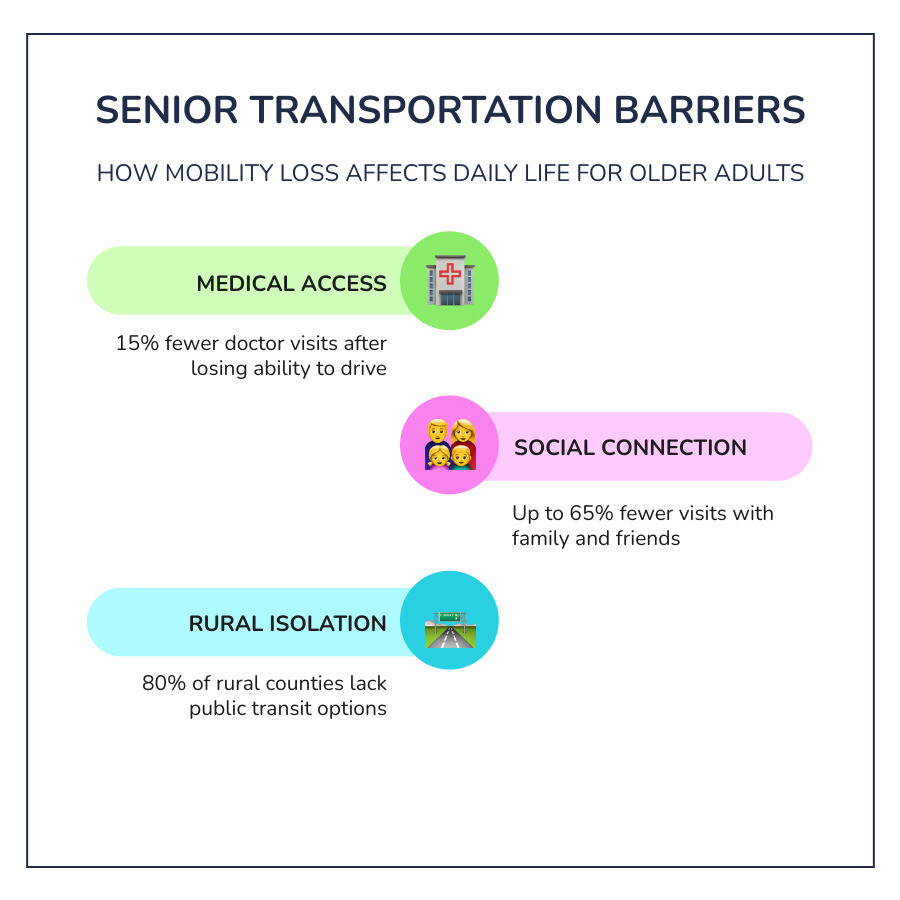
The numbers tell a sobering story. Roughly 1 in 5 Americans over 65 no longer drive. When seniors lose access to a car, they make 15% fewer trips to the doctor and up to 65% fewer visits to family and friends. Over 60% of non-driving seniors depend on family members to fill the gap — a burden that quietly builds over time.
In rural areas, the situation is even harder. 80% of rural counties have little or no public transportation, leaving many older adults and people with disabilities effectively stranded.
If you're an adult child trying to make sure a parent stays safe, connected, and independent — this guide is for you. We'll walk you through every major option, what it costs, who qualifies, and how to actually get a ride booked.
Transportation for elderly and disabled terminology:
The Growing Need for Accessible Transit Options

As we look at the landscape of June 2026, the demand for accessible transit has never been more critical. When driving is no longer a safe option, the world can feel like it is shrinking. It is not just about missing doctor's appointments—though a 15% drop in medical visits is a serious health risk. It is also about the quiet toll of isolation. Missing out on weekly bridge games, Sunday church services, or trips to the local grocery store contributes directly to depression and physical decline.
For families, stepping in to help is a labor of love, but it often leads to caregiver burnout. Juggling a full-time job, children, and a parent's social and medical calendar is a recipe for exhaustion.
The gap is particularly severe in rural areas, where fixed public transit routes are virtually non-existent. To solve these challenges, organizations like the National Aging and Disability Transportation Center work at a national level to promote accessible transit options, helping local communities build better networks. Understanding what is available starts with exploring both the public and private options designed to keep your loved ones on the move.
For a deeper dive into modern transit planning, check out our comprehensive Senior Transportation Guide 2026.
Public and Private Transportation for Elderly and Disabled Options
Navigating the transit landscape requires understanding the balance between public, subsidized programs and private, highly customizable services. Federal funding, such as the Federal Transit Administration’s (FTA) Section 5310 program, actively supports local communities by funding vehicles and programs specifically designed for seniors and individuals with disabilities.
When searching for the right fit, families can look at a mix of government-subsidized options and private alternatives to find the right balance of cost, convenience, and care.
To learn more about finding local programs, you can read our guide on Transportation Assistance for Seniors or explore state-level resources such as the Transportation | Office for the Aging - NY.gov portal.
Federal and State-Funded Programs
Under the Americans with Disabilities Act (ADA), public transit authorities must provide "paratransit" services to individuals who cannot use traditional fixed-route buses or trains. This service typically operates within a 3/4-mile corridor of regular transit routes.
State-level programs often utilize creative funding models to subsidize these rides:
- State Lotteries & Trust Funds: In states like Pennsylvania, the state lottery heavily subsidizes shared-ride programs, covering up to 85% of the fare for seniors aged 65 and older.
- County-Level Initiatives: Programs like the Sunshine Line in Florida provide door-to-door, fare-free rides for seniors, low-income residents, and individuals with disabilities who have no other means of transportation.
- Specialized Disability Portals: State-specific resources, such as those found on the Transportation - Division of Disability Services - NJ.gov website, offer directories to help residents locate county-by-county accessible services.
Private and On-Demand Services
Public transit is highly affordable, but it often requires rigid scheduling. Private and on-demand services step in to offer maximum flexibility:
- GoGoGrandparent: This innovative service allows older adults to access ride-hailing networks like Uber and Lyft without needing a smartphone. By calling a toll-free number, seniors can speak to a live operator 24/7, get automated updates, and request standard or wheelchair-accessible vehicles (WAV). This service charges the standard rideshare fare plus a concierge fee of $0.27 per minute. Learn more about how this works through Uber Rides With Gogo for Seniors and People With Disabilities.
- Public-Private Partnerships: Programs like Encompass | Accessible & Senior Transportation in Connecticut combine the efficiency of private fleets with local transit subsidies. Eligible members can get heavily discounted on-demand rides, paying a flat rate (such as $5.00 for the first 8 miles) with the flexibility of 24/7 booking.
- Private Ambulatory Transport: For seniors who can walk but need a steadying hand, private ambulatory services (like Protego in Northern Virginia) provide "door-through-door" care, ensuring the rider is safely escorted from their living room directly into their medical appointment.
Eligibility, Rules, and Trip Coverage
Before booking a ride, it is essential to understand the rules of the road. Every program has its own set of eligibility requirements, geographic boundaries, and rules regarding what types of trips are allowed.
To help you get started, we have compiled a guide on Senior Transportation Services. You can also review structured operational guidelines, such as the Transportation Services standards document, to see how municipal aging departments manage passenger intake and trip limitations.
Eligibility Criteria for Transportation for Elderly and Disabled Programs
Eligibility generally falls into three main categories:
- Age-Based Eligibility: Many local senior transit programs open their doors at age 60 or 65. Applicants usually only need to show a government-issued photo ID to enroll.
- Disability-Based Eligibility: For paratransit and specialized disability programs, age is irrelevant. Applicants must provide medical documentation or undergo a physical assessment to certify that their disability prevents them from using standard public transit.
- Income-Based and Sliding-Scale Criteria: Some county door-to-door programs prioritize low-income residents. For instance, programs may limit free rides to households earning below 175% of the Federal Poverty Guidelines, while offering a sliding-scale fee for those with slightly higher incomes.
Covered Trip Types and Restrictions
Not all rides are created equal. Depending on the program, trip purposes may be strictly prioritized:
- Medical and Essential Errands: Almost all programs cover non-emergency medical appointments, pharmacy pickups, grocery shopping, and banking.
- Social and Recreational Trips: Subsidized county programs may restrict or entirely ban social trips (like visiting a friend or going to the movies) during peak hours to save space for medical appointments. However, private services and volunteer networks rarely place restrictions on trip purposes.
- Geographic Boundaries: Most local services will not cross county or city lines. Some programs have strict mileage limits, requiring special administrative approval for any trip exceeding 40 miles outside the service boundary.
- Medicaid NEMT Exclusions: If a senior is eligible for Medicaid Non-Emergency Medical Transportation (NEMT), they are often required to use dedicated Medicaid transit brokers for medical trips rather than utilizing local, aging-funded community vans.
Scheduling, Booking, and Caregiver Coordination
One of the greatest hurdles for families is the logistics of scheduling. For seniors who aren't tech-savvy, managing reservations over the phone can be frustrating, making caregiver coordination tools incredibly valuable.
If you are looking for broader strategies on managing your loved one's daily routine, explore our guide on Help for Seniors Living at Home.
Booking and Scheduling Transportation for Elderly and Disabled Services
When booking subsidized public or county rides, spontaneous trips are rarely an option.
- Advance Notice: Most public paratransit and county door-to-door programs require reservations at least 1 to 3 days in advance, with some programs requiring calls by noon the day before.
- Same-Day Services: While public options rarely offer same-day booking, private services like GoGoGrandparent or local private ambulatory companies can dispatch rides on-demand or with just a few hours' notice.
- Recurring Trips: For ongoing needs like dialysis or weekly physical therapy, many providers allow you to set up "subscription" or recurring rides so you don't have to call to book every single week.
- Cancellation Policies: Always check the cancellation rules. Some programs charge a fee or issue a "no-show" penalty if a ride is not cancelled at least 1 to 2 hours before the scheduled pickup.
Caregiver and Family Booking Portals
Modern transportation services recognize that family members are often the ones steering the ship. Many private providers now offer caregiver dashboards and family portals:
- Third-Party Booking: Caregivers can log in from anywhere in the country to schedule, modify, or pay for rides on behalf of their parents.
- Real-Time Tracking: Services send SMS text alerts or app notifications to the caregiver when the driver arrives, when the senior is picked up, and when they safely reach their destination.
- Direct Billing: Instead of requiring the senior to carry cash or a physical credit card, fares are automatically billed to the caregiver's linked account, ensuring a seamless, stress-free experience for the rider.
Vehicle Accessibility and Driver Assistance Levels
A ride is only useful if your loved one can safely get in and out of the vehicle. Understanding the physical layout of the vehicle and the level of assistance the driver provides is crucial for safety.
For companion support that goes beyond transit, read about how we assist with Daily Life Assistance.
Curb-to-Curb vs. Door-to-Door Support
It is a common misconception that all senior transit drivers will help passengers walk to their front door. Always clarify the level of service:
- Curb-to-Curb: The driver's responsibility begins and ends at the curb. They will operate wheelchair lifts and secure mobility devices, but they will not walk the passenger to or from the door of their home or medical facility.
- Door-to-Door: The driver will meet the passenger at their front door, assist them down steps, help them navigate the entrance of their destination, and even carry light parcels or grocery bags (often up to a certain weight limit, like 20 lbs).
- Door-through-Door (Ambulatory): The highest level of assistance. The driver will enter the home (with permission) to help the senior put on their coat, guide them safely to the vehicle, escort them into the clinic lobby, and ensure they are checked in for their appointment.
Standard Vehicle Accessibility Features
Modern public and private fleets must meet strict accessibility standards:
- Kneeling Buses: Public transit buses can "kneel," lowering the first step closer to the ground to make boarding easier for those with walkers or canes.
- Wheelchair Lifts and Ramps: All standard paratransit vehicles and Wheelchair Accessible Vehicles (WAVs) are equipped with hydraulic lifts or fold-out ramps.
- Securement Systems: Drivers are trained to use multi-point tie-down systems (often called Q'Straint) to lock wheelchairs securely into place before the vehicle moves.
- Requesting Equipment: When booking, always specify if your loved one uses a standard wheelchair, an oversized motorized scooter, or a walker. This ensures the dispatcher sends a vehicle with the appropriate clearance and lift capacity.
Frequently Asked Questions about Transportation for Elderly and Disabled
How do reduced-fare or half-fare programs work on public transit?
Most public transit authorities offer a 50% discount on fixed-route buses and trains for seniors (usually 65+) and Medicare cardholders. To qualify, riders must apply for a Senior Transit ID card or a Reduced Fare card through their local transit office. In modern systems, these discounts can be linked directly to contactless payment accounts (like OMNY in New York or SmarTrip in Washington, D.C.). These discounts are sometimes restricted to non-peak hours.
What backup options exist when primary transportation is fully booked?
When county or paratransit services are booked solid, look to:
- Volunteer Driver Networks: Organizations like Ride Connection - The Span Center coordinate local volunteers who use their personal vehicles to transport seniors.
- On-Demand Ridesharing: Using phone-based concierge services to access standard Uber or Lyft rides on short notice.
- Community and Faith-Based Shuttles: Many local churches, synagogues, and community centers operate weekly shopping shuttles for local seniors.
Can Medicaid cover non-emergency medical transportation (NEMT)?
Yes. If a senior is enrolled in Medicaid and has a documented medical need that prevents them from driving or using public transit, Medicaid will cover rides to doctor visits, dialysis, and therapy. These rides must be coordinated through your state's designated Medicaid transit broker, and they typically require at least 3 business days' advance notice and prior clinical authorization.
Conclusion
Maintaining independence is not just about staying in one's home; it is about staying connected to the community. Finding the right transportation for elderly and disabled loved ones takes a little research, but the peace of mind it brings to the entire family is immeasurable.
At Burnie's Way, we believe that staying active and mobile is the key to living life on your own terms. We don't provide medical caregiving or direct clinical services. Instead, we act as a personal concierge, virtual companion, and lifestyle coordinator. We are here to help your loved ones manage their daily routines, coordinate trusted services, and find the perfect transportation options so they can navigate the world with confidence and ease.
Ready to make daily life a little smoother? Explore how we can help by visiting Our Services.