

Understanding the Journey of Dementia Care
How do you care for an elderly person with dementia? Caring for someone with dementia involves establishing daily routines, adapting communication methods, ensuring home safety, managing behavioral changes, and prioritizing both their independence and your own well-being. It's a journey that requires patience, flexibility, and a strong support network.
Quick Reference: Essential Dementia Care Strategies
- Create consistent daily routines for meals, activities, and rest
- Communicate simply and calmly using clear words and reassuring tone
- Make the home safe with grab bars, good lighting, and hazard removal
- Address behavioral changes by identifying triggers and redirecting gently
- Encourage healthy eating with familiar foods and regular mealtimes
- Stay connected through activities they enjoy and memories they cherish
- Plan for the future with legal documents and support options
- Take care of yourself with breaks, support groups, and help from others
Millions of families across the United States are navigating the complexities of dementia care right now. As one caregiver shared: "Family and friends don't get it. It's hard trying to explain it to them because they think that Alzheimer's is just memory loss." The reality is far more nuanced.
Dementia affects not just memory, but communication, behavior, daily functioning, and relationships. It changes how a person experiences the world around them. Understanding this shift in perspective is the foundation for providing compassionate, effective support.
This guide offers practical strategies drawn from medical experts, experienced caregivers, and trusted health organizations. Whether you're just beginning this journey or looking for better ways to support your loved one, you'll find actionable advice for managing daily care, navigating challenging moments, and maintaining quality of life for everyone involved.
The path forward isn't always clear, but you're not walking it alone.
Quick how do you care for an elderly person with dementia definitions:
- adapting to aging
- aged care aides
- body hygiene in aged care
Understanding Dementia and Its Early Stages
Dementia is not a single disease but a general term for a decline in mental ability severe enough to interfere with daily life. It's a loss of cognitive function that affects memory, thinking, and behavior. While often associated with aging, it is not a normal part of the aging process. Dementia results from various diseases and conditions that cause progressive brain changes. Alzheimer's disease is the most common cause of dementia, accounting for 60-80% of cases. Understanding the specific type of dementia affecting your loved one can help anticipate challenges and tailor support.
The importance of early recognition cannot be overstated. Early diagnosis allows for timely interventions, medical management, and crucial planning for the future. It also provides an opportunity for the individual with dementia to be involved in decisions about their own care and preferences while they are still able to communicate them effectively.

Recognizing Early Signs and Symptoms
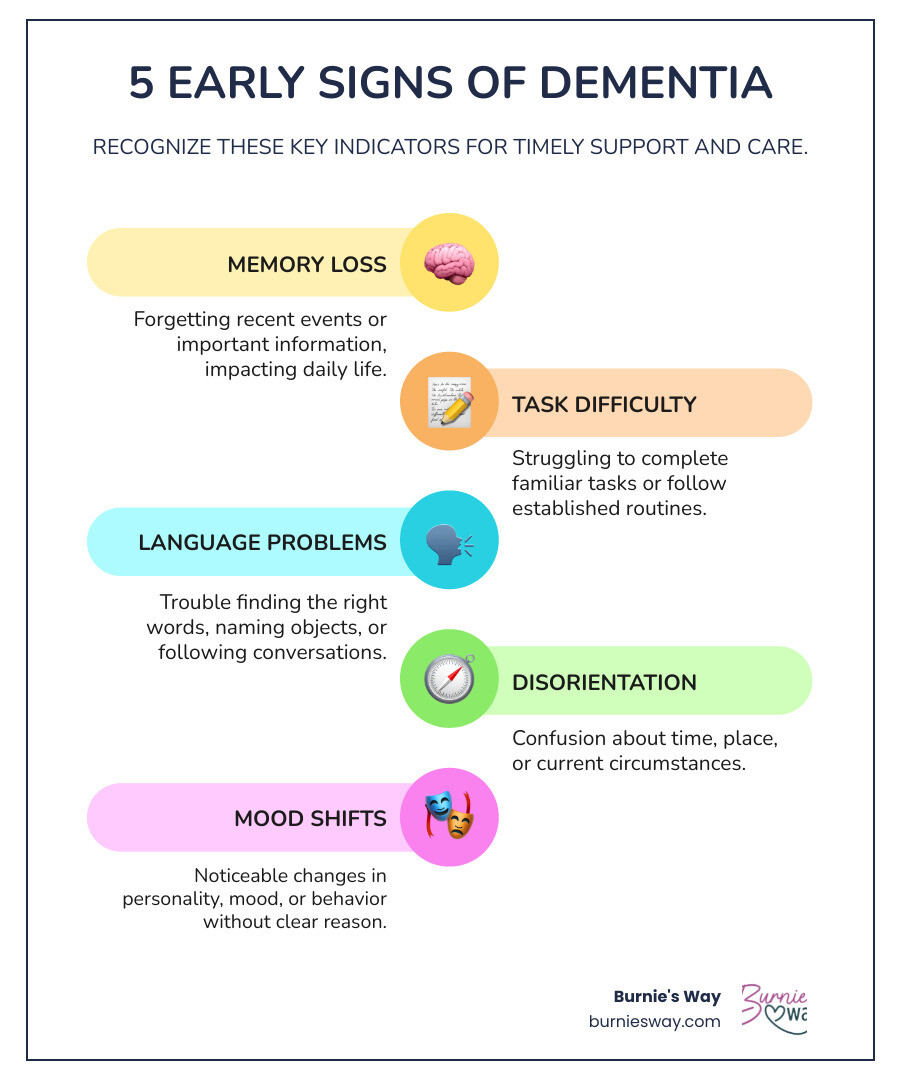
The early signs of dementia can be subtle and may sometimes be mistaken for normal aging or stress. However, caregivers should be aware of persistent changes that affect daily functioning. These include:
- Memory loss affecting daily life: Forgetting recently learned information, important dates or events, or repeatedly asking the same questions.
- Difficulty with familiar tasks: Struggling to complete routine activities, such as driving to a familiar location, managing a budget, or remembering the rules of a favorite game.
- Language problems: Trouble finding the right words, stopping mid-sentence, or repeating themselves.
- Disorientation to time and place: Losing track of dates, seasons, or the passage of time, or forgetting where they are or how they got there.
- Poor judgment: Making uncharacteristic decisions, such as giving away large sums of money to telemarketers or neglecting personal hygiene.
- Changes in mood or personality: Experiencing sudden mood swings, becoming confused, suspicious, depressed, fearful, or anxious.
- Trouble with abstract thinking: Difficulty understanding numbers or complex concepts.
- Misplacing things: Putting items in unusual places and being unable to retrace steps to find them.
- Loss of initiative: Becoming passive or withdrawn from social activities or hobbies.
Recognizing these signs early is crucial. Practical recommendations for timely, accurate diagnosis of symptomatic Alzheimer's disease (MCI and dementia) in primary care highlight the need for healthcare providers to be vigilant in assessing cognitive changes. We encourage families to seek professional evaluation if they observe these persistent changes in a loved one.
Promoting Independence and Quality of Life
In the early stages, our focus should be on helping individuals with dementia maintain their independence and quality of life for as long as possible. This involves creating a supportive environment and encouraging engagement.
- Maintaining routines: A consistent daily schedule for waking, meals, activities, and bedtime can provide comfort and reduce confusion. This predictability helps individuals remember tasks and provides a sense of security.
- Using memory aids: Simple tools like large-print calendars, whiteboards, notes, or digital reminders can help manage appointments, medications, and daily tasks. Labeling important items or cupboards can also be beneficial.
- Encouraging hobbies and social engagement: Adapting activities for people with memory changes allows them to continue engaging in things they enjoy. This could include gardening, listening to music, simple crafts, or light exercise. Social interaction is vital for cognitive health and emotional well-being. Burnie's Way helps our clients understand these choices and coordinates personal support that fits best for them, helping them live well. You can learn more about How We Work to support independence.
How Do You Support an Elderly Person with Dementia Day-to-Day?
Supporting an elderly person with dementia day-to-day presents a unique set of challenges that require patience, flexibility, and a person-centered approach. Each day may bring new situations, and understanding that behaviors are often a form of communication is key. Our role is to create an environment where our loved ones feel safe, respected, and as comfortable as possible.
Practical Tips for Daily Routines
Assisting with daily care tasks like bathing, dressing, and toileting can become increasingly difficult as dementia progresses. The goal is to maintain dignity and encourage as much independence as possible.
- Bathing and Grooming: Personal hygiene can be a source of anxiety or resistance. We can help by:
- Creating a calm environment: Ensure the bathroom is warm, well-lit, and free of clutter.
- Respecting privacy: Keep the person covered as much as possible and explain each step before you do it.
- Adapting the process: Use a sturdy shower chair, a handheld showerhead, and non-slip mats to improve safety. Consider a towel bath as an alternative if a traditional shower or bath is too distressing.
- Using preferred products: Allow them to choose their favorite soaps or shampoos to give them a sense of control.
- Making it a routine: Try to bathe at the same time each day to establish predictability.
- More tips on bathing and grooming can be found to help make this process smoother.
- Dressing: Difficulty with clothing choices, fasteners, or coordination can make dressing a struggle.
- Simplify choices: Lay out one outfit at a time.
- Choose easy clothing: Opt for loose-fitting clothes with elastic waistbands, Velcro closures, or pull-overs instead of buttons, zippers, or shoelaces.
- Provide clear instructions: Break the task into small, simple steps.
- Toileting: Incontinence is common in later stages of dementia.
- Establish a routine: Suggest bathroom visits every two to three hours.
- Make it easy to find: Keep the bathroom door open or clearly marked.
- Use appropriate products: Incontinence pads or adult briefs can help manage accidents and maintain hygiene.
- Look for signs: Pay attention to non-verbal cues that may indicate a need to use the toilet.
Encouraging Healthy Eating and Hydration
Ensuring adequate nutrition and hydration is vital, as people with dementia may forget to eat or drink, have difficulty chewing or swallowing, or experience changes in taste and appetite.
- Consistent mealtimes: Serve meals at predictable times in a calm, familiar setting to minimize distractions.
- Finger foods: Offer foods that are easy to pick up and eat without utensils if fine motor skills decline.
- Reducing distractions: Turn off the TV or radio during meals to help them focus on eating.
- Addressing swallowing issues: Cut food into small, soft pieces, grind, or blend it. Offer soft foods like yogurt, applesauce, or mashed vegetables. Avoid straws, as they can sometimes make swallowing more difficult. Ensure the person is sitting upright during and for at least 20 minutes after eating to prevent choking or aspiration pneumonia. The risk of pneumonia increases if food enters the lungs due to swallowing difficulties, which can be fatal.
- High-calorie snacks: If weight loss is a concern, offer nutritious, high-calorie snacks and discuss dietary supplements with a doctor. Restlessness and wandering can increase physical activity, requiring extra calories.
- Dehydration risk: Offer small sips of water or other fluids frequently throughout the day, especially between meals. People with dementia often forget to drink, leading to dehydration.
- For more specific guidance, explore tips for helping people with memory changes eat well.
Creating a Safe and Supportive Home Environment
Safety is paramount for individuals with dementia, who may be prone to falls, wandering, or mismanaging medications.
- Fall prevention: Remove throw rugs, clear clutter, and ensure all rooms are well-lit. Install grab bars in the bathroom and near stairs. Mark the edges of steps with brightly colored tape.
- Wandering prevention: Lock doors and windows, especially those leading outside. Consider door alarms or a home security system. For individuals prone to wandering, identification bracelets with contact information can be invaluable. Some programs, like the Alzheimer's Association's Safe Return Program, offer identification bracelets for individuals who wander.
- Medication reminders: Use a pill organizer, set phone alerts, or enlist the help of a trusted individual to ensure medications are taken correctly and on time. Keep all medications locked away when not in use.
- Good lighting: Adequate lighting, especially at night, can reduce confusion and prevent falls. Nightlights in hallways and bathrooms are helpful.
- Locking up hazardous products: Store cleaning supplies, toxic chemicals, tools, and weapons securely to prevent accidental harm.
Navigating Communication and Behavioral Changes
Behavioral changes are often one of the most challenging aspects of supporting someone with dementia. It's crucial to remember that these changes are caused by the disease, not by the person themselves. Behavior is often a form of communication, signaling an unmet need, discomfort, or confusion. Our approach should be to identify triggers and create a calm, reassuring environment.

Effective Communication Strategies
As dementia progresses, language and understanding change. Adapting our communication style is essential for positive interactions.
- Simple sentences: Use short, clear sentences and speak slowly. Avoid jargon or complex instructions.
- Calm tone: Maintain a gentle, reassuring voice and positive body language.
- Non-verbal cues: Make eye contact, smile, and use gentle touch to convey warmth and connection.
- Active listening: Listen patiently, both to their words and their non-verbal cues. Try to understand the feeling behind what they are trying to express.
- Avoiding arguments: It's rarely productive to argue or try to correct someone with dementia, especially about their perceptions of reality. Instead, validate their feelings and gently redirect.
- Reminiscing about the past: People with dementia often remember distant past events better than recent ones. Talking about their childhood, career, or family history can be a wonderful way to connect and engage.
- Using names instead of pronouns: Use specific names and places they know, rather than "he," "she," or "there," to reduce confusion.
How to manage common behavioral changes
Common behavioral changes can include agitation, restlessness, wandering, repetitive actions, and paranoia. These are often coping tactics for a person with deteriorating brain function.
- Agitation and Restlessness: These can be triggered by overstimulation, fatigue, pain, or confusion.
- Reduce noise and clutter: Create a peaceful environment.
- Maintain routines: Predictability can reduce anxiety.
- Calming activities: Gentle music, a familiar activity, or a short walk can help.
- Acknowledge feelings: Reassure them and validate their emotions, then try to redirect their attention.
- For more insights, refer to coping with agitation, aggression, and sundowning.
- Wandering: This can be a significant safety concern.
- Regular exercise: Can help reduce restlessness.
- Secure the home: Install locks high or low on doors, use door alarms.
- Identification: Ensure they wear an ID bracelet.
- Inform neighbors: Let them know your loved one might wander.
- Repetitive actions or speech (Perseveration): This can stem from anxiety, boredom, or a need for reassurance.
- Provide comfort: Offer reassurance and a gentle touch.
- Distraction: Gently redirect their attention to another activity or topic.
- Avoid asking "Don't you remember?": This can cause distress.
- Paranoia: False beliefs or suspicions are part of the illness.
- Don't argue: Acknowledge their feelings without validating the false belief.
- Reassure: Focus on making them feel safe and loved.
- Distract: Change the subject or move to a different room.
Managing Sleep Disturbances and Discomfort
Dementia can affect people's sleep patterns and cause problems with a person's "body clock." Sleep disturbances, such as insomnia or sundowning (increased confusion and agitation in the late afternoon or evening), are common.
- Promoting daytime activity: Encourage physical activity and exposure to natural light during the day to help regulate sleep-wake cycles. Regular walks can be beneficial.
- Limiting naps: While short naps can be good, long or frequent naps can disrupt nighttime sleep.
- Evening routine: Create a calm, relaxing evening routine with soft lighting, soothing music, or a warm bath.
- Addressing sundowning: Turn on lights before sunset, avoid caffeine and sugar in the afternoon, and engage in quiet activities during the evening.
- Recognizing non-verbal signs of discomfort: People with dementia may not be able to verbalize pain or discomfort. Look for signs like grimacing, groaning, guarding a body part, increased agitation, or changes in behavior. If you suspect pain, consult their healthcare provider. Regular checks of eyes and ears are also important, as uncorrected vision or hearing problems can increase confusion and agitation.
Planning for the Future and Finding Support
Supporting an elderly person with dementia is a marathon, not a sprint. A long-term perspective and proactive planning are essential, not just for the individual but also for the well-being of those providing support. Building a strong support network is paramount.
Addressing Difficult Decisions like Driving
Driving is a complex skill that requires quick judgment, good reaction time, and the ability to process multiple pieces of information simultaneously. As dementia progresses, these abilities decline, making driving unsafe.
- Recognizing warning signs: Look for signs like getting lost on familiar routes, near-miss accidents, confusion at intersections, or difficulty following traffic signals.
- Involving family and trusted advisors: This is a difficult conversation. Seek help from their healthcare provider and other family members to approach the topic sensitively. State laws vary regarding the ability of a person with dementia to continue driving, and regular driving tests may be required.
- Exploring alternative transportation options: Plan for alternative ways for them to get around, such as rides from family or friends, public transportation, or ride-sharing services.
Understanding Long-Term Support Options
As the needs of an elderly person with dementia evolve, so too might the type of support required. There are various options available to help maintain independence and ensure well-being.
- Personal support at home: Many individuals with dementia thrive in their familiar home environment. Services can include assistance with daily tasks, companionship, and memory-enhancing activities.
- Community programs: Adult day care centers provide structured activities, social interaction, and supervision during the day, offering respite for family and companions.
- Social engagement services: These services focus on keeping individuals connected to their community and interests, which is vital for quality of life.
- Exploring living options: While Burnie's Way focuses on enabling people to live independently at home, we understand that needs can change. Options like assisted living facilities (for those needing some help), group homes (where several people live with a companion), and nursing homes (for those needing ongoing medical support) are available when in-home support is no longer sufficient.
- Comfort-focused support: Eventually, people with dementia may need 24-hour monitoring and assistance to provide a safe environment, manage challenging behaviors, and meet their needs. Hospice services provide comfort and support for individuals nearing the end of life, focusing on quality of life rather than curative treatments.
- For information and resources for older adults in your community, the Eldercare Locator is a valuable resource. Burnie's Way, as a personal concierge for aging adults, helps our clients understand these choices and coordinate the personal support that fits best, helping them live the way they want, with support in key areas of daily life, and giving families peace of mind that everything’s okay.
The Importance of Legal and Financial Planning
Addressing legal and financial matters early is one of the most proactive steps you can take. These conversations, while difficult, ensure that the individual's wishes are respected and that their affairs are managed appropriately as their cognitive abilities decline.
- Power of attorney: Designating a trusted individual to make financial and healthcare decisions on their behalf.
- Advance directives: Documenting their wishes for medical treatment, such as a Living Will or Do Not Resuscitate (DNR) order.
- Consulting an elder law attorney: An attorney specializing in elder law can provide guidance on these complex issues, ensuring all documents are legally sound and reflect the individual's preferences.
- These steps can simplify future decisions and reduce stress for families. For more information, you can check our FAQ section.
How to care for yourself as a supporter of an elderly person with dementia
Caring for someone with dementia is demanding, both physically and emotionally. Millions of people living in the United States take care of a friend or family member with Alzheimer’s disease or a related dementia. Neglecting your own well-being can lead to burnout, stress, and health problems. You cannot pour from an empty cup.
- Asking for help: Recognize your limits and don't be afraid to ask for assistance from family, friends, or community resources. Burnie's Way offers personal support that helps you stay independent at home, helping with everyday life, errands, and coordination.
- Respite and breaks: Regular breaks are crucial. Respite care, whether provided by another family member, a professional, or an adult day care center, allows you to recharge.
- Support groups: Connecting with others who understand your experiences can provide emotional support, practical advice, and a sense of community. In some communities, dementia-related support groups may be available.
- Managing stress: Practice stress-reduction techniques like meditation, exercise, or hobbies. Consider seeking help from mental health professionals if you are struggling with anxiety or depression.
- Maintaining personal health: Prioritize your own doctor's appointments, healthy eating, and adequate sleep.
- For more comprehensive guidance on taking care of yourself as a supporter, we encourage you to explore available resources.
Frequently Asked Questions about Dementia Support
What is the difference between Alzheimer's and dementia?
Dementia is an umbrella term, not a specific disease. It describes a set of symptoms including memory loss, difficulties with thinking, problem-solving, and language, that are severe enough to reduce a person's ability to perform everyday activities. Alzheimer's disease is the most common type of dementia, accounting for 60-80% of cases. It's caused by specific changes in the brain involving nerve cell damage. Other types of dementia include vascular dementia, Lewy body dementia, and frontotemporal dementia, each with its own unique characteristics and progression.
How do I handle resistance to daily tasks like bathing?
Resistance to daily tasks like bathing is common and often stems from fear, confusion, a loss of control, or physical discomfort.
- Understand the cause: Try to identify why they are resisting. Are they cold? Embarrassed? Afraid of falling?
- Break tasks into small steps: Instead of "let's take a bath," try "let's get your towel," then "let's turn on the water."
- Use a calm and reassuring tone: Speak gently and avoid confrontation.
- Offer choices: "Would you like a shower or a sponge bath?" "Do you want to wash your hair first or last?"
- Distraction and redirection: Sometimes, shifting their focus to a favorite song or a pleasant memory can make them more amenable.
- Timing: Choose a time of day when they are typically calmer and more cooperative.
- Respect their dignity: Always maintain their privacy and be gentle.
When is it time to consider additional support or a new living arrangement?
This is one of the most difficult decisions families face. Several signs may indicate that additional support or a new living arrangement, such as an assisted living facility or nursing home, might be beneficial:
- Supporter burnout: If you, as the primary supporter, are consistently exhausted, stressed, or experiencing declining health, it's a critical sign.
- Safety concerns: Frequent falls, wandering outside the home, improper use of appliances, or unsafe medication management can pose serious risks. Eventually, people with dementia may need 24-hour monitoring and assistance to provide a safe environment.
- Escalating needs: When the individual requires constant supervision or assistance with most daily activities (bathing, dressing, toileting, eating) beyond what can be safely and effectively provided at home.
- Aggressive or agitated behavior: If behavioral changes become unmanageable or pose a risk to the individual or others.
- Declining health: Significant weight loss, frequent infections, or other medical issues that require more intensive medical support.
- When daily support needs exceed what family or companions can provide, exploring other options becomes necessary. Seeking additional help is a sign of strength and ensures your loved one receives the best possible support.
Final Thoughts
Caring for an elderly person with dementia is a profound journey, marked by both challenges and moments of deep connection. We've explored how understanding the disease, adapting daily routines, fostering effective communication, ensuring safety, and planning for the future are all crucial components of providing compassionate support. The core principles remain patience, establishing routine, prioritizing safety, and, critically, practicing self-care.
It's a testament to the strength and love of families and companions that millions across the United States undertake this journey. You don't have to steer it alone. Burnie's Way provides personal support and coordination to help our clients live independently, confidently, and comfortably at home. We serve as a guide, helper, and companion, assisting with key areas of daily life and giving families peace of mind.
To learn more about how we can support your family in fostering independence and well-being, explore Our Story and find our personalized approach by visiting Our Services.