

Why Coordinating Your Loved One's Care Matters More Than Ever
Senior care coordination is the process of organizing an older adult's healthcare and support services across multiple providers. It ensures everyone involved in your parent's care—doctors, specialists, and home care workers—is on the same page, working toward their wellbeing and independence.
Quick Answer: What Is Senior Care Coordination?
- Definition: Organizing care across all providers and services
- Key Goal: Getting the right info to the right people at the right time
- Core Elements: Team-based, patient-centered planning and risk assessment
- Main Benefit: Prevents errors, duplicate tests, and unnecessary hospital visits
- Who Coordinates: A care coordinator, case manager, or nurse
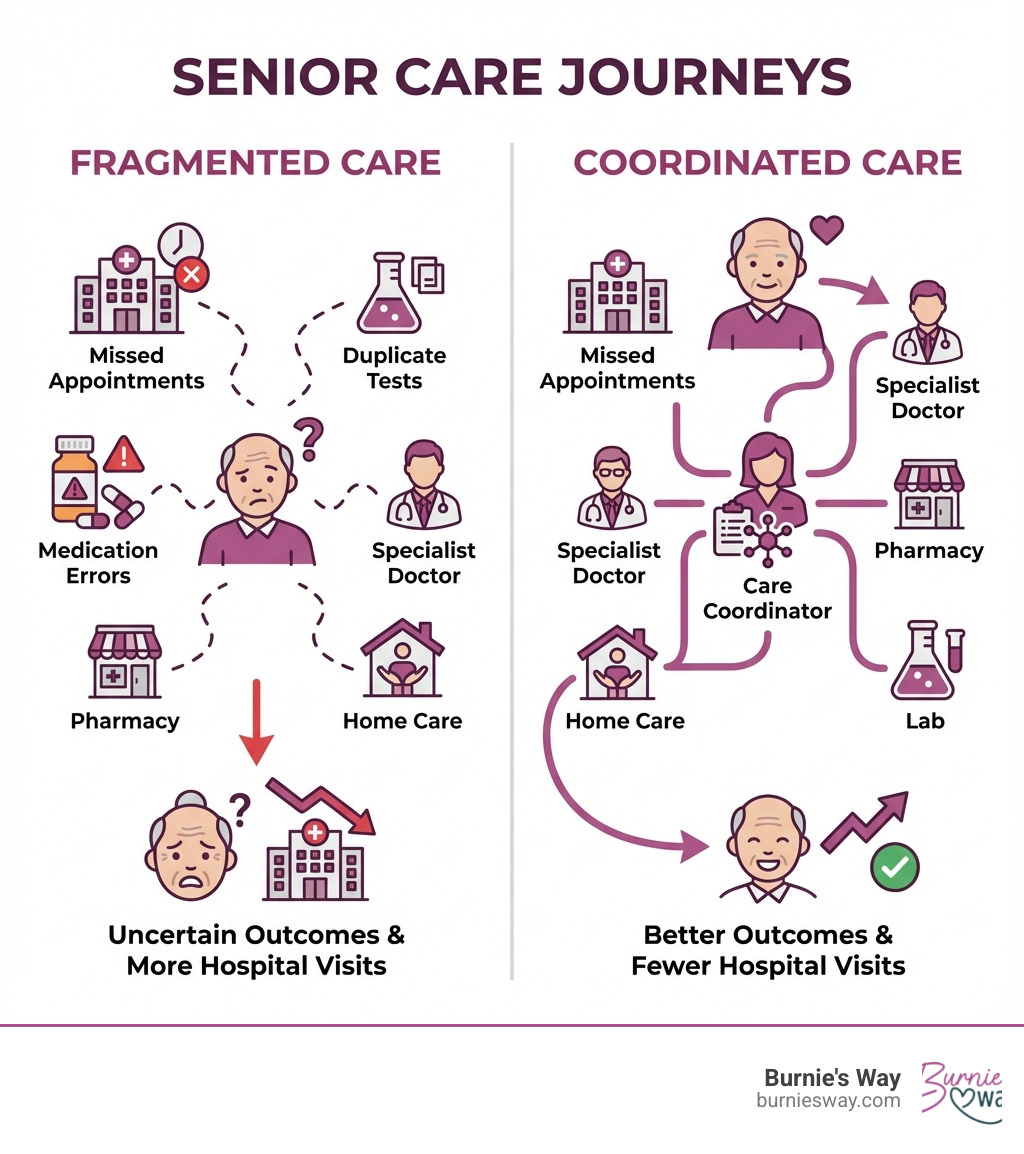
Here's why this matters: Nearly 80% of older adults have at least two chronic conditions. Without coordination, they may see specialists who don't communicate, leading to conflicting advice, duplicate tests, and medication errors. This fragmentation wastes time and money and can result in preventable hospital stays.
Coordinated care assigns a point person to ensure clear communication and that your parent's needs are met. Studies show effective coordination can reduce hospital readmissions by 30% and lower patient costs by 39%.
Whether your parent is recovering from surgery or managing chronic conditions, coordination provides confidence and control.
What is Senior Care Coordination and Why Is It Essential?
What is senior care coordination and why is it important?
Senior care coordination creates a seamless health experience for older adults. It organizes a patient's care across multiple providers, ensuring all pieces of the puzzle fit together. Without it, care becomes fragmented, leading to medication errors, duplicate tests, and preventable hospitalizations.
With nearly 95% of older adults having at least one chronic condition, coordination is crucial for safety. It prevents dangerous drug interactions and ensures care is patient-centered, placing the individual's needs and goals first. This empowers seniors to manage their health effectively and live with the support they need.
For a deeper dive into the definition of care coordination, you can visit What is care coordination?.
What are the benefits and challenges of senior care coordination?
Navigating the later stages of life should be about comfort and independence, not confusing appointments. This is where senior care coordination shines.
Benefits of Senior Care Coordination:
- Reduced Hospital Readmissions: Coordinated care helps keep seniors out of the hospital, allowing them to recover and live at home.
- Lower Patient Costs: Effective coordination significantly reduces healthcare spending, easing financial burdens on families.
- Improved Quality of Life: With providers working in harmony, seniors receive timely and effective care, leading to better health and a greater sense of well-being.
- Better Chronic Condition Management: Coordination ensures specialists communicate and treatments are aligned, leading to more stable health.
- Support for Family Caregivers: A central point of contact reduces the administrative burden on families, offering peace of mind and more quality time with loved ones.
Challenges of Senior Care Coordination:
Despite its benefits, coordination faces problems:
- Aligning Payments: Fragmented payment methods can hinder streamlined, needs-based care.
- Navigating a Complex System: The healthcare landscape is vast, and understanding available services can be overwhelming for families.
- Incompatible Technology: Disparate electronic health records (EHRs) can prevent seamless information sharing between providers.
At Burnie's Way, we understand these challenges. While we don't provide medical services, our personal support and coordination help clients and families steer this complexity to find the right resources.

What Are the Components and Services of Coordinated Care?
What are the key components of effective senior care coordination?
Effective senior care coordination is a structured approach built on several key components:
- Interdisciplinary Team: A team of professionals from different disciplines (doctors, nurses, social workers) works together to address all aspects of a senior's well-being.
- Patient-Centered Approach: The senior's needs, preferences, and goals are at the center of all decisions, ensuring the support plan reflects what matters most to them.
- Risk Stratification: This process identifies seniors at the highest risk for poor health outcomes, allowing resources to be focused where they are needed most.
- Individualized Support Plans: Tailor-made plans are created to meet the specific circumstances and preferences of each senior, avoiding a one-size-fits-all approach.
- Communication Between Providers: Clear and regular communication among all team members is essential to prevent misunderstandings and ensure everyone is updated on the senior's status.
These components work together to deliver integrated care. To learn more about community-level interventions, you can explore resources like Guidelines on community-level interventions to manage health.
How can care coordination help manage chronic conditions?
Managing chronic conditions like diabetes or heart disease is a major challenge for many seniors. Senior care coordination is an indispensable ally in this process.
Here's how it helps:
- Medication Management Support: Coordination helps ensure prescriptions are reviewed for interactions and schedules are simplified. We can help clients organize prescriptions and set reminders to follow their doctor's instructions.
- Coordinating Specialist Appointments: A coordinator can schedule appointments, arrange transport, and ensure records are shared between providers to avoid duplicate tests.
- Managing Transitions of Care (Hospital-to-Home): This is a critical period. Coordination ensures a safe return home by scheduling follow-up appointments and arranging for any necessary equipment.
- Coaching on Self-Care Techniques: Coordination connects clients with resources for self-care, such as dietary guidance or exercise programs. We can help our clients find and access these valuable programs.
By integrating these strategies, senior care coordination improves health outcomes, allowing clients to lead more independent lives. To learn more about our approach, please visit More info about how we work.
What types of services are available through coordination programs?
Senior care coordination provides a gateway to a wide array of services:
- In-Home Support Services: Assistance with daily activities (bathing, dressing, meals) to help seniors age in place. Our coordination can help clients arrange for trusted providers.
- Medical Care:
- Nursing Services: Skilled care at home for wound care, medication administration, and disease management.
- Therapy Services: Physiotherapy, occupational therapy, and speech-language pathology to improve mobility and independence.
- Social Work Services: Psychosocial and emotional support, and connection to resources.
- Community Services:
- Meal Delivery & Transportation: Access to nutritious meals and rides to appointments or social activities.
- Adult Day & Exercise Programs: Supervised activities and classes to improve strength, balance, and social connection.
- Social Programs: Social groups and recreational activities to combat loneliness and foster well-being.
- Assisted Living Services: A housing option offering a balance of independence and assistance with daily living.
- End-of-Life Care Planning: Palliative and hospice services focused on comfort, dignity, and support for the senior and their family.
Who Are the People and What Are the Processes Involved?
What is the role of a care coordinator in supporting seniors?
In senior care coordination, the care coordinator acts as a personal navigator for seniors and their families. Their vital responsibilities include:
- Main Point of Contact: Serving as the central figure for questions and concerns, which streamlines communication.
- Liaison Between Family and Providers: Acting as a link between the family and medical team, translating jargon and ensuring everyone is on the same page.
- Assessing Needs: Conducting a thorough assessment of the senior's physical, emotional, and social needs to determine the right support.
- Developing Support Plans: Creating an individualized plan that outlines goals and required services, prioritizing the senior's independence.
- Connecting to Community Resources: Using their expertise to connect seniors with local services like meal delivery, transportation, and social programs.
- Senior Advocate: Ensuring the senior's voice is heard, their rights are protected, and their care aligns with their wishes.
While Burnie's Way does not provide medical care coordination, our role as a personal concierge for aging adults aligns with supporting these functions. We help clients understand their options and coordinate personal support to make daily life seamless.

What are the best practices for successful coordination models?
Successful senior care coordination models are built on proven best practices:
- Targeting High-Risk Individuals: Using "risk stratification" to identify seniors with the most complex needs allows programs to focus intensive efforts where they have the greatest impact.
- In-Person Contact and Home Visits: The human touch is irreplaceable. Home visits allow coordinators to build trust and perform thorough assessments of a senior's living situation and needs.
- Integrating with Primary Care: Coordination is most effective when integrated with primary care practices, ensuring efforts align with the senior's ongoing medical management.
- Patient-Centered Medical Homes (PCMHs): In this model, a primary care team provides comprehensive, coordinated care, with care managers helping seniors steer the system.
- Accountable Care Organizations (ACOs): These are networks of providers who collaborate to deliver high-quality, coordinated care to their Medicare clients, aiming to improve outcomes and avoid duplicate services.
These best practices highlight a commitment to proactive, holistic support. For those interested in exploring more about these models, the CMS offers valuable insights: Learn more about care coordination models from CMS.
How do community organizations and healthcare providers collaborate?
Effective senior care coordination thrives on collaboration between community organizations and healthcare providers.
- Partnerships: Hospitals and Community Groups: Hospitals partner with community groups (e.g., meal delivery, transportation) to ensure seniors have support at home after discharge, preventing readmissions.
- Doctor's Offices and Social Services: Physicians collaborate with social services to address non-medical needs like food insecurity or social isolation by referring clients to community partners.
- Home Care Agencies and Healthcare Systems: Home care agencies are integral partners, receiving referrals from hospitals and doctors and communicating regularly with the medical team to ensure continuity of care.
- Sharing Information for Seamless Transitions: Securely sharing information between providers is key to preventing delays and reducing stress for the senior and their family during care transitions.
At Burnie's Way, we understand the power of these connections. We actively help our clients connect with these crucial community and healthcare resources to help them live the way they want. To learn more, visit More info about our story and partnerships.
How Can You Access and Leverage Modern Senior Care Support?
How can seniors and their families access coordination services?
Understanding the value of senior care coordination is one thing; knowing how to access it is another. Fortunately, there are several pathways to connect with support.
Seniors and their families can access senior care coordination through several avenues:
- Doctor Referrals: A primary care physician can refer you to a care coordinator or program within their network.
- Hospital Discharge Planners: Upon leaving the hospital, a discharge planner can connect you with coordination services for a safe transition home.
- Government Agencies: Federal and state agencies, like Medicare, Medicaid, and local Area Agencies on Aging (AAAs), offer or can direct you to coordination services.
- Private Care Managers: Families can hire private care managers, who are often nurses or social workers, to act as a dedicated advocate and coordinator.
- Insurance Providers: Check with your health insurance provider, as many plans (especially Medicare Advantage) include care coordination benefits.
At Burnie's Way, we are experts in helping our clients understand these options and connect with the right resources. If you're feeling overwhelmed, we're here to guide you. For personalized guidance, please Contact us for guidance.
How does technology play a role in senior care coordination?
Technology is a powerful tool in modern senior care coordination, bridging distances and streamlining communication.
Here's how technology is changing the field:
- Electronic Health Records (EHRs): These centralized digital records give all providers access to a complete medical history, reducing errors and preventing duplicate tests.
- Telehealth Appointments: Virtual visits with doctors and specialists provide convenient access to care from home, ensuring continuity for those with mobility challenges.
- Remote Monitoring Devices: Wearables and in-home sensors track vital signs and activity, allowing care teams to intervene proactively and providing peace of mind for families.
- Digital Communication Platforms: Secure messaging apps and online portals streamline communication between coordinators, families, and providers, keeping everyone informed.
- Reducing Service Duplication and Lowering Costs: Overall, technology improves information flow, which eliminates redundant services and contributes to lower healthcare costs.
At Burnie's Way, we can help our clients feel comfortable using telehealth platforms and other digital tools that support their independence and give families peace of mind.
Conclusion
The journey of aging should be about comfort and dignity, not stress. Senior care coordination is the compass that guides this journey, providing personalized support that promotes independence. Effective coordination delivers better health outcomes, reduces stress for families, and allows seniors to thrive at home. A personalized approach centered on the individual's needs is the key to success.
While medical coordination is vital, true well-being also includes daily life, social connections, and a well-managed home. This is where personal concierge services like Burnie's Way come in.
We are not a caregiving or healthcare provider. We act as a virtual companion and personal assistant, helping our clients manage the non-medical aspects of daily life that support their independence. We help them live the way they want and give families peace of mind. With 50 years of experience, we offer compassionate personal support, enabling clients to live safely and independently through continuous support and strategic partnerships.
To find how our personal support and coordination services can help you or your loved one live confidently and independently, we invite you to learn more about what we offer. Visit Learn more about our personal support and coordination services today, and let us help you steer the path to a life well-lived.