13 min read

Family Caregiver Support 101

Family Caregiver Support 101

Understanding the Role of a Family Caregiver

family caregiver support

Family caregiver support includes a wide range of resources, programs, and services designed to help individuals who care for aging, disabled, or chronically ill loved ones. This support can include educational training, financial assistance programs, respite care, legal guidance, community services, and emotional support networks that help caregivers manage their responsibilities while maintaining their own well-being.

Key Types of Family Caregiver Support:

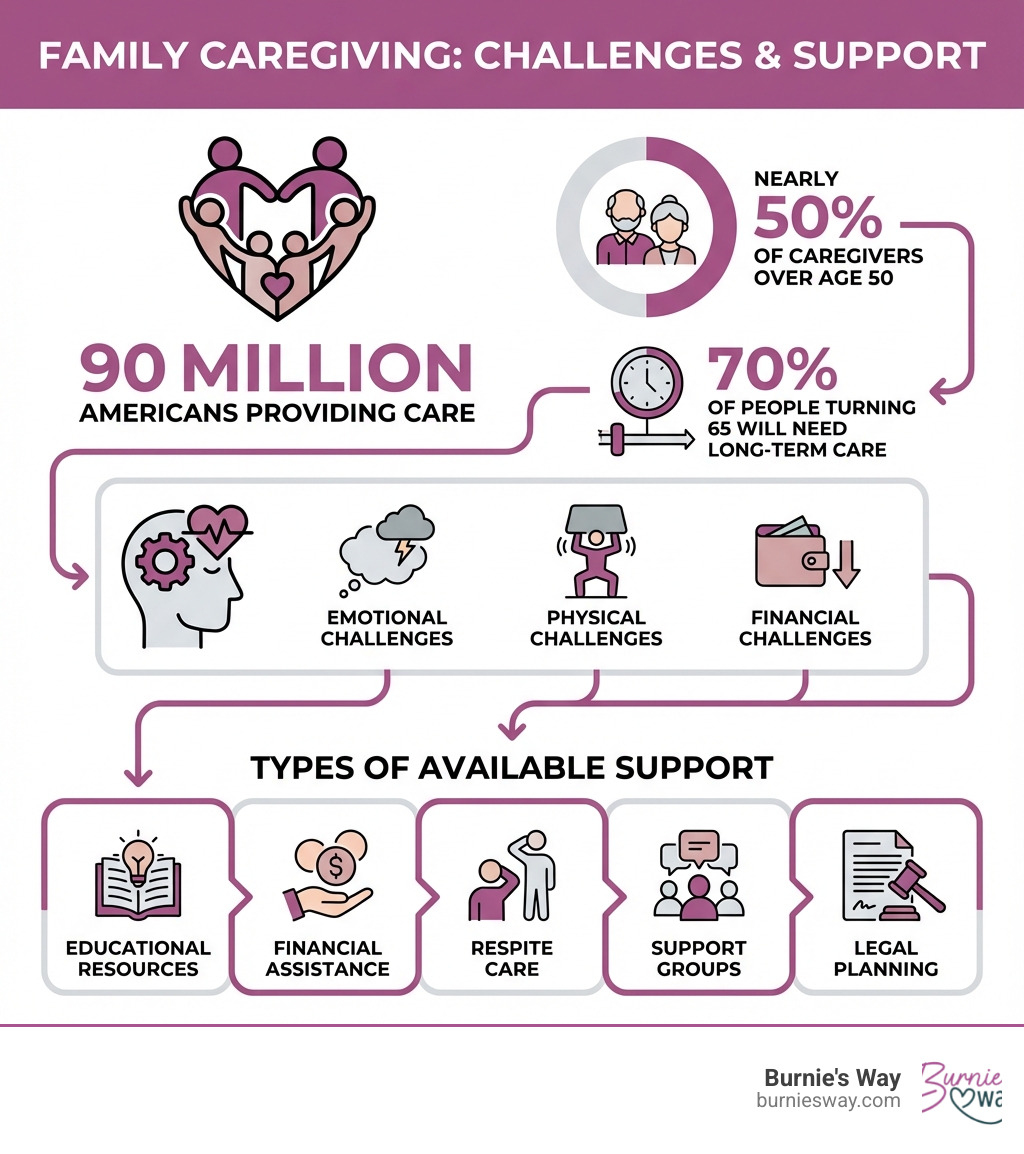
  • Educational Resources - Training programs, workshops, and online courses to build caregiving skills
  • Financial Assistance - Medicaid programs, VA benefits, paid family leave, and tax credits
  • Respite Care - Temporary relief services through in-home help or adult day centers
  • Support Groups - Peer connections through online communities and local meetings
  • Legal Planning - Guidance on power of attorney, advance directives, and healthcare decisions
  • Technology Tools - Apps, telehealth, and medical alert systems to assist with care coordination

Families are the primary source of support for older adults and people with disabilities in the United States. More than 90 million Americans currently care for loved ones with chronic conditions, disabilities, disease, or the frailties of older age.

The caregiving journey often begins suddenly. One day you're living your regular life, and the next you're managing medications, coordinating doctor appointments, and making critical decisions for someone you love. This transition brings significant challenges that extend far beyond the practical tasks of daily life management.

Research shows that caregiving takes a serious toll. Many caregivers work full-time jobs while also providing support, creating conflicts between competing responsibilities. The emotional, physical, and financial burden is real and measurable. Nearly half of all caregivers are older than age 50, making them vulnerable to declines in their own health.

But here's the good news: coordinated support services can reduce caregiver depression, anxiety, and stress. When caregivers receive proper support, they can continue to provide assistance longer, which helps avoid or delay the need for costly institutional care.

This guide will walk you through the landscape of available support, from educational resources and financial programs to self-care strategies and community connections. Whether you're a first-time family caregiver or have been supporting a loved one for years, understanding what help exists is the first step toward building a sustainable support system.

infographic showing statistics on family caregiving including 90 million Americans providing care, nearly 50% of caregivers over age 50, 70% of people turning 65 will need long-term care, and the emotional physical and financial challenges caregivers face along with types of support available including educational resources financial assistance respite care support groups and legal planning - family caregiver support infographic

Becoming a family caregiver means taking on a new, often demanding, role. The good news is that you don't have to steer it alone. A vast landscape of family caregiver support services and resources exists to help you on your journey. These services are designed to provide practical assistance, emotional encouragement, and crucial information, ensuring both your loved one and you are well-supported. From educational tools that improve your skills to community programs that offer a helping hand, understanding these options is key to a more manageable and sustainable experience.

Educational Resources and Training

One of the most empowering forms of family caregiver support is education and training. The benefits of seeking educational resources are immense: they improve your skills, build your confidence, and provide practical strategies for common challenges. Whether you're new to the role or looking to refine your approach, continuous learning can make a significant difference.

Many organizations offer online training programs and workshops that cover a wide range of topics, from understanding specific conditions to managing daily routines. For instance, the Family Caregiver Alliance - National Center on Caregiving and the Caregiver Action Network are excellent starting points. They provide comprehensive information, tips, and resources designed to equip you with the knowledge you need. These programs can help you learn effective communication techniques, understand the progression of various conditions, and even teach you how to safely assist with mobility or personal care. By investing in your own education, you're not just helping your loved one; you're also strengthening your own capacity and resilience.

Support for Dementia and Alzheimer's Caregivers

Caregiving for individuals with dementia or Alzheimer's disease presents unique and often profound challenges. These conditions affect memory, cognition, and behavior, requiring specialized approaches. Caregivers often grapple with communication difficulties, managing behavioral changes (like sundowning or agitation), and the emotional toll of witnessing a loved one's decline.

Fortunately, there are resources specifically custom to these situations. Organizations like Alzheimers.gov provide a wealth of information on understanding the disease, practical tips for daily care, and strategies for coping with challenging behaviors. The National Institute on Aging also offers valuable information on caregiving for those with cognitive impairments. These resources often include guidance on creating a safe environment, engaging in meaningful activities, and finding local support groups where you can connect with others who understand your experience. Specialized programs can teach you communication techniques that are effective for individuals with memory loss and offer strategies to reduce stress for both you and your loved one.

Leveraging Technology for Assistance

In our increasingly connected world, technology offers powerful tools for family caregiver support. From simplifying daily tasks to providing peace of mind, technological aids can significantly ease the burden. Caregiving apps can help you organize schedules, track medications, and communicate with other family members or support providers. Medication management tools, often linked to smart devices, can provide reminders and ensure your loved one takes their prescriptions correctly.

Telehealth has emerged as a crucial resource, allowing for remote consultations with healthcare professionals, reducing the need for travel and making medical advice more accessible. Medical alert systems provide immediate help in emergencies, offering a safety net for individuals living independently. Remote monitoring devices can help you keep an eye on your loved one's well-being from a distance, offering reassurance without constant physical presence.

At Burnie's Way, while we don't provide medical care, we understand the importance of leveraging technology for daily life management and coordination. We can assist our members in understanding and integrating such tools into their routines, helping them live confidently and stay connected. To learn more about how we work to coordinate and simplify daily life, you can explore More info about How We Work.

Finding Local and National Support Services

Connecting with the right support services can feel like a daunting task, but many organizations are dedicated to guiding you. The first step is often to identify what kind of help you need, whether it's information, financial aid, or emotional support.

A cornerstone resource in the U.S. is the Eldercare Locator, a public service of the U.S. Administration on Aging. This service provides an instant connection to local resources via one phone call or website visit, helping you find programs and services in your area. They can direct you to your local Area Agency on Aging (AAA), which serves as a hub for services for older adults and their families, offering counseling, referrals, and often direct support.

Beyond local services, several national organizations provide broad family caregiver support:

  • Family Caregiver Alliance - National Center on Caregiving: Offers information, education, and advocacy for caregivers.
  • National Alliance for Caregiving: A non-profit coalition that conducts research, develops public policy, and provides resources.
  • Caregiver Action Network: Serves over 90 million Americans caring for loved ones with chronic conditions, disabilities, or the frailties of older age, providing education and peer support.
  • Generations United: Focuses on intergenerational strategies and policies, including support for grandparents raising grandchildren.
  • The Brookdale Foundation Group—Relatives as Parents Program (RAPP): Specifically supports grandparents and other relatives raising children.
  • eXtension: Provides information on various topics relevant to caregivers, including disaster preparedness and military families.

These organizations are vital for connecting you with the specific assistance you need, ensuring you don't feel isolated in your caregiving journey.

The financial and legal aspects of caregiving can be complex and overwhelming. Proactive planning in these areas is a critical form of family caregiver support that can alleviate significant stress and ensure your loved one's wishes are honored. Getting affairs in order involves understanding available financial assistance, managing legal documents, and navigating government programs.

Caregiver organizing documents - family caregiver support

Accessing Financial Assistance and Family Caregiver Support Programs

One of the most frequently asked questions by family caregivers is whether they can get paid for their services. The answer is often yes, through various programs, though eligibility and benefits vary significantly.

  • Medicaid Programs: Many states offer consumer-directed personal assistance programs through Medicaid. If your loved one is eligible for Medicaid, their state may allow a family member to become a paid caregiver. These are often known as Medicaid self-directed services, which can provide financial assistance for necessary home and community-based services, including payment to the family caregiver or for respite. Some states even offer "Structured Family Caregiving," where a family caregiver can be paid and receive additional supports if the care recipient needs 24-hour supervision and help with daily personal care.
  • Long-Term Care Insurance: Some long-term care insurance policies allow family members to be paid as caregivers. It's crucial to contact the insurance agent for written confirmation of benefits.
  • Veterans Affairs (VA) Programs: For veterans and their caregivers, several programs can provide financial assistance:
    • The Veteran-Directed Home and Community-Based Services program offers veterans a flexible budget that can be used to hire a family member for assistance with daily living activities.
    • The Aid and Attendance Benefits program provides monthly payments in addition to a VA pension for qualified veterans and survivors, helping to cover caregiver costs.
    • The Program of Comprehensive Assistance for Family Caregivers offers stipends, mental health services, and other supports for eligible caregivers of veterans.

These programs are vital for reducing the financial strain that often accompanies caregiving, allowing family members to dedicate more time and energy to their loved one's well-being.

Navigating the legal and financial landscape is a cornerstone of effective family caregiver support. Having the right documents in place can prevent future crises and ensure your loved one's wishes are respected. Key documents include:

  • Power of Attorney (POA): This legal document grants you the authority to make financial or medical decisions on behalf of your loved one if they become unable to do so. There are different types of POAs (e.g., durable, general, medical), and understanding which one is appropriate is crucial.
  • Living Will and Advance Directives: These documents outline a person's wishes regarding medical treatment, especially end-of-life care. They guide healthcare providers and family members on decisions about life support, resuscitation, and other interventions.
  • Healthcare Surrogate/Proxy: This designates a person to make healthcare decisions if the individual cannot. It’s distinct from a medical POA but serves a similar purpose.
  • Managing a Loved One's Money: This involves understanding their income, expenses, assets, and liabilities. It might include paying bills, managing investments, and ensuring they receive all eligible benefits. Tax tips for family caregivers can also be helpful in managing financial responsibilities.

For comprehensive guidance on these critical aspects, the Administration for Community Living (ACL) offers resources on long-term care planning, including insights into costs and payment options. These resources help you prepare for the financial realities of long-term care and make informed decisions.

Government Programs and Leave Policies

Beyond direct financial assistance, various government programs and employment leave policies offer crucial family caregiver support:

  • National Family Caregiver Support Program (NFCSP): Funded by the U.S. Administration for Community Living (ACL), this program provides grants to states and territories to fund a range of supports that help family and informal caregivers care for older adults in their homes. Services often include information, assistance, counseling, respite care, and supplemental services. You can learn more about this program on the ACL's website.
  • Family and Medical Leave Act (FMLA): This federal law allows eligible employees to take up to 12 weeks of unpaid, job-protected leave per year for family and medical reasons, including caring for a spouse, child, or parent with a serious health condition. While unpaid, it guarantees your job will be there when you return. For more details, consult the Department of Labor Fact Sheet on FMLA.
  • State Paid Leave Laws: In addition to FMLA, several states (such as California, Colorado, Connecticut, Delaware, Maine, Massachusetts, Maryland, Minnesota, New Jersey, New York, Oregon, Rhode Island, Washington, and the District of Columbia) have enacted laws providing paid family leave for employees. These programs offer partial wage replacement, allowing caregivers to take time off without complete financial loss. Contact your state's labor office for specific information.
  • The National Strategy to Support Family Caregivers: This comprehensive strategy, developed by federal agencies and advisory councils, outlines nearly 350 actions federal agencies will take to support family caregivers. It also suggests over 150 actions for states, communities, and other entities. This strategy aims to create a more coordinated and robust support system nationwide. You can read more about it on the ACL's dedicated page.

These programs collectively form a safety net, offering protection and assistance to caregivers as they balance their responsibilities with work and personal life.

Prioritizing Your Well-being: Self-Care and Respite

The demands of caregiving can be relentless, and the emotional, physical, and financial toll is significant. We've learned that nearly half of all caregivers are over 50, making them vulnerable to their own health declines. This highlights why prioritizing your well-being is not a luxury, but a necessity. Studies have shown that coordinated support services can significantly reduce caregiver depression, anxiety, and stress, enabling you to provide assistance longer and with greater effectiveness. Balancing your caregiving responsibilities with your work and personal life is one of the toughest challenges, but it's crucial for preventing burnout and maintaining your own health.

Prioritizing Self-Care: Essential Family Caregiver Support for Your Well-being

Self-care is a cornerstone of sustainable family caregiver support. It's about recognizing that you cannot pour from an empty cup. Preventing burnout, managing stress, and maintaining your physical and mental health are paramount. This involves conscious efforts like:

  • Healthy Diet and Exercise: Even small, consistent efforts can make a big difference. Eating nutritious meals and incorporating regular physical activity (even short walks) can boost your energy and mood.
  • Adequate Sleep: Caregiving often disrupts sleep, but finding ways to prioritize rest is vital for cognitive function and emotional regulation.
  • Mindfulness and Stress Reduction: Techniques like meditation, deep breathing, or simply taking a few moments of quiet reflection can help manage daily stress.
  • Setting Boundaries: Learning to say no, delegating tasks, and creating personal time are essential for recharging.
  • Seeking Professional Help: Don't hesitate to consult a therapist or counselor if you're struggling with depression, anxiety, or overwhelming stress.

The CDC offers valuable guidance on caring for yourself while caring for another, emphasizing that your health is just as important as your loved one's. Self-care is not selfish; it's a vital component of being an effective and compassionate caregiver.

Finding and Using Respite Care

"Help! I need a break!" is a common cry among caregivers, and for good reason. Respite care is temporary relief for primary caregivers, offering them a much-needed break from the demands of their role. It's a critical component of family caregiver support that allows you to rest, attend to personal needs, or simply recharge, preventing burnout and improving your overall well-being.

Respite care can take various forms:

  • In-Home Assistance: Trained professionals come to your home to care for your loved one, allowing you to leave the house or simply relax in another room.
  • Adult Day Centers: These facilities provide supervised activities, socialization, and often meals for older adults or individuals with disabilities during daytime hours.
  • Short-Term Stays: Some residential facilities offer short-term stays, providing round-the-clock care for your loved one while you take an extended break or vacation.
  • Informal Support: Family members, friends, or volunteers can step in to provide temporary relief.

Finding local respite care options often starts with your local Area Agency on Aging or the Eldercare Locator. For veterans' caregivers, the VA Respite Care program information provides specific resources and eligibility details. Utilizing respite care isn't a sign of weakness; it's a smart strategy for long-term caregiving sustainability.

Connecting with Community and Support Groups

The caregiving journey can sometimes feel isolating, but connecting with others who understand your experiences is a powerful form of family caregiver support. Support groups and communities offer a safe space to share challenges, exchange advice, and receive emotional encouragement. The power of peer support cannot be overstated; knowing you're not alone can be incredibly validating and comforting.

You can find these connections in several ways:

  • Local Support Groups: Many community centers, hospitals, and non-profit organizations host in-person support groups custom to specific conditions (e.g., Alzheimer's, Parkinson's) or general caregiving.
  • Online Forums and Communities: Platforms like AARP's Online Caregiving Community offer accessible ways to connect with caregivers nationwide, 24/7. These online spaces are invaluable for advice, empathy, and shared experiences.
  • National Organizations: Many of the national organizations mentioned earlier (e.g., Family Caregiver Alliance, Caregiver Action Network) also facilitate connections and provide resources for finding support groups.

Connecting with these communities can provide practical tips, emotional solace, and a renewed sense of purpose. It’s a vital way to balance your caregiving responsibilities with your personal life, fostering a sense of belonging and shared understanding. If you're looking for personalized assistance in finding resources or coordinating support, we are here to help. You can always Contact Us to explore how we can provide guidance and support for your specific situation.

Frequently Asked Questions about Family Caregiver Support

We understand that you likely have many questions as you steer the complexities of family caregiver support. Here, we address some of the most common inquiries to provide clear and actionable answers.

How do I start finding local support services for a family caregiver?

The best place to start looking for local family caregiver support services in the United States is the Eldercare Locator. This is a public service of the U.S. Administration on Aging, designed specifically to connect older adults and their families with services in their area. By visiting their website or calling their toll-free number (1-800-677-1116), you can find your local Area Agency on Aging (AAA). These agencies are community-based organizations that provide a wide range of services, including information and referral, counseling, and often direct assistance programs custom to caregivers. They are an invaluable first point of contact for understanding what's available in your specific community.

What is the first step if I feel overwhelmed or burned out?

If you're feeling overwhelmed or burned out, it's crucial to acknowledge these feelings. They are common experiences among family caregivers and are not a sign of failure. The very first step is to seek a break. This is where respite care comes in. Explore options for temporary relief, whether it's through a professional in-home assistant, an adult day center, or even asking a trusted family member or friend to step in for a few hours.

Beyond a physical break, consider talking to someone. This could be a close friend, a family member, or a professional counselor. Joining a support group, either locally or online, can also provide immense relief. Connecting with peers who understand your situation can validate your feelings and offer practical coping strategies. Prioritizing your own health and well-being is essential for long-term caregiving.

Are there specific programs to pay caregivers of veterans?

Yes, several programs are specifically designed to provide financial assistance and support to caregivers of veterans. These programs recognize the unique sacrifices and challenges faced by military families.

  • The Program of Comprehensive Assistance for Family Caregivers (PCAFC) is a significant VA program that offers a monthly stipend, mental health services, travel expenses, and access to health care insurance for eligible family caregivers of veterans with serious injuries incurred or aggravated in the line of duty. You can find more details on the VA's dedicated page for this program.
  • The Aid and Attendance benefit can supplement a veteran's or survivor's VA pension, providing additional funds to help cover the costs of a caregiver, who may be a family member. Eligibility depends on the veteran's need for assistance with daily activities.
  • The Veteran-Directed Care program offers veterans a flexible budget and allows them, with the help of a counselor, to hire family members or friends to provide daily living assistance. This program empowers veterans to choose their own care providers.

To explore eligibility and apply for these programs, we recommend contacting your local VA office or the VA Caregiver Support Line.

Conclusion: Building Your Support System for the Journey Ahead

The journey of a family caregiver is one of profound dedication, love, and often, immense challenge. As we've explored, family caregiver support is not a singular solution but a multifaceted network of resources designed to empower you, protect your well-being, and ensure your loved one receives the best possible assistance.

Remember these key takeaways:

  • You are not alone: Millions of Americans share this path, and countless organizations and communities are ready to offer help and understanding.
  • Proactive planning is key: Addressing legal, financial, and practical aspects early can prevent future crises and provide peace of mind.
  • Prioritize your well-being: Self-care and respite are not luxuries; they are essential for your physical, emotional, and mental health, enabling you to sustain your role effectively.
  • Build a network of support: Leverage educational resources, technology, government programs, and community connections to create a robust support system for both you and your loved one.

The landscape of caregiving is constantly evolving, but the availability of support remains steadfast. By actively seeking out and utilizing these resources, you can transform a potentially overwhelming experience into a more manageable and even fulfilling one.

At Burnie's Way, we understand that supporting aging adults to live independently at home requires a comprehensive approach. While we do not provide caregiving services, our mission is to offer personal concierge support, coordinating daily life needs and providing families with peace of mind that everything is organized and managed. We can act as a trusted companion and guide, helping your loved one live the way they want, with support in key areas of daily life.

We encourage you to explore the resources mentioned in this guide and to proactively prepare for the caregiving journey ahead, setting yourself up for success. To learn more about how Burnie's Way can support your loved one's independence and ease daily life management, please Learn more about Our Services.

Navigating Long-Term Care: Everything You Need to Know

12 min read

Navigating Long-Term Care: Everything You Need to Know

Understanding Long-Term Care: What It Means for You and Your Family Long term care is a range of services and supports designed to help people meet...

Read More
The Continuous Care Compass: Navigating Ongoing Health Services

13 min read

The Continuous Care Compass: Navigating Ongoing Health Services

What Continuous Care Services Really Mean for You and Your Family Continuous care services are specialized, short-term support designed to help...

Read More
Beyond the Search: How to Pick the Best Caregiver Matching Service

13 min read

Beyond the Search: How to Pick the Best Caregiver Matching Service

Why Finding the Right Support Partner Matters A caregiver matching service connects families with qualified support companions or personal...

Read More