7 min read

From Pantry to Plate: How to Get Help with Grocery Shopping

From Pantry to Plate: How to Get Help with Grocery Shopping

Why Grocery Shopping Support Matters for Aging Adults

grocery shopping assistance

Grocery shopping assistance connects older adults who need help with their grocery shopping to support services that keep their pantries stocked and their independence intact. Here's what you need to know:

Quick Overview of Grocery Shopping Help:

  • Who it helps: Seniors with mobility challenges, vision concerns, transportation barriers, or fatigue from navigating busy stores
  • Types of services: Personal shoppers, volunteer programs, at-home support coordinators, community initiatives, and delivery assistance
  • Key benefits: Fresh food access, customized shopping lists, safety and convenience, reduced isolation, and peace of mind for families
  • Typical costs: $9-$27 per shop (community programs) or $19-$20/hour (personal helpers), with some volunteer options available at no cost
  • What's included: Shopping trips, list planning, unpacking groceries, meal prep support, and coordination with other household tasks

Maintaining a healthy diet becomes increasingly important as we age. But the simple act of getting groceries—once taken for granted—can become a real challenge. Heavy bags, crowded aisles, long checkout lines, and the physical demands of loading and unloading a car can turn a routine errand into an exhausting ordeal.

8.4 million seniors in the United States depend on other people for transportation, and transportation is the third-most common barrier to accessing health services for older adults. When grocery shopping becomes difficult, it's not just about inconvenience. It affects nutrition, independence, and quality of life.

The good news? Multiple forms of grocery shopping assistance exist to help. Whether it's a personal helper who shops with you or for you, a volunteer program through your community, or a concierge service that coordinates everything from list-making to pantry organization, support is available.

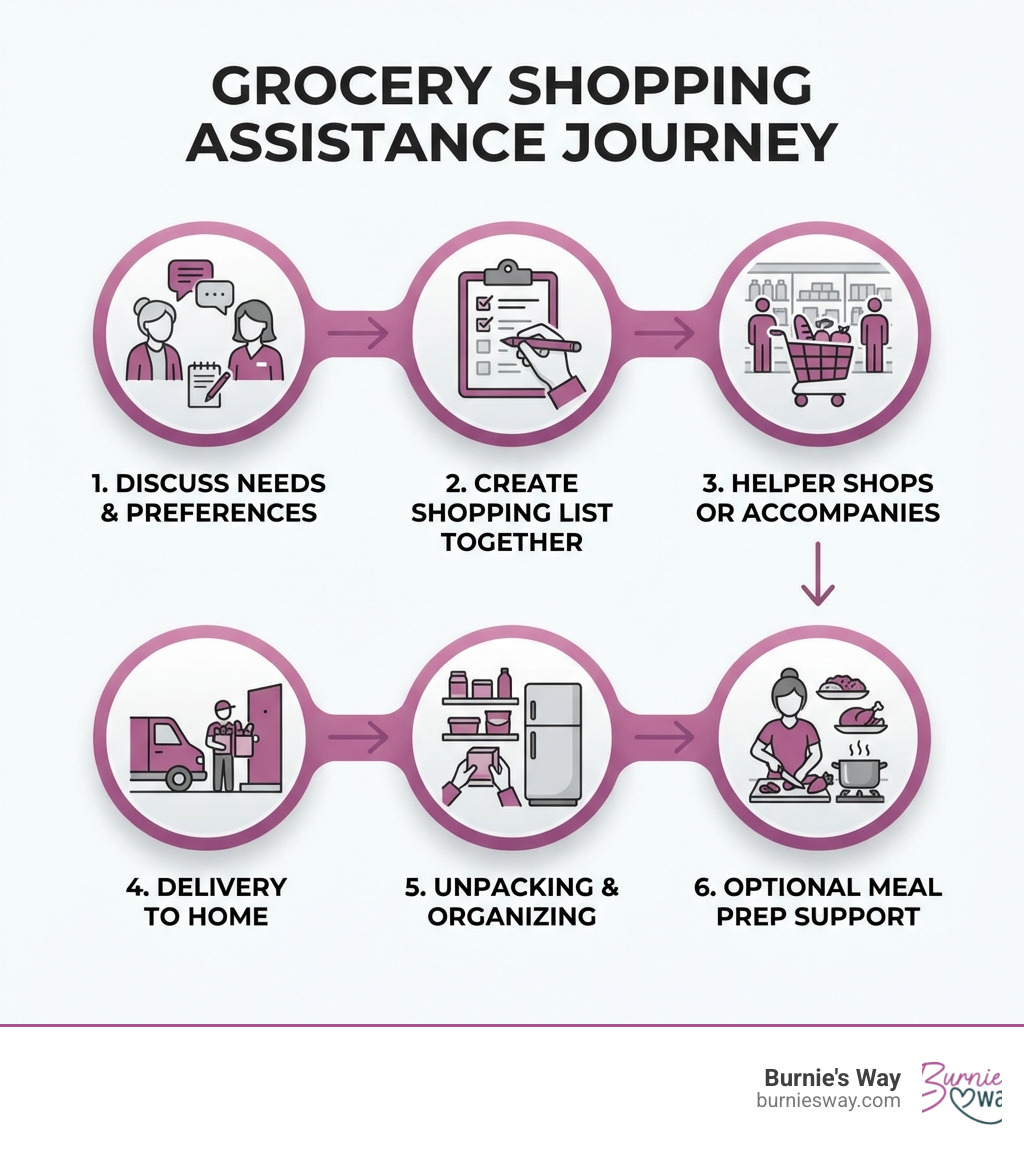
Infographic showing the grocery shopping assistance journey: 1. Discuss needs and preferences, 2. Create shopping list together, 3. Helper shops or accompanies to store, 4. Delivery to home, 5. Unpacking and organizing groceries, 6. Optional meal prep support - grocery shopping assistance infographic

Easy grocery shopping assistance word list:

Understanding Grocery Shopping Assistance and Who It Serves

At its heart, grocery shopping assistance is about more than just filling a cart. It is a vital service that ensures individuals can maintain their nutritional health and household routines without the physical or logistical stress that often accompanies a trip to the supermarket. We see it as a bridge between a desire for independence and the practical realities of aging or health concerns.

helper navigating a supermarket aisle - grocery shopping assistance

This support serves a wide range of needs. For many, it addresses mobility or vision challenges that make navigating a large, brightly lit store difficult. For others, it provides a solution to cognitive hurdles, such as organizing a complex shopping list or managing payment at a busy register.

One of the most significant groups benefiting from these services are non-driving seniors. According to the American Hospital Association, transportation is the third-most common barrier to accessing health services for older adults. When you consider that 8.4 million seniors in the U.S. do not drive, the need for a reliable way to get fresh food into the home becomes a matter of public health. Without grocery shopping assistance, many are forced to rely on shelf-stable, processed foods that lack the nutrients necessary for bone health, brain function, and energy.

Why Many Older Adults Value Grocery Shopping Assistance

As we age, the "little things" about shopping start to add up. Have you ever noticed how heavy a gallon of milk feels after carrying it across a parking lot? Or how tiring it is to stand in a checkout line for fifteen minutes?

Older adults often value this assistance because it mitigates several key issues:

  • Heavy Lifting: Carrying bags from the store to the car, and then from the car to the kitchen, is physically taxing and increases the risk of falls.
  • Store Navigation: Large supermarkets can be overwhelming. Finding specific items requires a lot of walking and reaching, which can be difficult for those with arthritis or fatigue.
  • Safety and Comfort: Navigating icy parking lots in the winter or dealing with extreme heat in the summer can be dangerous. Having someone else handle the trip—or accompany you for stability—provides a safety net.
  • Maintaining Routines: People have specific brands they love and recipes they’ve cooked for decades. A helper ensures these personal preferences aren't lost just because the trip to the store has become harder.

Types of Grocery Shopping Assistance Services Available

There isn't a "one size fits all" approach to getting the groceries done. Depending on your needs, you might find that one of these common models works best:

  • Personal Shopping Support: This involves a dedicated helper who gets to know your specific tastes. They might come to your home, help you write a list, and then either take you to the store or go on your behalf.
  • Lifestyle Coordination: This is a more holistic approach where shopping is integrated into a broader Senior Life Management plan. It might include meal planning and pantry organization.
  • Public and Government Programs: Initiatives like Groceries to Go (common in urban areas) provide credits for delivery or pickup. There are also various food assistance programs for older adults that help stretch a budget.
  • Volunteer Networks: Many local churches and non-profits offer volunteer drivers who can assist with errands at no or low cost.

Comparing Personalized Support and Community Resources

Choosing between a personal concierge-style service and a community program often comes down to the level of customization you need.

Feature Personalized Support (Concierge) Community/Volunteer Programs
Customization High; specific brands and dietary needs Moderate; may be limited to specific stores
Consistency High; usually the same person every time Low to Moderate; depends on volunteer availability
Additional Help Includes unpacking, organizing, and meal prep Usually limited to delivery or transport
Cost Hourly rate (avg. $19.73/hr) Low fee ($9-$27) or free
Safety Background-checked, professional helpers Vetted volunteers or public transit drivers

While community programs are excellent for those on a tight budget, they may not offer the "above and beyond" support like household chores help or detailed pantry organization that a personal assistant provides.

Key Benefits of Personalized Shopping Support

When we talk about personalized grocery shopping assistance, we are talking about a service that adapts to the person, not the other way around. This isn't just about getting a bag of apples; it's about getting the right apples—the ones you like for your morning snack.

  • Tailored to Your Tastes: A professional helper learns that you prefer a specific brand of low-sodium soup or that you only buy organic spinach. They can perform freshness checks that automated apps often miss, ensuring the bread is soft and the produce isn't bruised.
  • Social Connection: For many seniors, the grocery store was a place for social interaction. A personal helper provides companionship during the trip or while unpacking, reducing the feelings of isolation that can come with being homebound.
  • Confidence in Routines: Knowing that the fridge will be stocked every Tuesday morning provides a sense of rhythm and control. It removes the "food anxiety" that occurs when you realize you're out of essentials but have no way to get to the store.
  • Peace of Mind for Families: Families often worry about their loved ones' nutrition. Seeing a stocked pantry and knowing a trusted helper is checking in provides immense relief to adult children who may live far away or have busy schedules.

Maintaining Independence Through Grocery Shopping Assistance

It might seem counterintuitive, but asking for help actually increases independence. When an older adult doesn't have to spend all their energy and "spoons" on the stress of grocery shopping, they have more energy for the things they actually enjoy—like gardening, visiting friends, or working on a hobby.

By using Daily Life Assistance, seniors remain the "CEO" of their own homes. They decide what’s on the menu and how the pantry is organized; the helper simply provides the physical support to make that vision a reality. This empowerment is central to our philosophy at Burnie's Way. We believe in supporting the lifestyle you've built, ensuring you can stay in the home you love with the comfort you deserve.

Practical Considerations: Costs, Scheduling, and Technology

If you're considering hiring a helper for grocery shopping assistance, there are a few "nuts and bolts" to keep in mind:

  • Costs: The average rate for a personal grocery helper is approximately $19.73 per hour as of late 2025. Community programs may charge a flat service fee, often ranging from $9.00 to $27.00 per trip.
  • Payment Methods: Safety is paramount. Many services allow for digital payments or pre-authorized billing so that seniors don't have to handle large amounts of cash. If using a volunteer service, be aware of limits—some programs restrict cash handling to $40 or less for security.
  • Scheduling: Reliability is key. Most people prefer a set schedule (e.g., every Thursday at 10:00 AM) to keep their household running smoothly.
  • The Role of Technology: While standard grocery delivery apps are popular, they can be impersonal and don't help with the "last mile"—getting the food from the doorstep into the cupboard. A modern assistance service might use technology to track lists and receipts but provides a human touch for the physical tasks.

Frequently Asked Questions about Grocery Shopping Assistance

Can a helper assist with unpacking and meal prep?

Absolutely. This is one of the primary reasons people choose personalized help over a standard delivery app. A dedicated helper can:

  • Unpack all bags and place heavy items on easy-to-reach shelves.
  • Organize the pantry so that older items are moved to the front (FIFO - First In, First Out).
  • Provide Meal Preparation Assistance by chopping vegetables or pre-portioning snacks.
  • Check for expired items in the refrigerator to ensure food safety.

How do I find a reliable grocery assistant?

Trust is everything when you are inviting someone into your home or giving them your shopping list. We recommend:

  • Background Checks: Ensure the service or individual has been thoroughly vetted.
  • Experience: Look for helpers who have experience working with seniors and understand mobility or dietary needs.
  • Reviews: Check for high ratings (many top helpers maintain 4.7 out of 5 stars) and read comments about their punctuality and communication.
  • Clear Communication: A good helper should be willing to call you from the store if a specific brand is out of stock to ask for your preferred substitute.

Are there low-cost options for seniors on a budget?

Yes. If a private concierge service isn't the right fit, look into:

  • SNAP Benefits: Programs like Food Assistance (available in various states) help low-income individuals stretch their budgets.
  • Paratransit Services: Many cities offer Paratransit which can provide door-to-door transportation to the store for those with mobility issues.
  • Non-Profit Volunteers: Organizations like Feeding America or local senior centers often have programs specifically designed to combat food insecurity among the elderly.

Conclusion

At Burnie's Way, we understand that a full pantry is the foundation of a happy, healthy home. Our personalized concierge support goes beyond simple errands; we provide heart-forward assistance that respects your history and empowers your future. With 50 years of experience, we specialize in Customized Support Plans that treat you like the individual you are.

Whether you need someone to navigate the aisles with you or a trusted partner to handle the entire "pantry to plate" process, we are here to help. You don't have to give up the foods you love or the independence you've earned. Let us handle the heavy lifting so you can focus on living your life to the fullest.

Explore Our Services today and see how we can help you or your loved one stay confident and connected at home.

Your Go-To Guide: Practical Ways to Help Look After Elderly Parents

7 min read

Your Go-To Guide: Practical Ways to Help Look After Elderly Parents

When a Parent Needs Help: What You Should Know First Help looking after elderly parents is something millions of families navigate every year —...

Read More
Don't Get Stressed: How to Find Bill Paying Assistance

10 min read

Don't Get Stressed: How to Find Bill Paying Assistance

Why Financial Stress Shouldn't Mean Losing Your Independence Bill paying assistance is available through government programs, utility providers, and...

Read More
Savvy Seniors: How to Save Money on Groceries

7 min read

Savvy Seniors: How to Save Money on Groceries

Why Smart Grocery Shopping Matters for Aging Adults Grocery shopping for elders can feel overwhelming when you're managing it from a distance or...

Read More