7 min read

Savvy Seniors: How to Save Money on Groceries

Savvy Seniors: How to Save Money on Groceries

Why Smart Grocery Shopping Matters for Aging Adults

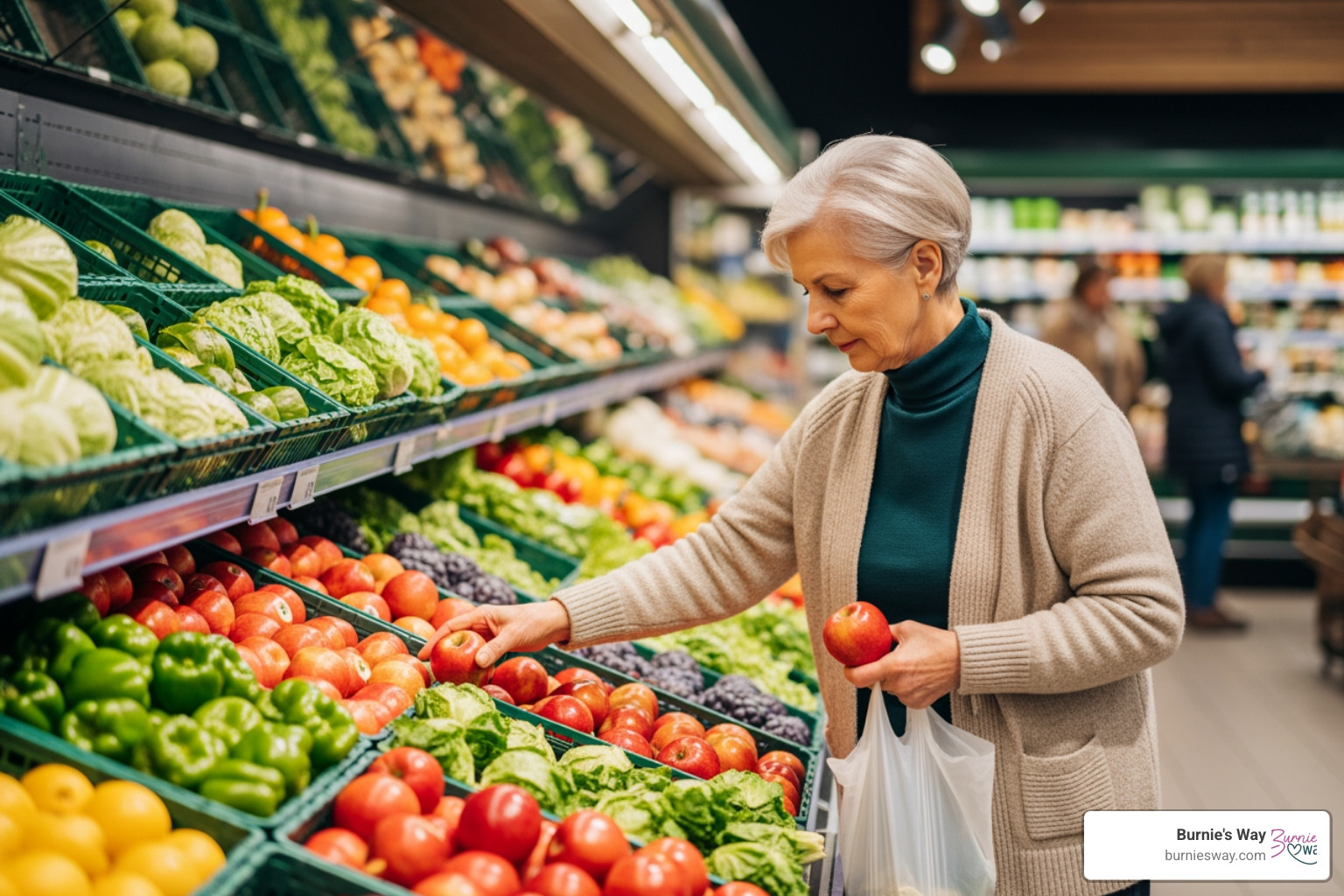
senior selecting fresh produce at grocery store - grocery shopping for elders

Grocery shopping for elders can feel overwhelming when you're managing it from a distance or watching a parent struggle with rising costs on a fixed income. Here's what you need to know:

Quick Solutions for Grocery Shopping Challenges:

  • Delivery Services - Instacart, Walmart+, and Amazon Fresh bring groceries to the door
  • Senior Discount Days - Most major chains offer 5-10% off on specific weekdays for shoppers 55+
  • Government Assistance - SNAP benefits now work with many online retailers
  • Meal Planning Apps - Digital tools help create organized lists and track spending
  • Community Resources - Meals on Wheels and local food banks provide nutritious options

The numbers tell a stark story. As of March 2025, seniors should expect to spend between $285.50 to $428.60 monthly on groceries. But here's the harder truth: lonely older adults receive 157 fewer servings of fruits and vegetables each year than their more socially connected peers. They're also nearly twice as likely to have a physical disability that makes navigating store aisles difficult.

Your parent probably shops once a week like 41% of Americans. But that weekly trip might involve challenges you don't see from afar—heavy bags to carry, confusing store layouts, or simply forgetting items because the list got left at home.

The good news? Small changes make a big difference. Shopping after breakfast instead of on an empty stomach can save an average of $26 per trip in impulse purchases. Using store brands instead of name brands cuts costs without sacrificing nutrition. And technology—when set up with help—can transform the entire experience.

This isn't about taking away independence. It's about finding smarter ways to maintain it while easing the financial and physical burden of keeping a healthy kitchen stocked.

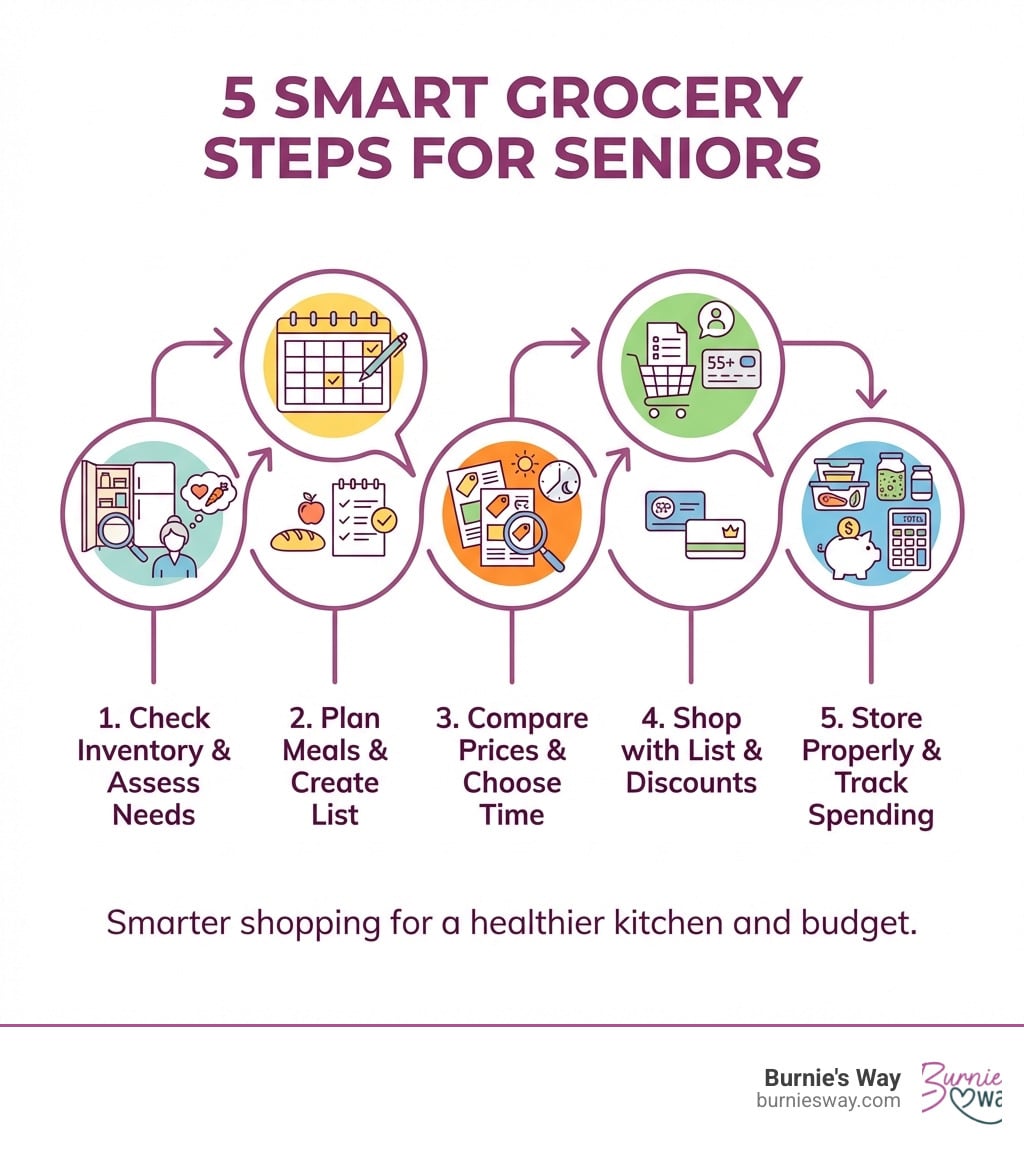
infographic showing 5 steps: 1. Check kitchen inventory and assess dietary needs, 2. Plan weekly meals and create organized shopping list, 3. Compare prices using circulars and choose shopping time, 4. Shop with list using senior discounts and loyalty programs, 5. Store food properly and track spending for next week - grocery shopping for elders infographic

Simple grocery shopping for elders word guide:

Overcoming Challenges in Grocery Shopping for Elders

For many of us, a trip to the supermarket is just another chore on the Saturday to-do list. But for an older adult, that same trip can feel like navigating an obstacle course. Physical limitations are often the first hurdle. Conditions like arthritis can make it painful to grip a heavy gallon of milk, while decreased mobility makes walking those long, refrigerated aisles exhausting.

senior using a grocery store mobility scooter - grocery shopping for elders

Transportation is another significant barrier. If a senior is no longer driving, they are often at the mercy of public transit schedules or the availability of family members. This often leads to "Toast and Tea Syndrome," where an elder subsists on simple, easy-to-store carbohydrates because getting fresh produce is just too difficult.

We also have to consider cognitive and sensory changes. Dulling taste buds can make food seem unappealing, leading to a loss of appetite. Vision impairment can make it nearly impossible to read the tiny print on nutrition labels or price tags. Furthermore, cognitive decline can make the simple act of following a list or navigating a crowded store overwhelming and stressful.

According to a presentation on how older adults use online grocery shopping and delivery tools, technology is becoming a vital bridge. Delivery services like Instacart or Walmart+ eliminate the need for heavy lifting and transportation. At Burnie's Way, we see how Daily Life Assistance can transform this experience. We aren't just looking at a list; we're helping coordinate the logistics that keep a home running smoothly and a pantry full of healthy choices.

Mastering the Art of Grocery Shopping for Elders

Efficiency is the name of the game. Most Americans shop once a week, and for seniors, this is usually the sweet spot. It ensures fresh produce is always on hand without the physical strain of daily trips. However, timing is everything. We recommend shopping between 8:00 a.m. and 9:00 a.m. on Tuesday through Thursday. This window avoids the weekend rush and the after-work crowds, making for a much calmer environment.

One of the best strategies to protect a budget is to never shop while hungry. A Dole survey on hungry shopping habits found that three-quarters of shoppers who go to the store hungry spend significantly more than they intended—dropping an average of $26 extra on unneeded items. By shopping right after breakfast, seniors can stay focused on their list and avoid the siren call of the snack aisle.

Using Technology and Apps for Grocery Shopping for Elders

Technology doesn't have to be intimidating; it can be a senior's best friend for saving money. Digital age tools make it easier than ever to access discounts without clipping paper coupons. Many stores have their own apps that offer "just for you" deals based on previous purchases.

Websites like Coupons.com and RetailMeNot provide printable and digital savings that can be applied instantly. For those looking to get a little money back, apps like Ibotta, Checkout 51, and Rakuten offer cash-back rewards on everyday staples.

If the tech feels a bit much, that’s where a lifestyle concierge comes in. We can help set up these accounts, show how to scan a receipt, or even manage the digital list so the savings happen automatically. It’s about using these tools to empower independence, not replace it.

Smart Planning to Stretch Your Grocery Budget

A successful shopping trip starts long before you walk through the automatic doors. It starts in the kitchen. We always suggest taking a "pantry inventory" before writing a single item down. It’s easy to buy a third jar of mayonnaise simply because you couldn't remember if you had one tucked behind the flour.

Meal planning is the ultimate budget-stretcher. By deciding what to eat for the week, you can buy exactly what you need and nothing more. This reduces food waste—a major drain on a fixed income. There are various online tools for meal planning that can provide inspiration and even generate shopping lists for you.

When you are at the store, pay close attention to unit pricing. This is the small price per ounce or per pound usually listed on the shelf tag. Sometimes a larger "bulk" item is actually more expensive per unit than two smaller ones, or vice versa. For seniors, we also emphasize buying seasonal produce. Not only does it taste better, but it’s often significantly cheaper because the supply is high. If you need Household Chores Help, coordinating these lists and inventories is a great place to start.

Maximizing Savings with Discounts and Assistance

One of the perks of being a senior is the abundance of discounts—if you know where to look. Many grocery stores in Virginia and across the U.S. have designated "Senior Days." For example, some chains offer a 5% or 10% discount on the first Wednesday or Tuesday of every month for those 55 or 60 and older. It’s always worth asking at the customer service desk, as these programs aren't always loudly advertised.

Another savvy move is opting for store brands. In most cases, the ingredients in the generic version are identical to the name brand, but the price tag is 20-30% lower.

Name Brand vs. Store Brand Comparison

Item Name Brand Price (Avg) Store Brand Price (Avg) Savings
Cereal (12 oz) $5.49 $3.29 40%
Canned Beans $1.89 $0.89 53%
Whole Wheat Bread $4.25 $2.50 41%
Greek Yogurt (32 oz) $6.99 $4.99 28%

Buying in bulk can be wise, but only for non-perishables like toilet paper, pasta, or canned goods. For fresh items, bulk buying often leads to waste unless you have a plan to freeze or share the extras with a neighbor.

Government and Community Resources

If the budget is still tight, there are several programs designed specifically to help. The Supplemental Nutrition Assistance Program (SNAP) provides financial assistance to eligible seniors. A wonderful recent update is that SNAP benefits can now be used for online grocery orders at major retailers like Amazon and Walmart, which is a game-changer for those with mobility issues.

For those who find cooking itself a challenge, Meals on Wheels America is a fantastic resource. They deliver nutritious, prepared meals directly to the door. Beyond the food, it provides a vital "wellness check" and social connection, which we know is so important for mental health. Local food banks also often have "senior boxes" filled with staples specifically chosen for older adults' nutritional needs.

Healthy Choices and Safe Food Management

As we age, our nutritional needs shift. We generally need fewer calories but more nutrients. This makes reading labels essential. When looking at the Nutrition Facts, we suggest the "5/15 rule": 5% Daily Value (DV) or less is low (good for sodium and sugar), and 15% DV or more is high (good for fiber, protein, and vitamins).

We also have to adapt to physical changes. If dental health is an issue, look for soft but nutrient-dense foods like Greek yogurt, eggs, avocados, and well-cooked beans. Frozen and canned vegetables are also excellent options—they are often just as nutritious as fresh but are easier to prepare and have a much longer shelf life.

Before you buy, check out this guide on how to read a nutrition label for health to ensure you’re getting the best value for your body. If the kitchen feels like a place of stress, Meal Preparation Assistance can help bridge the gap between shopping and eating.

Proper Food Storage to Reduce Waste

Saving money doesn't stop at the checkout counter; it continues in the pantry. Proper storage can extend the life of your groceries by weeks. Using airtight containers for dry goods keeps pests out and freshness in.

Freezing is a senior's best friend. If a recipe makes four servings but you're only eating for one, portion out the leftovers immediately and freeze them. This provides a "homemade TV dinner" for those days when you don't feel like cooking. Just remember to label and date everything!

Safety is also paramount. To prevent cross-contamination, always keep raw meats separate from produce in your cart and your fridge. For more detailed tips, the FDA guide on storing food safely is a must-read.

Frequently Asked Questions about Grocery Shopping for Elders

What are the best times for seniors to shop to avoid crowds?

As mentioned, the "golden hour" is typically between 8:00 a.m. and 9:00 a.m. on Tuesday, Wednesday, or Thursday. Most stores have finished restocking by then, and the floors are clean and clear of pallets.

How can I find local stores that offer specific senior discount days?

The best way is to check the store's weekly circular (the paper flyer) or their website. However, many local Virginia grocers don't post these online. A quick phone call to the store manager or asking the cashier during your next visit is the most reliable method.

Are grocery delivery services safer than in-store shopping for seniors?

In terms of physical safety—yes. It eliminates the risk of slips and falls in the store and the strain of carrying heavy bags. However, it does come with fees. For many, the "middle ground" of Curbside Pickup is the best of both worlds: you stay in the car, and they bring the groceries to you for free or a very small fee.

Conclusion

At Burnie's Way, we believe that staying independent at home shouldn't be a struggle. Grocery shopping for elders is one of those daily routines that, with the right coordination and a few "savvy" tricks, can go from a burden to a source of pride and health.

Whether it’s helping you steer a new delivery app, coordinating a trip to the store during senior discount hours, or simply being that virtual companion who makes sure the fridge is never empty, we are here to help. We are your personal concierge, helping you or your loved one live confidently and stay connected to the things that matter most.

If you’re ready to see how a little extra support can make life at home easier and more enjoyable, we invite you to explore Our Services. Let’s make the next trip to the store—or the next delivery to the door—something to smile about.

Beyond the Basics: A Comprehensive Guide to Eldercare Services

12 min read

Beyond the Basics: A Comprehensive Guide to Eldercare Services

Why Understanding Eldercare Services Matters Now More Than Ever Eldercare services help older adults live safely and independently at home by...

Read More
The ADL Lowdown: Everything You Need to Know About Daily Living Support

11 min read

The ADL Lowdown: Everything You Need to Know About Daily Living Support

Why Understanding Assistance with Daily Activities Matters Assistance with daily activities helps people maintain independence and safety at home as...

Read More
The Right to Refuse: What to Do When an Elderly Loved One Declines Help

12 min read

The Right to Refuse: What to Do When an Elderly Loved One Declines Help

Understanding Your Loved One's Right to Refuse Can an elderly person refuse care? Yes. In most situations, a mentally competent adult—regardless of...

Read More