13 min read

Your Guide to Respite Care: Finding Relief, Long or Short Term

Your Guide to Respite Care: Finding Relief, Long or Short Term

Understanding the Support You Need: What Respite Really Means

caregiver taking a break with tea - Long term respite

Long term respite is temporary relief care that allows you to take an extended break from supporting an aging loved one, while ensuring they receive safe, professional assistance. Unlike short visits of a few hours, long-term respite typically involves stays ranging from several days to weeks—in Ontario, for example, you can arrange care in a facility for up to 60 days at once, with a maximum of 90 days per calendar year.

Quick Answer: Long Term Respite Options

  • In-home respite: Professional caregivers provide support in your loved one's home for extended periods
  • Residential respite: Temporary stays in long-term care facilities (up to 60 days at a time in many regions)
  • Adult day programs: Regular, structured daytime care that can extend over weeks or months
  • Convalescent care: Recovery-focused stays following hospitalization or illness

When caring for someone with a health condition, disability, or care needs related to aging, the ongoing demands can strain even the most devoted person. Many caregivers later wish they had asked for support sooner, before exhaustion set in.

The reality is simple: you cannot pour from an empty cup. Taking a break isn't abandoning your responsibilities—it's ensuring you have the energy and well-being to continue providing the best support possible. Respite care serves this exact purpose, offering temporary relief while maintaining quality care for your loved one.

Whether you need time to travel, attend to other family members, recover from your own health issues, or simply rest and recharge, respite options exist to match your specific situation. The key is understanding what's available, how to access it, and planning ahead rather than waiting until you're completely overwhelmed.

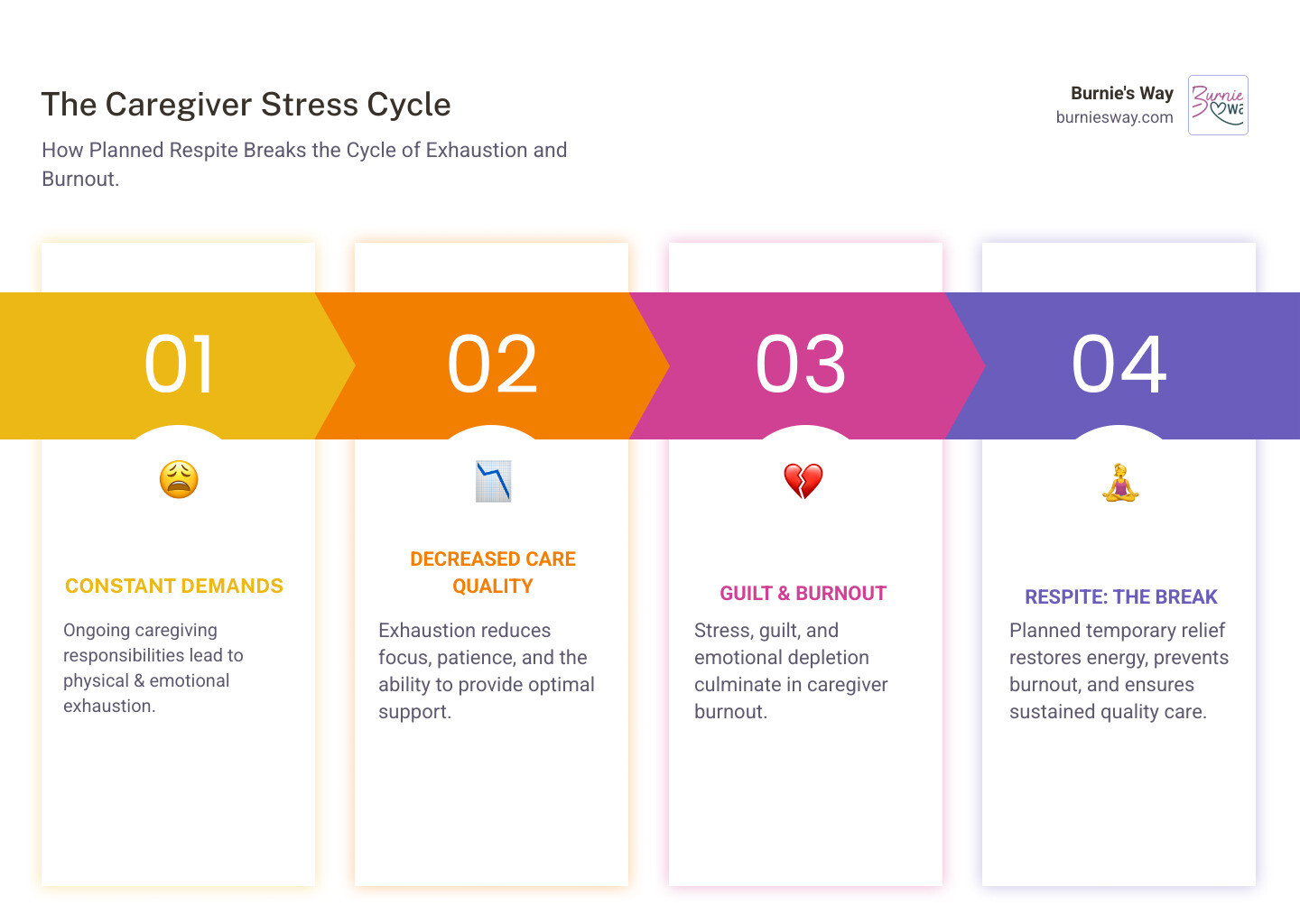
infographic showing the caregiver stress cycle: constant caregiving leads to exhaustion, which reduces care quality, which increases caregiver guilt and stress, which leads to burnout—and how planned respite breaks this cycle by providing regular relief, restored energy, and sustained care quality - Long term respite infographic pillar-4-steps

Important Long term respite terms:

  • Crisis care planning
  • Elderly care planning

What is Respite Care and Who Needs It?

Respite care is a vital service designed to provide temporary relief for primary caregivers. It allows you to step away from your caregiving duties for a period, knowing that your loved one is receiving appropriate and compassionate support. This temporary break can range from a few hours to several weeks, depending on your needs and the type of respite chosen. It's more than just a convenience; it's a critical component of sustainable caregiving, ensuring both the well-being of the caregiver and the continued quality of life for the care recipient.

The need for respite care is growing, particularly as our population ages. Many seniors express a strong desire to remain in their homes for as long as possible, and respite services play a crucial role in making this a reality. By supporting caregivers, respite can help delay or even prevent the need for more costly long-term care facility placements. In fact, research from 2019 showed that 1 in 9 newly admitted residents to long-term care homes had health characteristics similar to those living at home with formal supports, suggesting that robust home-based and respite services could help many more individuals remain in their preferred environment.

Defining Respite: More Than Just a Break

At its core, respite is about providing a temporary, substitute support system. It can be planned well in advance, perhaps for a caregiver's vacation or a significant family event, or it can be arranged in an emergency, such as when a caregiver faces an unexpected illness or crisis. Whether it's a short-term break that allows for a medical appointment or an extended period of long term respite for a much-needed recuperation, the purpose remains the same: to give the primary caregiver time to rest, refresh, and attend to their personal matters.

Without these breaks, caregivers can quickly become exhausted, isolated, and overwhelmed. This not only impacts their own health and relationships but can also diminish the quality of care they are able to provide. Respite ensures that the care cycle remains healthy, allowing both parties to thrive. We believe that planning ahead and considering respite services before exhaustion sets in is one of the best proactive steps a caregiver can take. It’s about being strategic, not just reactive, in managing the demanding role of caregiving.

Who is Respite For?

While respite care primarily benefits the caregiver, its reach extends to several groups:

  • Primary Caregivers: This includes spouses, adult children, other relatives, or close friends who bear the main responsibility for a loved one's daily needs. Respite offers them an essential opportunity to prevent burnout, manage stress, and maintain their own physical and mental health.
  • Individuals Living Alone Who Need Temporary Support: Respite isn't solely for those with a primary caregiver. Sometimes, an individual living alone may need a short period of 24-hour support, perhaps after a hospital stay or during a temporary illness, to ensure their safety and well-being until they can manage independently again.
  • People Recovering from Illness or Surgery (Convalescent Care): For those transitioning home from a hospital, convalescent care—a form of short-term respite—provides a safe environment to regain strength, build endurance, and resume normal activity levels before returning to full independence.
  • Seniors Wishing to Remain at Home: By providing periodic breaks for caregivers and temporary support for the care recipient, respite services can be instrumental in allowing seniors to stay in their familiar home environment for as long as possible, aligning with the wishes of most older adults.

Understanding who benefits from respite care makes it clear that this service is a cornerstone of a supportive and sustainable care system for aging adults and individuals with disabilities. For more information on this essential support, you can visit the What Is Respite Care? - National Institute on Aging - NIH website.

Exploring Your Options: From In-Home Support to Short-Term Stays

When considering respite care, it's helpful to know the diverse landscape of options available. These range from support that comes directly into your home to programs in community settings and even temporary stays in residential facilities. Each type offers unique benefits and caters to different needs and preferences. Our goal at Burnie's Way is to help you understand these choices and coordinate the personal support that fits best for your loved one and your family.

In-Home Respite Services

In-home respite is often a preferred choice because it allows the care recipient to remain in the comfort and familiarity of their own home. This can reduce stress and disruption, especially for individuals with cognitive impairments. While Burnie's Way does not provide direct caregiving services, we can certainly help you coordinate these vital supports. In-home respite services typically include:

  • Personal Support Services: These focus on daily self-care tasks, such as assistance with bathing, dressing, grooming, medication reminders, and mobility support.
  • Homemaking Services: Support with household tasks like light housekeeping, laundry, and meal preparation can alleviate significant burden. In some publicly funded programs, homemaking services are offered if personal support services are also needed, ensuring a holistic approach to in-home well-being.
  • Professional Services: For those with more complex needs, in-home respite can include professional health services like nursing care, physiotherapy, or occupational therapy. These services are crucial for maintaining stability at home and can be essential for someone transitioning from a hospital or facility.

The advantages of in-home respite include maintaining routines, avoiding transportation issues, and often being more flexible in scheduling. When considering these services, we help our clients identify reputable agencies and individual providers, ensuring qualifications and experience align with their specific requirements.

Community-Based Programs

Community-based programs offer a vibrant alternative, providing social engagement and structured activities outside the home. Adult day programs are a prime example, offering a safe and supervised environment for several hours or a full day. These programs are particularly beneficial for care recipients who thrive on social interaction and a change of scenery.

Adult day programs typically offer:

  • Structured Activities: These can include arts and crafts, games, exercise programs, music therapy, and educational sessions, designed to keep the mind active and foster a sense of community.
  • Socialization Opportunities: Being with peers helps combat loneliness and isolation, improving overall well-being and cognitive function.
  • Supervised Environment: Trained staff ensure safety, provide assistance with personal care as needed, and manage any health-related requirements during program hours.

While many publicly funded adult day programs require a referral (for example, from a local health authority in some regions), private options are also available. These programs usually involve a daily fee, but the benefits of social engagement for your loved one and a valuable break for you are often well worth the investment.

Residential Stays and Short-Term Long Term Respite

For situations requiring more intensive supervision, an overnight break, or an extended period away, residential respite offers a comprehensive solution. This involves a temporary stay in a facility such as a long-term care home, an assisted living community, or a specialized respite center.

These facilities provide:

  • 24-Hour Care and Supervision: Ensuring safety and immediate assistance around the clock.
  • Professional Support: Access to trained staff, including nurses and personal support workers, who can manage complex health needs and medication.
  • Equipped Environment: Facilities are designed to be accessible and safe, often with features like grab bars and emergency call systems.

Residential stays can serve several purposes:

  • Respite Care: Allowing the caregiver an extended break, such as a vacation. In some regions, like Ontario, Canada, these stays can last up to 60 days at one time, with a maximum of 90 days per calendar year.
  • Convalescent Care: For individuals who need to recover strength and skills after an illness or surgery before returning home. This can also extend up to 90 days annually in certain contexts.
  • Interim Care: Providing a temporary placement for someone awaiting permanent long-term care or other long-term living arrangements.

Here's a quick comparison of the main types of respite:

Feature In-Home Respite Adult Day Program Residential Respite (Short-Term Long-Term Care)
Location Care recipient's home Community center, dedicated facility Assisted living, long-term care home, respite center
Duration Hours to days, flexible scheduling Few hours to full day, typically weekdays Days to weeks (e.g., 60-day limit in some regions)
Services Personal care, homemaking, professional services Social activities, meals, light personal care 24/7 personal care, nursing, meals, activities
Environment Familiar, personalized Group, social, structured Supervised, equipped, often structured
Cost Hourly, custom Daily fee Daily fee (often accommodation only for public programs)
Primary Benefit Comfort, routine, one-on-one attention Socialization, cognitive stimulation, caregiver break Intensive supervision, extended caregiver break

Specialized Respite for Dementia and Other Needs

For individuals with dementia or other specialized needs, finding the right respite is paramount. Many programs and facilities offer custom support designed to meet these unique challenges.

  • Dementia-Specific Programs: These often incorporate Montessori-inspired activities that engage individuals at their cognitive level, secure environments to prevent wandering, and staff specially trained in memory care techniques. These programs understand the complexities of dementia and provide a supportive setting that promotes dignity and engagement.
  • Support for Complex Health Conditions: For those with chronic illnesses, physical disabilities, or other complex health requirements, specialized respite providers ensure that medical needs are met, therapies are continued, and safety is maintained. This might include facilities with higher nursing ratios or staff with specific training in managing particular conditions.

When exploring these options, we encourage our clients to ask about staff training, the ratio of staff to participants, the types of activities offered, and how the environment is adapted to support specific needs.

Understanding how to access respite care, what you might need to qualify, and how to cover the costs can feel like navigating a maze. But with a bit of guidance and planning, it becomes much clearer. We're here to help you coordinate the information and connect with the right resources.

Understanding Eligibility Criteria

Eligibility for respite care, especially for publicly funded services, often depends on several factors:

  • Needs Assessment: This is typically the first step. A professional (often a care coordinator from a local health authority or an Area Agency on Aging in the U.S.) will assess the care recipient's health status, functional abilities, and the caregiver's situation. This assessment helps determine the level of need and the most appropriate type of respite.
  • Geographic Requirements: Publicly funded programs usually require the care recipient to reside within a specific service area and have valid health coverage (e.g., state residency and Medicaid/Medicare eligibility in the U.S.).
  • Care Recipient's Health Status: The individual's medical condition, cognitive abilities, and need for supervision or assistance with daily activities are key factors. For instance, some residential respite programs require the care recipient to need frequent nursing care.
  • Caregiver's Situation: The primary caregiver's need for a break is a significant factor. This could be due to stress, a planned vacation, their own health issues, or an emergency.

A care coordinator plays a crucial role here, acting as a guide through this process. They can help you understand the specific criteria for programs in your area, conduct necessary assessments, and assist with applications.

The Costs of Care and Funding Avenues

The cost of respite care varies widely based on the type of service, its duration, the level of care required, and your geographic location.

  • Daily Fees: Adult day care facilities might cost around $85 per day, according to Genworth data, and this figure is projected to increase annually. Residential respite stays and in-home care can vary significantly, from hourly rates for personal support to daily or weekly rates for overnight or facility-based care.
  • Public Funding:
    • Medicaid: In the U.S., Medicaid waivers and state-specific programs often cover respite care for eligible individuals, particularly those with disabilities or chronic conditions who meet income and asset requirements.
    • Medicare: While Medicare generally does not cover long-term respite care, it may cover most of the cost for up to five consecutive days of respite care in a hospital or skilled nursing facility for individuals receiving hospice care.
    • Veterans Affairs (VA) Benefits: The VA offers various programs that can provide respite care for eligible veterans and their caregivers.
    • State Programs: Many states have their own programs to support caregivers and provide respite services, often administered through Area Agencies on Aging.
  • Private Pay: Many families choose to pay for respite care out-of-pocket, especially for in-home services where they can tailor the support to their exact needs and schedule.
  • Long-Term Care Insurance: Some private long-term care insurance policies may cover respite care, so review your policy details.

Understanding these funding avenues can be complex, and we can help you explore them. For more details on how Burnie's Way approaches affordability and helps you manage these considerations, please visit our Pricing page.

Duration and Frequency of Short-Term and Long Term Respite

The duration and frequency of respite care are key considerations, especially when planning for long term respite.

  • Short-Term Respite: This can be a few hours a day, a couple of days a week for an adult day program, or a weekend stay.
  • Long Term Respite: This typically refers to stays of several days to weeks. For example, in some Canadian provinces like Ontario, short stays in long-term care homes for respite can be arranged for up to 60 days at one time, with a maximum of 90 days in a calendar year. Convalescent care stays can also be up to 90 days each year, depending on individual needs and health goals.

The concept of long term respite isn't about permanent placement but about providing a substantial break that allows the caregiver to fully disengage and recharge. Planning for these extended breaks requires careful coordination and often involves booking services in advance due to limited availability. It's about ensuring that when you need that longer period of relief, the support system is firmly in place.

The Dual Benefits: How Respite Supports Everyone Involved

Respite care is a win-win situation. It provides crucial support not just for the primary caregiver but also offers significant advantages for the care recipient. It's a testament to the idea that by supporting one, you ultimately strengthen the entire care ecosystem.

For the Caregiver: Preventing Burnout and Restoring Balance

The role of a caregiver is profoundly rewarding but also incredibly demanding. The ongoing responsibilities can lead to significant stress, exhaustion, and even isolation. This is where respite care truly shines, offering a lifeline that prevents burnout and helps restore balance to a caregiver's life.

  • Reduces Stress and Exhaustion: Taking a break allows your mind and body to rest. This critical pause can alleviate the chronic stress that often accompanies caregiving, preventing the physical and emotional toll of continuous demands.
  • Provides Time for Self-Care: Whether it's a doctor's appointment, a hobby, a quiet afternoon reading, or simply catching up on sleep, respite time is invaluable for personal well-being. Prioritizing your own health ensures you can continue to be an effective and compassionate supporter.
  • Improves Mental and Physical Health: Regular breaks contribute to better overall health outcomes for caregivers, reducing the risk of depression, anxiety, and stress-related illnesses.
  • Allows Time for Other Responsibilities: Respite frees up time for work, other family commitments, social engagements, or managing personal errands that are often neglected amidst caregiving duties.
  • Peace of Mind: Knowing that your loved one is in safe and capable hands while you're away provides immense peace of mind, allowing you to truly relax and recharge without worry. This proactive approach also helps delay or prevent the need for permanent nursing home placement, which often comes at a higher cost to families and public programs.

For the Care Recipient: New Connections and Continued Support

While the caregiver enjoys a break, the care recipient also benefits significantly from respite services. It’s an opportunity for them to experience new interactions and environments, which can be highly stimulating and beneficial.

  • Opportunity for Socialization: Especially in adult day programs or residential respite settings, individuals can engage with peers, form new friendships, and participate in group activities, combating loneliness and fostering a sense of community.
  • Engagement in New Activities: Respite programs often offer a diverse range of activities, from arts and crafts to music and gentle exercise. These new experiences can stimulate cognitive function, improve mood, and introduce enjoyable routines outside of the home.
  • Change of Scenery: A temporary change in environment can be refreshing and provide new sensory experiences, which can be particularly beneficial for individuals who spend most of their time at home.
  • Access to Professional Support Services: Respite ensures continuity of care, providing access to personal support, medication management, and other professional services, even when the primary caregiver is away. This means their needs are consistently met, maintaining their well-being.

How to Find and Arrange Respite Support

Finding and arranging respite support might seem daunting at first, but with the right approach and resources, it becomes a manageable process. We're here to help you steer these waters.

The Application Process and the Role of a Coordinator

The journey to securing respite care typically begins with understanding the application process and often involves a key player: a coordinator.

  1. Contacting Your Local Health Authority: In the United States, a good starting point is your local Area Agency on Aging (AAA) or your state's Department of Health and Human Services. These agencies can provide information about publicly funded programs, eligibility requirements, and local providers.
  2. Assessment Process: An initial assessment will be conducted to evaluate the care recipient's needs and the caregiver's situation. This helps match you with the most appropriate respite options.
  3. Choosing Providers: Once eligibility is established and options are presented, you'll need to select a provider. We recommend thoroughly checking qualifications, reading reviews, inquiring about experience (especially with similar cases), confirming availability, and understanding all costs involved. Don't hesitate to ask for tours of facilities or to meet in-home professionals.
  4. Scheduling Services: This involves coordinating the timing and duration of respite, whether it's a regular weekly program or a planned long term respite stay.

This is where Burnie's Way truly shines. As your personal support coordinator, we can help you steer these options, understand eligibility, connect with reputable providers, and manage the scheduling. We act as your guide, simplifying the process and ensuring you find the personal support that makes life easier for everyone involved. To learn more about how we work with you, please visit Learn how we help you navigate options.

Finding Local Services and Resources

Locating the right respite care requires tapping into various resources. Here are some key avenues to explore:

  • Local Health Networks: In the U.S., Area Agencies on Aging (AAAs) and Aging and Disability Resource Centers (ADRCs) are invaluable resources. They can provide comprehensive information about local services, support groups, and funding options custom to your specific community.
  • National Locators:
    • The ARCH National Respite Locator Service is an excellent tool that allows you to search for local respite resources, including state-sponsored programs, adult day care centers, and services for veterans.
    • The Eldercare Locator (eldercare.acl.gov) is another service connecting older adults and their caregivers with local support resources.
  • State-Specific Directories: Many states maintain online directories of licensed care providers. Similar to how Canadians might use "Ontario Health atHome" to search for services in their region, look for comparable state government websites in the U.S.
  • Primary Care Provider: Your loved one's doctor or nurse practitioner often has a network of local referrals and can offer guidance based on their medical needs.
  • Charitable Organizations: Many non-profits and disease-specific foundations (e.g., Alzheimer's Association, Parkinson's Foundation) offer respite grants or lists of local providers.

We encourage you to use these resources and to not be afraid to ask for help. Building a network of support is key to sustainable caregiving. For a comprehensive tool to find respite providers, you can visit the Find a Respite Provider - ARCH National Respite Network.

Conclusion

Taking a break from caregiving is not a luxury; it's a necessity for your well-being and the continued quality of life for your loved one. Whether you need a few hours of relief or a period of long term respite, understanding your options, eligibility, and how to access services is the first crucial step. Respite care supports the entire family by preventing caregiver burnout, fostering new connections for the care recipient, and ultimately strengthening the bonds that tie you together.

Planning ahead, rather than waiting for a crisis, empowers you to make informed choices and ensure a smooth transition for your loved one. This proactive approach allows you to take necessary time for yourself, knowing that everything is handled with compassion and expertise.

At Burnie's Way, we understand the complexities and emotional demands of supporting an aging loved one. We're here to be your trusted partner, helping you steer the myriad of options and coordinate the personal support and services that make life easier for you and your family. Let us help you find the peace of mind you deserve.

Explore our personal support and coordination services

Family Caregiver Support 101

13 min read

Family Caregiver Support 101

Understanding the Role of a Family Caregiver Family caregiver support includes a wide range of resources, programs, and services designed to help...

Read More
The Continuous Care Compass: Navigating Ongoing Health Services

13 min read

The Continuous Care Compass: Navigating Ongoing Health Services

What Continuous Care Services Really Mean for You and Your Family Continuous care services are specialized, short-term support designed to help...

Read More
The ADL Lowdown: Everything You Need to Know About Daily Living Support

11 min read

The ADL Lowdown: Everything You Need to Know About Daily Living Support

Why Understanding Assistance with Daily Activities Matters Assistance with daily activities helps people maintain independence and safety at home as...

Read More