
What Aging at Home Really Means — and Why It Matters Now
Aging at home is the choice to stay in your own home as you grow older, with the right support in place to keep life safe, comfortable, and full.
If you're an adult child trying to figure out how to help a parent stay independent, you're not alone — and you're asking exactly the right question.
Here's a quick overview of what aging at home involves:
| Pillar | What It Covers |
|---|---|
| Home Safety | Modifications that reduce falls and improve accessibility |
| Health & Mobility | Planning for changing physical needs over time |
| Transportation | Alternatives for when driving is no longer an option |
| Financial Planning | Understanding real costs and available grants or supports |
| Daily Living Support | Help with meals, errands, cleaning, and routines |
| Social Connection | Staying engaged with community and loved ones |
| Technology | Tools like fall detection, voice assistants, and monitoring |
| Future Planning | Knowing when home is still the right fit — and when it isn't |
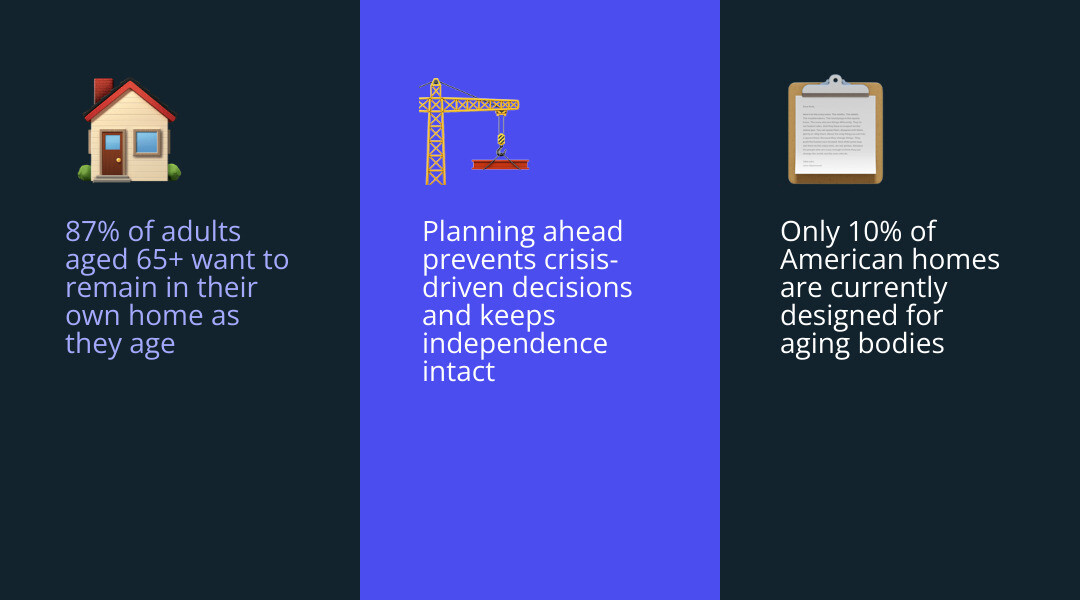
The desire to stay home runs deep. Over 87% of adults aged 65 and older say they want to remain in their own home as they age. Yet only about 10% of American homes are actually designed with aging bodies in mind.
That gap — between what people want and what their homes and support systems can realistically provide — is where things get complicated.
And that's exactly what this guide is here to help you bridge.
Whether your parent is healthy and independent today, or you're already navigating daily challenges, the best time to plan is before a crisis forces your hand.
The Core Principles of Aging in Place
At its heart, aging in place means staying in a familiar home and community for as long as it remains safe, workable, and personally meaningful. The National Institute on Aging frames it simply: growing older at home while maintaining independence.
Why do most older adults prefer it? Usually for reasons that are deeply human, not complicated:
- Familiar routines feel grounding
- Home carries memories, comfort, and identity
- Nearby neighbors, faith communities, and favorite stores matter
- Independence often feels stronger at home than in a new setting
- Moving is stressful, expensive, and emotionally heavy
Aging at home is not about pretending nothing will change. It is about planning for change early enough that it does not take over the conversation.
That means looking at the house, the neighborhood, the budget, and the daily routine with honest eyes. We often encourage families to think in seasons, not emergencies. What works this spring may not work next winter, especially when stairs, driving, ice, fatigue, or isolation start to creep in.
For a practical next step, our Adapting to Aging resource can help families think through how needs evolve over time.

Preparing for Lifestyle and Mobility Changes
The best aging-at-home plans start before there is a major fall, hospitalization, or "we need to talk" moment at Thanksgiving.
A good early assessment looks at:
- Mobility inside and outside the home
- Bathing, dressing, cooking, and other daily routines
- Medication organization
- Transportation if driving becomes unsafe
- Social connection and risk of isolation
- Who helps now, and who could help later
This is where a broader lifestyle plan matters. Our Senior Lifestyle Management Guide can help families organize daily life in a way that supports independence without making everything feel like a project spreadsheet.
Transportation deserves special attention. Many older adults eventually outlive their ability to drive safely because of vision changes, slower reaction time, medication effects, or medical conditions. Planning alternatives early helps preserve dignity. Options may include:
- Family ride schedules
- Paratransit or senior transportation programs
- Ride-share support with setup help
- Community shuttles
- Grocery and prescription delivery
And just as important: social connection should be treated like infrastructure, not a bonus. A person can have a grab bar and still feel alone. Regular calls, outings, volunteering, faith groups, and hobby-based events can make aging at home feel like living, not just staying put.
Strategic Home Modifications for Safety and Longevity
Most homes were built for younger bodies, not older knees, lower vision, or a walker turning radius. That is why home modifications matter so much.
The evidence is strong. A systematic review of home modifications for aging in place found meaningful benefits in fall prevention, functional independence, and cost savings. In one randomized clinical trial, home modifications reduced falls by 39% compared with control groups. Other studies found reductions in weekly care hours and lower caregiver burden.
That is not a small win. That is the difference between "doing okay" and an ER visit triggered by one slippery bathroom floor.
The highest-impact modifications are usually:
- Grab bars near toilets and in showers
- Walk-in or low-threshold showers
- Non-slip flooring
- Better lighting in hallways, stairs, entries, and bathrooms
- Handrails on both sides of stairs
- Removal of loose rugs and clutter
- Raised toilet seats
- Lever-style door handles and faucets
For more room-by-room ideas, see our Fall Prevention Home Tips Guide and Elderly Home Modifications.
Smart Technology for Aging at Home
Technology is not magic, but it can be genuinely useful when chosen carefully. Research in the Journal of Housing and the Built Environment shows many older adults are willing to adopt smart-home tools when the benefits are clear, especially for safety, daily tasks, and staying connected.
The best tools tend to be simple and low-friction:
- Fall detection systems
- Motion-activated lighting
- Voice assistants for reminders and calls
- Smart locks and video doorbells
- Medication reminder devices
- Automatic stove shutoff devices
- Remote check-in tools for family
A useful takeaway from the research is that people accept technology more readily when it feels supportive rather than intrusive. In plain English: a voice assistant that reminds Dad to take out the chicken from the freezer may go over better than a gadget that makes him feel watched.
Start with one or two tools that solve a real problem. If technology creates anxiety, it is not helping.
Targeted Barrier Removal
Some of the best home changes are not dramatic renovations. They are targeted fixes that remove the exact barriers getting in the way of daily life.
Examples include:
- Widening doorways for walkers or wheelchairs
- Adding a ramp or step-free entrance
- Smoothing thresholds that cause trips
- Installing non-slip surfaces
- Replacing round knobs with lever handles
- Lowering storage so essentials stay reachable
- Rearranging furniture for clear walking paths
Research cited in the systematic review found accessibility improvements of up to 35% through targeted barrier removal. In other words, the right small fix can do a lot.
If your family is trying to think through practical setup changes, our guide on How to Care for an Elderly Person at Home walks through the home environment side of the equation clearly.
Navigating the Financial Landscape of Aging at Home
One of the biggest myths around aging at home is that staying put is automatically cheap. The mortgage may be paid off, but life at home is not free.
Real ongoing costs can include:
- Property taxes
- Homeowners insurance
- Utilities
- Repairs and maintenance
- Yard work and seasonal upkeep
- Housekeeping help
- Transportation
- Food delivery or meal programs
- Home modifications
- Professional in-home support when needed
The economics are nuanced. A 2026 Richmond Fed brief notes that home health and home-based support can be more practical and affordable than institutional care for people with low to moderate support needs. But costs rise sharply when someone needs many hours of hands-on help every day.
Here is a simple comparison:
| Expense Category | Aging at Home | Senior Housing / Facility Living |
|---|---|---|
| Housing costs | Taxes, insurance, utilities, maintenance | Monthly facility fee or rent |
| Food | Groceries, delivery, meal services | Often bundled |
| Home upkeep | Repairs, lawn care, snow removal | Usually included |
| Personal support | Added as needed, often hourly | Varies by level of support |
| Modifications | Upfront home expense | Usually not needed personally |
| Transportation | Separate cost | Sometimes partially included |
| Flexibility | High | Moderate |
| Total cost | Can be lower or higher depending on needs | Can be predictable but substantial |
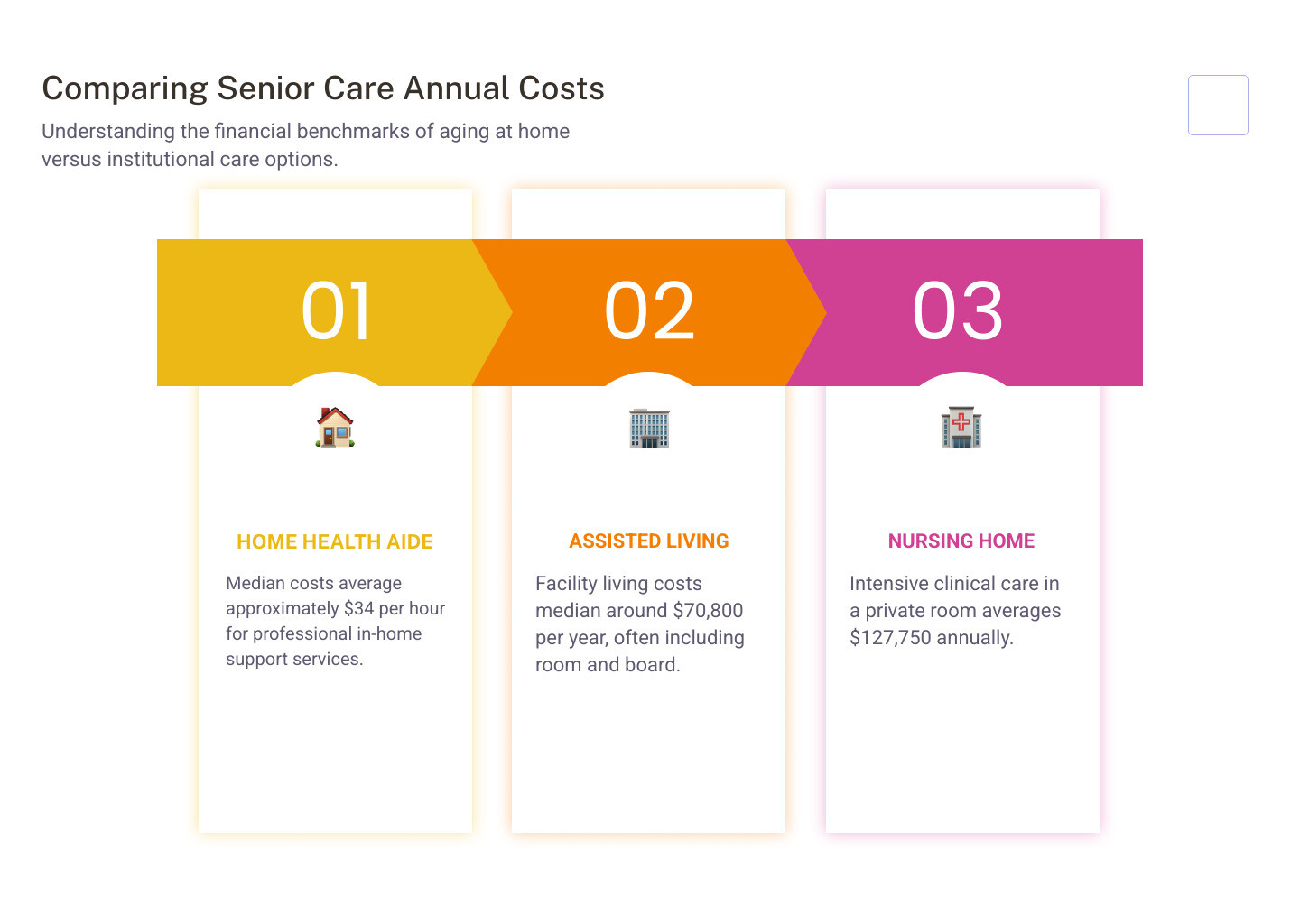
The Richmond Fed reported median costs around $34 per hour for a home health aide, compared with roughly $70,800 per year for assisted living and $127,750 per year for a private nursing home room. Those numbers are useful benchmarks, but they do not include every local variable.
That is why we recommend pricing the real monthly picture, not guessing. Our Help for Seniors Living at Home resource can help families think through the day-to-day support side of the budget.
Grants and Programs for Aging at Home
Financial support exists, but it is highly location-specific. Since Burnie's Way serves the United States and Virginia, families should focus on U.S. federal, state, and local programs rather than assuming every grant they find online applies.
Helpful starting points include:
- Eldercare Locator
- USAging
- Virginia Department for Aging and Rehabilitative Services
- Local Area Agencies on Aging
Depending on eligibility, support may come through:
- Medicaid home- and community-based services
- Medicare-covered home health in limited clinical situations
- Veterans benefits
- State or local home repair programs
- Tax relief or weatherization programs
- Nonprofit or community grants for ramps and accessibility updates
A quick but important note on geography: some widely shared programs are not relevant in Virginia. For example, the Aging Well at Home Grant described in the research applies to Newfoundland and Labrador, not the U.S. Likewise, the Métis Nation of Ontario Aging At Home Program is a Canadian program for eligible Métis citizens in designated Ontario communities. It is not a Virginia or U.S. program.
That said, it is still useful as an example of how specialized aging-at-home programs can work. That program requires:
- Age 55+
- Métis Nation of Ontario citizenship
- A financial review
- A medical referral
Services listed include:
- In-home cleaning
- Transportation for errands
- Lawn care
- Snow removal
The takeaway for U.S. families is this: always verify location, age, income, and documentation requirements before counting on a program.
Eligibility for Specialized Support
In the U.S., low-income support programs often require proof of:
- Age
- Residency
- Income
- Functional need or disability status
- Veteran status, in some cases
- Ownership or rental status for housing-related repairs
Common documents include tax returns, Social Security benefit letters, proof of address, and physician documentation if a functional limitation must be verified.
Families exploring home support options should also understand the difference between medical home health and non-medical help. Our Non-Medical Home Care guide explains that distinction in plain language.
Coordinating Lifestyle Support and Community Resources
Aging at home works best when it is not all resting on one exhausted daughter, one neighbor, or one heroic spouse with a bad back.
It works when support is layered.
That can include:
- Family check-ins
- Community programs
- Meal delivery
- Transportation services
- Faith communities
- Friendly visitors
- Housekeeping help
- Seasonal maintenance
- Personal coordination support
There is also an emotional side to home that families sometimes overlook. A Stanford Center on Longevity article on aging-in-place design makes an important point: homes should not only be safe, but enjoyable. Better lighting, easier furniture layouts, and spaces that make it easier to welcome guests can reduce isolation and support well-being. Safety matters, yes. But joy matters too. No one wants their home to feel like a waiting room with grab bars.
Our Daily Living Assistance Complete Guide can help families think through the practical routines that keep life running smoothly.
Essential Community Services
A strong aging-at-home setup often relies on services already in the community. Good places to start include:
- Area Agencies on Aging
- Meals on Wheels
- Senior centers
- Volunteer driver programs
- Religious communities
- Local parks and recreation programs
- County older adult services
Families may also need practical help with:
- Grocery shopping
- Meal preparation
- Housekeeping
- Lawn care
- Snow removal
- Bill organization
- Social visits and activity planning
If you are supporting a parent from near or far, our Help Aging Parents article offers useful guidance for navigating those conversations and responsibilities.
How Burnie’s Way Supports Aging at Home
At Burnie’s Way, we support aging at home through personalized, non-medical lifestyle coordination. That means we help older adults live more comfortably and confidently at home without trying to replace family, community, or healthcare providers.
Our role is best understood as a personal concierge and trusted companion for daily life. Depending on the client, that may include:
- Coordinating errands and appointments
- Helping organize routines and responsibilities
- Providing check-ins and companionship
- Supporting communication with family
- Helping clients stay socially connected
- Making everyday life feel more manageable and less overwhelming
We focus on independence, consistency, and peace of mind. Families often do not just need "more help." They need the right kind of help, in the right places, with someone who sees the whole person.
Evaluating the Future: When to Consider Housing Alternatives
Aging at home is a goal, not a moral test. Sometimes home remains the right fit. Sometimes it stops working.
It may be time to consider a move when:
- Falls or near-falls keep happening
- The person needs help with multiple activities of daily living
- Wandering, confusion, or nighttime safety becomes a major issue
- The house cannot be modified enough at a reasonable cost
- Isolation is severe and persistent
- Care needs exceed what family and home-based support can safely handle
- The older adult is no longer eating well, bathing regularly, or managing medications reliably
Research suggests home-based living is most practical for low to moderate limitations. Once someone has several serious ADL difficulties, the odds of needing a more structured setting rise.
Alternatives may include:
- Independent senior living
- Assisted living
- Living with family
- Accessory dwelling units
- Continuing care retirement communities
- Nursing facilities for high medical needs
This is not failure. It is problem-solving. The best question is not "How do we stay home forever?" It is "What setting best supports safety, dignity, and quality of life now?"
Frequently Asked Questions about Aging at Home
What are the most effective home modifications for fall prevention?
The most effective changes are usually the simplest and most targeted: grab bars, better lighting, handrails, non-slip flooring, removing loose rugs, improving bathroom safety, and reducing tripping hazards. Research found home modifications reduced falls by as much as 39% in one trial, and hazard reduction programs lowered falls overall and indoors across follow-up periods.
How do I qualify for the Métis Nation of Ontario Aging at Home Program?
That program is not a U.S. or Virginia program, but based on the research provided, eligibility includes being a Métis Nation of Ontario citizen age 55 or older, completing a financial review, and obtaining a medical referral. It is offered only in specific Ontario communities. For U.S. families, the bigger lesson is to check every program for location-specific rules before applying.
Is aging at home more cost-effective than a retirement facility?
Sometimes yes, sometimes no. If someone needs modest support, aging at home can be more affordable and more flexible. If they need many hours of daily assistance, ongoing home costs can climb quickly. Compare the full picture: housing costs, maintenance, transportation, support hours, food, and modifications. Do not assume staying home is free just because the house is already familiar.
Conclusion
Done well, aging at home is not just about staying put. It is about staying connected, capable, and supported in a home that still fits real life.
That takes planning, honest conversations, smart home changes, community resources, and the right day-to-day support.
At Burnie’s Way, we help make that process feel less overwhelming. Through personalized lifestyle coordination, concierge-style assistance, and trusted companionship, we help older adults stay independent at home with more confidence and help families worry a little less.
If you are exploring what the right support could look like, More info about our services.