

Finding the Right Caretakers for Elderly Near Me: What Richmond Families Need to Know
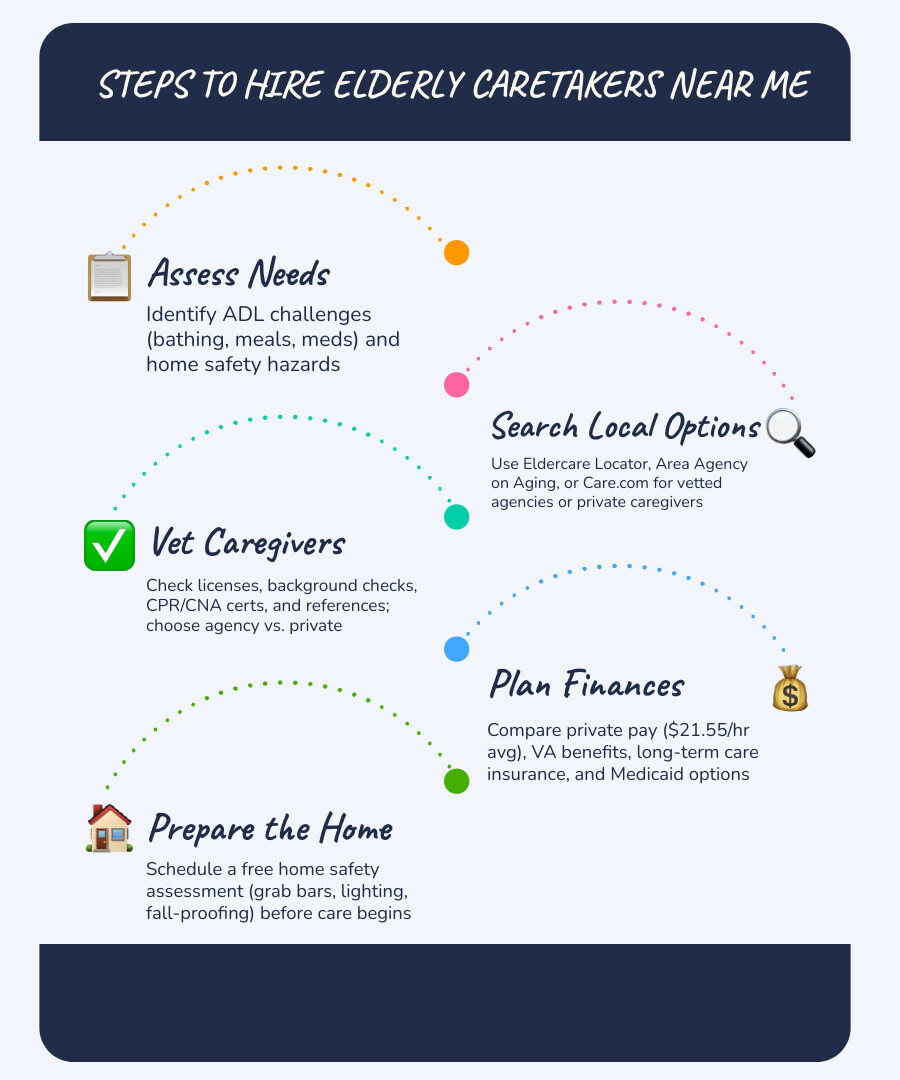
If you're looking for caretakers for elderly loved ones near me, here's a quick overview of how to find help fast:
- Search online directories like Care.com (65,000+ caregivers listed, averaging $21.55/hr in 2026)
- Contact the Eldercare Locator at 1-800-677-1116 to find vetted local agencies
- Reach out to your local Area Agency on Aging — in Richmond, that's Senior Connections Capital Area Agency on Aging
- Choose between a home care agency (licensed, bonded, W-2 employees) or a private caregiver (lower cost, more vetting required)
- Start with a home safety assessment before care begins — this helps identify fall risks and home modifications your loved one needs
Watching a parent struggle at home is one of the hardest things a family goes through. Maybe you've noticed they're skipping meals, forgetting medications, or moving more carefully around the house. Maybe you live across town — or across the country — and you can't be there every day.
You're not alone. Nearly one in four U.S. adults is a caregiver right now. The Caregiver Action Network estimates over 90 million Americans are caring for a loved one with a chronic condition, disability, or the challenges that come with aging.
The good news? There are real, practical options — and you don't have to figure it out alone.
This guide walks you through exactly how to find, vet, and hire the right caretaker for your elderly loved one. We'll cover the types of care available, what it costs, how to pay for it, and what questions to ask before you hire anyone.
One important note before we dive in: finding a great caregiver is only part of the solution. The home itself matters just as much. A caregiver can't fully protect a senior in a home with loose rugs, no grab bars, or poor lighting. That's where Burnie's Way comes in — we offer free in-home senior safety assessments for families in the Richmond area to identify hazards and recommend modifications that make aging in place safer from day one.
Caretakers for elderly near me terminology:
Recognizing the Signs Your Loved One Needs Caretakers for Elderly Near Me
It is rarely a single, dramatic event that alerts us to our parents' declining independence. More often, it is a series of subtle changes that accumulate over time. You might visit their home in Midlothian or Glen Allen and notice things aren't quite as tidy as they used to be, or that a once-passionate gardener has let their yard go.
Recognizing these early warning signs is crucial to preventing a serious injury or a sudden health crisis.

Physical and Cognitive Warning Signs
When searching for a Caretaker for Old Age, the first step is objectively assessing your loved one's physical and cognitive state. Look for these key indicators:
- Decline in Personal Hygiene: Neglecting bathing, wearing the same clothes for several days, or a noticeable change in grooming habits.
- Unexplained Weight Loss or Poor Nutrition: An empty refrigerator, spoiled food left on shelves, or difficulty preparing meals.
- Forgetfulness and Cognitive Slippage: Missing doctor appointments, forgetting to take vital medications, or leaving the stove burning.
- Mobility Struggles and Balance Issues: Holding onto walls or furniture while walking (known as "furniture surfing"), difficulty getting up from a favorite chair, or unexplained bruises that suggest minor, unreported slips.
- Social Isolation: Withdrawing from community activities, church groups, or hobbies they once loved.
If you observe these changes, it is time to seek local support. For families in the Richmond metropolitan area, contacting Senior Connections Capital Area Agency on Aging is an excellent starting point. They can connect you with community-based programs, localized resources, and guidance on navigating the challenges of aging.
Evaluating the Home Environment for Safety
Even the most compassionate caregiver will struggle to keep your loved one safe if the physical house is filled with structural hazards. This is especially true in the Richmond area, where our beautiful, historic housing stock presents unique challenges.
A historic Victorian home in The Fan or a classic colonial in Ginter Park may feature steep, narrow staircases, cramped bathrooms, and uneven flooring. Meanwhile, mid-century split-levels in Henrico and older homes in Chesterfield often have deep step-downs between rooms that become major tripping hazards as mobility declines.
To make aging in place a viable reality, families must evaluate the physical home:
- Falls are the leading cause of injury among older adults. Simple issues like loose throw rugs, poor lighting in hallways, and low toilet seats significantly increase fall risks.
- Bathrooms are the most dangerous room in the house. Wet surfaces, high tub walls, and a lack of stable handholds create a high-risk environment. Installing professional grab bars, walk-in showers, and slip-resistant flooring can dramatically reduce these dangers.
- Staircases often become impassable barriers. If your loved one's bedroom or laundry room is on the second floor, a stair lift installation may be necessary to preserve single-floor living convenience without forcing a move.
Before you bring a new caregiver into the home, we highly recommend scheduling our free in-home senior safety assessment. At Burnie's Way, we specialize in identifying these exact environmental hazards across Richmond, Henrico, and Chesterfield. We don't just point out the problems — we design and execute custom aging-in-place modifications, from grab bars to full bathroom safety remodels, ensuring your loved one's home is a secure sanctuary.
Understanding the Types of In-Home Care Services Available
When researching caretakers for elderly near me, it is easy to get overwhelmed by the terminology. Home care, home health, companion care, personal care — what do they all mean? Understanding the distinctions ensures you secure the precise level of support your family needs.

Companion and Personal Caretakers for Elderly Near Me
Most families starting their caregiving journey begin with non-medical home care. This type of care is designed to assist with daily routines and is generally divided into two categories:
- Companion Care: This focuses on emotional support and basic household help. It includes friendly conversation, sharing hobbies, light housekeeping, laundry, running errands, and meal preparation. If your parent is lonely but otherwise physically independent, companion care is an ideal fit. You can explore options for this via our Elderly Companions Near Me resource.
- Personal Care: This is a step up from companionship and includes hands-on physical assistance. Personal caretakers help with what professionals call Activities of Daily Living (ADLs). This includes bathing, dressing, grooming, toileting, and transfers (helping someone transition safely from a bed to a wheelchair).
These non-medical services are crucial for keeping seniors active and healthy. Excellent national networks like the Family Caregiver Alliance offer comprehensive educational guides to help families understand how to manage these daily care tasks effectively.
Specialized Memory and 24-Hour Care
For seniors living with progressive, chronic conditions, standard companion care may not be enough. Specialized care services are tailored to meet complex physical and cognitive needs:
- Alzheimer's and Dementia Care: Caring for a loved one with memory loss requires specialized strategies. Experienced memory care professionals focus on what the senior can still do, using sensory activities and behavioral techniques to reduce agitation and wandering. For local support, resources, and support groups, families can turn to the Alzheimer's Association Greater Richmond Chapter.
- Parkinson's and ALS Support: These conditions impact physical motor skills, requiring caregivers trained in safe transfers, specialized mobility assistance, and speech-friendly communication.
- 24-Hour and Live-In Care: If your loved one experiences nighttime restlessness, wandering, or severe fall risks, round-the-clock supervision ensures they are never left unattended. This care is typically structured in shifts to keep caregivers alert and responsive.
If you are looking for medical or clinical care — such as administering injections, managing complex wound care, or physical therapy — you will need to hire a licensed Home Health Care agency rather than a non-medical caregiver.
Note: While Burnie's Way does not provide direct caregiving staff, we work alongside many local agencies. If your loved one needs hands-on care, we can refer you to trusted, high-quality local home care providers while we handle the critical task of making the home physically safe for both the senior and their new caregiver.
How to Find and Evaluate Local Caregivers
Once you understand the level of care required, the next step is finding a trustworthy professional. You have two main pathways: hiring through a licensed home care agency or employing an independent private caregiver directly.
Vetting Agencies vs. Private Caretakers for Elderly Near Me
Each path has distinct pros and cons that impact your budget, your schedule, and your legal responsibilities.
| Feature | Licensed Home Care Agency | Private/Independent Caregiver |
|---|---|---|
| Employment Status | Caregivers are W-2 employees of the agency. | Caregiver is your direct employee or a contractor. |
| Tax & Legal Duties | Managed entirely by the agency. | You must handle payroll taxes and workers' comp. |
| Background Checks | Conducted by the agency (often Level 2 FBI). | You must run and pay for your own background checks. |
| Backup Coverage | Provided automatically if the primary caregiver is sick. | You must find your own replacement if they call out. |
| Average Cost | Higher hourly rates due to agency overhead. | Lower hourly rates (typically $20 - $25/hr in Richmond). |
| Licensing | Regulated by state bodies. | No agency oversight; relies on personal credentials. |
If you choose the agency route in Virginia, ensure they are registered and in good standing with the Virginia Department of Health Licensed Providers.
For those looking to evaluate regional options across the state, you can review general frameworks like Virginia Home Care Services or look at specialized providers such as Northern Virginia Senior Home Care - 24/7 Elderly Support to understand the standards of care expected in the commonwealth. If you are researching for family members in other states, directories like Home Care Services in Ypsilanti, MI | Village Caregiving can provide localized insight.
Key Qualifications and Interview Questions
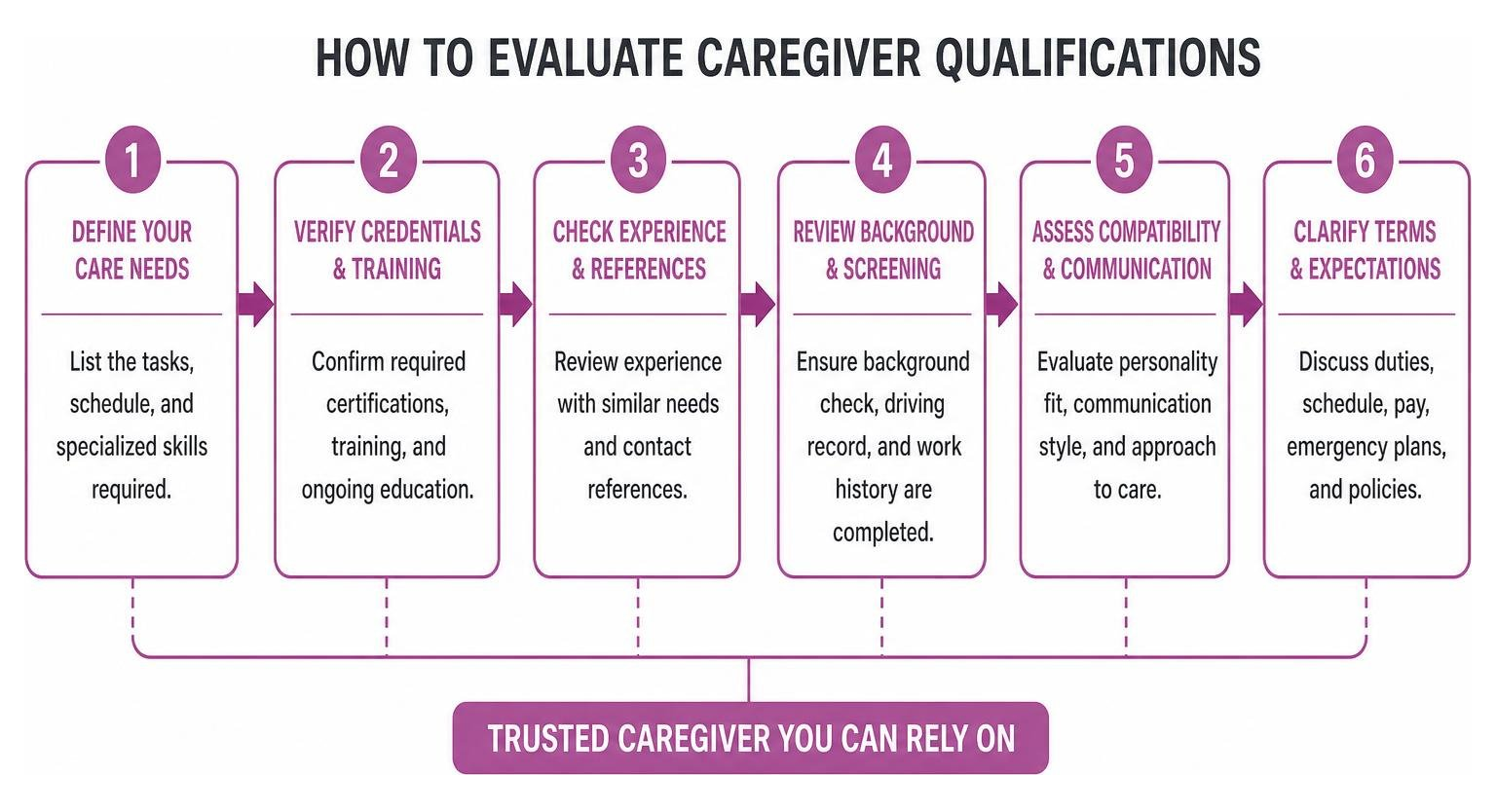
Whether you use an agency or hire privately, you should always conduct a rigorous interview. Look for professionals who hold active credentials, such as a Certified Nursing Assistant (CNA) license or a Home Health Aide (HHA) certification, along with up-to-date CPR and First Aid training.
When interviewing candidates, we recommend using the 40/70 Rule — a communication guideline suggesting that when adult children reach age 40, or their parents reach age 70, they should proactively discuss sensitive topics like care preferences. Use these open-ended questions to gauge a candidate's experience and temperament:
- "Can you describe a time when a client resisted taking their medication or bathing, and how you handled it?"
- "What specialized training do you have for managing symptoms of dementia, Parkinson's, or physical mobility limitations?"
- "How do you handle emergency medical situations? Can you walk me through your protocol?"
- "Are you comfortable assisting with transfers, and what techniques do you use to prevent back strain for yourself and falls for the client?"
For a deeper dive into this vetting process, check out our comprehensive How to Get an Elderly Carer Guide.
Analyzing the Costs and Financial Assistance Options
The cost of senior care is a primary concern for most families. In July 2026, the average rate for hiring a private, at-home senior caregiver on Care.com is $21.55 per hour. However, rates can fluctuate based on your location, the caregiver's experience, and the complexity of the tasks required.
To help you plan, we have compiled a comparison of the primary funding methods for eldercare and home modifications:
| Payment Option | Coverage for Non-Medical Home Care | Coverage for Home Safety Modifications | Key Limitations |
|---|---|---|---|
| Private Pay | Fully covered (out-of-pocket). | Fully covered. | Can deplete personal savings rapidly over time. |
| Long-Term Care Insurance | Typically covered if ADL triggers are met. | Sometimes covers modifications under home-safety clauses. | Requires policy activation; high monthly premiums beforehand. |
| VA Aid & Attendance | Excellent monthly pension benefits available. | May cover ramps or minor modifications via VA grants. | Must meet specific military service and clinical asset limits. |
| Medicare | No coverage for long-term non-medical care. | No coverage (only covers medically necessary DME like oxygen). | Only covers short-term, clinical home health care. |
| Medicaid | Covered under state waiver programs (CCC+ Waiver in VA). | Limited coverage for essential safety modifications. | Strict income and asset limits apply. |
As you evaluate these financial paths, investing in home modifications can actually save you money in the long run. Professional Home Care Providers for Seniors charge by the hour. By making the home safer with grab bars and fall-prevention modifications, you may reduce the number of hours a caregiver needs to be present, stretching your care budget significantly further.
For families in Northern Virginia seeking county-administered public options, you can review the In-Home Care Services | Family Services portal to see how local governments structure their safety-net programs.
Supporting Family Caregivers and Accessing Community Resources
If you are currently acting as a primary caregiver, please hear this: you cannot do it all alone.
Caregiver burnout is a real physical and psychological condition. The Caregiver Action Network serves more than 90 million Americans who care for loved ones with chronic conditions, reminding us that taking care of your own mind and body is essential to being a good caregiver.
Fortunately, there are local community resources designed to give you a break and support your loved one:
- Respite Care: This provides temporary, short-term relief. A professional caregiver steps in for a few hours, a weekend, or a week, allowing you to rest, travel, or attend to your own medical needs.
- Adult Day Care Services: These community-based programs offer social activities, meals, and basic health monitoring in a safe, supervised group setting during the day.
- Meal Delivery Programs: Services like Meals on Wheels deliver nutritious, hot meals directly to homebound seniors, ensuring they eat well even when you can't be there to cook.
- Volunteer Transportation Networks: Many local organizations and volunteer groups offer discounted or free rides to help seniors get to medical appointments and grocery stores.
To find these services in your specific neighborhood, use the Eldercare Locator database or reach out to our team at Burnie's Way. We can help connect you to trusted local care partners while we focus on securing the home environment.
Frequently Asked Questions About Hiring Caregivers
Does Medicare cover non-medical in-home care?
No, Medicare does not cover non-medical in-home care, companion care, or long-term personal care. Medicare is designed to cover clinical, medically necessary services. It will only pay for short-term home health services if they are prescribed by a physician and provided by a Medicare-certified agency during recovery from an illness, injury, or surgery.
What is the average hourly rate for a caregiver in 2026?
As of July 2026, the average posted rate for a private, at-home senior caregiver on Care.com is $21.55 per hour. However, if you hire through a licensed home care agency in the Richmond area, rates typically range from $28 to $38+ per hour due to agency overhead, insurance, and administrative costs.
How do I transition a resistant senior to accepting help?
Introduce the idea gradually. Rather than framing it as "hiring a caretaker," suggest bringing in someone for "light housekeeping" or "help with cooking."
Another highly effective strategy is to start with a professional, objective assessment. Seniors are often much more receptive to advice from a neutral third party. Having our team conduct a free home safety assessment is a gentle, non-threatening way to start the conversation about making daily life easier and safer.
Conclusion
Finding the right caretakers for elderly near me is a journey that requires patience, research, and a clear understanding of your loved one's unique needs. By partnering with reputable local agencies, checking qualifications, and utilizing community resources, you can ensure your parent receives the compassionate care they deserve.
But remember: a great caregiver is only half of the equation. To truly support aging in place, you must secure the physical environment.
At Burnie's Way, we are dedicated to helping seniors in Richmond, Henrico, Glen Allen, Chesterfield, and surrounding areas live safely and independently. We don't provide caregiving staff, but we are the region's experts in senior safety.
Take the first step today. Protect your loved one from devastating falls by scheduling our free in-home senior safety assessment. We will walk through the home with you, identify hidden hazards, and recommend custom modifications — from simple grab bars to complete bathroom safety remodels — that give your family true peace of mind.
Explore our services and book your assessment today at Burnie's Way Services.