12 min read

Beyond the Basics: A Comprehensive Guide to Eldercare Services

Beyond the Basics: A Comprehensive Guide to Eldercare Services

Why Understanding Eldercare Services Matters Now More Than Ever

eldercare services

Eldercare services help older adults live safely and independently at home by providing personalized support with daily activities, companionship, and coordination of trusted resources. Here's what you need to know:

Types of Eldercare Services:

  • Personal Support - Help with daily routines, meal preparation, light housekeeping, and companionship
  • Specialized Coordination - Connecting with trusted professionals, scheduling appointments, medication reminders
  • Technology Integration - Emergency alert systems, virtual check-ins, smart home devices
  • Respite Care - Short-term relief for family caregivers
  • Transition Support - Post-hospitalization assistance and recovery coordination

Who Needs Eldercare Services:

  • Seniors recovering from illness or hospitalization
  • Older adults experiencing difficulty with daily tasks
  • Individuals with chronic conditions requiring ongoing support
  • Families juggling work while caring for aging parents

Right now, 6.1 million Canadians are quietly juggling their jobs while caring for a loved one. If you're one of them, you know how overwhelming it feels.

The need for support can arrive suddenly after a stroke or fall. More often, it develops gradually as your parent struggles with tasks that were once routine. Maybe you've noticed the mail piling up, meals being skipped, or a once-tidy home becoming cluttered.

Most people prefer to stay in their own home for as long as they can - a concept called "aging in place." The good news? A wide spectrum of services exists to make this possible, from a few hours of companionship each week to around-the-clock support.

But navigating this landscape is confusing. What's the difference between personal support and home health care? How do you find trustworthy providers? What will it cost, and how will you pay for it?

This guide cuts through the complexity. We'll help you recognize when it's time to seek support, understand your options, evaluate costs and funding sources, and choose the right partner for your family's unique needs.

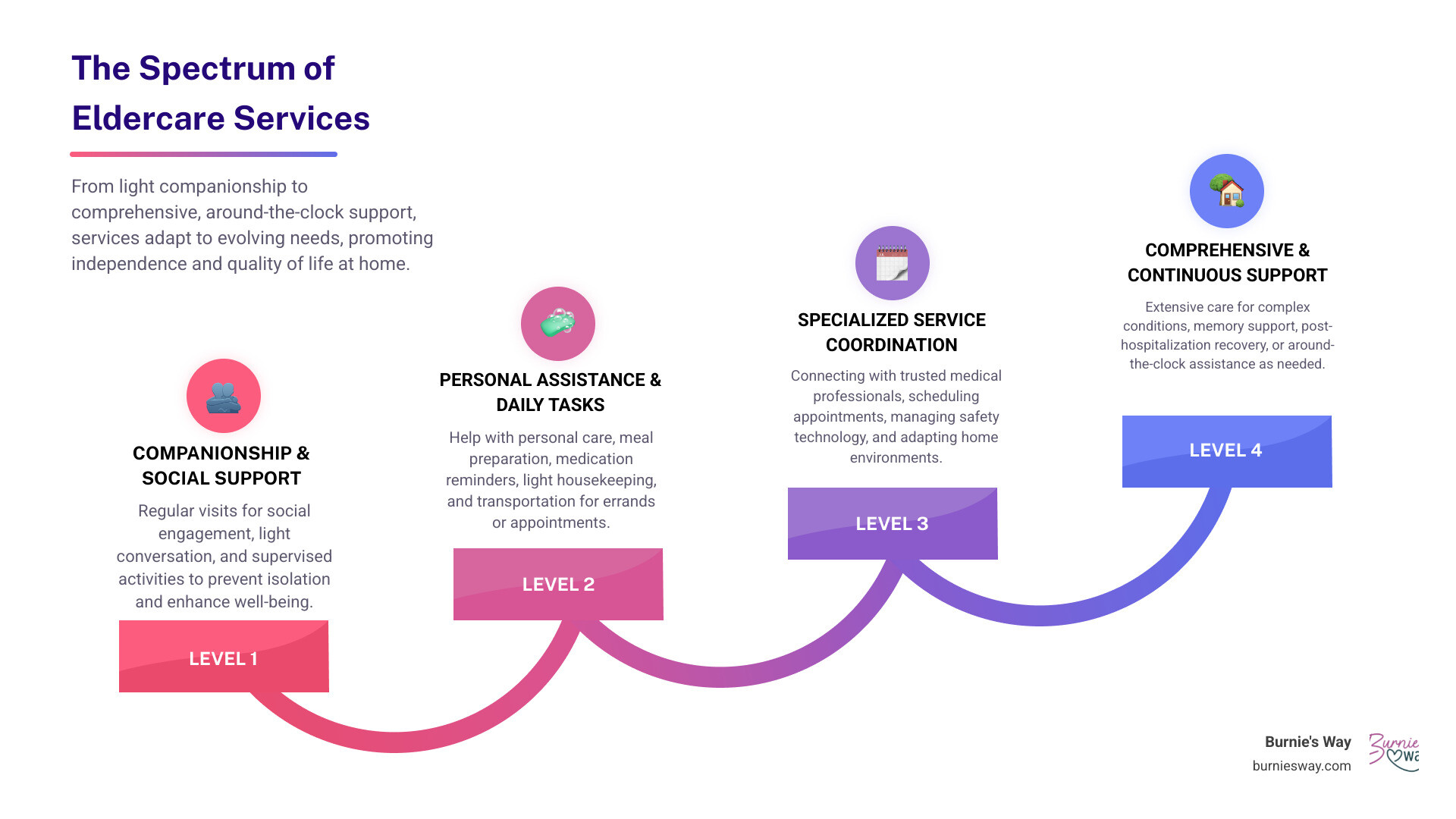
Infographic showing the spectrum of eldercare services from basic companionship and social support at one end, progressing through personal assistance with daily activities and light household tasks in the middle, to comprehensive coordination of specialized services and around-the-clock support at the other end, with typical hours per week and independence levels indicated for each tier - eldercare services infographic step-infographic-4-steps

Recognizing the Need: When Is It Time for Eldercare?

Sometimes the need for support is obvious, like after a fall or a hospital stay. Other times, it's a slow, subtle shift that gradually impacts an older adult's well-being and independence. Recognizing these signs early can make all the difference in providing timely and effective eldercare services.

A concerned family member having a gentle conversation with an elderly parent - eldercare services

The need for long-term support can arise suddenly, such as after a heart attack or stroke. More often, however, the need for long-term support develops gradually. It might start with small changes you observe:

  • Difficulty with daily routines: Are they struggling with bathing, dressing, grooming, or managing their medications? These are often called Activities of Daily Living (ADLs) and Instrumental Activities of Daily Living (IADLs).
  • Changes in personal habits: A once-immaculate home might become cluttered or untidy. You might notice changes in hygiene, like unkempt hair or clothes.
  • Neglected home environment: Is the mail piling up? Are bills going unpaid? Is there spoiled food in the refrigerator? A lack of maintenance around the house can be a clear indicator.
  • Social isolation: Are they withdrawing from social activities or hobbies they once enjoyed? Loneliness can significantly impact an older adult's mental and physical health.
  • Post-hospitalization support: Returning home after a hospital stay can be challenging. Even after a short stay, seniors might need assistance to regain their strength and confidence.

We understand these signs can be tough to spot, and even tougher to address. Our goal is to help your loved one maintain their dignity and independence, ensuring they receive the appropriate level of support without feeling overwhelmed. If you suspect an immediate need for assistance, especially after an accident or sudden decline, it's important to know about Emergency Elderly Support Resources.

The desire to "age in place"—to remain in one's own home for as long as possible—is a powerful one. For many, home represents comfort, familiarity, and a lifetime of memories. We believe in empowering older adults to live confidently and comfortably at home, and that's where thoughtful eldercare services come in.

A friendly support person helping a senior with groceries - eldercare services

The benefits of receiving support at home versus in a facility are clear:

  • Maintaining independence: Seniors retain control over their daily routines and environment.
  • Familiar surroundings: Being in a cherished home can reduce stress and confusion, especially for those with memory challenges.
  • Personalized assistance: Support is custom to individual needs and preferences, often on a one-on-one basis.
  • Cost-effectiveness: For many, in-home support can be more economical than residential care, particularly if only a few hours of support are needed each day.

We champion the ability of older adults to thrive in their own homes. Our approach focuses on enhancing their quality of life through personalized assistance and thoughtful coordination. For more insights into fostering independence at home, consider reading How to Support an Elderly Person at Home.

Personal and Companion Support

This category of eldercare services focuses on non-clinical assistance that makes daily life easier and more enjoyable. It's about providing a helping hand and a friendly face.

Our services can include:

  • Assistance with daily routines: Helping with tasks like getting dressed, light grooming, or moving safely around the house. We focus on enabling independence, not taking it away. For more on this, check out Personal Support for Elderly at Home.
  • Companionship: Sometimes, the greatest support is simply having someone there to share a conversation, play a game, or enjoy a quiet afternoon. This can combat feelings of loneliness and isolation.
  • Meal Preparation Assistance: Ensuring nutritious meals are prepared and enjoyed, custom to dietary needs and preferences. This might involve planning menus, grocery shopping, and cooking.
  • Light household help: Keeping the living space tidy and comfortable, which could include light cleaning, laundry, or organizing.
  • Transportation for errands: Providing safe and reliable transport to appointments, social engagements, or for grocery shopping, helping seniors maintain their community connections.
  • For a broader view of how we can support daily activities, explore our Daily Life Assistance resources.

Coordinating Specialized Services

While we focus on personal support and lifestyle coordination, we understand that comprehensive well-being often requires specialized expertise. Our role here is to act as your trusted guide and coordinator, connecting you with the right professionals.

This might involve:

  • Connecting with trusted professionals: We help you identify and connect with qualified home health care agencies (for nursing or therapy needs), medical professionals, or other specialists.
  • Scheduling appointments: Managing calendars and ensuring appointments are made and kept, reducing the administrative burden on families.
  • Medication reminders (non-clinical): While we don't administer medication, we can provide gentle reminders to ensure medications are taken as prescribed.
  • Support with wellness routines: Encouraging and facilitating adherence to exercise programs, dietary plans, or other wellness activities recommended by health professionals.

Understanding the difference between personal support and clinical care is crucial. To dig deeper into what constitutes personal support, refer to What is Personal Care for the Elderly.

Integrating Technology for Improved Safety

Technology offers incredible opportunities to improve safety and well-being for older adults living at home. We help integrate these tools seamlessly into daily life.

  • Emergency alert systems: These systems, often worn as a pendant or bracelet, provide immediate connection to help during falls or other emergencies. They typically involve a setup fee and a monthly service fee. While Medicare generally doesn't cover these, Medicaid and some private health insurance or long-term care insurance plans might.
  • GPS-enabled devices: For seniors who may wander or get disoriented, GPS tracking devices can offer peace of mind for families, allowing them to locate their loved ones quickly.
  • Virtual check-ins: Regular video calls or automated check-in systems can ensure seniors are safe and well, providing a sense of connection and security.
  • Smart home technology: Devices that can control lights, thermostats, or even detect unusual activity can contribute significantly to a safer and more comfortable home environment.

These technological solutions, when properly integrated, allow seniors to maintain their independence with an added layer of security. You can find more information about various support options, including technology, on Services for Older Adults Living at Home.

Specialized Support for Complex Needs

When an older adult faces chronic conditions or progressive challenges, the need for eldercare services becomes more nuanced. Our approach is to create custom support plans that adapt to evolving needs, always with a focus on dignity and personal well-being. We collaborate with families and other professionals to ensure comprehensive support. For a deeper understanding of how custom plans benefit seniors, visit Comprehensive Care Plans.

Memory and Cognitive Support

Supporting individuals with memory loss or cognitive decline requires patience, understanding, and a structured approach. Our services focus on creating a supportive and engaging environment:

  • Creating a safe environment: Identifying and mitigating potential hazards in the home to prevent accidents and reduce confusion.
  • Encouraging positive routines: Establishing consistent daily schedules can provide comfort and reduce anxiety for those with memory challenges.
  • Cognitive engagement: Engaging seniors in activities that stimulate their minds, such as puzzles, reading aloud, or reminiscing about past events.
  • Gentle reminders: Providing cues for daily tasks or appointments, always delivered with kindness and respect.

For families navigating the complexities of memory loss, our approach to Alzheimer's Home Support is designed to foster a sense of security and familiarity.

Comfort and End-of-Life Support Coordination

During challenging times, particularly at the end of life, our role shifts to providing a comfort-focused approach and coordinating essential resources. We aim to ease the burden on families and ensure the older adult's wishes are respected.

  • Emotional and spiritual support: Offering a compassionate presence and facilitating connections with spiritual advisors or support groups, if desired.
  • Connecting with trusted resources for comfort and planning: We can help families find hospice services, palliative care specialists, or other professionals who provide medical and emotional comfort during this sensitive period. For instance, Medicare covers most of the cost for up to five consecutive days of respite care in a hospital or skilled nursing facility for a person receiving hospice care.
  • Family support: Providing a lifeline for family members, offering guidance, and ensuring they have the space and time to be present with their loved one.

Planning for this stage is a profound act of love and foresight. We can guide you through the considerations for End of Life Planning.

Post-Hospitalization and Transitional Support

Returning home after a hospital stay can be a critical period for older adults. The transition can be overwhelming, and proper support is essential to prevent readmission and promote a full recovery.

  • Short-term recovery assistance: Helping with daily tasks during the recovery period, allowing the senior to focus on healing.
  • Preventing setbacks: Ensuring medication adherence (with reminders), monitoring for any changes in condition, and maintaining a safe home environment.
  • Coordinating with outside professionals: Liaising with doctors, therapists, and home health care agencies to ensure a cohesive recovery plan.
  • Regaining confidence at home: Providing encouragement and practical assistance to help seniors rebuild their strength and feel secure in their own space.

Our Post-Hospitalization Support is designed to make this transition as smooth and stress-free as possible.

Planning for long-term eldercare services involves more than just identifying needs; it also requires careful consideration of financial and legal aspects. This is a journey best taken proactively, allowing you to protect assets, make informed decisions, and ensure your loved one's wishes are honored. For a comprehensive overview of preparing for the future, consult our resources on Elderly Care Planning.

Understanding the Costs of Eldercare Services

The cost of eldercare services can vary significantly depending on the type, intensity, and duration of support needed.

  • Hourly rates vs. live-in support: Many in-home services charge by the hour, with rates varying based on the level of skill required (e.g., personal support vs. a skilled nurse). Live-in support, while often more expensive overall, can sometimes be a cost-effective option for extensive needs.
  • Adult day program fees: Adult day care centers offer a supervised environment during the day, providing social activities, meals, and basic health care. They tend to be less expensive than in-home or nursing home care, with charges typically hourly or by the day.
  • Coordination service fees: Services like ours, which focus on personalized support and coordination, have their own fee structures, often hourly or package-based. Understanding these rates is crucial for budgeting. You can find more information on Private Pay Home Support Rates.

Here's a general comparison of average costs for various services:

Type of Service Average Cost Considerations
In-Home Personal Support Hourly rates (e.g., $20-$35+ per hour), can be more for specialized needs. Live-in care can be a daily rate.
Home Health Care Hourly rates (e.g., $30-$50+ per hour for skilled nursing). Often short-term.
Adult Day Care Hourly or daily rates (e.g., $75-$150+ per day). Less expensive than full-time in-home or facility care.
Assisted Living Facility Monthly fees (e.g., $4,000-$7,000+ per month), varying by location, services, and apartment size.
Nursing Home Care Daily or monthly fees (e.g., $8,000-$12,000+ per month), varying by location and level of care. Usually the most expensive option.
Geriatric Care Manager Hourly rates (e.g., $100-$250+ per hour) for assessment, planning, and coordination.

Funding Options and Eligibility

Navigating payment for eldercare services can be complex, as coverage varies widely.

  • Medicare limitations: Medicare has limited coverage for home health services. These services must be short-term, medically necessary, and provided by Medicare-certified agencies. Generally, Medicare does not cover long-term personal care, companion visits, meal delivery, emergency medical alert systems, or adult day care, though it may cover short-term respite care for hospice patients.
  • Medicaid benefits: Medicaid also provides coverage for home health and other eldercare services, but these benefits vary significantly by state. Eligibility is typically based on income and asset limits, as well as functional need. Medicaid may cover some meal delivery services, transportation for medical care, emergency medical alert systems, and adult day care if the person qualifies.
  • Long-term care insurance: Some long-term care insurance plans can help pay for various eldercare services, including companion visits, respite care, adult day care, and even geriatric care managers. It's crucial to check the specific policy for coverage details.
  • Veterans Affairs (VA) programs: The U.S. Department of Veterans Affairs offers various programs and benefits for eligible veterans and their spouses to help cover the cost of eldercare services. Visit the U.S. Department of Veterans Affairs (VA) for more information.
  • Private pay: Most people must pay for some or all of their eldercare services themselves, using personal savings, pensions, or other assets.

For a deeper dive into funding options, you can Learn more about paying for long-term care. Resources like USA.gov can also help you find benefits you might be eligible for. The Eldercare Locator (or call 800-677-1116) connects older Americans and their caregivers with trustworthy local support resources. You can also explore Medicare and Medicaid websites for specific program details.

Beyond immediate funding, long-term legal and financial planning is paramount to ensure an older adult's wishes are respected and their assets are protected.

  • Power of Attorney (POA): This legal document grants a trusted individual the authority to make financial or healthcare decisions on someone else's behalf if they become unable to do so.
  • Advance directives: These documents, like living wills and healthcare proxies, outline an individual's preferences for medical treatment in various scenarios.
  • Trusts: Establishing trusts can be a way to manage and protect assets, particularly when planning for long-term care costs or leaving an inheritance.

We encourage families to engage with legal and financial professionals to set up these important documents. It’s about ensuring peace of mind for everyone involved. To find professionals who can assist with these complex decisions, consider visiting Aging Life Care Association or our own resource on Find a Professional for Aging Life Planning.

Finding and Choosing the Right Support Partner

Finding the right support partner for eldercare services can feel like a daunting task, but it’s one of the most important decisions you’ll make. It’s about more than just checking boxes; it’s about finding a compassionate, reliable, and trustworthy partner who understands your loved one's unique needs. We aim to simplify this process, helping you make an informed choice. For a starting point, our How to Get Elderly Support Guide offers valuable insights.

How to Find Reputable Eldercare Services

  • Local agencies and organizations: Community-based organizations, senior centers, and Area Agencies on Aging are excellent resources for finding local eldercare services. The Eldercare Locator is a national service that connects older adults and their caregivers with local support resources.
  • Physician referrals: Your loved one's doctor or other healthcare providers often have a network of trusted eldercare service providers they can recommend.
  • Community-based resources: Local religious organizations, community centers, and even word-of-mouth recommendations from friends and neighbors can lead to valuable connections.
  • Online comparison tools: For specific medical home health care, the Medicare Care Compare tool can help you find and compare Medicare-certified home health agencies.

Vetting and Selecting a Provider

Once you have a list of potential providers, a thorough vetting process is essential.

  • Checking references and credentials: Always ask for and check references. For agencies, inquire about their licensing, certifications, and the training their staff receive. For individual providers, ask about their experience and background checks.
  • Screening process: Understand how the provider screens their staff. Do they conduct background checks, drug screenings, and verify qualifications?
  • Cultural and linguistic needs: If your loved one has specific cultural preferences or speaks a language other than English, ask if the provider can accommodate these needs.
  • Reviewing agreements: Before signing any agreement, carefully read the contract, understanding the services included, costs, cancellation policies, and complaint procedures.

To ensure you're selecting the best fit, consider these key questions to ask potential support partners:

  • What specific personal support and coordination services do you offer?
  • How do you tailor your services to individual needs and preferences?
  • What is your process for matching clients with support staff?
  • What are your fees, and what is included in those fees?
  • Are your staff employees or independent contractors, and how are they screened, bonded, and insured?
  • What is your policy for emergencies or unexpected situations?
  • How do you handle communication with families and other professionals?
  • Can you provide references from current or past clients?
  • What is your cancellation policy?

It's always a good idea to check for any complaints filed against a company with the Better Business Bureau in your area. Our commitment is to provide Reliable Home Support, ensuring peace of mind for you and your family.

Frequently Asked Questions about Eldercare

What's the difference between personal support and home health care?

This is a crucial distinction! Personal support focuses on non-clinical assistance, companionship, and help with daily routines. This includes tasks like meal preparation, light housekeeping, transportation, medication reminders (not administration), and social engagement. It's about enhancing quality of life and maintaining independence.

Home health care, on the other hand, is clinical, medical care prescribed by a doctor. This often involves registered nurses (RNs), licensed practical nurses (LPNs), or therapists (physical, occupational, speech) providing services like wound care, medication administration, injections, physical therapy, or monitoring chronic conditions. We specialize in personal support and lifestyle coordination, helping you connect with reputable home health care providers when clinical needs arise.

How do eldercare services support family members?

Eldercare services provide invaluable support to family members in several ways. Firstly, they offer much-needed respite, reducing stress and preventing caregiver burnout. Caring for a loved one, especially while juggling work and other responsibilities, can be incredibly demanding. Having reliable support allows family caregivers to take breaks, recharge, and maintain their own well-being. Secondly, these services offer peace of mind, knowing that a loved one is safe, comfortable, and well-supported in their own home. This allows families to focus on quality time together, rather than being solely consumed by caregiving tasks.

What are the benefits of receiving support at home versus in a facility?

The benefits of receiving support at home are numerous for many older adults. Staying at home allows seniors to remain in a familiar, comfortable environment surrounded by their cherished belongings and memories. This can significantly reduce stress and promote emotional well-being. It also helps them maintain a greater sense of independence and control over their daily lives. Furthermore, in-home support is highly personalized, offering one-on-one attention custom to specific needs and preferences. It can be more flexible than facility care, adapting to changing schedules and requirements, and for many, it can be a more cost-effective solution than a residential facility, especially if only certain hours of support are needed.

Conclusion: Your Partner in Navigating the Eldercare Journey

Navigating eldercare services can feel like a complex maze, but you don't have to go it alone. Planning is key, and understanding the broad spectrum of support available empowers you to make the best decisions for your loved one and your family. From fostering independence with daily tasks to coordinating specialized services and integrating technology for safety, a personalized approach makes all the difference.

At Burnie's Way, we believe in empowering seniors to live confidently and comfortably in their own homes. We help families understand their options and coordinate personalized, non-medical support, acting as a virtual companion, events coordinator, and personal assistant. With 50 years of experience, our compassionate approach ensures continuous support and partnerships for comprehensive daily life management. We’re here to help your loved one live the way they want, giving you peace of mind that everything’s okay.

Explore our services to see how we can help.

The Continuous Care Compass: Navigating Ongoing Health Services

13 min read

The Continuous Care Compass: Navigating Ongoing Health Services

What Continuous Care Services Really Mean for You and Your Family Continuous care services are specialized, short-term support designed to help...

Read More
Navigating Long-Term Care: Everything You Need to Know

12 min read

Navigating Long-Term Care: Everything You Need to Know

Understanding Long-Term Care: What It Means for You and Your Family Long term care is a range of services and supports designed to help people meet...

Read More
Family Caregiver Support 101

13 min read

Family Caregiver Support 101

Understanding the Role of a Family Caregiver Family caregiver support includes a wide range of resources, programs, and services designed to help...

Read More