

Why Personalized Support Plans Matter for Your Loved One's Well-Being
Personalized support plans are detailed documents that guide the daily support and coordination for a loved one. They bring together family members, support providers, and the individual themselves to create a clear roadmap for maintaining quality of life and achieving personal goals.
What You Need to Know:
- Core Purpose: A living document that coordinates support across all providers and settings.
- Key Components: Important contacts, daily routines, personal goals, and specific preferences.
- Who Benefits Most: Seniors wishing to live independently, families coordinating multiple services, and anyone with complex scheduling needs.
- How It Works: Created collaboratively with the individual and their chosen support circle.
If you're feeling overwhelmed by coordinating your aging parent's life across multiple appointments, services, and social engagements, you're not alone. Many families struggle to piece together personal preferences, daily schedules, and emergency contacts into a coherent strategy that everyone can follow.
A personalized support plan solves this problem. It's not a medical documentit's a personal support strategy that respects your loved one's wishes while giving everyone involved a shared understanding of goals, needs, and responsibilities.
When a clear plan is in place, life runs more smoothly. It helps ensure that important preferences are honored and that everyonefrom a family member to a home helperis working from the same playbook. For families, these plans provide peace of mind, knowing that their loved one's daily life is well-managed and their independence is fully supported.
Essential comprehensive personal support plans terms:
- adapting to aging
- aged care aides
- home care solutions
What is a Personalized Support Plan?
At its heart, a personalized support plan is a detailed and dynamic document designed to centralize all vital information about an individual's daily life and personal needs. Think of it as a master blueprint for well-being, carefully crafted to ensure that everyone in a person's support networkfrom family members to service providersis on the same page. It's a living guide that evolves with the individual, containing specific, actionable information that promotes seamless communication and continuity of personal support.
Its core purpose is to ensure a person's preferences, routines, and goals are always at the forefront. The crucial aspect is that all core information is readily shareable and accessible to every member of the approved support team.
The Core Components of a Personalized Support Plan
An effective personalized support plan is built upon several key pillars, each contributing to a holistic view of the individual. These components ensure that every facet of a person's life is considered and addressed.
Here's a breakdown of the essential elements:
- Key Personal Information: This section acts as a quick-reference guide. It lists important contacts (family, friends, doctors, service providers), key preferences, and any allergies. It provides invaluable insight for anyone supporting the individual.
- Personal Goals: This is where the individual's voice shines through. It outlines their objectives for their well-being, which might include learning a new hobby, staying connected with friends, or simply maintaining their current level of independence.
- Support Strategies: These are the specific actions that the support team will take to help the individual achieve their stated goals. They can range from arranging transportation for social events to coordinating meal delivery services or scheduling appointments.
- Daily Routines & Preferences: This component digs into the personal aspects of a person's life, ensuring their comfort and dignity. It covers daily schedules (e.g., preferred wake/sleep patterns), dietary preferences (including religious or cultural considerations), spiritual needs, and favored activities or pastimes.
- Emergency Plan: Safety is paramount. This section contains critical information for urgent situations, including emergency contact details and any legal directives (such as a Power of Attorney). It's designed to provide clear guidance when every second counts.
These components work in concert to create a robust and adaptable framework for personal support. For more in-depth information custom for clinicians, you can refer to resources like the Components of the comprehensive care plan.
The Benefits of a Coordinated Approach
Implementing personalized support plans isn't just good practice; it's a game-changer for individuals and their families. The advantages ripple across various aspects of well-being, leading to a significantly higher quality of life. We've seen how a well-orchestrated plan can transform a challenging situation into one of confidence and ease.
One of the most compelling benefits is the tangible impact on daily living. A coordinated plan helps create smoother routines, reduces day-to-day stress, and fosters a greater sense of security and independence at home. It's a proactive approach that helps prevent small issues from becoming larger crises.
Beyond that, these plans drastically improve peace of mind for families. By centralizing all critical information—from personal preferences to emergency contacts—they ensure that everyone in the support circle has the right information at the right time. This meticulous attention to detail helps everyone feel confident that the individual's wishes are being honored.

Who Benefits Most from These Plans?
While anyone can benefit from a thoughtful approach to their support, certain individuals and families gain the most significant advantages from personalized support plans:
- Seniors Seeking to Maintain Independence: For seniors who wish to live comfortably and confidently in their own homes, these plans are invaluable. They ensure that all necessary support, from personal assistance to lifestyle coordination, is in place to foster continued independence. This is precisely where our approach at Burnie's Way aligns, helping clients coordinate the personal support that fits best, enabling them to live the way they want.
- Families Coordinating Multiple Services: When a person uses several different services (like housekeeping, meal delivery, and transportation), the plan acts as a central hub, ensuring all providers are working in harmony.
- Individuals with Complex Schedules: For those juggling numerous appointments, social activities, and family commitments, a plan brings order to the chaos and ensures nothing falls through the cracks.
- Long-Distance Family Members: A detailed plan provides immense reassurance to family members who live far away, giving them a clear window into their loved one's daily life and support structure.
Key Benefits for Individuals and Families
The advantages of a well-structured personalized support plan extend far beyond simple scheduling, touching every aspect of a person's life and offering profound relief to their loved ones.
- Improved Independence and Comfort: These plans are designed to empower individuals, helping them stay in control of their lives and remain in the comfort of their own homes. The focus is always on enabling them to live life on their own terms.
- Ensuring Personal Wishes are Honored: By clearly documenting preferences for everything from daily routines to social activities, the plan ensures an individual's choices are respected by everyone involved in their support.
- Better Coordination and Efficiency: A shared plan prevents miscommunications and redundant efforts. It leads to more efficient use of time and resources, reducing stress for both the individual and their family.
- Peace of Mind for Families: For family members, a support plan offers an unparalleled sense of security. Knowing that a detailed roadmap is in place alleviates much of the worry. It ensures that their loved one's needs are consistently met and that their preferences are respected, even when family can't be physically present.
These plans empower individuals to live their best lives, with dignity and independence, while providing their families with the confidence that everything is being handled with expertise and compassion. You can learn more about how we work to support these principles at More info about how we work.
How Personalized Support Plans Are Developed and Maintained
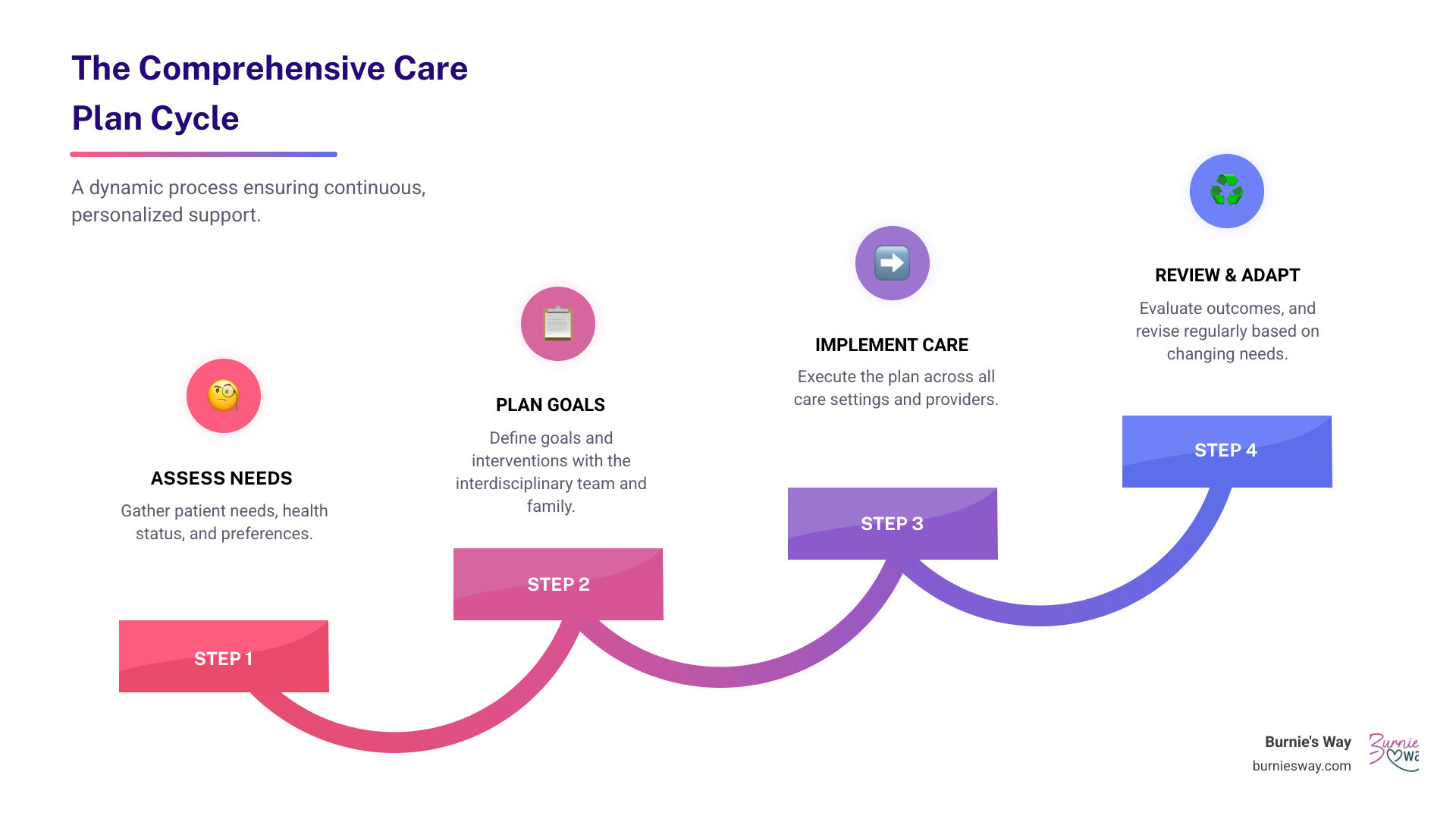
The creation and ongoing management of a personalized support plan is a dynamic, collaborative journey, not a one-time event. It's a continuous cycle of discussion, planning, coordination, and review, designed to adapt as an individual's needs and circumstances change. We think of it as a living document, constantly being refined to ensure it accurately reflects the current situation and future aspirations.
The development process typically follows a collaborative model:
- Listen & Find: This initial phase is all about understanding the individual. It involves conversations to identify their goals, what's important to them, their daily routines, and what they want their life to look like.
- Map It Out: Here, all the gathered information is organized into a clear, easy-to-use document. This includes creating lists of key contacts, outlining daily and weekly schedules, and documenting personal preferences in detail.
- Coordinate & Share: With the individual's permission, the plan is shared with their support circlefamily, friends, and any service providers. This ensures everyone is on the same page and working together effectively.
- Review & Adapt: Life changes, and so should the plan. This phase involves regular check-ins to assess how things are going and make updates as needed. The plan is revised whenever preferences shift, schedules change, or new goals are identified.
Regular reviews are paramount. A personalized support plan should be reviewed at least yearly, or whenever there's a significant change in life circumstances or personal preferences. For more detailed guidance on developing these kinds of plans in clinical environments, you can explore resources like Element 4: Develop a comprehensive care plan.
The Role of the Support Circle
The strength of any personalized support plan lies in the collaborative effort of the individual's support circle. This isn't a solo act; it's a team of trusted people, all contributing to a holistic and effective support strategy. The team typically includes:
- The Individual: Crucially, the person themselves is the most important member of the team, guiding the plan with their preferences and goals.
- Family & Friends: Offering invaluable insights into the individual's history, routines, and preferences, and providing hands-on support.
- Support Coordinators: Often serving as the central point of contact (a role Burnie's Way proudly fills as a concierge-style guide and organizer), ensuring seamless communication and coordination among all team members.
- Service Providers: This can include anyone from housekeepers and drivers to personal assistants, all working from the shared plan.
When everyone is working from the same roadmap, vital information is communicated effectively, leading to better outcomes and a more coordinated approach to personal support.
Addressing Personal Preferences and Individual Needs
At the heart of a truly effective personalized support plan is a profound respect for the individual's preferences and unique needs. This is where a person-centered approach truly shines, ensuring that the plan is not just practical but also deeply personal and empowering. We believe that everyone deserves to live life on their own terms, and a well-crafted plan helps make that a reality. You can read more about our commitment to personalized support in More info about our story.
Key to this approach is shared decision-making. This means the individual is actively involved in every step of the planning process, from identifying their most important goals to choosing the support options they prefer. Their voice is central, and their choices are respected.
Incorporating personal goals goes beyond just daily tasks. It digs into what truly matters to the individualtheir daily routines, their preferred activities, their spiritual beliefs, and their cultural practices. For instance, if someone prefers to have their main meal in the afternoon, the plan reflects that. If specific dietary needs are tied to cultural heritage, these are explicitly included. This commitment to understanding and respecting individual needs is what transforms a simple document into a truly empowering life plan.
Frequently Asked Questions about Personalized Support Plans
We understand that navigating personalized support plans can bring up many questions. Here, we address some of the most common inquiries families and individuals have, providing clarity and confidence.
How often should a personalized support plan be reviewed?
A personalized support plan is a living document, meaning it's designed to adapt and evolve. Therefore, regular review and revision are crucial to its effectiveness. A general rule of thumb is that the plan should be reviewed:
- Periodically: At minimum, the plan should be reviewed with the individual and their support circle at least yearly. This annual check-in ensures that the plan remains relevant to their current goals.
- After any significant life change: A change in living situation, the start or end of a service, or a shift in family support warrants a review. These events often necessitate adjustments to the plan.
- When preferences change: Life is dynamic, and a simple change in preference (like a new hobby, dietary choice, or desired daily schedule) should trigger a review to keep the plan current.
- When the individual or family requests a review: The individual and their family are the primary stakeholders. If they feel the plan is no longer meeting needs or if new concerns arise, their request for a review should be promptly addressed.
Can a family member help create the support plan?
Absolutely, and their involvement is not just welcomed—it's crucial! Family members are invaluable partners in the creation and ongoing management of a personalized support plan. Their insights provide a rich mix of information that helps create a truly holistic guide.
Here's why family input is so vital:
- Historical Context: Families often have a deep understanding of an individual's lifelong routines, personality, and preferences.
- Advocacy: Family members can serve as advocates, ensuring that the individual's voice is heard and their wishes are accurately captured.
- Support Network: They are often key members of the individual's day-to-day support network, making their understanding and buy-in for the plan essential for successful implementation.
The process of developing a personalized support plan actively encourages shared decision-making, ensuring that individuals, their families, and designated support people collaborate on goals and strategies.
Is this a medical document?
This is a great question, and the answer is no. A personalized support plan is fundamentally different from a medical or treatment plan.
A treatment plan is a clinical document created by healthcare providers to address a specific medical condition. Its focus is on diagnoses, medications, and therapies.
A personalized support plan, on the other hand, is a non-medical guide focused on quality of life and daily living. It's about the whole person, not just their health. It orchestrates all the non-medical aspects of life—social activities, personal preferences, household management, and daily routines—into a single, cohesive strategy.
While a support plan will list important contacts, including doctors, its primary purpose is to coordinate personal support in a way that honors the individual's independence and lifestyle choices.
Conclusion
Navigating the complexities of an aging loved one's needs can feel like an intricate dance, but with a personalized support plan, you gain a clear, reassuring rhythm. We've explored how these detailed, dynamic documents serve as invaluable roadmaps, centralizing crucial information, fostering seamless communication, and ultimately enhancing the quality of life for individuals and peace of mind for families.
By ensuring personal preferences are honored and daily life is well-coordinated, these plans empower individuals to maintain their independence and live with dignity as their needs evolve. The collaborative spirit of a dedicated support circle, coupled with a deep commitment to person-centered planning, transforms support from a series of disjointed efforts into a harmonious and effective strategy.
At Burnie's Way, we understand the importance of this coordinated approach. While we are not a caregiving or healthcare provider, we are your dedicated partner in life's daily orchestration. We act as your personal concierge, helping you understand and coordinate the personal support that fits best, ensuring that your loved one can live comfortably and confidently at home. We help bridge the gaps, connecting the dots between various services and personal preferences to ensure everything aligns with the vision of a well-lived, independent life.
Empower yourself with knowledge, become an advocate for your loved one, and embrace the clarity that a comprehensive, non-medical support approach brings. To find how Burnie's Way can support your family in coordinating the personal support that makes daily life easier and more enjoyable, we invite you to Learn more about our services. Let us help you ensure that every day is lived with confidence and connection.