

Why More Families Are Choosing In-Home Support
In home elderly help refers to the range of personal support services that enable seniors to maintain independence and quality of life in their own homes. If you're exploring options for an aging parent or loved one, here's what you need to know:
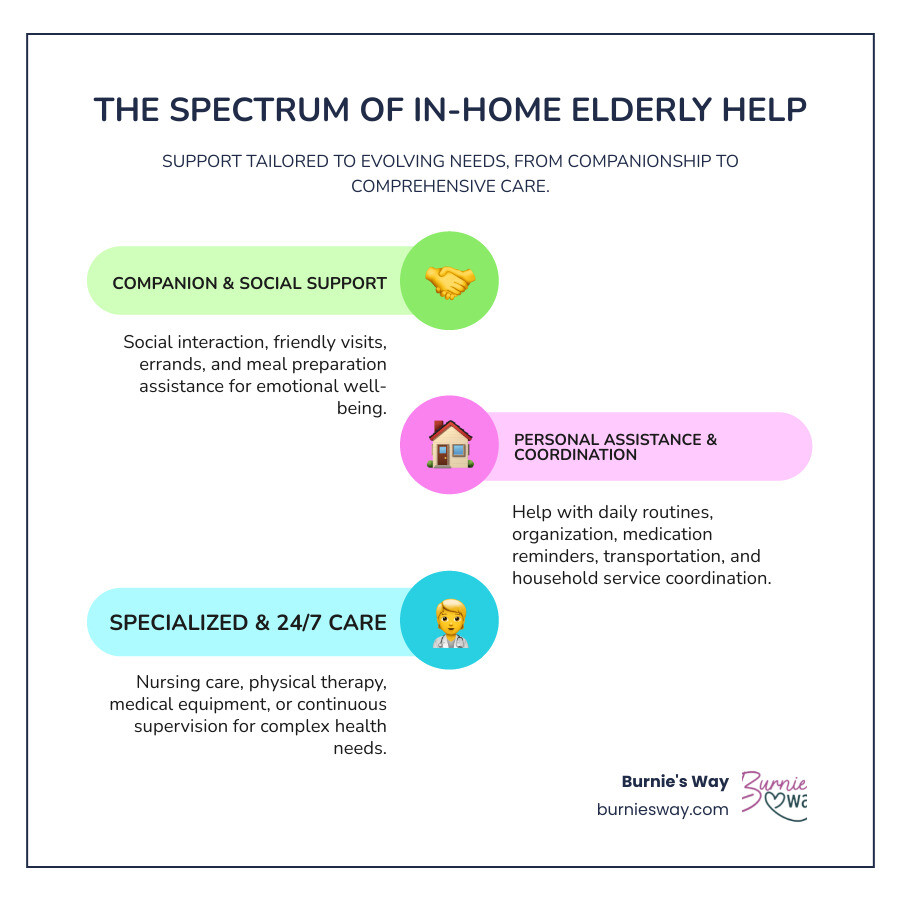
Quick Overview: Types of In-Home Support
- Companion Support - Social interaction, friendly visits, errands, meal preparation assistance
- Personal Assistance - Help with daily routines, organization, medication reminders, transportation
- Household Coordination - Arranging trusted professionals for home maintenance, specialized services
- Healthcare Services - Nursing care, physical therapy, medical equipment (through licensed providers)
- 24/7 Care Options - Live-in support or rotating shifts for constant supervision
Average costs: $15-30/hour for personal support, with rates varying by location and service level.
The statistics tell a compelling story: 77% of seniors want to stay in their homes as they age, according to AARP research. This isn't just preference—it's about maintaining independence, dignity, and connection to the life they've built.
The reality is that aging at home with the right support often leads to better outcomes than moving to a facility. Research shows seniors who age in place are frequently happier, healthier, and recover faster from illness or injury. They maintain their social connections, keep their pets, and enjoy the comfort of familiar surroundings.
But here's what many families don't realize: in-home support isn't one-size-fits-all. The spectrum ranges from a few hours of companionship each week to round-the-clock professional care. Some families need help coordinating services and staying connected. Others require hands-on personal assistance or specialized healthcare support.
The challenge? Figuring out what level of support your loved one actually needs—and finding trustworthy, qualified help that fits your family's situation and budget.
That's what this guide is for. We'll walk you through the types of support available, how to recognize when it's time to seek help, what to look for in providers, how to manage costs, and how to create a sustainable support system that works for everyone involved.
Terms related to in home elderly help:
- private elder care services
- emergency aged care respite
What is In-Home Elderly Help and What Are the Benefits?
In home elderly help encompasses a wide array of personal support services designed to empower older adults to continue living independently and comfortably in their familiar surroundings. At Burnie's Way, we believe in supporting individuals to live the way they want, with the assistance they need, without having to leave the comfort of home. This concept, often referred to as "aging in place," is a strong preference for the majority of seniors. As an AARP study reports, 77% of seniors wish to remain in their homes as they age.
The benefits of aging in place with appropriate in home elderly help are profound. Seniors who stay in their homes tend to be happier, healthier, and often recover more quickly from illness or injury. The familiar environment provides a sense of security and stability, which can be particularly beneficial for those experiencing cognitive changes, potentially leading to a slower progression of memory-related conditions. Our focus is on enabling this independence and enhancing the quality of life for our clients.
Types of In-Home Support Services
The spectrum of in home elderly help is broad, ranging from casual assistance to more structured support, all custom to individual needs. Here’s a breakdown of common types of services:
| Service Category | Description More info about how we work
Key Benefits Compared to Moving to a Facility
The decision to choose in home elderly help over a move to an assisted living facility or nursing home is often driven by several key benefits:
- Familiar Surroundings: There's no place like home. The comfort of familiar objects, personal memories, and a lifelong routine significantly contributes to an elder's emotional well-being. This continuity can be particularly vital for those with memory challenges.
- Maintaining Social Connections: Staying in their community means seniors can continue to engage with friends, neighbors, and local groups, preserving vital social networks. They can maintain their preferred lifestyle, whether it's attending a local church, visiting a favorite park, or simply enjoying their own backyard.
- Pet Ownership: For many, pets are cherished family members. Remaining at home allows seniors to keep their beloved companions, a comfort often impossible in facility settings.
- Flexibility and Control: In home elderly help offers unparalleled flexibility. Services can be customized and adjusted as needs evolve, giving seniors and their families more control over their daily lives and personal choices.
- Healthier and Happier Outcomes: As cited earlier, studies suggest that seniors who age in place tend to be happier, healthier, and recover faster. This aligns with the broader goal of creating livable communities where older adults can thrive.
At Burnie's Way, our personalized approach, backed by 50 years of experience, focuses on empowering our clients to preserve their independence and enjoy the highest possible quality of life in their own homes. We believe in building trust, getting to know families, and listening to what matters most to create a support plan that truly fits their life. More info about how we work
10 Signs Your Loved One Might Need In-Home Support
Recognizing the need for in home elderly help can be challenging, as changes in an elder's abilities often occur gradually. It's important to approach these conversations with empathy and a focus on proactive planning rather than waiting for a crisis. Observing changes in daily habits and overall well-being is the first step toward ensuring your loved one receives the appropriate support to remain safe and independent.

List of Key Warning Signs
Here are 10 common indicators that suggest an elderly loved one might benefit from in home elderly help:
- Increased Falls or Mobility Issues: Frequent tripping, difficulty walking, getting up from a chair, or using stairs can signal a need for assistance with mobility and safety within the home. This increases the risk of serious injury.
- Decline in Personal Hygiene: Noticeable changes like unkempt hair, body odor, wearing dirty clothes, or a general lack of attention to personal grooming can indicate difficulty with bathing, dressing, or other personal care tasks.
- Messy or Cluttered Home Environment: A once tidy home becoming excessively cluttered, dirty, or disorganized might suggest your loved one is struggling with household chores, cleaning, or managing their living space.
- Signs of Confusion or Memory Loss: Forgetting important appointments, getting lost in familiar places, repeating questions, or difficulty following conversations could point to cognitive decline that impacts daily safety and functioning.
- Unexplained Weight Loss or Poor Nutrition: Skipping meals, having expired food in the fridge, or noticeable weight loss can indicate challenges with meal preparation, grocery shopping, or a loss of appetite.
- Social Withdrawal and Isolation: A loved one who used to be active but now avoids social gatherings, friends, or hobbies may be experiencing loneliness, depression, or finding it difficult to leave the house without assistance.
- Difficulty Managing Medications: Forgetting to take medications, taking incorrect doses, or struggling to organize prescriptions can have serious health consequences and indicates a need for medication reminders or management support.
- Forgetting to Pay Bills: Missed payments, overdue notices, or difficulty understanding financial statements can be a sign that managing finances has become overwhelming.
- Recent Hospital Stay or Surgery: A return home after a hospitalization often requires temporary or ongoing support for recovery, medication management, and general assistance during a vulnerable period.
- Family Caregiver Burnout: If you or other family members are feeling overwhelmed, stressed, or exhausted by the demands of caregiving, it's a clear sign that additional in home elderly help is needed to provide respite and sustainable support. Over a third of caregivers must use their personal finances and savings to pay for the needs of the person they care for, underscoring the financial and emotional strain.
If you observe several of these signs, it's time to consider exploring options for in home elderly help. We can assist in coordinating the right personal support and services to address these challenges. More info in our FAQ
Finding and Choosing the Right In-Home Elderly Help
Finding the right in home elderly help is a crucial step in ensuring your loved one's well-being and your own peace of mind. Navigating the various options and vetting providers can seem daunting, but with a structured approach, you can find reputable support that aligns with your specific needs.
How to Find Reputable Support
When searching for in home elderly help, we recommend starting with comprehensive research and personal recommendations:
- Personal Concierge Services: Consider services like Burnie's Way, which acts as a personal concierge for aging adults. We help coordinate daily life management, connect you with trusted professionals for specific needs, and provide independence-focused assistance. We are not direct caregivers but facilitate access to the support that allows your loved one to live confidently and comfortably at home.
- Referrals from Trusted Sources: Ask friends, family, neighbors, or healthcare professionals (doctors, social workers) for recommendations. Personal experiences often provide the most reliable insights.
- Community Resources: Local Area Agencies on Aging (US) or Home and Community Care Support Services (Canada) are excellent starting points. In the US, the Eldercare Locator is a national database that can help you find community resources. For Canada, Ontario Health atHome is a key contact point for home care services.
- Checking References: Always request and thoroughly check references from any potential provider or agency. Ask about reliability, trustworthiness, punctuality, and how they handle challenging situations.
- Interview Questions: Prepare a list of questions for interviews with potential providers. These should cover their experience, training, approach to support, availability, and how they handle emergencies.
Legal and Safety Considerations for In-Home Elderly Help
Ensuring the safety and security of your loved one is paramount when engaging in home elderly help.
- Background Checks: Reputable agencies and personal concierge services will conduct thorough background checks on any individuals providing support. If you are hiring independently, it is crucial to perform these checks yourself.
- Bonding and Insurance: Verify that any agency or individual is bonded and insured. This protects you from liability in case of accidents, theft, or injury occurring in your home.
- Service Agreements: A clear, written service agreement or contract is essential. It should outline the scope of services, schedule, costs, payment terms, and procedures for addressing concerns or making changes. The Hiring In-Home Help guide offers valuable advice on this.
- Emergency Procedures: Discuss emergency protocols with your provider. Ensure they know how to respond to medical emergencies, power outages, or other unforeseen events, and have clear contact information for family members and emergency services.
- Qualifications for Personal Support: While Burnie's Way focuses on coordination and personal assistance rather than direct medical care, we ensure that any referred or coordinated personal support providers have appropriate qualifications and training for the tasks they perform. This includes understanding their scope of practice and capabilities.
Navigating Public and Private Options for In-Home Elderly Help
The path to accessing in home elderly help can involve both government-funded programs and private services.
- Government-Funded Services (US): In the United States, Medicare has limited coverage for short-term home health services from certified agencies, typically for medically necessary care. Medicaid benefits for home health services vary by state and are generally for low-income individuals.
- Government-Funded Services (Canada): In Canada, specifically Ontario, residents can access home and community care services through Ontario Health atHome. This organization supports individuals of all ages who require care in their home, at school, or in the community. They can assess needs, develop care plans, and provide access to professional health care (like nursing and therapy) and personal support services. While government-funded home care is free, some community support services may involve co-payments.
- Private Pay Services: Many families choose to pay for in home elderly help directly, especially if they do not qualify for government programs or desire more extensive or flexible services. This allows for greater choice and control over the type and amount of support received.
- Long-Term Care Insurance: If your loved one has long-term care insurance, review their policy to understand what in home elderly help services are covered and under what conditions.
We understand that navigating these options can be complex. As your personal concierge, Burnie's Way can help you understand these choices and coordinate the personal support that fits best, ensuring your loved one lives the way they want.
The Financial Side: Costs and Assistance for Home Support
Understanding the financial aspects of in home elderly help is a critical component of sustainable planning. Costs can vary significantly based on the type of support, the frequency, and geographic location.
Understanding the Costs
- Average Hourly Costs: While specific US-wide averages were not provided in our research, home health care services typically charge by the hour. Rates can range widely depending on the level of specialized support required. For instance, basic companion support will generally be less expensive than skilled nursing services.
- Geographic Cost Variations: The cost of in home elderly help is not uniform across the United States or Canada. Urban areas, for example, often have higher hourly rates than rural areas due to differing costs of living and demand for services.
- Service Level Pricing: The complexity of the services provided directly impacts the cost. Personal assistance with daily activities, for example, costs more than simple companionship. If 24/7 support is needed, options include "live-in care" (where a caregiver resides in the home, requiring scheduled breaks and a sleeping arrangement) or "24-hour care" (where multiple caregivers rotate shifts to ensure someone is always awake and available). The latter typically costs more but offers constant, active supervision.
- Hidden Fees: Always inquire about any additional or "hidden" fees. This could include administrative charges, travel costs for caregivers, or surcharges for evening, weekend, or holiday services. A clear service agreement should detail all potential costs upfront.
At Burnie's Way, we believe in transparency. More info on our pricing is available to help you understand the investment in personalized support.
Financial Assistance and Payment Options
While many in home elderly help services are paid for privately, several avenues for financial assistance exist:
- Long-Term Care Insurance: If your loved one has a long-term care insurance policy, it may cover a significant portion of in home elderly help costs. Review the policy carefully to understand its benefits, waiting periods, and daily limits.
- Veterans Benefits: Eligible veterans and their spouses may qualify for Aid & Attendance benefits, which can help cover the costs of in home elderly help. Information can be found through the Department of Veterans Affairs.
- Medical Expense Tax Credit (Canada): Canadian residents can claim eligible medical expenses on their personal taxes. This may include certain in home elderly help services that are medically necessary. It's crucial to keep all receipts and related documents to support your claim. More details are available from the Canada Revenue Agency on the Medical Expense Tax Credit.
- Disability Tax Credit (Canada): The Disability Tax Credit (DTC) is a non-refundable tax credit for persons with disabilities or their supporting persons, designed to reduce the amount of income tax they may have to pay. If your loved one qualifies, this credit can indirectly free up funds for in home elderly help. Learn more about the Disability Tax Credit.
- State and Local Programs (US): Many states and local communities in the US offer programs to assist seniors with in home elderly help costs, particularly for those with lower incomes or specific needs. These programs can vary widely, so checking with your local Area Agency on Aging or state health department is recommended.
- Medicare and Medicaid: As mentioned, Medicare has limited coverage for specific, short-term home health services. Medicaid may offer more extensive in home elderly help benefits, but eligibility is typically based on financial need and varies by state.
Exploring these options can significantly alleviate the financial burden, making in home elderly help more accessible.
The Support Ecosystem: Family, Personal Support, and Technology
A successful in home elderly help strategy involves a holistic approach, integrating family involvement, professional support, and modern technological solutions. This ecosystem ensures comprehensive well-being for the elder while also supporting the family.
The Role of Family and Support Resources
Family members often form the backbone of an elder's support system, but recognize the limits of what one family can provide.
- Communication: Open and honest communication among family members and with your loved one is paramount. Discuss needs, expectations, and roles to avoid misunderstandings and burnout.
- Setting Boundaries: Caregiving can be demanding. It's vital for family caregivers to set boundaries to protect their own physical and mental health. This might mean delegating tasks or seeking external support.
- Respite and Backup Support: Family caregivers need breaks. Respite services provide short-term relief, whether at home, in a health care facility, or at an adult day care center. This allows caregivers to recharge. As a personal concierge, Burnie's Way can assist in coordinating respite options to ensure continuity of personal support.
- Support Groups: Connecting with other caregivers can provide invaluable emotional support, practical advice, and a sense of community. Organizations like The Ontario Caregiver Organization offer resources and a point of access to information for caregivers.
- Managing Stress: Caring for an older adult can be rewarding but also stressful. Seeking counseling from a mental health professional, joining support groups, or simply talking to trusted friends can help manage this stress.
We understand that being a son or daughter often means wearing many hats. Our personal support services are designed to lighten your load so you can focus on what matters most—being present for your loved one.
Integrating Technology into Senior Support
Technology offers powerful tools to improve in home elderly help, promoting safety, connection, and independence.
- Emergency Alert Systems: These systems, often worn as pendants or bracelets, allow seniors to call for help with the press of a button. Some include fall detection or GPS tracking. While they typically involve an initial fee and a monthly service charge, they provide peace of mind for elders living alone.
- Smart Home Devices: Devices like smart speakers (e.g., Amazon Echo, Google Home) can help with reminders (medication, appointments), provide entertainment, and even facilitate communication. Smart lighting and thermostats can improve comfort and energy efficiency.
- Virtual Appointments: Telehealth and virtual doctor's appointments allow seniors to receive medical advice and check-ups from the comfort of their home, reducing the need for transportation and exposure to illnesses.
- Medication Reminders: Automated pill dispensers and smartphone apps can provide timely reminders for medication, helping to ensure adherence to treatment plans.
- Social Connection Tools: Tablets and smartphones enable video calls with family and friends, combating social isolation. Online communities and social media can also help seniors stay engaged and connected with the wider world.
At Burnie's Way, we can help coordinate the integration of these technologies into your loved one's daily routine, ensuring they are used effectively to improve their independent living.
Conclusion: Your Partner in Aging Gracefully at Home
The journey of aging is unique for everyone, and the desire to remain independent in one's own home is a deeply personal and common aspiration. In home elderly help offers a flexible, personalized, and often more comforting alternative to facility-based care, allowing seniors to maintain their routines, connections, and dignity.
We've explored the diverse spectrum of support available, from companion services and personal assistance to the coordination of specialized medical and household services. We've highlighted the signs that suggest a need for assistance, provided guidance on finding reputable providers, and discussed the financial considerations and available aid.
At Burnie's Way, we pride ourselves on being more than just a service; we are your dedicated personal concierge, committed to empowering independent living. With 50 years of experience, we offer compassionate personal support that helps our clients live confidently and comfortably at home. We believe in proactive planning, coordinated daily life management, and giving families peace of mind that everything’s okay. Our approach is deeply human, focusing on connection, independence, and ease, without providing direct caregiving or healthcare services. We are here to guide you through the choices and coordinate the personal support that fits best for your loved one.
Embracing in home elderly help is a choice for independence, comfort, and a higher quality of life. Let us be your partner in navigating this journey, ensuring your loved one can age gracefully, on their own terms, at home.