

What Is Respite Care — and Why It Matters for Family Caregivers
Respite care is short-term relief for family caregivers — a planned break where someone else steps in to look after your loved one so you can rest, recharge, or handle other responsibilities.
Here's a quick overview of what you need to know:
| What it is | Temporary care for a loved one, giving the primary caregiver a break |
| How long | A few hours to several weeks |
| Where it happens | At home, an adult day center, or a short-term residential facility |
| Who provides it | Trained professionals, volunteers, family members, or facility staff |
| Who pays | Out-of-pocket, Medicaid, VA benefits, or Medicare (for hospice patients only) |
| How to find it | ARCH National Respite Locator, Eldercare Locator, state programs |
Caregiving is one of the most demanding roles a person can take on. If you're helping an aging parent manage daily life, you're likely doing it out of love — but that doesn't make it easy. Research shows that around 60% of caregivers experience symptoms of burnout. That's not a personal failure. It's a sign that even the most dedicated people have limits.
Respite care exists to help with exactly that.
This guide walks you through every major option — from in-home support and adult day programs to VA benefits and government-funded programs — so you can find the right break at the right time.
Understanding the Different Types of Respite Care
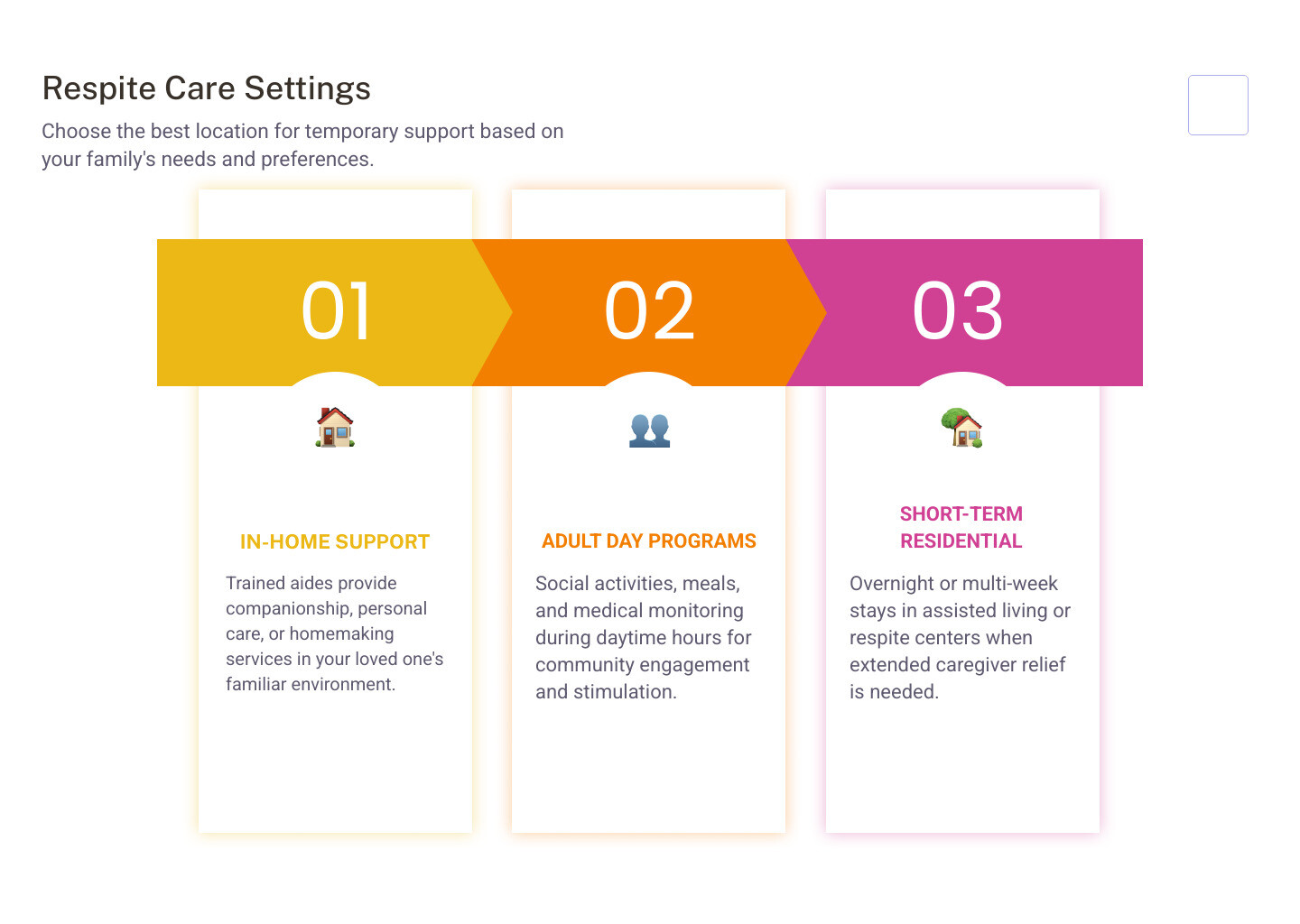
When we talk about respite care, we aren't talking about a "one-size-fits-all" service. It is a broad umbrella that covers everything from a neighbor sitting with your dad for two hours so you can go to the dentist, to a two-week stay in a beautiful residential community while you take a much-needed vacation.
According to the National Institute on Aging, the goal is simply to provide a short-term break. At Burnie's Way, we often see families who feel they have to do it all themselves. We’ve spent 50 years helping families realize that bringing in support isn't "giving up"—it's actually the best way to ensure your loved one can stay independent at home for as long as possible. You can explore more about short-term senior care to see how these temporary shifts in support can make a world of difference.
In-Home Respite Care Services
This is often the first choice for many families because it allows the senior to stay in their familiar environment. In-home services can be very flexible. You might hire someone for just a few hours a week or for 24-hour support while you’re away.
In-home providers generally offer three levels of support:
- Companion Care: This is all about social interaction. A companion might play cards, go for a walk, or simply chat with your loved one to prevent isolation.
- Homemaking Services: These helpers take care of the "heavy lifting" of daily life—doing laundry, prepping meals, and light cleaning.
- Personal Support: This involves more "hands-on" help with what professionals call activities of daily living (ADLs), such as bathing, dressing, and grooming.
At Burnie's Way, we act as a lifestyle concierge to help coordinate these types of services. We don't provide medical care ourselves, but we use our half-century of experience to help you find the right fit, ensuring your loved one’s daily life is managed with heart and competence.
Community-Based Adult Day Programs
If your loved one is a social butterfly (or even a social caterpillar looking to come out of their cocoon), an adult day program might be the perfect fit. These programs are usually hosted at community centers, churches, or specialized facilities.
They offer:
- Socialization: Group activities like music, crafts, and games.
- Structure: A routine that can be very comforting for seniors, especially those with early-stage memory loss.
- Professional Supervision: Staff members are on-site to monitor safety and engagement.
The median cost for a day of adult day services is approximately $80, making it one of the most cost-effective ways to get a full day of respite. It’s a win-win: you get an eight-hour block to work or rest, and they get a change of scenery and some new friends.

The Vital Role of Respite Care in Preventing Burnout
We’ve all heard the flight attendant say, "Put your own oxygen mask on before assisting others." Caregiving is exactly the same. If you are running on empty, you can’t provide the compassionate, patient support your loved one deserves.
As we mentioned, 60% of caregivers show symptoms of burnout, which can manifest as irritability, extreme fatigue, and even physical illness. This is why the Caregiver Action Network emphasizes that respite is not a luxury—it is a necessity for your health. Taking a break allows you to decompress and return to your role with renewed patience. We’ve written extensively about the importance of caregiver self-care because we know that a healthy caregiver is the foundation of a happy home.
Improving Well-being Through Respite Care
Respite care doesn’t just help you; it helps your loved one too. When a senior only interacts with one person all day, every day, life can start to feel a bit small. Introducing a new face—whether it’s a professional companion or a staff member at a day center—provides social stimulation that can actually improve cognitive health and mood.
The Cleveland Clinic notes that these programs help prevent the isolation that so often leads to depression in seniors. A fresh conversation or a new activity can be the highlight of their week, giving them something to look forward to while you take your "oxygen mask" break.
Emergency Respite Care Planning
Life happens. You might wake up with a 102-degree fever, or an emergency might require you to leave town on short notice. If you don't have a plan in place, these moments can be terrifying.
Emergency respite care is designed for these exact "what-if" scenarios. Some facilities and agencies offer "fast-track" scheduling for crises. We always recommend having an emergency senior care plan ready to go. This includes a list of local providers who accept short-notice stays and a "go-bag" for your loved one with their medications and personal preferences clearly documented.
Navigating Costs and Funding for Respite Services
Let’s talk numbers. One of the biggest hurdles to accessing respite care is the cost. While it can be an investment, understanding the averages helps you budget effectively.
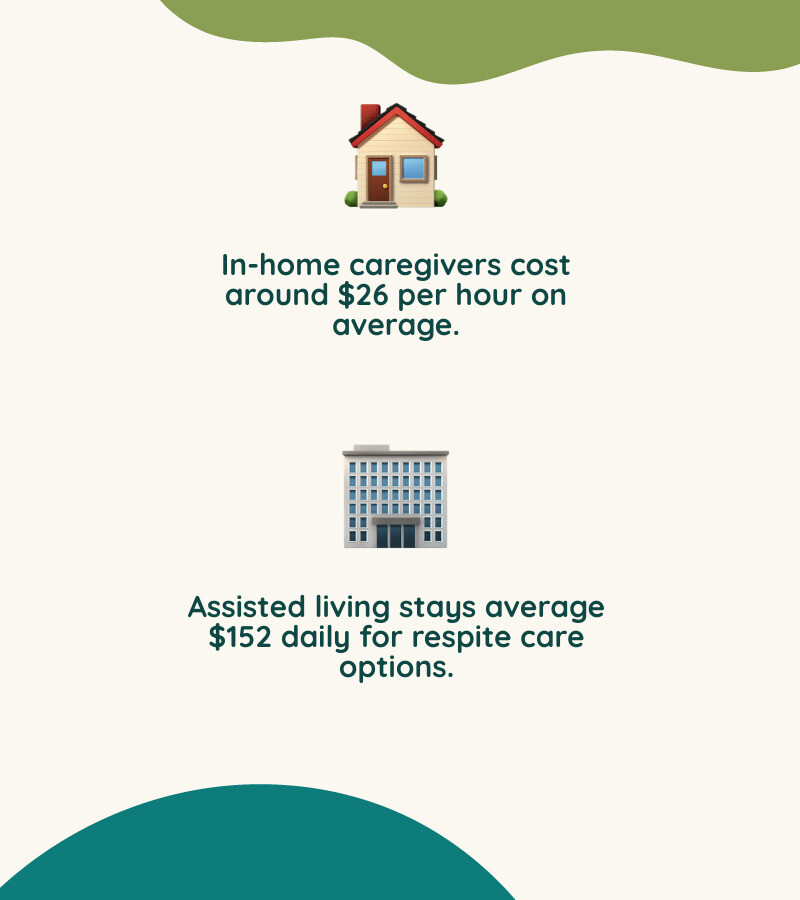
- In-home Caregivers: On average, a professional in-home caregiver gets paid around $26 an hour.
- Adult Day Services: As noted, the median cost is around $80 per day.
- Assisted Living Stays: For overnight or multi-day respite, the average cost for a day in an assisted living center is $152.
According to WebMD, these costs vary significantly based on your location and the level of care required. However, there are several ways to offset these expenses.
Medicare and Medicaid Coverage
A common misconception is that Medicare covers all respite care. Unfortunately, it usually doesn't. Standard Medicare only covers respite care if it is part of a hospice benefit. In those cases, Medicare will cover up to five consecutive days of respite care in a hospital or skilled nursing facility to give the primary caregiver a break.
Medicaid is a different story. Many states, including Virginia, offer "waiver" programs that can help pay for respite services to keep seniors living at home rather than in a nursing home. In Virginia, the Lifespan Respite Voucher program through DARS provides reimbursement to eligible caregivers, helping to make these breaks more affordable.
VA Benefits and Private Insurance
If your loved one is a Veteran, there are fantastic resources available. The VA provides respite care for Veterans who meet clinical criteria. This can include:
- A Home Health Aide coming to the house.
- Stays in a VA Community Living Center.
- Attendance at an Adult Day Health Care center.
Nursing home respite through the VA is typically available for a maximum of 30 days per calendar year. You can learn more through the VA Geriatrics and Extended Care portal.
For those with private insurance, standard health insurance rarely covers respite. However, if you have a Long-Term Care Insurance policy, check the fine print! Many of these policies specifically include a daily or weekly allowance for respite care services.
How to Find and Evaluate Respite Care Providers
Finding someone you trust to step into your shoes is a big deal. You aren't just looking for a "babysitter"; you're looking for a partner in support.
The ARCH National Respite Locator Service is the gold standard for finding local options. You can search by zip code and the specific needs of your loved one. Once you have a list of potential providers, we recommend looking into comprehensive care plans to help you communicate exactly what your loved one needs during your absence.
Essential Qualifications for a Respite Care Provider
Don’t be afraid to ask the tough questions. When interviewing a provider or touring a facility, keep this checklist in mind:
- Background Checks: Does the agency perform criminal background checks and drug screenings?
- Training: What specific training do they have for conditions like dementia or mobility issues?
- Licensing: Is the facility or agency licensed by the state of Virginia?
- Emergency Procedures: What is their plan for a fire, power outage, or medical emergency?
Resources like VirginiaNavigator are excellent for finding vetted, local providers who specialize in supporting individuals with disabilities and seniors in our community.
Steps to Accessing Respite Care Programs
Getting started can feel like a lot of paperwork, but taking it step-by-step makes it manageable:
- Assessment: Start with a clear assessment of what you need. Is it four hours of "me time" or a week-long vacation?
- Application: Contact local programs like the Lifespan Respite Care Program to see if you qualify for grants or vouchers.
- Trial Run: If possible, do a "mini-respite." Have a companion come for just two hours while you're in the other room to see how your loved one reacts.
For those looking for more permanent or recurring solutions, our long-term respite complete guide can help you plan for the months and years ahead.
Frequently Asked Questions about Respite Care
How long can a person stay in respite care?
It depends entirely on the setting! In-home respite can be as short as one hour. Residential facilities usually have a minimum stay of 24 to 48 hours, and many have a 60-day limit for temporary stays. VA programs typically cap nursing home respite at 30 days per year.
Does Medicare pay for respite care?
Only under the hospice benefit. If your loved one is in hospice, Medicare covers nearly all the cost for up to five days of inpatient respite care. For non-hospice situations, Medicare generally does not pay for respite.
How do I find local respite care resources?
The best places to start are the ARCH National Respite Locator, the Eldercare Locator (1-800-677-1116), and your local Virginia Area Agency on Aging. These organizations can point you toward state-funded programs and trusted local businesses.
Conclusion
At the end of the day, respite care is about preserving the most important thing: the relationship between you and your loved one. By taking the time to care for yourself, you ensure that the time you spend together is high-quality, patient, and full of joy.
At Burnie's Way, we believe in empowering seniors to live independently while giving families the peace of mind they deserve. We aren't a medical provider; we are your personal concierge for aging well. With 50 years of experience, we specialize in lifestyle coordination—helping you navigate these choices, set up routines, and find the perfect balance of support.
Whether you need a few hours to grab coffee with a friend or help coordinating a complex schedule of support, we are here to help your family live confidently at home.
Explore our lifestyle coordination services and let us help you find your breath again.