

 Sydney Giffen
Family Caregiver Support 101
 Sydney Giffen : Feb 22, 2026 12:00:00 AM
Understanding the Role of a Family Caregiver Family caregiver support includes a wide range of resources, programs, and services designed to help...

Caregiver self care is the practice of maintaining your own physical, emotional, and mental health while supporting a loved one. It includes simple daily habits like getting enough sleep, eating nutritious meals, staying connected with friends, setting boundaries, and taking regular breaks—even short ones.
Quick self-care essentials:
Nearly 1 in 5 adults in the United States are now caregivers, and that number keeps growing as our population ages. If you're one of them, you probably know the emotional roller coaster well—the deep love and commitment mixed with exhaustion, worry, and the nagging feeling that you're not doing enough.
Here's what many people don't realize: caregivers face a 63% higher risk of dying prematurely if they're between 66 and 96 years old and experiencing emotional strain. An estimated 46% to 59% of caregivers are clinically depressed. The statistics are sobering, but they're not destiny.
The oxygen mask rule from airplanes applies perfectly here. You can't help anyone else if you're running on empty. When you prioritize your own well-being, you actually become more effective at supporting your loved one—not less.
The good news? Self-care doesn't require spa days or expensive retreats. Small, consistent actions—a 10-minute walk, a phone call with a friend, saying no to one extra request—can make a real difference in how you feel and function.
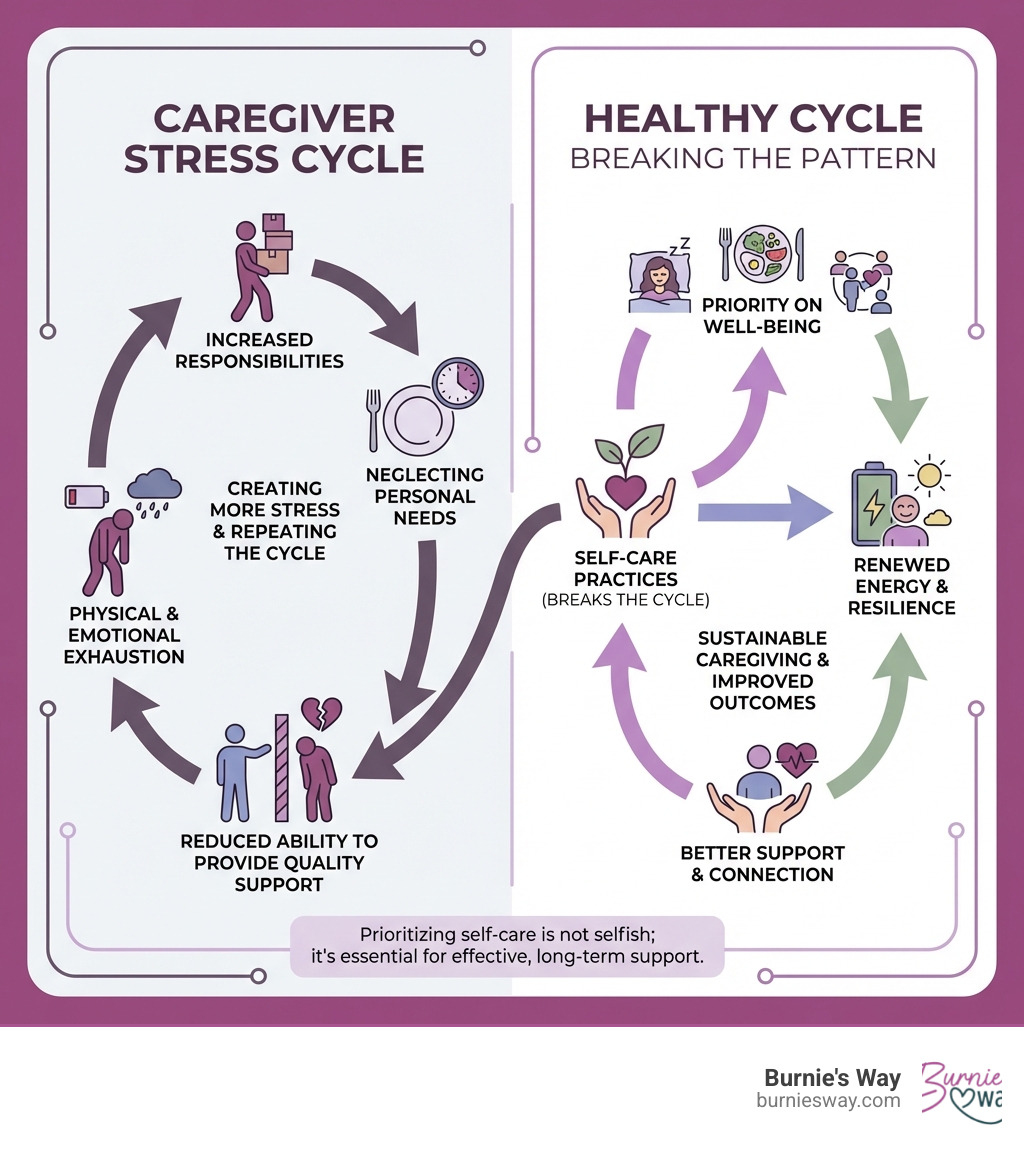
Simple guide to Caregiver self care:
Caregiving, while incredibly rewarding, often comes with a unique set of challenges and stressors. We dedicate ourselves to the well-being of others, sometimes without fully realizing the toll it takes on us. This can lead to caregiver burnout, a condition marked by irritability, fatigue, problems with sleep, weight gain, feelings of helplessness or hopelessness, and social isolation, resulting from repeated exposure to stress.
The primary challenges caregivers face extend beyond the immediate tasks of assisting a loved one. They include:
Recognizing the physical and emotional signs of caregiver burnout or stress is the first step toward reclaiming your well-being. These signs are not a weakness; they are messages from your body and mind telling you it's time to prioritize your caregiver self care.
Physical Warning Signs:
Emotional Warning Signs:
Chronic stress triggers a release of stress hormones, leading to exhaustion, irritability, and a weakened immune system. This prolonged stress has been linked to increased inflammation in the body and a higher risk for chronic health conditions such as high blood pressure, heart disease, and diabetes. We need to be vigilant about these signs, as they can have serious long-term consequences for our health. For more on the health impacts of ongoing stress, we find valuable information from the National Institute on Aging: Scientific research on the health impacts of ongoing stress.

When we are deeply involved in supporting someone, it's easy to fall into the trap of self-criticism. We might feel we're not doing enough, that we should be stronger, or that any time spent on ourselves is time stolen from our loved one. This harsh inner voice can be a significant barrier to effective caregiver self care.
This is where self-compassion becomes the bedrock of your well-being. Self-compassion means giving yourself credit for the tough, complex work you do every day. It means acknowledging your struggles, treating yourself with the same kindness and understanding you would offer a dear friend, and stepping away from that self-critical, harsh inner voice. It's about recognizing that feelings of sadness, frustration, and even guilt are normal and understandable reactions to a demanding situation.
Why is self-compassion so essential? Because it allows us to build emotional resilience. When we are gentle with ourselves, we create space to acknowledge our needs without judgment. This isn't selfish; it's a vital part of the job. As the Harvard Health blog points out, practicing self-care allows the caregiver to remain more balanced, focused, and effective, which ultimately helps everyone involved. We can explore more about this perspective here: Scientific research on the benefits of self-compassion.
When you prioritize your own needs, you're not abandoning your loved one; you're ensuring you have the energy, patience, and emotional reserves to continue providing the best support possible. It's the difference between trying to pour from an empty cup and consistently refilling it.
| Negative Self-Talk (Barrier to Self-Care) | Positive Affirmation (Fostering Self-Compassion) |
|---|---|
| "I'm being selfish if I take time for myself." | "Taking care of myself helps me care for others better." |
| "I should be able to handle everything." | "It's okay to ask for help; caregiving is challenging." |
| "I'm not doing enough for them." | "I am doing my best, and my best is enough." |
| "If I don't do it, no one will." | "I can delegate tasks and trust others to help." |
| "I feel guilty enjoying myself." | "I deserve moments of joy and peace to recharge." |
The journey of caregiver self care is often paved with internal and external barriers. One of the most pervasive is the feeling of guilt. We might feel guilty for wanting a break, for not being able to do everything, or for experiencing moments of joy separate from our caregiving role. These feelings are common, but they don't serve us or our loved ones in the long run.
Common misconceptions also stand in our way:
To manage this guilt and these misconceptions, we must consciously work on setting personal boundaries. This means recognizing your limits and communicating them effectively. It's about saying "no" to draining requests that push you past your capacity. Setting boundaries isn't about being unkind; it's about protecting your energy and preventing resentment from building up.
We also need to set realistic expectations for ourselves and our caregiving journey. Caregiving is rarely perfect, and there will be good days and bad days. Acknowledge that you are human, and you cannot control every outcome. Focus on what you can do, and celebrate small victories. As the National Institute on Aging reminds us, feelings of sadness, frustration, and guilt are normal and understandable for caregivers, and being kind to yourself is paramount. For more tips on managing these feelings and taking responsibility for your own care, we can refer to Taking Care of Yourself: Tips for Caregivers.
Caregiver self care doesn't have to be a grand gesture; it can be woven into the fabric of your daily life through small, consistent actions. Even 10-minute routines can make a significant difference.
Consider these simple integrations:
Integrating self-care into your daily life is about making intentional choices that support your well-being, one small step at a time. For additional support and guidance, especially regarding financial aid that can alleviate some burdens, explore Family Caregiver Grants.
To sustain our role in supporting others, we must actively cultivate habits that protect our physical and mental health. These daily practices form the backbone of effective caregiver self care, helping us build resilience and prevent burnout.
Nutrition: Fueling Your Body and Mind What we eat profoundly impacts our energy, mood, and overall health. Caregivers often neglect their own nutritional needs, grabbing quick, unhealthy options. However, prioritizing good nutrition is crucial.
Quality Sleep: Your Body's Recharge Station Sleep deprivation is a common reality for caregivers, yet it's one of the most detrimental. Lack of sleep exacerbates stress, impairs cognitive function, and weakens the immune system. Aim for 7-9 hours of quality sleep each night.
Gentle Movement: Releasing Tension, Boosting Mood Physical activity doesn't have to mean intense workouts. Gentle movement can significantly reduce stress, improve sleep, and boost mood.
Meditation: Cultivating Inner Peace Meditation, even in short bursts, can be a powerful tool for managing stress.
By consistently integrating these practical habits into your daily life, you'll not only improve your own well-being but also strengthen your capacity to provide compassionate and effective support to your loved one.
One of the most profound truths of caregiving is that you cannot do it alone. Building a robust support system and learning to effectively ask for and accept help are cornerstones of sustainable caregiver self care.
The Power of Social Connection: Caregivers often report higher levels of stress and are at greater risk for social isolation. Remaining socially connected is vital for preventing burnout. It helps us feel less alone, provides perspective, and can even foster self-compassion by realizing others share similar experiences. Make time for friends and family, even if it's just a quick phone call or a virtual chat. Maintaining activities you enjoy, even if modified, can also help keep you connected to your pre-caregiving self and community. We also encourage exploring options for Elderly Social Interaction for your loved one, as their engagement can indirectly free up some of your time and mental load.
Asking for Help: A Skill, Not a Weakness: Many caregivers struggle with asking for help, often feeling like a burden or fearing refusal. However, reaching out is a sign of strength and self-awareness.
Accepting help not only benefits you but also allows others to feel connected and contribute meaningfully to your loved one's well-being.
Even with the best intentions and a supportive network, there are times when the demands of caregiving require external assistance. Exploring personal support options and community resources is a strategic component of caregiver self care that can significantly alleviate stress and prevent burnout.
What is Respite Care? Respite care is a critical service that provides short-term relief for primary caregivers. It can range from a few hours of in-home assistance to adult day care or even short stays in a residential facility. The goal of respite care is simple: to give caregivers a much-needed break to rest, attend to personal needs, or simply recharge. Research shows that even a few hours of respite a week can improve a caregiver’s well-being.
While Burnie's Way does not provide direct medical or in-home care services, we understand that "in-home care" is one of many options families consider. Burnie's Way helps people understand those choices and coordinate the personal support that fits best for aging adults who want to live comfortably and confidently at home. This can include coordinating trusted services and routines that make life easier, which in turn can indirectly free up a caregiver's time.
How to Find and Use Resources:
Burnie's Way offers personal support and lifestyle coordination services, acting as a guide and companion to aging adults. Our team focuses on helping your loved one live confidently and stay connected, coordinating trusted services and routines that make life easier. This approach can complement your caregiving efforts by ensuring your loved one has consistent, compassionate assistance with daily life management, giving you peace of mind and potentially freeing up your time for essential caregiver self care.
Caregiver burnout manifests through a combination of physical, emotional, and mental symptoms. Physically, you might experience chronic fatigue, sleep disturbances (insomnia or sleeping too much), significant changes in appetite or weight, frequent headaches, muscle aches, and increased susceptibility to illness. Emotionally, signs include irritability, anxiety, feelings of sadness or hopelessness (clinical depression is prevalent among caregivers), resentment, social isolation, and a loss of interest in activities you once enjoyed. Mentally, you might notice difficulty concentrating, forgetfulness, or a pervasive feeling of being overwhelmed and helpless. If you identify with several of these signs, it's a strong indicator that you need to prioritize your caregiver self care and seek support.
Managing caregiver guilt is crucial for your well-being. First, acknowledge that guilt is a very common and normal emotion for caregivers, but it doesn't serve you or your loved one positively. Reframe your perspective: taking time for yourself is not selfish; it is essential for you to remain healthy, balanced, and effective in your role. Think of the "oxygen mask rule"—you must put on your own mask first to be able to help others. Practice self-compassion by treating yourself with the same kindness and understanding you would offer a friend. Set realistic expectations for yourself, knowing you can't do everything perfectly. Communicate your needs clearly to others and accept help when offered. Remind yourself that a recharged caregiver is a better caregiver.
A wide range of personal support and community resources can assist caregivers. These include:
The journey of supporting a loved one is a profound expression of love and commitment, but it is also one that demands immense personal strength and resilience. As we've explored, caregiver self care isn't a luxury; it's a fundamental necessity for your well-being and for the quality of support you can provide. By recognizing the signs of stress, practicing self-compassion, integrating small self-care habits into your daily routine, building a strong support system, and leveraging available resources, you can steer this journey with greater balance and peace.
You don't have to carry this load alone. There are resources and people ready to help. At Burnie's Way, we understand the importance of comprehensive daily life management for aging adults who want to live comfortably and confidently at home. Our personal support and lifestyle coordination services are designed to enable elders to live safely and independently, helping them live the way they want. We act as a guide, helper, and companion, offering compassionate assistance and continuous support that gives families peace of mind. By helping your loved one stay connected and supported in their daily life, we aim to indirectly alleviate some of your responsibilities, allowing you more space for your essential caregiver self care.
To learn more about how our personal support and lifestyle coordination services can help you and your loved one thrive, visit our website: More info about our personal support services.

Sydney Giffen : Feb 22, 2026 12:00:00 AM
Understanding the Role of a Family Caregiver Family caregiver support includes a wide range of resources, programs, and services designed to help...

Sydney Giffen : Jun 2, 2026 8:43:21 AM
Why a Caregiver Checklist Can Change Everything A caregiver checklist is one of the most practical tools a family caregiver can have. It's a...

Sydney Giffen : Jul 1, 2026 10:44:41 PM
When Caregiving Gets Overwhelming: What Family Respite Care Really Means Family respite care is short-term, temporary relief for primary caregivers —...