

Why Personal Care for Seniors at Home Matters More Than Ever
Personal care for seniors at home refers to non-medical, hands-on support that helps older adults manage daily tasks — like bathing, dressing, grooming, and meals — so they can stay safely and independently in their own homes.
Here's a quick overview of what it typically covers:
| Area of Support | Examples |
|---|---|
| Personal hygiene | Bathing, grooming, oral care, dressing |
| Mobility & safety | Transfers, fall prevention, positioning |
| Nutrition & routines | Meal prep, hydration, medication reminders |
| Companionship | Social connection, errands, daily check-ins |
| Specialized support | Dementia care, post-hospital recovery |
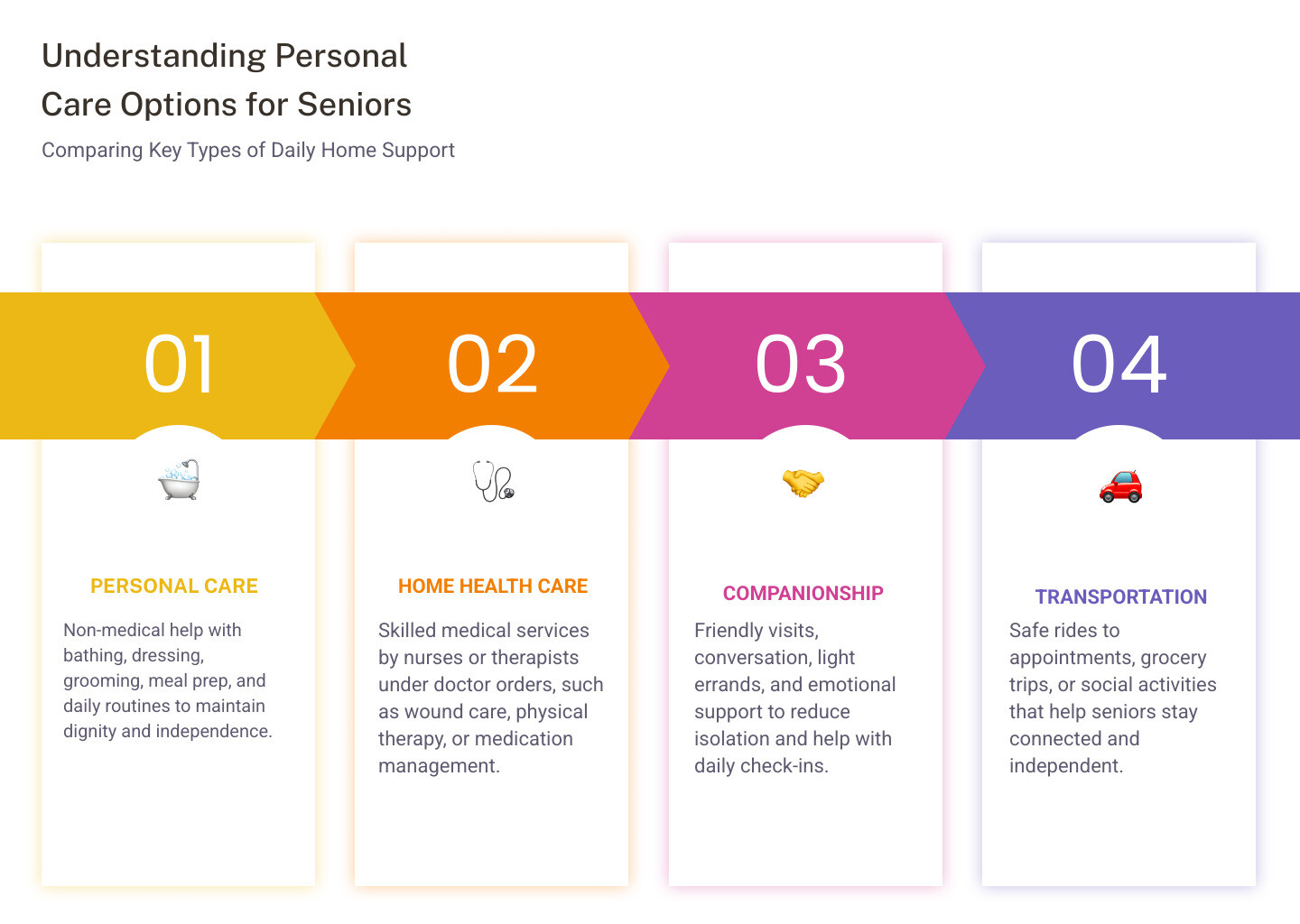
This is different from home health care, which involves licensed medical professionals treating specific conditions under a doctor's order.
Most families don't start thinking about this until something goes wrong — a fall, a missed medication, a phone call where a parent seems confused. Then the questions come fast: What kind of help do they actually need? Who provides it? What does it cost? How do we start?
It's a lot to figure out, especially from a distance. At Burnie's Way, we help families navigate these choices and coordinate the personal support that fits best.
The good news is that there are many types of support available to help older adults live well at home — and understanding your options makes the whole process less overwhelming.
This guide walks you through everything: what personal care includes, how it differs from medical services, what it costs, how families pay for it, and how to choose and coordinate the right support without making it harder on your loved one.
What Personal Care for Seniors at Home Means
When we talk about personal care for seniors at home, we are really talking about preserving a way of life. For most of us, our homes are where our memories live. It’s where we feel the most like ourselves. As we age, however, the "Activities of Daily Living" (ADLs) that we used to do without thinking — like buttoning a shirt or stepping into a bathtub — can start to feel like climbing Mount Everest.
Personal care is the safety net that catches seniors before they lose their independence. It is non-medical support designed to help with those intimate, daily tasks that keep a person clean, fed, and safe. At its heart, it is about maintaining dignity. No one wants to ask for help with the bathroom, but having a professional, compassionate person there to assist makes a world of difference compared to struggling alone.
What personal care for seniors at home includes
Think of personal care as "custodial care." It’s the kind of help a family member might provide, but with professional training and a structured routine. It typically covers:
- Bathing and Hygiene: Assistance with showers, sponge baths, or even just getting in and out of the tub safely.
- Dressing and Grooming: Helping with zippers, buttons, hair styling, and even applying makeup or shaving.
- Toileting: Dignified support with bathroom use and incontinence care.
- Mobility: Helping someone move from the bed to a chair (transfers) or navigating the hallways with a walker.
- Meal Preparation: Ensuring there is fresh, nutritious food available and that the senior is staying hydrated.
For more details on how these services are structured, you can explore Personal Care for Elderly at Home.
How personal care differs from home health care and medical services
This is where many families get confused. If your loved one needs a nurse to change a bandage or give an injection, that is Home Health Care. If they need someone to help them get dressed and make a sandwich, that is Personal Care.
Here are the key differences:
- Medical Necessity: Home health is usually prescribed by a doctor following a surgery or a new diagnosis. Personal care is often chosen by the family based on lifestyle needs.
- Medicare Coverage: Medicare generally pays for "skilled" home health services if the senior is homebound. It typically does not pay for long-term personal care if that is the only help needed.
- Provider Type: Home health involves nurses and therapists. Personal care is provided by aides or companions.
According to the National Institute on Aging, there are many layers to these services, and understanding the "non-medical" label is crucial for insurance planning. For a deeper dive into these definitions, see What is Personal Care for the Elderly.
Who benefits most from personal support at home
We often see a few specific groups who thrive with this kind of support:
- The "Independent" Senior: Those who are mostly fine but are starting to neglect hygiene or meals because it’s just too much effort.
- Seniors with Dementia: Those who need "gentle prompts" or cueing to remember to eat or change their clothes.
- Those with Mobility Issues: If a fall has happened or the fear of one is keeping them in bed, personal support can get them moving again.
- Family Caregivers: We see so many daughters and sons who are burnt out. Personal care provides the respite they need to just be "the child" again instead of the "bath attendant."
Services Typically Included in Personal Care for Older Adults
When a professional steps into a home, they aren't just there to check boxes. They are there to integrate into the senior's existing life. The goal is to make the day feel normal, not clinical.
Hygiene, bathing, dressing, and grooming support
Hygiene is often the first thing to slip when someone is struggling. It isn't just about smell; it's about health. Poor skin care can lead to infections, and neglected oral hygiene is linked to heart issues.
Professional support often includes:
- Shaving and Hair Care: Using electric razors for safety and keeping hair clean and styled.
- Nail Care: Basic trimming and moisturizing to prevent scratches or ingrown nails.
- Dressing: Helping the senior choose weather-appropriate clothing and assisting with the physical act of getting dressed.
Maintaining these routines provides an undeniable boost to self-esteem. Daily grooming is about feeling confident and like yourself, which is essential for emotional well-being. You can read more about this in our blog on Elderly Personal Hygiene.
Toileting, continence, mobility, and safety assistance
This is the most sensitive area of personal care for seniors at home. It requires a high level of trust. Caregivers are trained to handle incontinence with zero judgment, helping to maintain skin integrity and prevent the embarrassment that often leads seniors to withdraw socially.
Mobility support is equally vital. This includes "transferring and positioning." For seniors who spend a lot of time in a chair or bed, regular position changes are essential to prevent pressure ulcers (bedsores). Aides also provide "stand-by assistance," which means they are right there while the senior walks, ready to catch them if they stumble.
Meal preparation, reminders, errands, and daily routines
Nutrition is a major pillar of health. Did you know that dehydration is one of the most frequent causes of hospitalization for older adults? A standard goal is often eight 8-ounce glasses of water a day, but many seniors lose their sense of thirst.
A personal care plan usually includes:
- Grocery Shopping: Ensuring the fridge is stocked with healthy options.
- Special Diets: Following physician-prescribed plans for diabetes or heart health.
- Medication Reminders: While they can't "administer" the meds (like a nurse), they can remind the senior it's time to take them.
- Light Housekeeping: Doing the dishes or laundry to keep the environment safe and trip-free.
For more on how these tasks fit into a daily plan, check out Daily Life Assistance and Assistance with Daily Activities.

Why Personal Care Helps Seniors Stay Independent, Safe, and Respected
The biggest fear seniors have isn't death; it's the loss of independence. They fear being "put in a home." Personal care for seniors at home is the alternative that allows them to stay in the driver's seat of their own lives.
How personal care for seniors at home supports dignity and confidence
Imagine being 85 years old and having to move into a facility where you eat when they tell you and bathe when they have a slot open. Now imagine staying in your own house, but having a "caring friend" come by to help you look your best before your bridge club meeting.
That one-on-one attention ensures that the senior's preferences are always respected. If they like their coffee at 10:00 AM while watching the news, that’s when they get it. This level of control is what preserves dignity.
Safety benefits for falls, nutrition, and daily functioning
The bathroom is the most dangerous room in the house for a senior. Professional aides are trained in fall prevention, often conducting a walk-through to identify hazards like loose rugs or poor lighting. By having someone there during the "high-risk" times — like getting out of bed in the morning or stepping into the shower — the risk of a life-altering hip fracture drops significantly.

Support for dementia, mobility limits, and chronic conditions
For those living with Alzheimer's or other forms of dementia, the world can become a confusing place. Personal care providers use "gentle prompts." Instead of saying, "You need to wash your face," they might say, "Here is a warm washcloth, it feels so nice, doesn't it?"
Consistency is the secret sauce here. A regular routine reduces agitation and helps the senior feel grounded. Even for physical conditions like arthritis, having someone to help with the "heavy lifting" of daily life allows the senior to save their energy for the things they actually enjoy. You can find more advice on this in our guide on How to Care for an Elderly Person at Home and In-Home Elderly Help.
Costs, Insurance, and Ways Families Pay
Now, let’s talk about the elephant in the room: the cost. It’s the first question every family asks, and for good reason.
What personal care for seniors at home usually costs
As of May 2026, the median cost for non-medical home care in the United States is approximately $34 per hour. However, this can vary based on where you live (Virginia rates may differ slightly from the national average) and the level of care required.
Most agencies have a "minimum shift" requirement, often 4 hours. If you need 24/7 live-in support, the costs are usually structured as a daily rate rather than an hourly one. It’s important to remember that while this feels expensive, it is often significantly less costly than a private room in an assisted living facility or a nursing home.
What Medicare covers and does not cover
This is the part that surprises people: Medicare does not pay for long-term personal care.
Medicare is designed for short-term, "acute" medical needs. If your doctor certifies that your loved one is homebound and needs skilled nursing or physical therapy, Medicare may pay for a home health aide to visit for a few hours a week. But once the medical need is gone, the coverage stops.
According to Medicare guidelines:
- You pay nothing for covered home health services.
- You can receive combined skilled nursing and aide services up to 8 hours a day, for a maximum of 28 hours a week.
- It does not cover 24-hour care, meal delivery, or "custodial care" (like help with bathing and dressing) if that is the only help you need.
Other payment options families explore
Since Medicare is limited, how do people pay for personal care for seniors at home?
- Private Pay: Using savings, pensions, or social security.
- Long-Term Care Insurance: If your loved one had the foresight to buy a policy years ago, these usually cover in-home personal care once certain ADL triggers are met.
- Veterans Benefits: The "Aid and Attendance" pension can provide significant monthly funds to help veterans and their spouses pay for home care.
- Medicaid: In Virginia, there are "waiver" programs that may pay for home care for those who meet specific income and functional requirements.
- State Programs: Programs like the Virginia DARS Home and Community Based Services offer resources for older adults to remain in their communities.
For a breakdown of non-medical options, see our post on Non-Medical Home Care.
Choosing the Right Provider and Knowing When It’s Time
Deciding to bring someone into the home is a massive step. It usually happens when the "red flags" become too big to ignore.
Signs a senior may need help at home
We tell families to look for these changes:
- Hygiene Neglect: Wearing the same clothes for days, or an unusual body odor.
- The "Kitchen Test": Stale or expired food in the fridge, or signs of a small kitchen fire (scorched pans).
- Physical Clues: Unexplained bruises (often from "furniture walking" and falling).
- Social Withdrawal: Stopping hobbies or not answering the phone.
- Forgetfulness: Missing appointments or mixing up medications.
Agency vs. independent caregiver: key pros and cons
You have two main paths: hiring an agency or hiring a "private" independent caregiver.
Hiring an Agency:
- Pros: They handle background checks, taxes, and insurance. If a caregiver gets sick, they send a backup.
- Cons: Usually more expensive per hour.
Hiring an Independent Caregiver:
- Pros: Usually cheaper; you have direct control over who comes in.
- Cons: You are the employer. You have to handle payroll taxes, workers' comp, and find your own backup if they don't show up.
Questions to ask before hiring personal care support
Don't be afraid to be the "tough interviewer." You are inviting this person into the most private areas of your loved one's life.
- What kind of training do your aides receive?
- Do you have experience with dementia or [insert specific condition]?
- How do you handle emergencies?
- What is your process for matching a caregiver's personality to the senior?
- Can you provide references from other families in Virginia?
- How do you communicate updates to the family?
Frequently Asked Questions About Personal Care for Seniors at Home
Is personal care the same as home health care?
No. Personal care is non-medical (bathing, meals, companionship). Home health care is medical (wound care, physical therapy, injections) and requires a doctor's order.
Can personal care work for someone with dementia or limited mobility?
Absolutely. In fact, these seniors often benefit the most. The routine and safety support provided by an aide can prevent the accidents and confusion that often lead to nursing home placement.
How can families get started without overwhelming a loved one?
Start small. Don't announce, "We hired a nurse for you!" Instead, try, "We found someone to help with the heavy cleaning and maybe do some grocery shopping once a week." Once the senior builds a bond with the person, it’s much easier to transition into more personal tasks like bathing.
Conclusion
Navigating personal care for seniors at home can feel like learning a new language. But remember the goal: helping your loved one live the way they want, with the support they need to stay safe and confident.
At Burnie’s Way, we believe that aging shouldn't mean a change in how you enjoy your life. With 50 years of experience, we don’t just see ourselves as a service; we see ourselves as a personal concierge for independence. We help coordinate the routines, connections, and support that give families peace of mind.
Whether you are just starting to notice the signs or you are in the middle of a care crisis, you don't have to do this alone. There are resources, programs, and people ready to help.
For more information on how to build a support system that works for your family, explore Our Services or read more about Personal Care for Elderly at Home. Your loved one’s journey to staying home safely starts with a single conversation.