6 min read

The Best Safety Solutions for Independent Seniors

The Best Safety Solutions for Independent Seniors

Why Senior Safety Solutions Matter More Than You Think

senior safety solutions

Senior safety solutions are tools, modifications, and systems that help older adults live safely and independently at home — without moving to a care facility.

Here are the most important categories to know about:

  • Home modifications - grab bars, ramps, stairlifts, walk-in tubs
  • Fall prevention - non-slip flooring, better lighting, clutter removal
  • Monitoring systems - emergency alert devices, fall detection apps, GPS tracking
  • Kitchen safety - automatic shut-off appliances, ergonomic tools, non-slip mats
  • Security - smart locks, video doorbells, carbon monoxide detectors

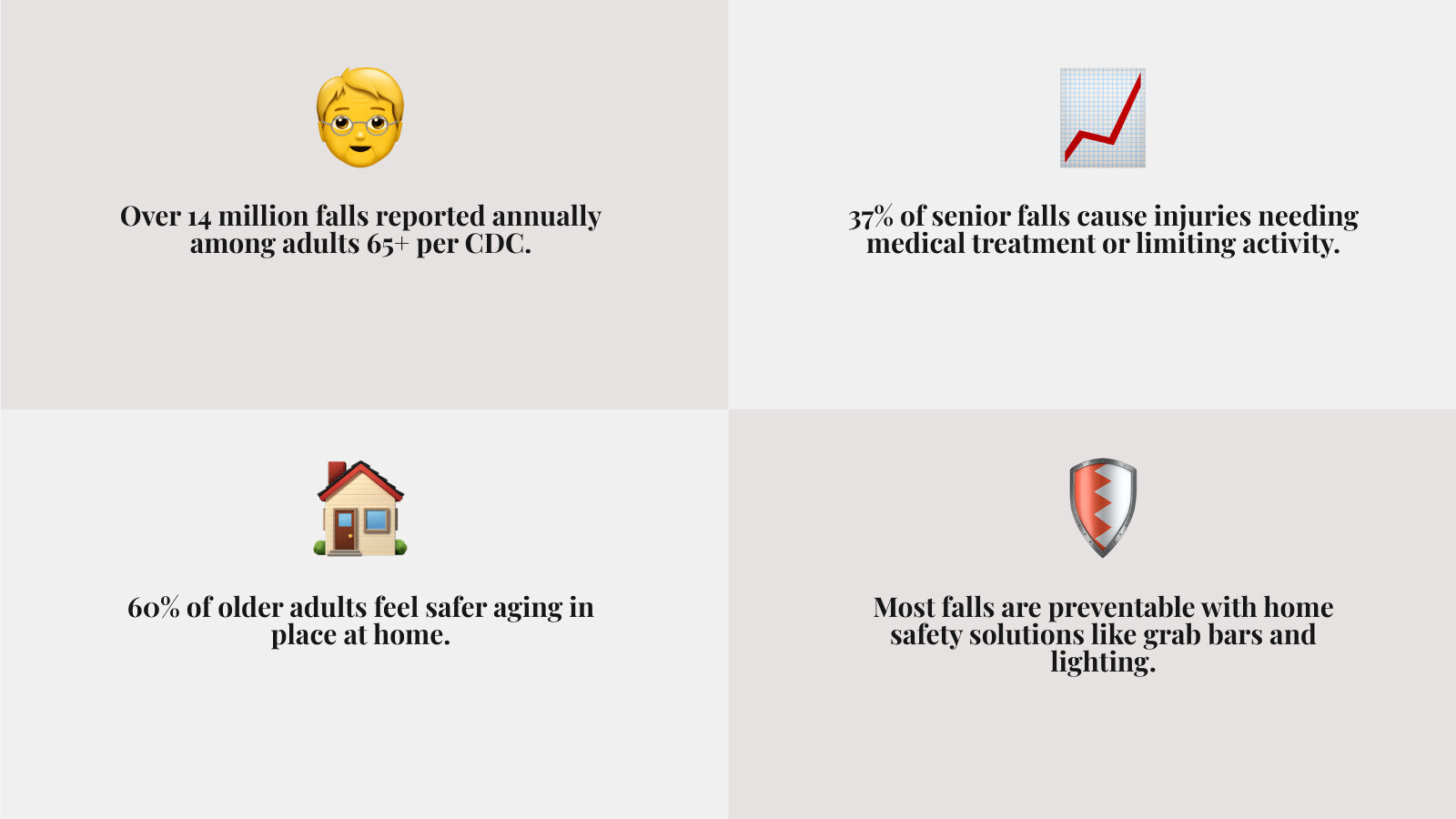
The numbers are hard to ignore. According to the CDC, over 14 million falls are reported each year among adults aged 65 and older. About 37% of those result in an injury serious enough to need medical treatment or limit daily activity.

And yet, most of these falls are preventable.

The good news? Around 60% of older adults say they feel safer at home than in any other living setting. That sense of security doesn't happen by accident — it takes the right setup.

This guide walks through the best senior safety solutions available today, from simple grab bars to smart monitoring apps, so you can make confident, informed choices for yourself or someone you love.

Infographic showing senior fall statistics and key home safety solution categories - senior safety solutions infographic

Handy senior safety solutions terms:

Identifying Risks and Implementing Senior Safety Solutions

professional home safety assessment identifying hazards - senior safety solutions

Before we can fix a problem, we have to find it. Many risks in the home are "silent"—we walk past them every day until they cause a trip or a slip. For many of us, adapting to aging means looking at our familiar surroundings with fresh eyes.

Common environmental risks include:

  • Trip Hazards: Loose area rugs, electrical cords stretched across walkways, and clutter in hallways.
  • Lighting Gaps: Dimly lit stairs or bathrooms that make it hard to spot obstacles at night.
  • Structural Barriers: High thresholds between rooms or steep entry steps that become harder to navigate over time.

Research shows that over 14 million reported falls occur annually, often because these small hazards were overlooked. Implementing senior safety solutions begins with a thorough walkthrough of the home to identify where mobility might be compromised. By catching these risks early, we can create a plan that supports aging in place comfortably and confidently.

High-Impact Home Modifications for Accessibility

When it comes to staying independent, some of the most effective senior safety solutions involve physical changes to the home. These structural modifications aren't just about "fixing" a house; they are about opening it up so you can move freely without worry.

From Stair Railings & Transfer Poles to more significant renovations, elderly-home-modifications transform a living space into a supportive environment. The goal is to reduce the physical strain of daily movement and ensure that every entryway and transition is secure.

Bathroom Senior Safety Solutions

The bathroom is often cited as the most hazardous room in the house due to slippery surfaces and low-visibility areas. To combat this, Grab Bars & Bathroom Safety should be the first priority.

Key features to consider include:

  • Professional-Grade Grab Bars: These should be installed near the toilet and inside the shower. Unlike suction-cup versions, wall-mounted bars provide the weight-bearing support needed for true safety.
  • Walk-In Tubs: These tubs feature low thresholds (often just a few inches) and inward or outward-swinging doors, eliminating the need to climb over a high porcelain wall. Many also offer hydrotherapy jets to help with joint pain.
  • Non-Slip Flooring: Adding textured mats or non-slip coatings to tiles can prevent the "skating rink" effect when floors get wet.
  • Raised Toilet Seats: A simple addition that makes sitting and standing much easier on the knees and hips.

Mobility Aids and Entryway Safety

Getting in and out of the house should never feel like a mountain climb. Entryway safety is critical for maintaining a connection to the outside world.

  • Wheelchair Ramps: Whether you need a permanent wooden ramp or a portable aluminum one, WheelchairRamps provide a smooth path for those using walkers or chairs.
  • Stairlifts and Porch Lifts: If stairs have become a barrier, Stair, Porch & Overhead Lifts offer a mechanical "boost." A stairlift allows you to glide between floors, while a porch lift (or vertical platform lift) can bypass outdoor steps entirely.
  • Threshold Ramps: These small, rubber or metal wedges smooth out the "lip" in doorways, preventing trips and making it easier for wheeled devices to pass through.

Kitchen Safety and Daily Living Gadgets

Cooking is a joy, but it does involve heat, sharp edges, and heavy lifting. As we age, changes in vision or grip strength can make the kitchen feel a bit daunting. Fortunately, there are dozens of gadgets designed to provide household-chores-help and make meal-preparation-assistance a breeze.

Consider these high-tech and low-tech senior safety solutions for the heart of the home:

  1. Automatic Shut-Off Devices: You can retrofit your stove with sensors that turn the burners off if they are left unattended for too long.
  2. Ergonomic Utensils: Knives with offset handles and "easy-grip" can openers reduce the strain on arthritic hands.
  3. Cut-Resistant Gloves: A simple pair of Kevlar-lined gloves can prevent nasty nicks while chopping vegetables.
  4. Reacher-Grabbers: To avoid using step stools (which are a major fall risk!), keep a few reaching tools around to grab items from high shelves.
  5. Anti-Fatigue Mats: These provide cushioning for your joints while you're standing at the sink or stove, and they usually come with non-slip backing for extra security.

Monitoring Systems and Digital Protection

Senior safety solutions have moved beyond just physical bars and ramps. Technology now provides a "virtual safety net" that can alert loved ones or emergency services the moment something goes wrong. This tech is especially helpful for emergency-elderly-care-help, ensuring that help is never more than a button-press (or a sensor-trigger) away.

Digital Senior Safety Solutions

Smartphones and wearable devices are now powerful tools for independence. For instance, you can Get it Free on Senior Safety App to access a suite of protective features.

  • Fall Detection: Many modern smartwatches and apps use accelerometers to detect the sudden impact of a fall. If the user doesn't respond, the device automatically calls for help.
  • GPS Tracking and Geo-Fencing: For those who might deal with occasional confusion or wandering, geo-fencing allows family members to receive an alert if their loved one leaves a "safe zone" (like their neighborhood).
  • Inactivity Alerts: These systems monitor movement within the home. If no motion is detected during a time when the person is usually active (like 8:00 AM to 10:00 AM), an alert is sent to check in.

Fire, Carbon Monoxide, and Security

General home security is just as important as fall prevention. Did you know that a home burglary occurs once every 25.7 seconds in the United States? Seniors are often targeted, making smart security a vital part of any safety plan.

  • Video Doorbells: These allow you to see and speak to whoever is at the door from your phone or tablet, so you don't have to rush to the door or open it for strangers.
  • Smart Detectors: Fire and carbon monoxide detectors that connect to your phone can alert you (and your family) even if you aren't in the room where the alarm is sounding.
  • Secure Smart Locks: These can be programmed to lock automatically at night and allow "digital keys" for trusted visitors, so you don't have to fumble with physical keys.

Professional Assessments and Safety Checklists

While DIY fixes are great, sometimes you need an expert eye. A professional home safety visit can identify hidden hazards you might have missed—like a loose floorboard under a rug or a water heater set to a scalding temperature.

Credentialed providers, such as Certified Aging in Place Specialists (CAPS), are trained to look at the home through a clinical lens. They don't just see a hallway; they see a potential fall zone.

DIY vs. Professional Installation

Feature DIY Friendly? Why Professional is Better
Grab Bars No Must be anchored into wall studs to support body weight.
Clutter Removal Yes Great way to start immediately without spending money.
Lighting Upgrades Partial Swapping bulbs is easy; adding new wired fixtures needs an electrician.
Stairlifts No Requires precise rail measurement and electrical integration.
Non-Slip Mats Yes Simple "peel and stick" or suction solutions available.

Professional installers ensure that your senior safety solutions are compliant with ADA standards and, most importantly, that they won't fail when you need them most.

Frequently Asked Questions about Home Safety

What are the benefits of aging in place compared to facilities?

Aging in place offers a level of comfort and familiarity that simply can't be matched by a facility. Around 60% of older adults report feeling safer in their own homes. Beyond the emotional benefits, it often provides greater financial flexibility, as you only pay for the modifications and support services you actually need. It allows you to keep your routines, stay close to your neighbors, and live on your own terms.

How do I choose a qualified home modification provider?

Look for providers who hold specific certifications, such as the CAPS (Certified Aging in Place Specialist) designation. You should always ask for proof of licensing and insurance. A good provider will offer a Guided Demo or a detailed consultation before asking for a deposit. Check reviews and ask for local references to ensure they have a history of quality work in your community.

What are the most common hidden hazards in a senior's home?

The most common "sneaky" hazards are:

  • Loose Rugs: Even with "non-slip" backing, edges can curl and create a trip hazard.
  • Poor Lighting: Especially in the path from the bed to the bathroom.
  • Expired Detectors: Smoke and CO detectors that haven't been tested in years.
  • Electrical Cords: Tucked under rugs or stretched across walking paths.
  • Bathroom "Grab Points": Using towel racks or sink edges for balance—these are not designed to hold human weight and can pull out of the wall.

Conclusion

At Burnie's Way, we believe that your home should be your sanctuary, not a source of stress. Our mission is to provide the personal support and lifestyle coordination that makes independent living a reality for as long as possible.

Think of us as your personal concierge for aging. We don't just look at the house; we look at the person living in it. Whether you need help navigating senior safety solutions, coordinating with trusted contractors for home modifications, or simply want a companion to help manage the rhythms of daily life, we are here to guide the way.

By combining high-impact modifications with smart technology and compassionate personal assistance, we help you live confidently and stay connected to the things you love. Explore our-services today to see how we can help you or your loved one thrive at home.

Rapid Response: Navigating Urgent Care for Seniors

7 min read

Rapid Response: Navigating Urgent Care for Seniors

Why Emergency Senior Care Matters for Your Family Emergency senior care refers to immediate support services available when an older adult faces an...

Read More
Smart Solutions: The Best Helping Aids for the Elderly

7 min read

Smart Solutions: The Best Helping Aids for the Elderly

Why the Right Helping Aid for the Elderly Changes Everything Helping aid for elderly individuals comes in many forms — and finding the right one can...
Read More
How Specialized Senior Care Keeps Your Loved Ones Safe

6 min read

How Specialized Senior Care Keeps Your Loved Ones Safe

Why Specialized Senior Care Matters for Aging at Home Specialized senior care refers to a tailored approach to supporting older adults with specific...

Read More