6 min read

Finding Your Peace of Mind: A Comprehensive Look at Non-Medical Home Care

Finding Your Peace of Mind: A Comprehensive Look at Non-Medical Home Care

Understanding Non-Medical Home Care: What It Is and How It Helps

non medical home care

Non medical home care is professional support that helps older adults live independently in their own homes without requiring medical services or a doctor's prescription. It focuses on daily living activities, companionship, and lifestyle coordination—not skilled nursing or healthcare.

Quick Answer: What Non-Medical Home Care Includes

  • Personal Support: Help with daily routines like dressing, bathing, and mobility
  • Household Help: Light housekeeping, laundry, and meal preparation
  • Companionship: Social interaction, conversation, and cognitive engagement
  • Transportation: Rides to appointments, errands, and social activities
  • Reminders: Non-clinical prompts for medications, appointments, and daily tasks
  • Coordination: Connecting you with trusted service providers as needs change

If you're an adult child watching your aging parent struggle with everyday tasks, you're not alone. Research shows that 90% of seniors plan to remain in their homes as they age. But staying home safely often requires extra support—and that's where non-medical home care comes in.

Many older adults eventually need help to maintain their daily routines and independence. As one possible solution, non-medical home care offers essential daily living support for seniors, empowering them to age in place for as long as possible.

The good news? This type of support is flexible, personalized, and doesn't require the medical oversight that home health care does. Whether your parent needs a few hours of help each week or around-the-clock support, non-medical home care can adapt to their changing needs.

This guide will walk you through everything you need to know—from understanding what services are available to recognizing when it's time to seek help, navigating costs, and choosing a reputable provider. By the end, you'll have the clarity and confidence to make informed decisions about supporting your loved one's independence at home.

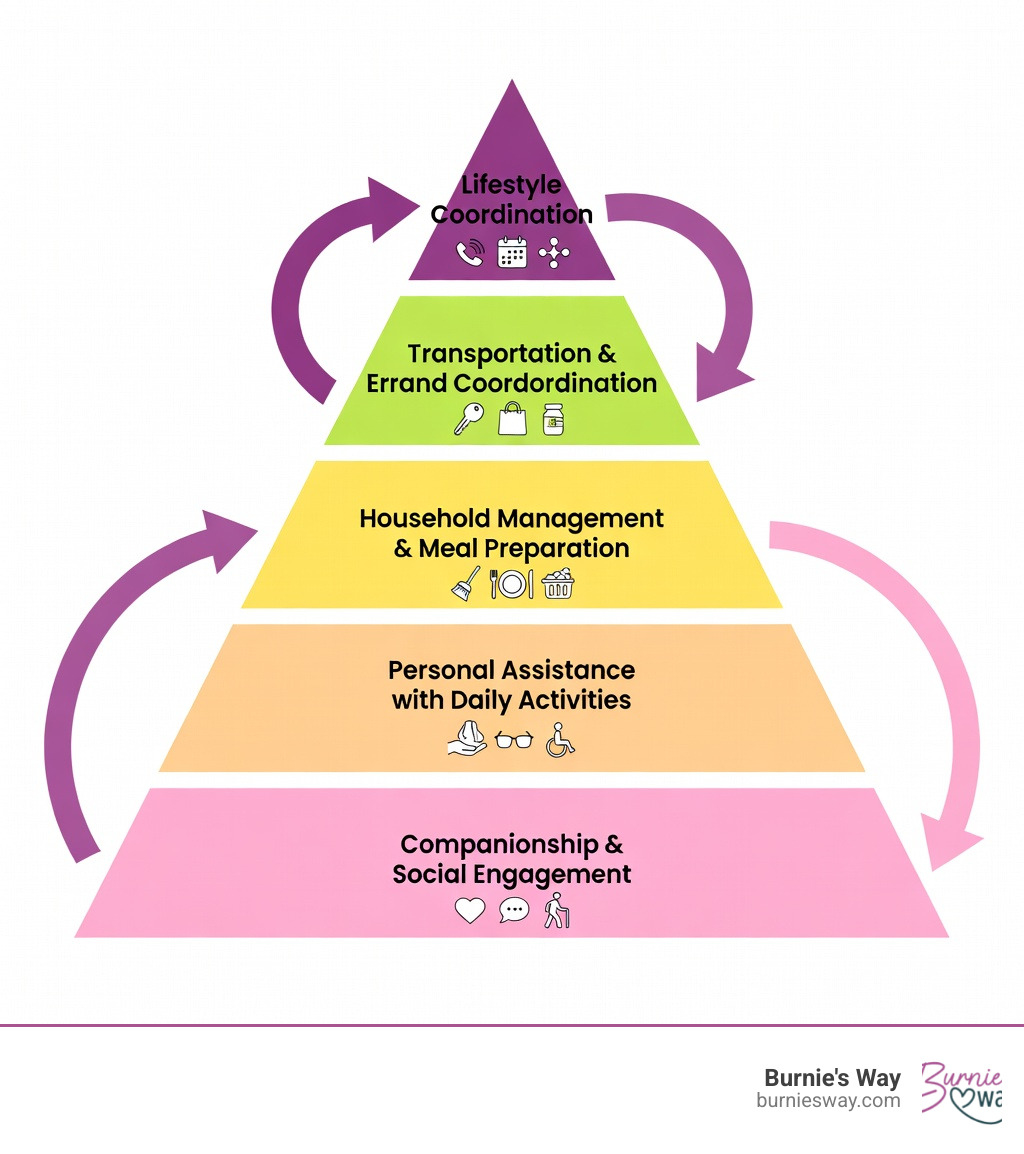
Infographic showing the spectrum of non-medical home support services: companionship and social engagement at the foundation, personal assistance with daily activities in the middle layer, household management and meal preparation in the next tier, transportation and errand coordination near the top, and lifestyle coordination connecting trusted service providers at the peak. Arrows indicate how services can be combined and scaled based on individual needs and preferences. - non medical home care infographic

Basic non medical home care terms:

What Is Non-Medical Home Support and Its Role in Aging

A companion and a senior looking at a photo album together, smiling and sharing a moment of connection. - non medical home care

When we talk about non medical home care, we are looking at a vital layer of support that sits between total independence and clinical intervention. It is designed for those who don't necessarily need a nurse, but could definitely use a "right-hand person" to keep life running smoothly. This type of support is the cornerstone of the "aging in place" movement, allowing seniors to stay in the comfort of their own four walls while receiving help with day-to-day routines.

In our experience at Burnie's Way, we see that aging in place isn't just about safety; it's about dignity. BNW is not a caregiving or healthcare provider—instead, we act as a personal concierge and companion, helping members keep life organized, connected, and enjoyable at home.

How Non-Medical Home Support Differs from Medical Services

It is easy to get confused by the terminology, but the distinction is actually quite simple. Home health care is prescribed by a physician and involves skilled professionals—think nurses or physical therapists—providing wound care, injections, or clinical therapy. It is usually short-term and goal-oriented.

On the flip side, non medical home care focuses on lifestyle support. There is no need for a doctor's referral. It is about the rhythm of daily life: making sure there is fresh food in the fridge, the home feels comfortable, and your loved one has meaningful connection. It's not about treating a disease; it's about supporting a person.

Can You Combine Non-Medical Support with Other Services?

Absolutely. In fact, many families find the best outcomes happen when services are coordinated. For example, after a hospital stay, a senior might receive medical home health visits for clinical follow-up, while also using non-medical support for errands, rides, companionship, and keeping the household running.

This kind of coordination helps the clinical team focus on recovery, while personal-support services focus on day-to-day ease and emotional well-being. At Burnie's Way, we can help members understand their options and coordinate trusted providers—so the right pieces are in place without BNW acting as a healthcare or caregiving service.

Essential Services Provided by Non-Medical Home Support Agencies

The beauty of non medical home care is its flexibility. It isn't a one-size-fits-all product; it can be tailored around the individual and adjusted as needs change.

Service Category Typical Activities Included
Companion Support Conversation, reading aloud, Cognitive Stimulation Activities, social outings.
Homemaker Services Household Chores Help, laundry, light cleaning, organizing mail.
Personal Assistance Meal Preparation Assistance, mobility support, dressing, and Elderly Personal Hygiene.
Lifestyle Logistics Transportation coordination, scheduling appointments, and routine reminders.

Personal Assistance and Daily Life Management

Daily-life support is about removing the friction from everyday tasks. This might include light organization of a pantry or help navigating a smartphone to stay in touch with grandkids. For many, it also includes discreet, non-clinical help with getting ready for the day so they can feel confident and refreshed.

We also support members through coordination—helping manage the "business of life" by scheduling, organizing, and connecting with trusted service providers. Whether it’s coordinating a plumber or remembering that the bridge club meets on Tuesday, these small details make a massive difference in quality of life.

Companionship and Cognitive Engagement

One of the most overlooked aspects of aging is loneliness and social isolation. Without regular connection, emotional well-being can decline rapidly. Non medical home care providers (and concierge-style support like BNW) can serve as friendly companions who provide more than just a service—they provide connection.

Through Cognitive Stimulation Activities, such as playing cards, discussing current events, or working on hobbies, we help keep the mind sharp and the days more enjoyable. Emotional well-being is just as important as practical support.

Recognizing the Signs: When Is It Time for Extra Support?

Deciding to bring in help is rarely a "lightbulb moment." Usually, it's a series of small "yellow flags" that start to wave. You might notice your loved one is Adapting To Aging with more difficulty than before. Perhaps the house isn't as clean as it used to be, or there are stacks of unpaid bills on the counter.

Many families reach out when they start feeling the weight of family stress and burnout. If you're constantly worried about your parent's safety or spending all your free time running their errands, it's time to consider In Home Elderly Help.

Physical and Cognitive Indicators

Beyond a messy house, look for these specific signs:

The Financial Landscape of Non-Medical Home Support

Understanding the Cost Of Senior Home Support is essential for long-term Elderly Care Planning. Nationally, the median cost for non medical home care in the U.S. is approximately $33 per hour, though this can vary significantly by state and the specific level of assistance required.

In our region, Private Pay Home Support Rates are the most common way families fund these services. While it is an investment, many find it much more affordable than the high monthly costs of an assisted living facility, especially when help is only needed for a few hours a day.

Payment Options and Government Assistance

While Medicare generally does not cover non-medical support, there are several other avenues to explore:

  • Long-Term Care Insurance: Many policies cover in-home personal assistance.
  • Veterans Benefits: Programs like "Aid and Attendance" can provide significant financial help for veterans and their spouses.
  • Medicaid Waivers: In some cases, government assistance through Home and Community-Based Services (HCBS) waivers can help those who qualify financially.
  • Family Support Grants: Some states offer Family Support Grants to help alleviate the financial burden on family members.

How to Choose a Reputable Non-Medical Home Support Provider

Choosing a reputable provider is about more than just finding someone with a high rating online. It's about finding a reliable partner who understands your family's unique dynamics.

We recommend using a How To Get Elderly Support Guide to screen potential agencies. One of the first questions should be whether you are dealing with an agency or an independent helper. Agencies typically handle the "heavy lifting" of employment—taxes, insurance, and background checks—which provides a significant layer of protection for you.

If you’re also exploring concierge-style personal support, Burnie’s Way can help you make sense of the options and coordinate trusted, non-medical services that fit your lifestyle—without acting as a caregiving or healthcare provider.

Understanding Licensing and Regulatory Requirements

In Pennsylvania, for example, the Pennsylvania Department of Health regulates home care agencies and registries. When vetting a provider, ensure they are licensed, bonded, and insured.

Ask about their training programs and experience (for example, supporting individuals who need dementia-aware companionship). The key is finding a service that matches your loved one’s needs and preferences, and a team you feel you can trust.

Frequently Asked Questions about Non-Medical Home Support

Does Medicare cover non-medical home support?

Generally, no. Medicare is designed to cover "medically necessary" clinical care. Because non medical home care focuses on day-to-day assistance and companionship, it usually falls under private pay or long-term care insurance. However, if your loved one is receiving Medicare-covered home health (medical) services, they can receive non-medical support at the same time.

How quickly can services typically start?

In many cases, support can begin within 24 to 48 hours. Most reputable agencies will first want to conduct an initial assessment to understand the home environment and the senior's specific needs.

What is the difference between an agency and an independent helper?

An agency employs the staff, meaning they handle payroll taxes, worker's compensation, and liability insurance. They also provide supervision and back-up coverage if a helper is sick. If you hire an independent helper directly, you essentially become their employer, taking on all legal and tax responsibilities yourself.

If you’re looking for a non-medical, concierge-style layer of support, BNW can also serve as a steady point of contact—helping members stay organized, connected, and confident at home, and coordinating trusted services as needs evolve (without providing caregiving or healthcare services).

Conclusion: Empowering Independence at Home

At the end of the day, non medical home care is about one thing: peace of mind. It’s the comfort of knowing that your loved one is supported, engaged, and living life on their own terms.

At Burnie's Way, we’re not a caregiving or healthcare provider. We’re a personal concierge for aging adults who want to live comfortably and confidently at home—helping our members stay organized, connected, and enjoying the life they choose. From coordinating household help and rides to planning outings, reminders, and meaningful companionship, we focus on independence, ease, and trust.

Ready to see how we can support your family’s day-to-day life? Explore Our Services and discover the Burnie's Way difference today. We’re here to help your loved one live confidently and stay connected. How We Work is simple: we put your family first, every single day.

Beyond the Basics: A Comprehensive Guide to Eldercare Services

12 min read

Beyond the Basics: A Comprehensive Guide to Eldercare Services

Why Understanding Eldercare Services Matters Now More Than Ever Eldercare services help older adults live safely and independently at home by...

Read More
Finding Trusted Senior Care That Actually Works

8 min read

Finding Trusted Senior Care That Actually Works

When a Parent Needs Help: Making Sense of Elder Care Solutions Elder care solutions cover a wide range of support options — from help around the...

Read More
Navigating Long-Term Care: Everything You Need to Know

12 min read

Navigating Long-Term Care: Everything You Need to Know

Understanding Long-Term Care: What It Means for You and Your Family Long term care is a range of services and supports designed to help people meet...

Read More