

Why Understanding Personal Support for Aging Adults Matters
Supporting the older adults in our lives is one of the most meaningful—and sometimes overwhelming—responsibilities we may face. If you're reading this, you likely have an aging parent or loved one who could use more support to continue living safely, healthily, and independently at home. It's a journey of love, but it can also be filled with questions and uncertainty.
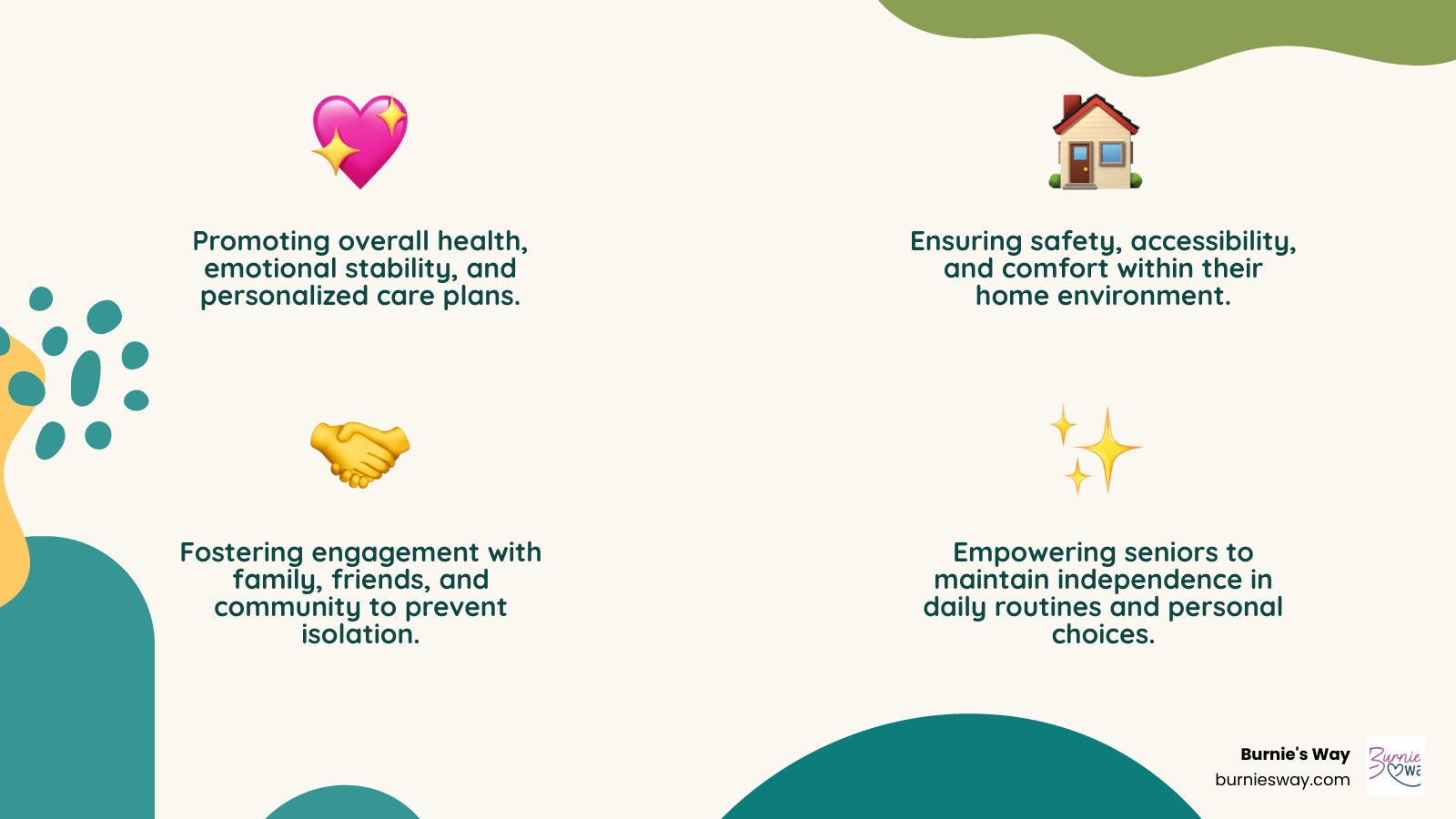
Here’s a closer look at the key areas where support can make a significant difference:
- Home Safety – This goes beyond just preventing falls. It involves creating an environment where your loved one feels secure. This can include simple modifications like improving lighting and removing tripping hazards, or coordinating the installation of grab bars and emergency alert systems. The goal is to adapt the home to their changing needs.
- Daily Living – The rhythm of daily life can become challenging. Support in this area means helping with the logistics that keep life running smoothly. This could be coordinating meal delivery services, arranging transportation for errands and appointments, managing household chores, or simply creating a consistent and reassuring routine.
- Social Connection – Loneliness is a significant health risk for seniors. Fostering social connection is vital for emotional well-being. This can involve scheduling regular check-ins from family, finding local clubs or groups that match their interests, or setting up easy-to-use technology for video calls with friends and relatives.
- Health Coordination – While not providing medical care, support in this area is about managing the logistics of healthcare. This includes scheduling doctor's appointments, arranging transportation to and from visits, sending reminders for medications, and ensuring prescriptions are filled and picked up. It’s the organizational backbone that supports their overall wellness.
- Financial & Legal Planning – Navigating finances and legal documents can become complex. Support here involves helping your loved one stay organized with bills, understanding what benefits or subsidies might be available, and connecting them with trusted professionals like elder law attorneys or financial planners for important decisions like establishing a power of attorney.
The good news? You don't have to figure this out alone. Many families feel caught between wanting their loved ones to maintain their independence and worrying about their safety. While statistics show a significant number of seniors reside in long-term care facilities, an overwhelming majority—nearly 80% according to AARP—want to remain in their own homes as they age. With the right personal support and coordination, this is often an achievable goal.
This guide will walk you through recognizing when help is needed, understanding your options for personal support services, navigating the practical side of accessing resources, and—just as importantly—taking care of yourself through the process.
Whether your parent needs a little help with errands or more comprehensive daily support, you'll learn how to create a plan that respects their independence while giving you peace of mind.
To help you on this journey, here are a few key concepts to understand:
- Adapting to aging: Learning how to steer the natural changes that come with getting older.
- Home care solutions: Exploring the different ways to get support within the home environment.
Recognizing When an Older Adult Needs More Support
It's not always easy to tell when an aging parent or loved one needs a bit more help. Sometimes, a sudden illness or emergency makes it clear. Other times, the signs are subtle, creeping in slowly. Many older adults are hesitant to admit they're struggling, not wanting to cause worry or lose their cherished independence. But recognizing these signs early is crucial for providing effective support, allowing us to step in with assistance rather than reacting to a crisis. The National Institute on Aging provides helpful guidance on this topic, and you can learn more by reading their article, Does an Older Adult in Your Life Need Help?.
We encourage you to observe and engage, looking for patterns rather than isolated incidents. This thoughtful approach helps us understand their evolving needs without undermining their autonomy.

Signs of a need for more support at home
The home environment often tells a story. When we visit, we might notice changes that indicate a loved one is finding it harder to manage daily tasks. Look for:
- Clutter and Disorganization: Is there an unusual accumulation of mail, newspapers, or objects that seems out of character? Piles of dirty laundry, layers of dust on surfaces, or a disorganized kitchen can be early indicators that keeping up with household chores has become physically or mentally taxing.
- Unopened Mail or Unpaid Bills: A stack of unopened envelopes, especially those that look like bills, or calls from creditors about overdue payments could signal trouble. This might point to challenges with money management, cognitive changes, or simply feeling too overwhelmed to handle administrative tasks.
- Expired Food: Checking the refrigerator and pantry for expired or spoiled food is a simple but important check. It might mean they're not cooking regularly, forgetting to go grocery shopping, or finding meal preparation too difficult. This can also be a sign of a poor appetite or changes in their sense of smell and taste.
- Difficulty with Chores: Are once-routine tasks like vacuuming, cleaning the bathroom, or doing yard work being neglected? Physical limitations, chronic fatigue, or cognitive decline can make these activities challenging and even unsafe.
- Neglected Home Maintenance: Look for signs of deferred maintenance, such as broken fixtures, leaky faucets, burnt-out lightbulbs, or an overgrown yard. This can indicate a struggle with the physical demands of home upkeep or memory lapses about what needs to be done.
Beyond the home, observe their personal routines and physical well-being:
- Personal Hygiene Shifting: Are they bathing as regularly as they used to? Are they wearing clean clothes and maintaining their usual grooming habits? A noticeable decline in personal care can be a significant red flag for physical limitations, depression, or cognitive issues.
- Missed Appointments: Forgetting doctor's visits, social engagements, or other commitments could point to memory issues, a lack of motivation, or difficulty with transportation and scheduling.
- Mood Changes and Social Withdrawal: While occasional forgetfulness is normal, persistent confusion, significant changes in personality (like increased irritability or anxiety), or difficulty making decisions might suggest more serious memory problems. Depression in older adults can sometimes be mistaken for normal aging, but it's crucial to recognize signs like persistent sadness, loss of interest in hobbies, or feelings of hopelessness. Loneliness and social isolation are also associated with higher risks for depression, heart disease, and cognitive decline.
- Physical Signs: Look for unexplained weight loss or gain, which could indicate nutritional problems or an underlying illness. Poor balance, unsteadiness, or frequent falls are major concerns. Also, note any new mobility issues, such as difficulty getting up from a chair or navigating stairs.
How to start the conversation about getting help
Noticing these signs can be tough, and starting the conversation can feel even tougher. We've found that approaching the topic with warmth, empathy, and respect for their independence is key.
- Choose the Right Time and Place: Pick a calm, private moment when you both are relaxed and not rushed. Avoid bringing it up during a family gathering or a stressful time.
- Express Concern, Not Criticism: Use 'I' statements. Instead of saying, "Your house is a mess," try, "I was worried when I saw the stack of mail, and I want to make sure you're feeling okay." Focus on your feelings of love and concern for their well-being.
- Offer Specific, Collaborative Solutions: Instead of a vague offer of "help," suggest concrete ways you can assist. For instance, "What if we worked together to sort through the mail once a week?" or "I found a service that can deliver groceries. Would you be open to trying it?" Frame it as a team effort.
- Involve Them in Decisions: Emphasize that you want to work with them, not take over. Ask questions like, "What are the biggest challenges for you right now?" or "What kind of support would actually feel helpful and not intrusive?" Their input is vital to maintaining their sense of control and dignity.
- Be Patient and Persistent: This isn't usually a one-time conversation. Your loved one may need time to think about it. Be prepared for initial resistance, and gently bring it up again later. Reassure them that accepting help is a sign of strength, not weakness.
Our goal is to empower them to live confidently and independently at home, not to take over. We believe in working collaboratively to ensure their comfort and peace of mind. For more insights into our collaborative approach, you can explore More info about our approach.
Understanding the Spectrum of Support Options for Older Adults
Once you've identified that an older adult needs more support, the next step is exploring the various options available. The desire to "age in place"—to stay in one's own home and community as long as possible—is a powerful and common goal. In fact, an AARP study reports that 77% of adults over 50 want to stay in their homes as they age. Our focus is on helping individuals maintain that independence through personalized support and strategic coordination. For more information on this topic, the National Institute on Aging offers a great resource on Aging in Place: Growing Older at Home.
There's a wide spectrum of support, ranging from informal help from family to professional services and community programs. Understanding these options can help you find the right combination for your loved one's unique needs and preferences.
| Category | Description | Independence Level | Level of Support |
|---|---|---|---|
| Personal Support Coordination | A concierge-style service that organizes and manages non-medical daily life tasks. This includes coordinating errands, appointments, social activities, and home services to simplify life and improve independence. | High | Flexible, personalized, and comprehensive. Adapts to changing needs. |
| Community Programs | Local services often offered by senior centers, non-profits, or government agencies. Examples include Meals on Wheels, subsidized transportation, and social clubs. | High to Moderate | Specific and task-based. Often targets a single need (e.g., nutrition, transport). |
| Informal Support | Help provided by family, friends, and neighbors. This can range from weekly grocery runs to daily check-in calls. | High | Varies greatly. Depends on the availability and capacity of the support network. |
Personal Support Coordination is ideal for those who want to remain independent at home but need a central point of contact to manage the moving parts of daily life. It's like having a personal assistant dedicated to their well-being, giving both the senior and their family peace of mind.
Community Programs are excellent resources that can supplement other forms of support. They are often low-cost or free and can be a great way to address specific needs, like ensuring a hot meal every day or providing a ride to a doctor's appointment. You can find local resources through the national Eldercare Locator, a public service of the U.S. Administration on Aging.
Informal Support from family and friends is the bedrock of support for many older adults. However, it can lead to burnout for the supporter and may not be consistent enough as needs increase.
We can help you steer these choices to find the right blend of services that fits your loved one's lifestyle and goals.