7 min read

Smart Solutions: The Best Helping Aids for the Elderly

Smart Solutions: The Best Helping Aids for the Elderly

Why the Right Helping Aid for the Elderly Changes Everything

helping aid for elderly

Helping aid for elderly individuals comes in many forms — and finding the right one can make the difference between struggling at home and thriving there.

Here's a quick overview of the most common types:

Category Examples
Bed safety Bed rails, step stools, fall mats, trapeze bars
Bathroom safety Grab bars, raised toilet seats, shower chairs, bath lifts
Mobility aids Canes, walkers, rollators, wheelchairs, scooters
Personal care tools Dressing sticks, pill organizers, reachers, grip aids
Emergency support Personal alarms, medical alert systems, key safes
Home modifications Grab rails, enhanced lighting, non-slip mats, stairlifts

The numbers tell a clear story. Nearly 40% of Americans aged 65 and over live with at least one disability, and 1 in 4 need help with everyday activities. By 2030, 1 in 6 people worldwide will be over 60.

That's a lot of families trying to figure out the same thing you are.

For adult children especially, the challenge isn't just finding the right device. It's knowing where to start, what actually works, and how to help a parent stay independent without taking over their life.

The good news? The right tools — combined with the right support — can make aging at home not just safe, but genuinely comfortable and confidence-building.

This guide walks through the best options across every category, so you can make smart, informed choices for your loved one.

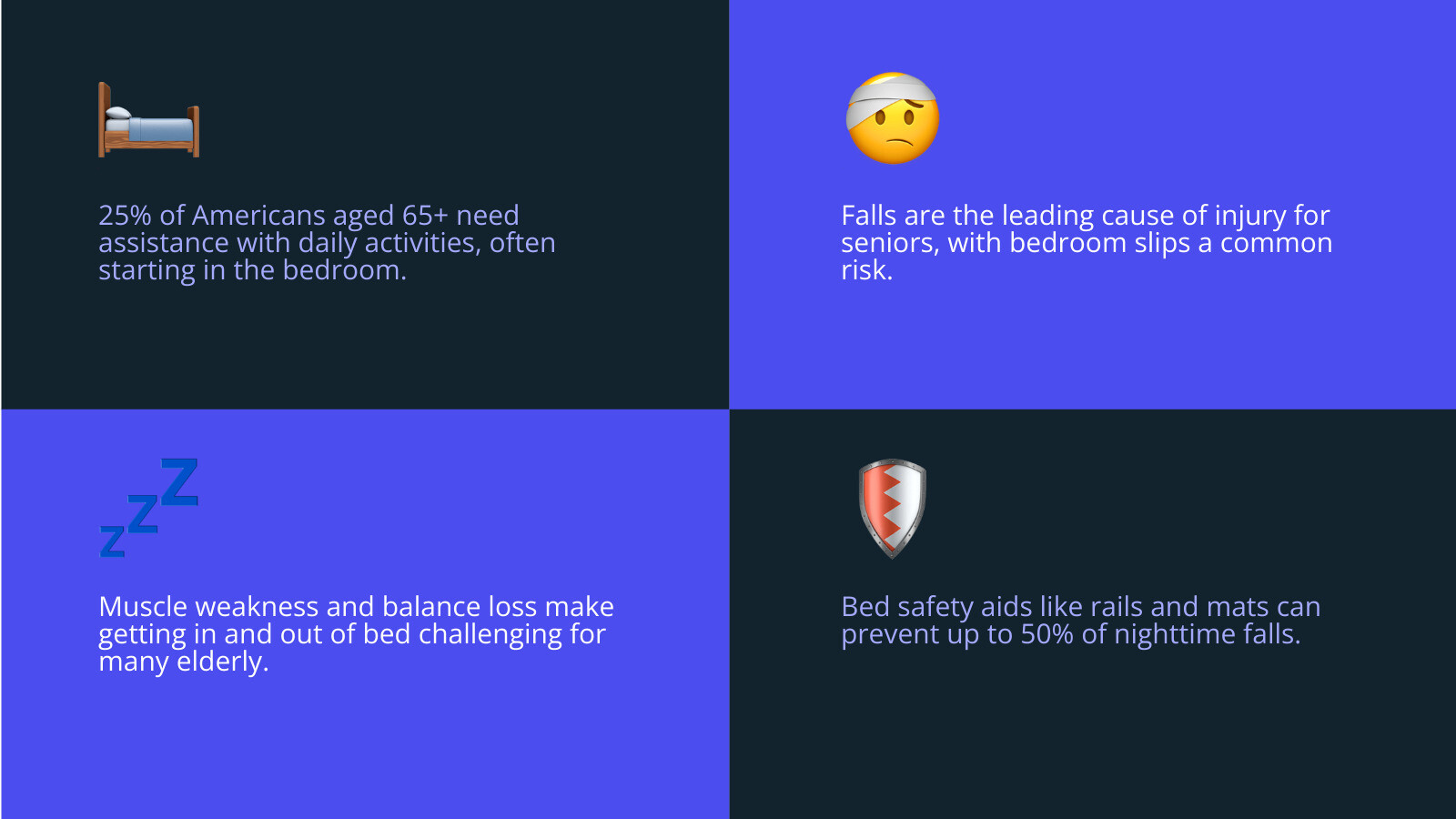
Top categories of helping aids for elderly seniors at home - helping aid for elderly infographic 4_facts_emoji_blue

As we age, our bodies undergo changes that can make the simple act of waking up feel like a hurdle. Joint health may decline, muscles can weaken, and balance often becomes a bit "fuzzy" in the morning. These aren't just minor annoyances; for many, they are significant barriers to starting the day with confidence.

Research indicates that 25% of Americans aged 65 and over require some form of assistance with everyday activities. When we talk about taking care of old people, the bedroom is often the first place we look to implement safety measures.

Elderly person using a sturdy bedside rail for support - helping aid for elderly

Understanding Bedside Support Systems

The goal of a bedside helping aid for elderly users is to provide leverage and stability. Here are the most effective tools for the bedroom:

  • Bed Rails: These come in various styles. Some are full-length to prevent falls during sleep, while others are smaller "assistive" handles designed specifically to give the user something sturdy to grab when sitting up or standing.
  • Bed Ladders: These are clever nylon straps with "rungs" that attach to the foot of the bed. They allow a senior to use their arm strength to pull themselves into a sitting position gradually.
  • Bed Step Stools: For those with high mattresses, a specialized step stool with a high-reaching handle can bridge the gap between the bed and the floor, preventing that precarious "dangle" of the legs.
  • Fall Mats: While these don't help with movement, they are essential safety backups. Placed beside the bed, these high-density foam mats cushion the impact if a fall does occur.

Exploring Options for Elderly Transfers

For those with more significant mobility impairments—where standing up independently is no longer possible—transfer aids become vital. Statistics show that nearly 40% of Americans aged 65+ have at least one disability, often affecting movement.

Transfer aids like patient lift systems (often called Hoyer lifts) use slings to move a person safely from a bed to a wheelchair. Trapeze bars, which hang over the bed from a floor-standing frame, allow users to use upper-body strength to reposition themselves. At Burnie's Way, we see ourselves as your lifestyle coordinators, helping you understand which of these technical tools might best fit your home layout and daily routine.

Enhancing Bathroom Safety: Preventing Falls and Maintaining Dignity

The bathroom is statistically the most dangerous room in the house for seniors. Between wet surfaces and the physical effort required to sit and stand, it’s a high-risk zone for slips. However, the right helping aid for elderly bathroom use doesn't just provide safety—it preserves dignity.

Maintaining privacy in the bathroom is a top priority for most seniors. By installing the right equipment, we can help our loved ones remain independent in their personal care for elderly at home routines.

Selecting Toileting and Showering Assistance Aids

Standard bathroom fixtures aren't usually designed with limited mobility in mind. To bridge that gap, consider these modifications:

  • Raised Toilet Seats: These add 4 to 6 inches of height to a standard toilet, significantly reducing the distance a senior has to "drop" when sitting down.
  • Toilet Safety Rails: These provide sturdy armrests on either side of the commode, offering leverage to push up to a standing position.
  • Shower Chairs and Benches: For those who find standing for long periods exhausting or unstable, a shower chair with non-slip feet and drainage holes is a game-changer.
  • Handheld Showerheads: Pairing a shower chair with a handheld sprayer (ideally one with a "pause" button) allows for a thorough clean while remaining seated.

Exploring Bath Lifts and Entry Aids

Getting over the wall of a bathtub is a common struggle. Transfer benches extend over the side of the tub, allowing a person to sit down outside the tub and slide their legs over safely. For those who still love a deep soak, bath lifts are motorized seats that lower the user into the water and raise them back up to the rim level when finished.

When considering what is personal care for the elderly, it’s about more than just hygiene; it’s about the confidence to manage one's own body safely.

When walking becomes difficult due to arthritis or balance issues, the world can start to feel small. The right mobility aid expands that world again.

Aid Type Best For... Stability Level
Cane Minor balance issues; one-sided weakness Low to Moderate
Walker Significant weakness; needs forward support High
Rollator Seniors who can walk but need frequent rests Moderate (has wheels/seat)
Scooter Long distances; outdoor travel High (Motorized)

Exploring Personal Mobility Aids

Choosing between a cane and a walker depends on the level of support needed. Canes (including quad canes with four feet) are great for light support. Standard walkers provide the most stability but require the user to lift the frame with each step. Rollators are the "sportier" cousins, featuring four wheels, hand brakes, and a built-in seat for resting during walks.

Understanding how to care for an elderly person at home often involves observing their "gait" or walking style to see which of these tools feels most natural to them.

Understanding Powered Mobility Solutions

For seniors who want to visit the park or go shopping but lack the stamina for long walks, mobility scooters and power wheelchairs are excellent solutions. Scooters are fantastic for outdoor terrain, though they often have a larger turning radius, making them tricky in tight hallways. Power wheelchairs are more maneuverable indoors and are often better suited for those with limited hand strength, as they are operated by a simple joystick.

Smart Gadgets for Empowered Independent Living

Independence is often found in the "small wins"—being able to button a shirt, reach a favorite mug, or manage medications without help. These small helping aid for elderly gadgets are often the most appreciated.

Practical Personal Care and Dressing Tools

Arthritis can make fine motor tasks like zipping a jacket or putting on socks feel impossible. These "low-tech" tools provide high-impact help:

  • Sock Sliders: These hold the sock open so the user can just step into it without bending over.
  • Button Hooks and Zipper Pulls: These extend the user's reach and provide a larger handle for those with stiff fingers.
  • Long-Handled Shoehorns: These allow shoes to be slipped on while standing or sitting upright.
  • Dressing Sticks: A simple rod with hooks that helps pull on cardigans or push off trousers.

Smart Household Management Aids

In the kitchen and living room, simple modifications go a long way. Reaching tools (grabbers) act like an extension of the arm for picking up dropped items or reaching high shelves. Pill organizers with timed compartments ensure medications are taken correctly, which is vital for meal preparation assistance and overall health.

Even small changes, like swapping traditional "twist" faucets for lever-action taps, can make a kitchen much more accessible for someone with a weakened grip.

Coordinating Emergency Support and Home Monitoring Systems

Safety isn't just about physical aids; it's about knowing that help is available if something goes wrong. This is where elder care support transitions into the digital age.

Understanding Emergency Access and Communication

Modern emergency systems have evolved far beyond the basic "help" button. Today, we have:

  • Personal Help Buttons: Wearable pendants or wristbands that connect to a 24/7 monitoring center.
  • Fall Detection: Advanced sensors that can automatically detect a "hard fall" and call for help even if the user is unconscious.
  • GPS-Enabled Alerts: These work outside the home, providing peace of mind for seniors who still enjoy independent walks or trips to the store.
  • Smart Home Monitoring: Non-intrusive sensors that can detect changes in routine (like the fridge not being opened or the bathroom light staying on too long), alerting family members that something might be amiss.
  • Key Safes: Secure boxes installed outside the home that hold a spare key, allowing emergency responders or trusted helpers to enter without breaking the door.

Frequently Asked Questions about Helping Aids

How can I access free or low-cost mobility aids?

In the United States, and specifically in Virginia, there are several pathways to explore. Medicare often covers "Durable Medical Equipment" (DME) like walkers or wheelchairs if a doctor certifies they are medically necessary. Medicaid coverage varies but often includes more comprehensive in-home supports.

For short-term needs, organizations like the Red Cross or local "loan closets" often have equipment available for rent or borrow. At Burnie's Way, we act as your personal concierge to help you navigate these bureaucratic waters and find the most cost-effective solutions for your family.

What professional advice should I seek before purchasing?

We always recommend consulting a professional before investing in expensive equipment. An Occupational Therapist (OT) is the gold standard; they can come to the home and perform a "home safety assessment" to see exactly which aids will work in your specific space. Geriatric Care Managers are also invaluable for coordinating long-term plans.

If you're feeling overwhelmed, checking out our how to get elderly carer guide can provide more context on the types of professional support available to your family.

How do I choose the right device for my budget?

Budgeting for a helping aid for elderly loved ones requires looking at both the sticker price and the long-term value. While a powered wheelchair might cost $2,000+, it may prevent a move to an assisted living facility, saving thousands in the long run.

Always check for:

  1. Insurance Eligibility: Will your provider cover a portion?
  2. Quality vs. Price: Sometimes a slightly more expensive rollator with better wheels is safer than the cheapest model.
  3. VAT/Tax Relief: Depending on your location and the user's disability status, you may be exempt from certain sales taxes on medical equipment.

Conclusion

At Burnie's Way, we believe that aging shouldn't mean a loss of freedom. It’s simply a new chapter that requires a few "smart solutions" to keep the story moving forward. Whether it's a simple reaching tool or a sophisticated home monitoring system, the right helping aid for elderly individuals is the one that fosters confidence and joy.

With our 50 years of experience, we don't just suggest tools; we provide the personalized concierge support and lifestyle coordination that makes those tools effective. We are here to be your companion and guide, ensuring that your loved one can live safely, independently, and—most importantly—on their own terms.

Ready to see how we can help coordinate a more comfortable life for your family? Discover more info about our services and let’s start this journey together.

Family Caregiver Support 101

13 min read

Family Caregiver Support 101

Understanding the Role of a Family Caregiver Family caregiver support includes a wide range of resources, programs, and services designed to help...


Read More
The Continuous Care Compass: Navigating Ongoing Health Services

13 min read

The Continuous Care Compass: Navigating Ongoing Health Services

What Continuous Care Services Really Mean for You and Your Family Continuous care services are specialized, short-term support designed to help...

Read More
Finding Trusted Senior Care That Actually Works

8 min read

Finding Trusted Senior Care That Actually Works

When a Parent Needs Help: Making Sense of Elder Care Solutions Elder care solutions cover a wide range of support options — from help around the...

Read More