
Put Your Own Oxygen Mask On First: A Caregiver Self-Care Checklist

Why Every Caregiver Needs a Self-Care Checklist
A caregiver self-care checklist is a structured tool that helps you track and protect your own well-being while caring for a loved one. Here's a quick overview of what a complete one covers:
- Physical health - sleep, nutrition, exercise, and medical appointments
- Emotional wellness - stress outlets, boundaries, and mental health support
- Social connection - staying in touch with friends, family, and peer support groups
- Practical matters - delegating tasks, respite breaks, and future planning
If you're caring for an aging parent, you already know the weight of it. The schedules. The medications. The constant mental load of making sure everything is okay — for them.
But here's the thing most caregivers don't hear enough: you are part of the equation too.
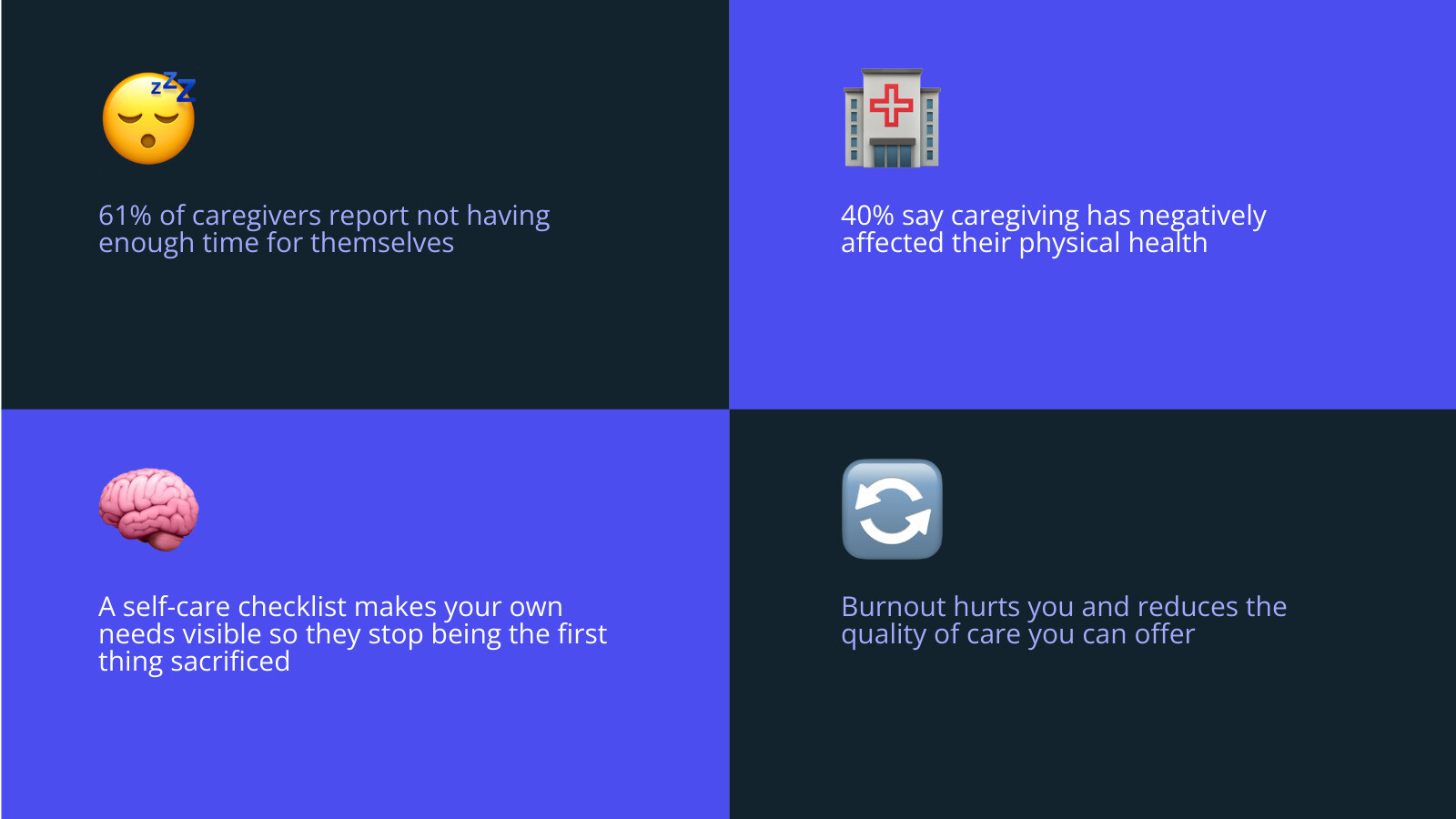
Research shows that 61% of caregivers report not having enough time for themselves, and 40% say caregiving has negatively affected their physical health. That's not a personal failing — it's what happens when one person carries too much for too long without a system to protect their own reserves.
And the stakes are real. Burnout doesn't just hurt you. When you're running on empty, the quality of care you can offer quietly deteriorates too.
A self-care checklist gives you something simple but powerful: a repeatable structure that makes your own needs visible — so they stop being the first thing you sacrifice.
Caregiver self-care checklist definitions:
What is a Caregiver Self-Care Checklist and Why is it Crucial?

At its core, a caregiver self-care checklist is an intentional, protective shield against the relentless demands of supporting a loved one. When we step into a caregiving role, we often do so with open hearts, ready to sacrifice our own comfort for the sake of another. However, without a systematic way to monitor our own wellness, that sacrifice can quickly turn into physical and mental depletion.
By utilizing a structured checklist, we establish a tangible baseline for our daily, weekly, and monthly health. This is vital for active burnout prevention. Burnout is not simply feeling tired after a long day; it is a state of profound physical, emotional, and mental exhaustion caused by prolonged stress. When we neglect our own needs, we also become highly vulnerable to compassion fatigue—a condition characterized by emotional numbing, high anxiety, and a reduced capacity to empathize with the very person we are trying to support.
Practicing self-compassion is the antidote to this cycle. It means acknowledging that we are human, that our energy is finite, and that we cannot pour from an empty cup. Incorporating a dedicated Caregiver Self-Care routine is not a luxury; it is a fundamental requirement of sustainable care.
The data back this up: caregivers who actively prioritize their well-being and run through a structured wellness plan are 50% less likely to experience symptoms of depression. When we make our needs visible, we change the trajectory of our caregiving journey from an overwhelming sprint to a manageable, compassionate marathon. For more guidance on adapting these strategies to your daily routine, you can explore how a caregiver self-care checklist prioritizes well-being - Active Aging Daily .
Recognizing the Warning Signs of Caregiver Burnout

Before we can effectively use a checklist to rebuild our health, we must first learn to recognize when we are sliding into the danger zone. Caregiver burnout does not happen overnight. It is a slow, quiet accumulation of stress that gradually alters how we think, feel, and behave.
The physical toll is often the first to manifest. Chronic physical fatigue, headaches, muscle tension, and frequent illnesses are clear signals that our immune system is struggling under elevated cortisol levels. Emotionally, we might experience a state of emotional numbing, where we feel detached from our loved ones or find ourselves reacting with unusual irritability, anxiety, or deep sadness.
With 40% of caregivers reporting that their duties have negatively affected their physical health, ignoring these signs can lead to severe long-term clinical consequences. To help you evaluate where you stand, we have compiled a comparison of normal stress versus true caregiver burnout. If you find yourself identifying more with the right-hand column, it is time to actively seek Caregiver Stress Relief.
| Aspect | Healthy/Normal Stress | Caregiver Burnout |
|---|---|---|
| Energy Levels | Tired, but recovers after a good night's sleep. | Chronic, deep fatigue that sleep does not fix. |
| Emotional State | Occasional frustration or worry about specific tasks. | Persistent anxiety, emotional numbness, or resentment. |
| Social Interest | Still enjoys catching up with friends when time permits. | Total withdrawal from social circles and hobbies. |
| Physical Health | Minor tension, but generally maintains overall health. | Frequent headaches, weight changes, or skipping doctor visits. |
| Outlook | Remains hopeful that things will balance out eventually. | Feelings of hopelessness, guilt, and constant dread. |
The Ultimate Caregiver Self-Care Checklist
To make self-care realistic, we must break it down into digestible, actionable categories. A truly comprehensive caregiver self-care checklist should address four key areas of life: physical health, emotional wellness, social connection, and professional or practical balance.
Rather than aiming for perfection in every category simultaneously—which only adds to our stress—we should focus on small, consistent habits. To help you get started, we recommend incorporating these daily micro-habits into your routine:
- Morning check-in: Spend 2 minutes assessing your physical and emotional state before starting your caregiving tasks.
- Hydration pause: Drink a full glass of water every time you assist your loved one with a transition or medication routine.
- Mindful breathing: Practice three deep, slow belly breaths during transition moments (e.g., sitting in the car or waiting for water to boil).
- Daily win: Write down one small success from the day, no matter how minor it seems.
To customize your own tracking system, you can review different structures like the Caregiver Self-Care Checklist - The Purple Vine or find additional inspiration from the Healing Family Caregiver Self-Care Checklist - CaringBridge .
Physical Health Essentials on Your Caregiver Self-Care Checklist
Our physical bodies are the foundation of our caregiving capacity. If we neglect our physical health, our ability to assist others with mobility, transfers, and daily coordination quickly crumbles.
First and foremost is sleep hygiene. Most adults require 7 to 9 hours of restorative sleep each night to maintain cognitive function and emotional regulation. Setting a consistent bedtime routine, keeping the bedroom cool and dark, and avoiding screens before bed are essential steps to achieving this.
Nutrition and hydration are equally critical. Fueling our bodies with whole grains, lean proteins, fruits, vegetables, and healthy fats keeps our energy levels stable throughout the day. Alongside nutrition, we should aim for 150 minutes of moderate-intensity physical activity per week (or about 20 minutes a day). This doesn't require a gym membership; a brisk walk around the block, gentle stretching, or yoga can work wonders for releasing physical tension and boosting endorphins. For a detailed breakdown of physical wellness recommendations, refer to the Maintaining Health and Well-Being as a Caregiver Checklist .
Finally, we must stop canceling our own medical appointments. Shockingly, nearly 1 in 5 caregivers report they have not seen a doctor in the past year due to a lack of time. Your health is just as important as your loved one's. Keep your dental cleanings, annual physicals, and eye exams. To help coordinate these tasks alongside daily support needs, check out our Caregiver ADL Checklist Complete Guide to stay physically resilient.
Emotional and Social Wellness in Your Caregiver Self-Care Checklist
Caring for someone else is a deeply emotional experience that can stir up a complex mix of love, grief, frustration, and guilt. To process these emotions healthily, we must build robust emotional and social habits into our lives.
Boundary setting is our most powerful emotional tool. Learning to say "no" to extra obligations that do not serve our core priorities is essential. We must also give ourselves a safe space to vent. Whether through journaling, crying, or talking openly with a therapist, releasing pent-up emotions prevents them from turning into resentment.
Humor and laughter are also therapeutic. Sharing a lighthearted moment or leaning into gentle, harmless sarcasm can break emotional tension and remind us of our shared humanity.
Socially, we must fight the urge to isolate ourselves. Maintaining regular contact with friends—and intentionally talking about topics other than caregiving—helps preserve our personal identity. Joining a dedicated caregiver support group connects us with a community of peers who truly understand the unique challenges we face.
To explore structured ways of setting up these boundaries, you can read How to Make a Self-Care Routine Checklist . For broader community resources, refer to our Family Caregiver Support Guide or download the resources available through the Caregiver Self-Care Checklist: Managing Stress & Support Groups .
How to Integrate Self-Care Into Your Routine and Overcome Barriers
Knowing what to do is only half the battle; the real challenge is finding the time to do it. When your schedule is already packed, adding "self-care" to your to-do list can feel like an extra, stressful chore.
To overcome this, we must shift our mindset from grand gestures to micro-self-care. Start by carving out just 5 minutes of personal time each day and gradually increase it. Use transition times—such as the quiet moments sitting in your car before heading into an appointment—to practice deep breathing or listen to a favorite song.
We can also apply the 80/20 rule: identify the 20% of caregiving tasks that cause 80% of your stress, and look for ways to simplify, automate, or delegate them.
Overcoming caregiver guilt is another major hurdle. Many of us feel that taking time for ourselves is selfish. However, reframing self-care as a vital component of your overall care strategy is essential.
Delegating tasks to other family members or utilizing professional support services is key to long-term success. In fact, caregivers who take regular breaks and use external support are 30% more likely to continue providing care long-term without experiencing burnout. If you need help organizing your daily schedule and identifying tasks that can be delegated, our comprehensive Caregiver Checklist can guide you through the process step-by-step.
Frequently Asked Questions About Caregiver Self-Care
How can I practice self-care when I have no free time during the day?
When you don't have dedicated blocks of free time, focus on micro-sessions. These are tiny, 1-to-5-minute windows of self-care integrated directly into your existing routine. You can practice deep diaphragmatic breathing while washing dishes, do gentle shoulder stretches while waiting for medication to be organized, or enjoy a cup of tea in complete silence before your loved one wakes up. Self-care is about quality of attention, not just quantity of time.
How do I handle the guilt of taking time for myself?
Acknowledge that guilt is a natural emotional response, but gently reframe it using the oxygen mask analogy: flight attendants always instruct us to secure our own oxygen masks before assisting others because we cannot help anyone if we run out of air. Taking care of yourself is a generous act that directly benefits your loved one by ensuring you remain healthy, calm, and emotionally present.
Can technology help me track my self-care progress?
Absolutely. Utilizing habit-tracking apps, digital journals, or simple mood-monitoring tools on your phone can provide visual proof of your progress and keep you accountable. Technology can also help you set gentle reminders throughout the day to hydrate, stretch, or simply step away for a five-minute mental break.
Conclusion
Caring for an aging family member is a beautiful, profound, and deeply demanding journey. But you don't have to carry the entire weight of daily life coordination on your own.
At Burnie's Way, we believe in supporting independence and peace of mind for both aging adults and their dedicated families. We operate as a high-touch personal concierge, virtual companion, and lifestyle assistant. While we are not a medical or clinical home care provider, we specialize in coordinating everyday life, organizing schedules, managing errands, and providing the heart-forward companionship that makes aging in place comfortable and confident.
By letting us handle the logistics, companion coordination, and lifestyle details, you can step back from the exhausting role of full-time administrator and simply focus on being a supportive family member again. We are here to help you put your own oxygen mask on first.
To learn more about how we can bring ease and balance back into your family's routine, Explore our personal support services.