
Stop the Burnout and Start Breathing Again with These Stress Relief Tips

The Hidden Weight of Caring for Someone You Love
Caregiver stress relief is something millions of Americans desperately need — but rarely prioritize. If you're feeling exhausted, overwhelmed, or stretched too thin while looking after an aging parent, you're not alone.
Here are the most effective ways to start finding relief today:
- Take micro-breaks — even 1–5 minutes outside or listening to a song can reset your nervous system
- Ask for specific help — make a task list and let family or friends choose what they can take on
- Practice simple relaxation techniques — deep breathing, meditation, or progressive muscle relaxation
- Prioritize the basics — 7–9 hours of sleep, regular meals, and daily movement
- Connect with support — caregiver support groups, online forums, or a counselor
- Use respite care — short-term breaks through in-home aides or adult day programs
- Set boundaries — it's not selfish, it's necessary
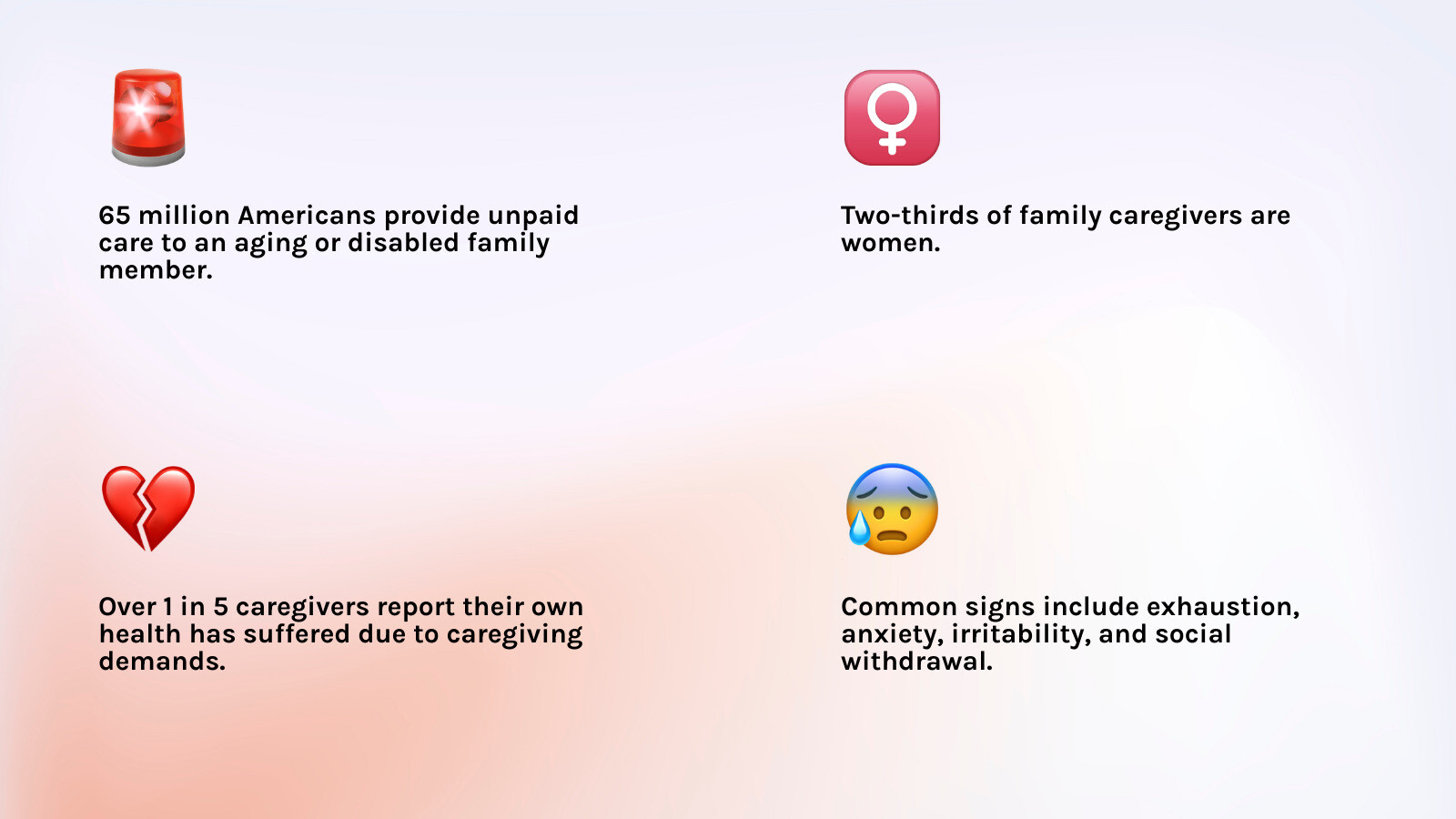
More than 65 million Americans are currently caring for a disabled or aging family member. Two-thirds of them are women. And more than 1 in 5 say their own health has suffered because of it.
That's not a small problem. That's a quiet crisis.
Caregiving — especially for an aging parent — is one of the most selfless things a person can do. But it comes with a cost that's easy to ignore until it's too late. The exhaustion builds slowly. The guilt feels constant. And asking for help can feel like admitting failure.
It isn't.
This guide will walk you through the warning signs of caregiver stress, practical daily relief strategies, and how to build a support system that actually works — so you can keep showing up for the people you love without losing yourself in the process.
Related content about Caregiver stress relief:
- Caregiver self care
- Long term respite
- Crisis care planning
Understanding the Impact of Caregiver Stress Syndrome
When we talk about Caregiver stress relief, we first have to understand what we are fighting. Many experts now refer to the extreme end of this experience as "Caregiver Stress Syndrome." It is a state of physical, emotional, and mental exhaustion that mirrors chronic stress or even PTSD. It happens when the demands of looking after a loved one outpace your ability to recover.
Because we love the people we are helping, we often ignore the toll it takes. We tell ourselves, "I should be able to handle this," or "Mom had it harder when she raised me." But the human body isn't designed to be on high alert 24/7.
According to the Mayo Clinic, there are 10 specific warning signs that your stress levels are reaching a breaking point:
- Denial: You find yourself saying things like, "I know Dad is going to get better," even when the medical reality says otherwise.
- Anger: You feel irritable with the person you're helping or angry at the world for putting you in this position.
- Social withdrawal: You stop seeing friends or participating in hobbies you once loved because you "just don't have the energy."
- Anxiety: You constantly worry about the future and what will happen when your loved one needs more help than you can provide.
- Depression: A persistent feeling of sadness or hopelessness that begins to break your spirit.
- Exhaustion: You feel like you're running on empty, and even a full night's sleep doesn't make you feel rested.
- Sleeplessness: You're too tired to function, but your mind won't stop racing long enough for you to fall asleep.
- Irritability: You lose your patience over small things that wouldn't have bothered you a year ago.
- Lack of concentration: You find it hard to focus on tasks at work or even follow a conversation.
- Health problems: You start experiencing frequent headaches, back pain, or getting sick more often because your immune system is compromised.

If left untreated, this chronic stress can lead to serious long-term health risks, including high blood pressure, heart disease, and diabetes. In fact, research shows that family caregivers are at a significantly higher risk of premature death compared to non-caregivers of the same age. Recognizing these symptoms isn't a sign of weakness; it's the first step toward survival.
Immediate Strategies for Caregiver Stress Relief
When the pressure feels like it’s boiling over, you need tools that work now. You don’t always have an hour for a spa day or a weekend for a retreat. You need "micro-strategies" that fit into the chaotic life of a busy family member.
Effective Caregiver stress relief often starts with resetting your nervous system. When you are stressed, your body is in "fight or flight" mode. These techniques help pull you back into "rest and digest" mode.
Micro-breaks
A micro-break is a 60-second to five-minute window where you completely step away from your responsibilities. Step onto the porch and breathe the fresh air. Listen to one favorite song. Drink a glass of water slowly. These tiny windows of time act like a "reset" button for your brain.
Deep Breathing
This is the fastest way to lower your heart rate. Try the "4-7-8" technique: breathe in for four seconds, hold for seven, and exhale forcefully through your mouth for eight. It sends a physical signal to your brain that you are safe.
Meditation and Mindfulness
You don't need to be a Zen master. Use an app or simply sit quietly and notice five things you can see, four things you can touch, three things you can hear, two things you can smell, and one thing you can taste. This grounds you in the present moment rather than worrying about the "what ifs" of tomorrow.
Visualization
Close your eyes and imagine a place where you feel completely safe and relaxed. It could be a beach, a mountain cabin, or your grandmother's kitchen. Engaging your senses in this mental image can lower cortisol levels almost instantly.
Progressive Muscle Relaxation
Starting at your toes and working up to your face, tense each muscle group as hard as you can for five seconds, then release suddenly. You’ll be surprised at how much tension you were holding in your shoulders and jaw without realizing it.
For more detailed guides on how to weave these into your day, check out our article on Caregiver Self-Care.
Daily Habits for Caregiver stress relief
While immediate techniques help in a crisis, long-term health is built on daily habits. We like to think of caregiving as a marathon. You wouldn't try to run 26 miles without training, eating right, and sleeping, would you?
- 7–9 Hours of Sleep: The National Institute on Aging emphasizes that sleep is non-negotiable. It is when your brain flushes out toxins and processes the day's emotions. If your loved one's needs are keeping you up at night, that is a clear sign that you need external support.
- Hydration: Dehydration leads to fatigue and brain fog. Aim for at least 6-8 cups of water a day.
- Nutritious Meals: It’s tempting to live on coffee and whatever leftovers are in the fridge. Prioritize fruits, vegetables, and whole grains. If cooking is too much, consider a healthy meal delivery service.
- 30–60 Minutes of Exercise: Movement is a powerful antidepressant. Even a 15-minute walk around the block can change your perspective and boost your energy.
Building a Support System: How to Ask for and Accept Help
The biggest mistake we see family members make is trying to be a "superhero." We think that asking for help means we aren't doing our job. In reality, the most successful caregivers are the ones who build a team.
Asking for help is a skill. Many people want to help you, but they don't know how. If you say, "Let me know if you need anything," they likely won't call. But if you have a specific list, you empower them to contribute.
Create a Task List
Keep a running list of things that need to get done. When someone asks how they can help, pull out the list and let them choose:
- "Could you pick up these three items from the grocery store?"
- "Would you mind sitting with Dad for an hour on Thursday so I can go to the dentist?"
- "Can you help me research local senior centers?"
Hold Family Meetings
If you have siblings or other relatives, don't assume they see what you see. Schedule a regular check-in to discuss the "business" of looking after your loved one. This prevents resentment from building and ensures everyone is contributing in some way, whether it's financially, logistically, or emotionally.
Emotional Support
Sometimes you don't need someone to do something; you just need someone to listen. Identify one or two friends who can be your "judgment-free zone." These are people you can call when you've had a bad day and just need to vent without receiving unsolicited advice.
For a deeper dive into coordinating with your family, see our Family Caregiver Support Guide or read about Assistance Caring for Elderly Parents.
Leveraging Burnie's Way and Community Resources for Sustainable Relief
At Burnie's Way, we believe that staying independent at home shouldn't come at the cost of a family's well-being. We aren't a medical provider; we are your personal concierge and lifestyle coordinators. Think of us as a virtual companion and personal assistant rolled into one.
We help bridge the gap between "doing it all yourself" and "hiring a medical team." Our team can coordinate trusted services, manage daily routines, and help your loved one stay socially connected. This takes the "mental checklist" off your plate, allowing you to focus on being a son, daughter, or spouse again.
Beyond personal support, there are numerous community resources available to help with Caregiver stress relief:
- Area Agency on Aging (AAA): Every region has one. They are a goldmine for finding local programs, transportation services, and meal programs.
- FMLA (Family and Medical Leave Act): If you are working, you may be eligible for up to 12 weeks of unpaid, job-protected leave per year to care for a relative. This can be a literal lifesaver during a health crisis.
- Respite Care: This is a formal way to get a break. It can range from an in-home aide who comes for a few hours to "adult day centers" where your loved one can socialize in a safe environment while you run errands or rest. According to Harvard Health, regular respite care is the #1 way to prevent total burnout.
If you are feeling overwhelmed by the logistics, we have more resources on Help Looking After Elderly Parents that can simplify your search.
Professional Resources for Caregiver stress relief
Sometimes, the stress is too heavy for friends and family to carry. That is when professional resources become vital:
- Support Groups: There is something incredibly healing about being in a room (or a Zoom call) with people who "get it." You can share tips, vent frustrations, and realize your feelings are normal.
- Online Forums: Sites like ALZConnected or the Family Caregiver Alliance offer 24/7 communities where you can ask questions and find support.
- Psychotherapy: A therapist specializing in chronic stress or grief can provide you with personalized coping mechanisms.
- Caregiver Help Desk: Organizations like the Caregiver Action Network offer free help desks to guide you through complex situations.
- Financial Assistance: Don't forget to look into Family Caregiver Grants which can sometimes help cover the costs of respite or home modifications.
Long-Term Caregiver Stress Relief: Setting Boundaries and Prioritizing Health
If you want to stay healthy for the long haul, you have to learn the word "No."
Setting boundaries is not about being mean; it's about protecting your capacity to care. If you overextend yourself until you collapse, you are no help to anyone.
Boundary Setting
Be clear about what you can and cannot do. If a relative asks you to host a holiday dinner while you are managing your parent's daily needs, it is okay to say, "I would love to see everyone, but I don't have the capacity to host this year. Can we do a potluck or meet at a restaurant?"
Reframing Guilt
Guilt is the most common emotion caregivers feel. We feel guilty for being angry, guilty for wanting a break, and guilty for not being "perfect." Reframe it: Taking a break isn't "abandoning" your loved one; it's "recharging" so you can give them better support. Self-care is a part of the job description.
Self-Compassion
Treat yourself with the same kindness you would show a friend in your situation. If a friend told you they were exhausted and crying in the car, would you tell them they were "lazy"? Of course not. You would tell them they are doing a great job under impossible circumstances. Tell yourself that, too.
Personal Space
Create a "refuge" in your home — a chair, a room, or even just a corner — that is yours. When you are in that space, you are not a caregiver. You are just you. Use this space to engage in a hobby, read, or simply sit in silence.
Frequently Asked Questions about Caregiver Stress
What are the primary symptoms of caregiver burnout?
Burnout is more than just being tired. It is a state of total emotional and physical depletion. Symptoms include feeling trapped, a loss of interest in things you used to love, feeling like you're "going through the motions," and even feeling resentment toward the person you are helping. If you feel like you can no longer provide compassionate care, you are likely experiencing burnout.
How does chronic stress affect a caregiver's physical health?
Chronic stress keeps your body flooded with cortisol and adrenaline. Over time, this wears down your internal organs. It can lead to a weakened immune system (getting sick constantly), digestive issues, chronic pain (especially in the back and neck), and an increased risk of cardiovascular events like heart attacks or strokes.
When should a caregiver seek professional mental health help?
You should reach out to a doctor or therapist if you experience:
- Thoughts of harming yourself or the person you are caring for.
- Persistent feelings of hopelessness or despair.
- An inability to sleep even when the person you care for is asleep.
- Using alcohol or drugs to cope with the stress.
- Physical symptoms like panic attacks or chest pain.
Conclusion
At Burnie's Way, we know that the journey of supporting an aging loved one is filled with both beautiful moments and immense challenges. Our goal is to provide the lifestyle coordination and personal support that allows you to breathe again. We believe in empowering elders to live safely and independently while giving their families the peace of mind they deserve.
You don't have to do this alone. By recognizing the signs of stress early, implementing daily relief habits, and leveraging community and professional resources, you can move from "surviving" to "thriving."
Ready to find a better balance? Learn more about our personal support services and how we can help you and your loved one live life to the fullest.