
Grocery Delivery for Seniors: Safe, Easy, and Delivered to Your Door

Why Getting Groceries Delivered Is a Game-Changer for Aging Seniors
Senior grocery list delivery is one of the simplest ways to help an aging parent stay independent at home — without the risks of heavy bags, slippery store floors, or exhausting checkout lines.
Here's how it works, quickly:
- Choose a service — phone-based concierge (no app needed), app-based platform like Instacart, or a local volunteer program
- Place your order — by phone call, website, or app; caregivers can also order on a senior's behalf
- Customize the list — add dietary preferences, brand preferences, and substitution options
- Receive delivery — typically within a few hours for on-demand, or on a scheduled recurring basis
- Report any issues — most services have a support line; contact within 24 hours of delivery
For seniors who can't drive or have mobility challenges, this isn't just a convenience — it's a lifeline.
And for adult children managing a parent's care from a distance, knowing that fresh food is arriving reliably each week is real peace of mind.
Whether your parent is comfortable with a smartphone or still uses a landline, there are options designed specifically for them. Some services use live human operators. Others offer dedicated senior support lines. Local nonprofits in the Richmond area even send volunteers directly to homebound seniors' doors.
This guide walks through all of it — so you can find the right fit without the guesswork.
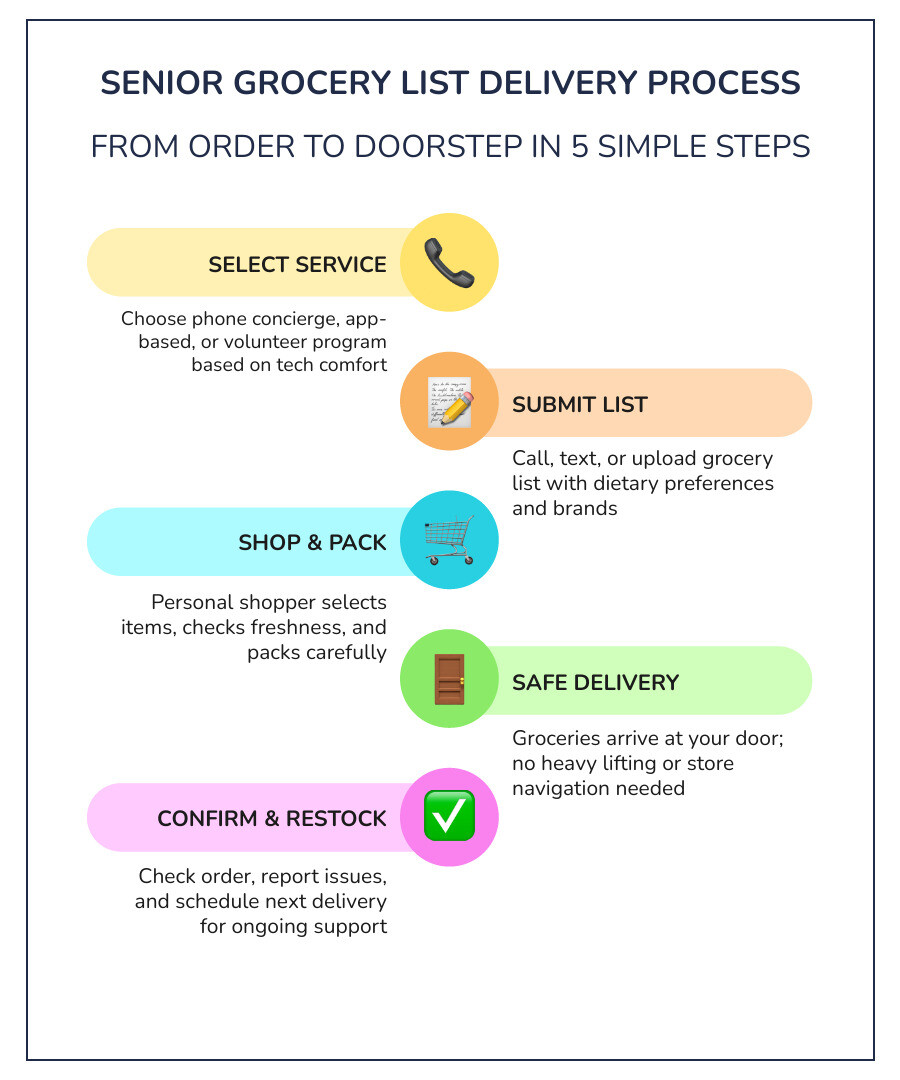
Senior grocery list delivery terms to remember:
How Senior Grocery List Delivery Simplifies Aging in Place
As we navigate July 2026, the tech landscape has evolved to make aging in place smoother than ever. Yet, for many older adults in the Richmond area, the simple task of getting milk, fresh vegetables, and household essentials remains a significant hurdle. Traditional grocery shopping requires a lot of physical stamina: walking the aisles, bending down to reach bottom shelves, stretching for high items, and carrying heavy bags to the trunk.
By utilizing a dedicated senior grocery list delivery service, seniors can entirely bypass these physical stressors. Instead of navigating crowded stores in Henrico or dealing with unpredictable weather in Chesterfield, they can have everything brought directly to their door.
Setting up a Senior Grocery Delivery plan ensures that nutritional needs are met consistently. It allows seniors to maintain their personal routines and food preferences without relying on others to drive them to the store. Whether they prefer to order on-demand or set up a recurring weekly delivery, the flexibility of modern delivery models means they never have to worry about an empty pantry.
Benefits of Grocery Delivery for Seniors and Disabled Adults

The benefits of utilizing grocery delivery go far beyond mere convenience. For seniors and disabled adults, it is a crucial component of fall prevention and overall health safety.
Lifting heavy gallons of milk or struggling with bulky cases of water is a common trigger for back strain and balance loss. By outsourcing the heavy lifting, seniors protect their joints and reduce the risk of accidents. Additionally, during peak cold and flu seasons, avoiding crowded grocery stores protects immunocompromised individuals from unnecessary exposure to illnesses.
To understand the best approach for your family, look at how different delivery models stack up:
| Feature | App-Based Delivery (e.g., Instacart) | Phone-First Concierge Services | Volunteer-Led Programs |
|---|---|---|---|
| Ordering Method | Smartphone app or desktop website | Standard phone call (landline friendly) | Phone call or paper list sign-up |
| Tech Requirement | High (requires smartphone/internet) | None (works with any basic phone) | None |
| Delivery Speed | On-demand (often within 1–3 hours) | Scheduled or on-demand (within 3 hours) | Scheduled (usually bi-weekly) |
| Cost Structure | Delivery fees + optional membership | Service fees + subscription options | Free or low-cost (suggested donation) |
| Social Connection | Minimal (contactless or quick drop-off) | Moderate (friendly operator and driver) | High (volunteer chat and wellness check) |
When setting up your first Home Food Delivery for Elderly order, it helps to build a reliable checklist of nutritious, easy-to-prepare foods. Here is a list of essential grocery items highly recommended for senior nutrition:
- Fresh Produce: Soft, easy-to-chew fruits like bananas, berries, and pre-cut melons, alongside pre-washed salad greens and baby carrots.
- Lean Proteins: Eggs, rotisserie chicken, salmon fillets, and low-sodium canned tuna.
- Calcium-Rich Dairy: Greek yogurt, cottage cheese, and fortified milk (or plant-based alternatives).
- Whole Grains: Oatmeal, whole-wheat bread, and brown rice pouches that can be easily microwaved.
- Hydration Essentials: Low-sodium broths, herbal teas, and bottled water if local tap water is not preferred.
Choosing the Right Service: App-Based vs. Phone-First Concierge
Selecting the right delivery service depends entirely on your loved one's comfort level with technology and their budget. There is no one-size-fits-all answer, which is why we break down the two primary commercial paths in our Grocery Delivery Guide 2026.
App-Based Senior Grocery List Delivery Options
For seniors who are comfortable using tablets or smartphones, app-based platforms offer incredible control. These services allow users to browse virtual aisles, filter items by dietary restrictions (such as low-sodium, gluten-free, or diabetic-friendly), and view real-time price updates.
Popular platforms like Instacart or Amazon Fresh allow users to save their favorite items, making future orders as simple as clicking "reorder." Caregivers can also log into the same account from a different location to add items to the cart, monitor the shopper's progress, and track the delivery vehicle in real time. Many of these services now accept SNAP/EBT benefits for eligible items, making them highly accessible for seniors on fixed incomes. You can read more about setting up these digital accounts in our Home Food Delivery Guide Seniors 2026.
Phone-First Senior Grocery List Delivery Services
If your parent views smartphones with healthy skepticism and prefers a good old-fashioned phone call, phone-first concierge services are the perfect alternative. These services act as a bridge between traditional phone lines and modern gig-economy delivery networks.
By calling a dedicated toll-free number, seniors can speak directly to a live, friendly operator who will take their grocery list item by item. The operator inputs the order into a delivery platform behind the scenes and monitors the delivery from dispatch to doorstep. Some of these concierge networks, such as GoGoGrandparent, operate 7 days a week (with Eastern hours from 8:00 AM to 9:00 PM) and can even save previous shopping lists for faster ordering next time. For more information on how to access these phone-based options, visit Grocery Delivery For Seniors & Disabled People Made Easy.
Integrating Grocery Delivery with Home Safety and Caregiver Support

Getting the groceries to the front door is only half the battle. For a senior living independently in Midlothian or Glen Allen, carrying heavy bags from the porch to the kitchen counter and putting away refrigerated items can still present a physical hazard.
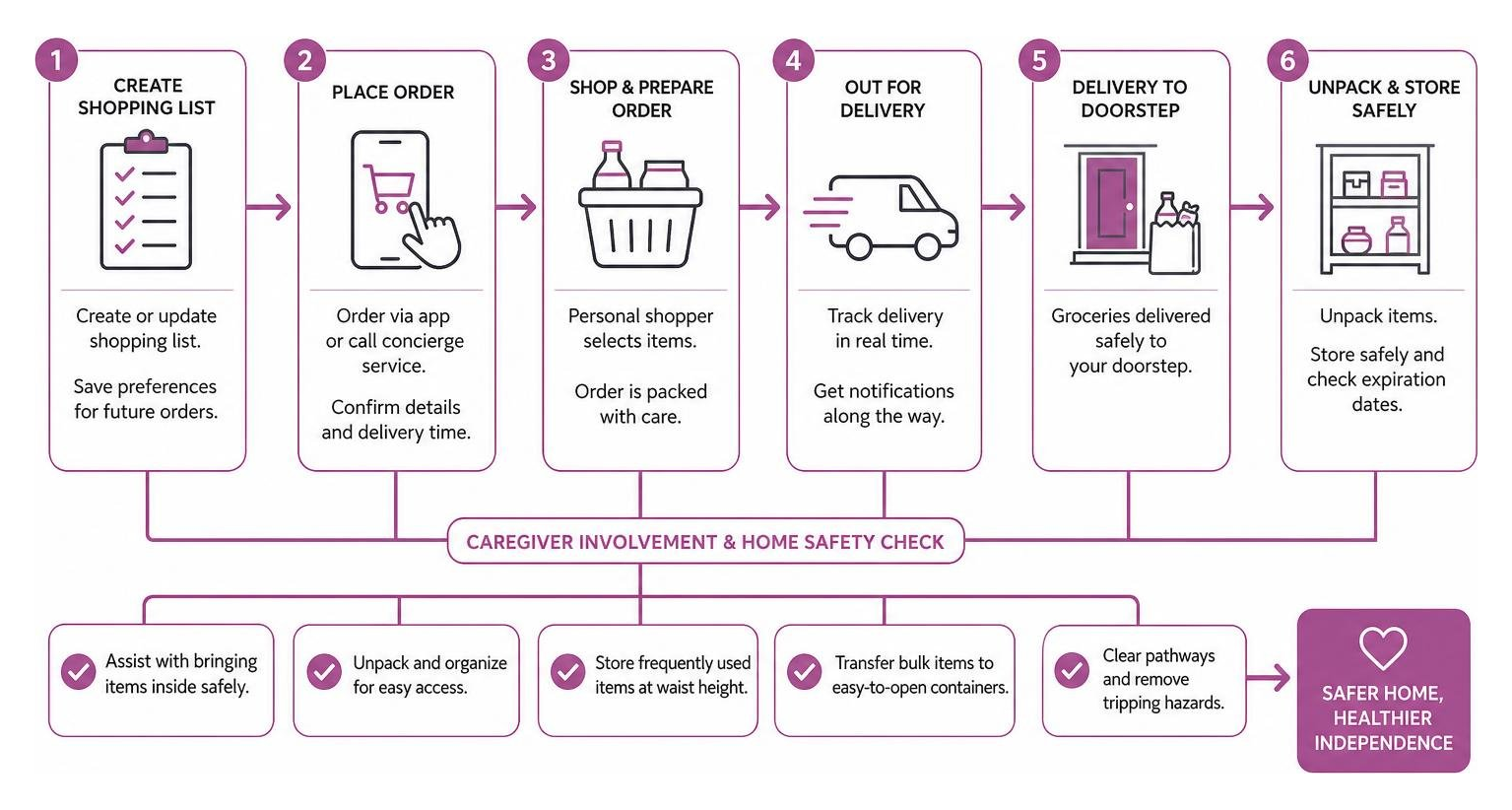
This is where integrating grocery delivery with home safety assessments and caregiver support becomes essential. When family members or local companion care professionals are involved, they can assist with:
- Unpacking items safely and checking expiration dates.
- Organizing the pantry so that frequently used items are stored at waist height, eliminating the need to bend down or climb on unstable step stools.
- Transferring bulk items into easy-to-open, lightweight containers.
- Ensuring that path-clearing measures are taken so there are no tripping hazards between the entryway and the kitchen.
You can explore these cooperative strategies further in our resource on Home Care Senior Groceries.
To visualize how grocery delivery integrates with a broader home safety routine, consider this process flow:
Volunteer-Led Programs in Richmond and Henrico
For seniors who may not have the budget for commercial delivery services, local volunteer-led programs are an outstanding alternative. Across Richmond, Henrico, and Chesterfield, community organizations step up to ensure no senior goes hungry due to lack of mobility.
Organizations utilizing the Virginia Elder Grocery Service framework connect homebound seniors with local volunteers who will personally shop for and deliver their groceries. These programs are often free or operate on a suggested donation basis, providing a vital safety net. To find active programs in your specific ZIP code, you can search the comprehensive directory at Grocery Ordering/Delivery - 4 results.
Here is a list of local Richmond food resources and community support systems:
- Feed More (Central Virginia’s Food Bank): Offers community food pantries and mobile delivery options for qualifying low-income seniors.
- Senior Services of Alexandria & Local Area Agencies on Aging: Provide localized "Groceries to Go" programs matching volunteers with senior citizens.
- 2-1-1 Virginia: A statewide free referral service that connects seniors directly to localized food pantries and volunteer delivery networks in their neighborhood.
Frequently Asked Questions about Senior Grocery Delivery
How do services handle out-of-stock items and substitutions?
When an item on your senior grocery list delivery is out of stock, the shopper will look for a suitable replacement. If you are using an app-based service, you can select your preferred backup brands in advance or choose to refund the item if a specific brand is required. For phone-based services, you can tell the operator your substitution preferences when placing the call. If no preference is saved, the shopper will typically text or call to confirm a replacement. Learn more tips for managing your orders in our guide on Grocery Shopping for Elders.
Can seniors place orders without a smartphone or internet?
Yes, absolutely. Services like Selectido and GoGoGrandparent allow seniors to use a standard landline. A real person will answer the call, take down the list, and coordinate the shopping trip on behalf of the senior. In some cases, the personal shopper will even call the senior directly from the store aisles to describe fresh produce options and read product labels over the phone. You can read more about these personal shopper models at Personal Shopper for Seniors — Real Person, No App, Free Local Delivery | Selectido.
What are the typical costs, fees, and tipping policies?
Commercial grocery delivery costs usually include a delivery fee (ranging from $3.99 to $9.99 per order) and a service fee. Many platforms offer annual memberships (like Instacart+ for around $99/year) that provide free delivery on orders over $35. Tipping your delivery driver is highly encouraged—usually 10% to 20% of the order total. If you are using a phone concierge service, tipping can be added directly over the phone or handed to the driver in cash upon arrival.
Conclusion
Simplifying daily tasks like grocery shopping is a wonderful first step toward supporting a senior who wants to age in place. However, maintaining true independence at home requires looking at the bigger picture of home safety.
At Burnie's Way, we believe that every senior in the Richmond area—from Short Pump and Glen Allen to Midlothian and Bon Air—deserves a living space that supports their mobility and safety. While we are not a home care agency, we specialize in helping families adapt their physical environments so that daily routines remain safe and stress-free.
If you want to ensure your loved one's home is fully optimized for independent living, we invite you to book a free, no-obligation In-Home Senior Safety Assessment. Our experienced team will evaluate key areas of the home, checking for fall hazards, lighting improvements, and opportunities for aging-in-place modifications—such as grab bars, stair lifts, and threshold ramps.
Let us help you create a safer home environment today. Learn more about local resources and home safety tips by visiting our Grocery Shopping Assistance page or contacting our Richmond-based team directly.