12 min read

The Definitive Guide to Finding Caretakers for Old Age

The Definitive Guide to Finding Caretakers for Old Age

Why Finding the Right Support for Aging at Home Matters

Finding a caretaker for old age is one of the most important decisions you'll make for your aging parent. The right support can mean the difference between struggling alone and living confidently at home.

Quick Answer: Types of Support for Seniors at Home

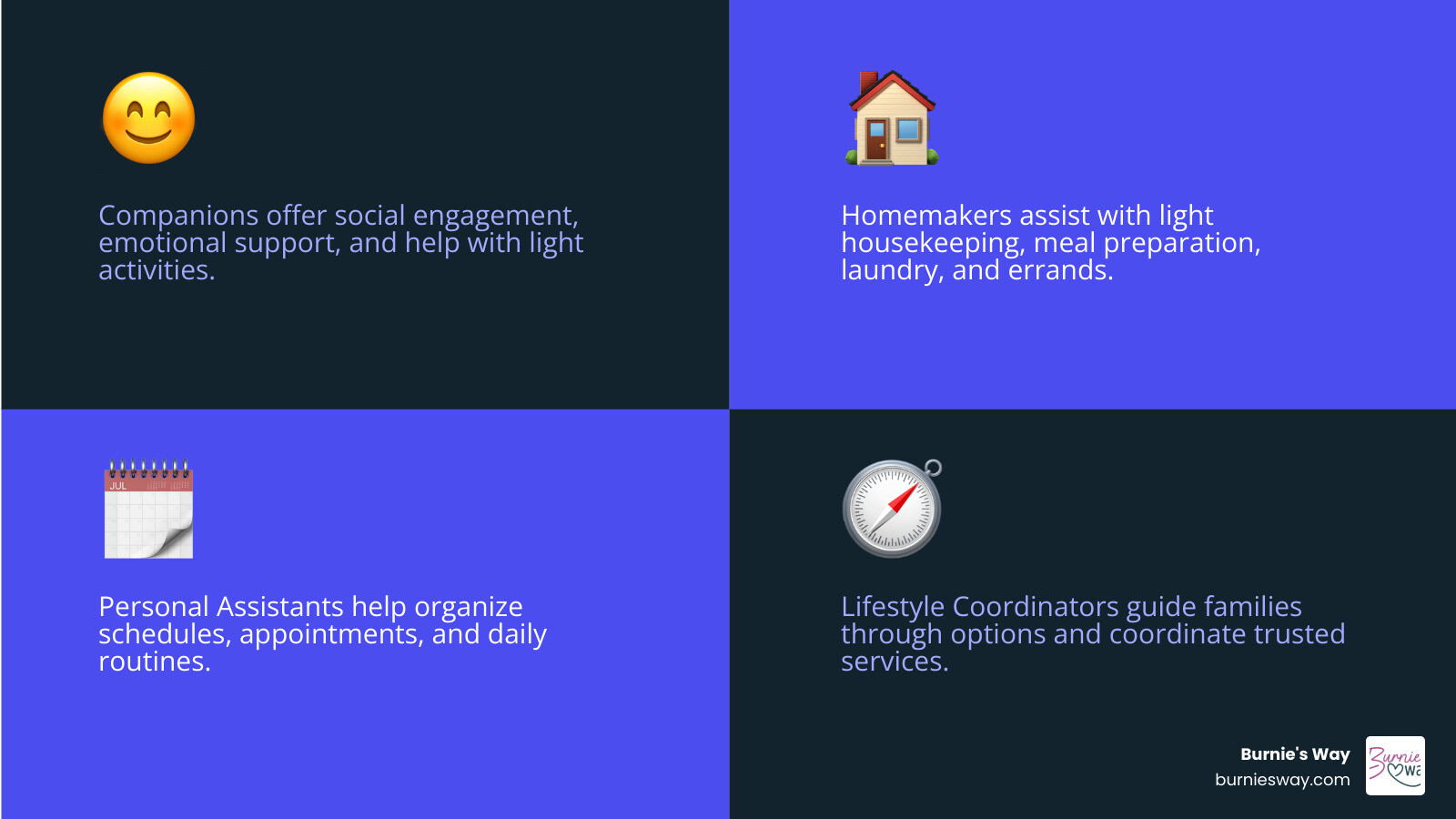
  1. Companions - Provide social engagement, emotional support, and help with light activities
  2. Homemakers - Assist with housekeeping, meal preparation, laundry, and errands
  3. Personal Assistants - Help organize schedules, appointments, and daily routines
  4. Lifestyle Coordinators - Guide families through options and coordinate trusted services
  5. Specialized Support - Focus on specific needs like memory challenges or mobility

Here's what many families don't realize: you don't have to figure this out alone. Millions of Americans take care of a friend or family member with a serious health condition, and the landscape of support has changed dramatically in recent years.

Your mom might be struggling with tasks that used to come easily. Maybe she's forgotten to take her medications, or the house isn't as tidy as it once was. Perhaps you've noticed she's become more isolated, or you simply can't be there as often as you'd like.

These aren't signs of failure. They're signals that it's time to explore options.

The good news? Home care services now fall into clear categories, and understanding them makes your search much simpler. Whether you need someone for a few hours a week or more comprehensive coordination, the right match exists.

This guide walks you through everything: recognizing when more support is needed, understanding different types of assistance, vetting potential helpers, navigating costs and legal considerations, and building a support system that honors your parent's independence.

infographic showing the four main types of personal support for seniors: companions who provide social engagement and light activity help; homemakers who handle household tasks and meal preparation; personal assistants who organize schedules and appointments; and lifestyle coordinators who guide families and coordinate trusted services - caretaker for old age infographic 4_facts_emoji_blue

Relevant articles related to caretaker for old age:

Recognizing the Signs: When Is It Time for More Support?

It's a common scenario: you visit an aging loved one and notice subtle changes. The refrigerator is empty, mail is piling up, or perhaps they seem a bit more confused than usual. These observations often spark the conversation about needing a caretaker for old age. But how do we know when it's truly time for more consistent support?

One of the first steps in assessing an older adult's needs is to look at their ability to manage Activities of Daily Living (ADLs) and Instrumental Activities of Daily Living (IADLs). ADLs are basic self-care tasks like bathing, dressing, eating, toileting, and moving around. IADLs involve more complex activities such as managing finances, preparing meals, shopping, doing housework, and using transportation. A decline in the ability to perform these tasks independently is a strong indicator that additional support may be beneficial.

Beyond these practical aspects, other signs might signal a need for more help:

  • Difficulty with mobility: Frequent falls, struggling to get up from a chair, or an overall decrease in physical activity.
  • Changes in daily routines: Neglecting personal hygiene, wearing the same clothes for days, or a noticeable change in sleeping patterns.
  • Social withdrawal: Losing interest in hobbies, friends, or family activities, leading to increased isolation.
  • Forgetfulness vs. normal aging: While some memory lapses are normal, consistent forgetfulness, confusion, or difficulty following conversations could be signs of dementia or other cognitive decline.
  • Home safety considerations: Unsafe living conditions, such as clutter that could cause falls, expired food, or neglected home maintenance.

These signs aren't always easy to spot, especially if you don't live nearby. Often, older adults may be hesitant to share health information or admit they need help, either because they don't want to worry their loved ones or they fear losing their independence. We understand this deeply, and our approach always respects their autonomy.

Assessing Your Loved One's Needs

Once you recognize potential signs, the next step is a more formal assessment. This doesn't have to be clinical; it can start with an honest conversation and observation. We encourage an in-home lifestyle review, looking at their environment and daily habits. A doctor's consultation is also crucial, as many physical and cognitive changes can be linked to treatable medical conditions.

Self-assessment checklists can be incredibly helpful for families to objectively evaluate needs. These checklists often cover the ADLs and IADLs mentioned earlier, allowing you to identify specific areas where support is most needed. The goal is to create a personalized support plan that helps your loved one maintain their dignity and independence. Geriatric care managers, who are often experienced professionals, can also assess needs, develop support plans, and coordinate various services. Their expertise is invaluable in navigating complex situations.

For more detailed information on how we approach personalized support, you can learn about our approach to personalized support.

The Importance of Early Conversations

We cannot overstate the importance of starting these conversations early. It's much easier to discuss options and make decisions proactively rather than reactively during a crisis. Family meetings can be a wonderful forum to respectfully discuss an older adult's wishes for their future. This includes their preferences for living arrangements, the types of support they might welcome, and their financial planning.

Having these discussions early also allows time for essential legal preparations. This includes establishing a Power of Attorney (POA), which grants a trusted individual the authority to make financial or healthcare decisions on their behalf if they become unable to do so themselves. Living Wills, or advance directives, also ensure that their wishes regarding medical care are honored. While some of the specific legal resources might vary by location, the general principles of preparing these documents are universal. You can find general information on Power of Attorney and Living Wills.

Understanding the Different Types of Home Support

The term "caretaker for old age" can encompass a wide range of services, from medical care to simple companionship. For many older adults, the desire to "age in place" – to remain in their own home as they grow older – is paramount. Our focus at Burnie's Way is enabling this independence through personal support and lifestyle coordination, rather than direct medical care.

To clarify the landscape, here's a table comparing different types of home support and how they contribute to independent living:

Type of Support Key Services Provided Focus
Companions Social engagement, conversation, light activities, accompanying to appointments, emotional support. Combating loneliness and isolation, promoting mental and emotional well-being, providing a friendly presence.
Homemakers Light housekeeping, laundry, meal planning and preparation, grocery shopping, errands, organizing the home. Maintaining a safe and tidy living environment, ensuring nutritional needs are met, assisting with household management.
Personal Assistants Organizing schedules, managing appointments, medication reminders (non-medical), coordinating transportation, managing correspondence, light administrative tasks. Streamlining daily routines, ensuring important tasks are completed, providing organizational support to maintain an active lifestyle.
Lifestyle Coordinators Comprehensive needs assessment, developing personalized support plans, coordinating various trusted services (e.g., transportation, meal delivery, home maintenance), advocating for the individual, facilitating communication with family. Holistic support for independent living, ensuring all aspects of an older adult's life are managed effectively, reducing family burden, and providing peace of mind. (This is where Burnie's Way truly shines, acting as your personal concierge).
Home Health Care/Skilled Nursing Medical care such as wound dressing, injections, vital sign monitoring, physical therapy, occupational therapy, speech therapy. Addressing specific medical needs, recovery from illness or surgery, managing chronic health conditions. (Burnie's Way does not provide these medical services, but our Lifestyle Coordinators can help connect you with providers.)

It's important to differentiate between these roles. While a certified home health agency might offer a broad range of services, including skilled nursing and personal care (like bathing and dressing assistance), our offerings at Burnie's Way are distinctly non-medical. We focus on personal support and coordination to help your loved one live the way they want.

Non-Medical Support: Companions and Homemakers

Non-medical support is often the first step for many families seeking a caretaker for old age. Companions and homemakers play a vital role in enhancing an older adult's quality of life without providing direct medical or personal physical care.

  • Companions offer valuable social engagement, which is crucial for mental and emotional well-being. They can chat, play games, read aloud, or accompany your loved one on outings to the park or for a cup of coffee. Volunteer friendly visitor services are sometimes available at no cost, or you can hire a companion through an agency for more consistent support. The connection between an older adult and their companion can be like that of a close friend, bringing immense joy and preventing loneliness.
  • Homemakers focus on maintaining a safe, clean, and comfortable home environment. Their services often include light housekeeping, laundry, grocery shopping, and meal planning and preparation. For many older adults, tasks like vacuuming or carrying heavy grocery bags become challenging. Having a homemaker ensures these essential activities are taken care of, allowing your loved one to conserve energy and enjoy their home without the burden of chores.

We offer various types of support to help older adults live safely and independently. You can find more information about our services.

Personal and Lifestyle Support

Beyond companionship and homemaking, personal and lifestyle support can significantly improve an older adult's ability to live independently. This is where Personal Assistants and Lifestyle Coordinators come in, providing comprehensive, non-medical assistance that streamlines daily life.

  • Personal Assistants help with organizational tasks that can become overwhelming for older adults. This might include organizing appointments and schedules, providing medication reminders (without administering medication), managing correspondence, and coordinating transportation for errands or social events. They act as a helpful right-hand person, ensuring that important tasks are completed and routines are maintained.
  • Lifestyle Coordinators take this a step further, offering a holistic approach to independent living. They can conduct thorough needs assessments, develop personalized support plans, and coordinate a network of trusted service providers. This could involve arranging for meal delivery programs, connecting with transportation services, or finding reputable home maintenance providers. For instance, if an older adult needs help with managing finances and scheduling doctor appointments, a Lifestyle Coordinator can help coordinate these aspects, providing peace of mind for both the older adult and their family. This role is about empowering choice and ensuring continuous support for comprehensive daily life management.

Your Guide to Finding a Supportive Companion for Old Age

Finding the right caretaker for old age or a supportive companion can feel like a daunting task, but with the right approach, it becomes much more manageable. You have several avenues to explore, each with its own benefits.

  • Personal support agencies: These agencies screen, hire, and manage their support staff. They can provide a range of services, from companions to homemakers and personal assistants. Agencies often handle background checks, training, and scheduling, which can simplify the process for families.
  • Independent companions/assistants: Some individuals work directly with families, offering more flexibility and potentially lower costs as there's no agency overhead. Platforms exist that allow you to search for and connect with individual companions, often with detailed profiles outlining their experience and services. For example, some platforms list thousands of candidates in specific areas, detailing their experience with various conditions and services offered.
  • Community referrals: Word-of-mouth from friends, family, or local senior centers can be a valuable source for finding trusted individuals or services.
  • Lifestyle Coordinators: Services like Burnie's Way offer a unique blend of personal assistance and coordination, guiding families through options and managing the logistics of daily life.

Before hiring anyone, it’s essential to figure out what services you need and what you can afford. The Federal Trade Commission offers excellent advice on Hiring Support: Health Information for Older People.

The Vetting Process: How to Hire a Trustworthy Companion or Assistant

Once you've identified potential companions or assistants, a thorough vetting process is crucial to ensure you hire a qualified and trustworthy individual. This is paramount for the safety and well-being of your loved one.

Here’s a list of essential steps we recommend:

  • Conduct comprehensive interviews: Prepare a list of specific questions about their experience, approach to support, availability, and how they handle challenging situations. Ask about their experience with specific conditions like Alzheimer's, Parkinson's, or dementia, if relevant.
  • Request and check references: Always speak to previous clients or employers. Ask about their reliability, communication skills, and how they interacted with the older adult. It’s always a good idea to check references before hiring a particular person or company.
  • Perform background checks: For independent hires, insist on a criminal background check. Agencies typically handle this for their staff.
  • Verify certifications and training: While Burnie's Way focuses on non-medical support, if you are hiring someone for direct care, verify any relevant certifications (e.g., First Aid, CPR, Personal Support Worker, or college diplomas).
  • Set clear expectations: Discuss the scope of work, schedule, compensation, and any specific preferences or routines. A written work agreement is highly recommended.
  • Check for complaints: If using an agency, check for any complaints filed against them with state and local agencies that regulate health services, or contact the Better Business Bureau in your area.

Ensuring Safety and Preventing Elder Abuse

Ensuring the safety and well-being of a senior receiving home support is our top priority. Unfortunately, elder abuse is a serious issue that affects hundreds of thousands of older adults each year. It's a public health and human rights issue that is often under-recognized, and it's vital for us to be vigilant.

Signs of elder abuse can be subtle and take many forms, including:

  • Physical abuse: Unexplained injuries, bruises, or signs of restraint.
  • Emotional abuse: Withdrawal, depression, fear, or anxiety around the companion or assistant.
  • Financial exploitation: Unexplained changes in finances, missing money, or unusual purchases.
  • Neglect: Poor hygiene, malnutrition, untreated medical conditions, or unsafe living conditions.

We encourage establishing open communication with your loved one and conducting regular check-ins. Trust your instincts. If something feels off, investigate. If you suspect elder abuse, it's crucial to report what you see to an authority. There are resources available to help you recognize the signs of elder abuse and take action. The National Center on Elder Abuse provides valuable information on how to recognize the signs of elder abuse.

Understanding the financial and legal aspects of hiring a caretaker for old age can be complex, but it's essential for long-term planning and peace of mind. We often hear families asking about costs and available assistance, and we're here to help clarify.

person reviewing budget with calculator - caretaker for old age

The costs associated with home support services can vary widely depending on the type of service, the hours needed, and your geographic location. For instance, services like companions or homemakers might charge hourly rates, while more comprehensive coordination services like ours at Burnie's Way might involve a custom plan.

When considering costs, it's important to understand what various programs cover:

  • Medicare: Generally, Medicare has limited coverage for short-term, Medicare-certified home health services, typically after surgery or an acute care stay. It usually doesn't cover non-medical personal support services like companions or homemakers.
  • Medicaid: Medicaid benefits for home support services vary by state, but they may cover some home-based services for eligible individuals.
  • Long-term support insurance: If your loved one has a long-term care insurance policy, review it carefully. While many policies cover some costs, most health or disability insurance policies offer limited, if any, long-term care benefits.
  • Private pay: Many families pay for personal support services out-of-pocket. This allows for greater flexibility in choosing services and providers.
  • Veteran benefits: Veterans and their spouses may be eligible for financial assistance programs through federal and state agencies. The Eldercare Locator can help you find resources in your area, including information about paying for care. You can reach them at Eldercare Locator.

Financial Assistance and Tax Credits for Families

While Burnie's Way provides non-medical support, we recognize that families also seek to understand broader financial assistance options for care. Many countries, including Canada, offer various tax credits and deductions that can help offset the costs associated with supporting an older loved one or a family member with a disability. For example, Canada offers a Disability Tax Credit, a Medical Expense Tax Credit, and a Canada Caregiver Amount. These are specific examples of how governments may provide financial relief to families.

For families in the United States, we strongly encourage you to consult the IRS and your state's tax agencies. Similar federal and state-based assistance programs, tax credits, and deductions for medical expenses or caregiving support may be available. These can help reduce your overall tax burden or provide direct financial aid. It's always best to research the specific programs applicable in your state and federal jurisdiction. You can explore general information on tax credits and deductions as an example of what might exist, but remember to verify local applicability.

Hiring a caretaker for old age, especially an independent companion or assistant, involves important legal and financial considerations. If you choose to hire someone directly, you essentially become an employer. This carries certain responsibilities:

  • Employment contracts: A clear written agreement outlining duties, hours, pay, and expectations can prevent misunderstandings.
  • Tax obligations: As an employer, you may be responsible for withholding and paying employment taxes (Social Security, Medicare, federal unemployment tax) and providing a W-2 form.
  • Worker's compensation: Depending on your state's laws, you might need to carry worker's compensation insurance to cover injuries the companion or assistant might sustain while working in your home.

Additionally, employees in the United States may have rights under laws like the Family and Medical Leave Act (FMLA). FMLA allows eligible employees to take unpaid, job-protected leave for specific family and medical reasons, including caring for a parent with a serious health condition. While the specific benefits and application processes vary by country, the general concept of caregiver leave is a vital support for working families. We encourage you to research federal and state-specific caregiver leave policies in the U.S. You can find general information on caregiver benefits and how to apply as a guide to understanding the types of support that might be available.

Frequently Asked Questions about Senior Support

We often receive questions from families navigating the journey of finding a caretaker for old age and supporting their loved ones. Here are answers to some of the most common inquiries.

What is the role of a lifestyle coordinator or personal assistant?

A lifestyle coordinator or personal assistant is a specialist who acts as a guide and advocate for families supporting older relatives. They can help assess needs, organize daily routines, and coordinate various services to help your loved one. Think of them as a personal concierge for daily life. They are experienced in evaluating needs, dealing with family dynamics, and connecting you with the right resources. Unlike medical professionals, their focus is on enhancing quality of life through non-medical support and seamless coordination, ensuring continuous support and partnerships for comprehensive daily life management. This allows your loved one to live confidently and stay connected.

How can technology help a senior age in place?

Technology offers many tools for safety and connection, including personal emergency response systems (PERS), automatic medication reminders, video calling devices to reduce isolation, and smart home features for safety and convenience. For example, PERS can alert emergency personnel if an older adult falls or needs urgent assistance. Smart home devices can control lighting, thermostats, and security, making the home safer and more comfortable. Technology can also help combat loneliness through video calls with family and friends, supporting a senior's mental and emotional well-being.

What resources are available for family support?

Family members can find support through local support groups, online forums, and organizations focused on family caregiving. Your doctor or faith community may be able to help you find the right support group. You can also reach out to your local senior center, state office on aging or social services office, or local Area Agency on Aging. Organizations like the Family Caregiver Alliance and the Caregiver Action Network offer online and in-person settings for caregivers to connect and share experiences. Respite services, which provide short-term relief for primary supporters, are also a vital resource to prevent burnout. Respite care can take place at home, in a health care facility, or at an adult day care center, allowing caregivers to take a much-needed break.

Conclusion: Building a Support System for Independent Aging

Navigating the journey of finding a caretaker for old age or the right support system for an aging loved one is a marathon, not a sprint. We've explored the critical steps: recognizing the signs that more support is needed, understanding the diverse types of assistance available, diligently vetting potential companions or assistants, and understanding the financial and legal landscapes.

The benefits of "aging in place" are profound – allowing older adults to maintain dignity, comfort, and independence in the familiar surroundings of their home. While challenges like safety concerns, social isolation, and the need for coordinated services exist, they are not impossible. With proactive planning and the right resources, these challenges can be effectively addressed. Supporting a senior's mental and emotional well-being is also key, which is why companionship, social engagement, and consistent routines are so important.

The goal is not just to find someone to help, but to build a robust support network that empowers your loved one to live confidently and fully. While finding hands-on support is one piece of the puzzle, coordinating daily life and fostering connection is just as important. Burnie's Way helps older adults live confidently at home by providing personal concierge-style support for everyday life, ensuring continuous support and partnerships for comprehensive daily life management. We are here to help you understand your choices and coordinate the personal support that fits best, allowing you to focus on what matters most—being present for your loved one.

To learn more about how we can support your family's unique needs, please visit our services.

The Ultimate Guide to At-Home Elder Care: Services, Specialists, and Support

12 min read

The Ultimate Guide to At-Home Elder Care: Services, Specialists, and Support

Why Finding the Right Support Matters Most Reliable home care starts with understanding what you need and knowing where to find trustworthy help....

Read More
Home Sweet Home: Alzheimer's Care That Makes a Difference

11 min read

Home Sweet Home: Alzheimer's Care That Makes a Difference

Why Alzheimer's Home Care Matters for Families Today Alzheimer's home care refers to the range of support services that help individuals with...

Read More
Unlocking Support: Essential Private Elder Care Services for Seniors

10 min read

Unlocking Support: Essential Private Elder Care Services for Seniors

Why Understanding Your Options Matters Now Private elder care services are non-medical and specialized support options that help seniors live...

Read More