8 min read

Peaceful Passages: Navigating End-of-Life Care with Grace

Peaceful Passages: Navigating End-of-Life Care with Grace

Why End-of-Life Care Matters Now More Than Ever

end of life care

End of life care is health care and support provided during the final months, weeks, or days of a person's life. It focuses on comfort, dignity, and quality of life—addressing not just physical symptoms, but also emotional, spiritual, and practical needs for both the individual and their loved ones.

What End-of-Life Care Includes:

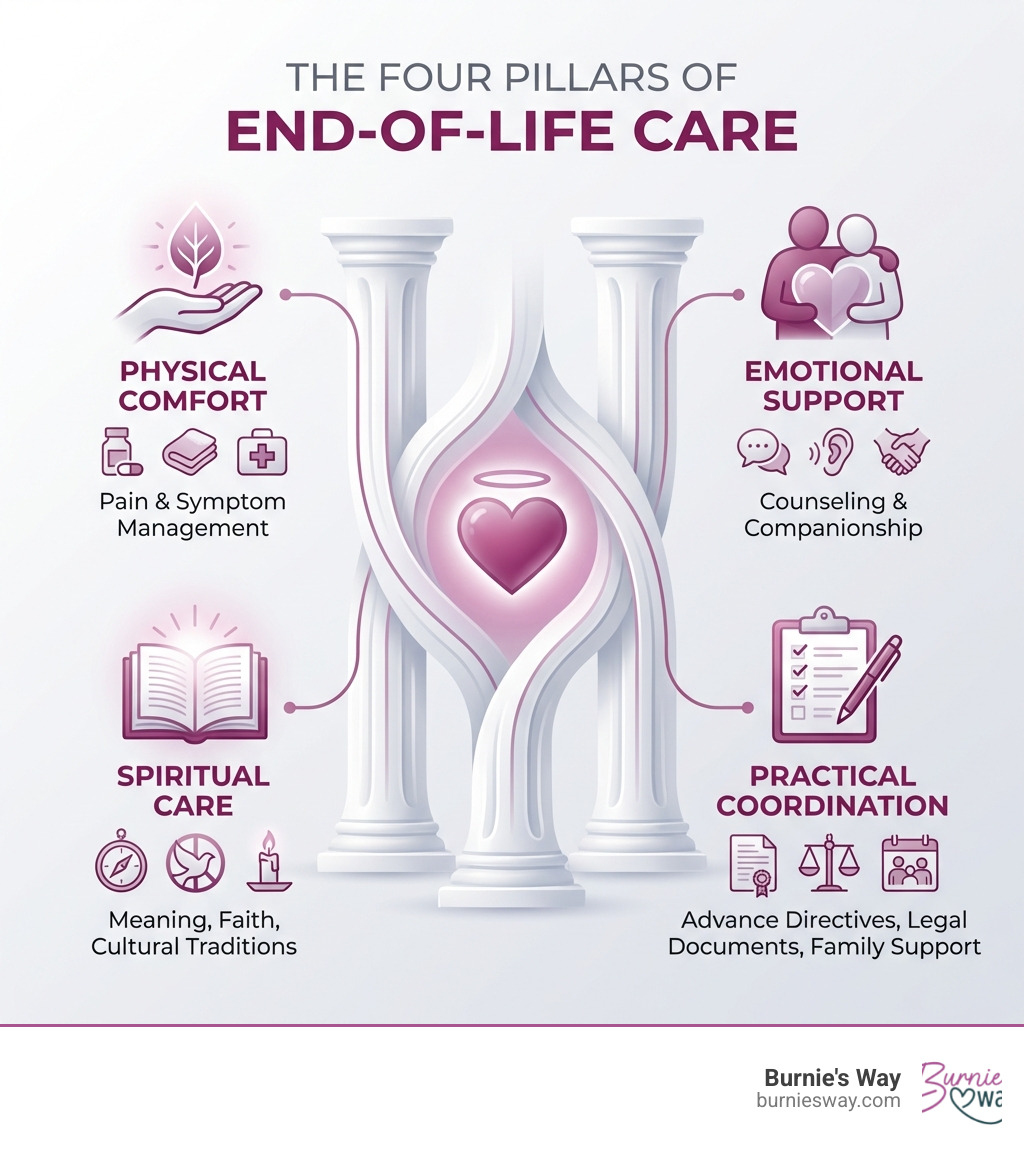
  • Physical comfort – Pain management, symptom relief, and medical support
  • Emotional support – Counseling, companionship, and help coping with fears
  • Spiritual needs – Helping find meaning, peace, and connection to faith or values
  • Practical coordination – Organizing care, managing logistics, and supporting families
  • Advance planning – Documenting wishes through directives and legal frameworks

When a loved one's health begins to decline, families often feel overwhelmed by the complexity of coordinating care, understanding medical options, and honoring personal wishes. The decisions ahead can feel heavy—not just medically, but emotionally and spiritually. Yet this time also offers an opportunity: to ensure your loved one experiences comfort, dignity, and connection in their final chapter.

In most developed countries, medical spending on people in the last twelve months of life accounts for roughly 10% of total health care costs. But the real investment isn't just financial—it's the attention, care, and presence that allow someone to live fully until the very end.

This guide will walk you through the essential components of end-of-life care, from understanding palliative and hospice options to navigating legal documents, managing symptoms, and providing emotional and spiritual support. Whether your loved one is at home, in a facility, or moving between settings, you'll learn how to make informed decisions that honor their wishes and bring peace of mind to your family.

Infographic showing the four pillars of end-of-life care: Physical Comfort (pain and symptom management), Emotional Support (counseling and companionship), Spiritual Care (meaning, faith, and cultural traditions), and Practical Coordination (advance directives, legal documents, and family support) - end of life care infographic

Key end of life care vocabulary:

Understanding the Scope of End-of-Life Care

End of life care is a broad term encompassing the support and medical attention provided when a person is nearing death. This period can span from hours or days to several months, depending on the individual's condition. The core purpose is to maximize comfort, preserve dignity, and improve the quality of life for the individual, while also supporting their loved ones.

A significant aspect of end of life care involves managing medical spending effectively. Research indicates that in most developed countries, medical expenses for individuals in their last twelve months of life constitute approximately 10% of total medical spending. In the United States, this figure is around 8.5%, but for those aged 65 and older, nearly 27% of Medicare's annual budget is dedicated to care in the final year of life. This data emphasizes the financial implications and the need for comprehensive planning to ensure resources align with patient preferences. You can dig deeper into this aspect by exploring scientific research on medical spending at the end of life.

Patient preferences play a pivotal role in shaping care. While some may wish for aggressive treatments, others prioritize comfort and quality of remaining time. The goal is to align care with the individual's values, whether provided at home, in a hospital, or a dedicated hospice facility.

We understand that coordinating these preferences with available medical services can be complex. While Burnie's Way does not provide direct medical care, we can act as a personal concierge, helping our clients and their families understand their choices and coordinate the personal support that fits best, ensuring their loved one's preferences are respected.

One of the most empowering steps in preparing for end of life care is advance care planning. This process allows individuals to articulate their preferences for future medical treatment, ensuring they align with personal values. It is an ongoing dialogue involving patients, families, and healthcare providers.

Key components of advance care planning include:

  • Advance Medical Directives: Legal documents specifying wishes for medical treatment if an individual becomes unable to communicate.
  • Living Will: Outlines specific decisions about future care, such as accepting or refusing life-sustaining treatments like ventilators or feeding tubes.
  • Durable Power of Attorney for Healthcare: Designates a trusted individual (a health care proxy) to make decisions on the patient's behalf if they are incapacitated.
  • Do-Not-Resuscitate (DNR) Order: A medical order indicating that CPR should not be performed if breathing or the heart stops.

Studies show that individuals who complete advance care planning report higher satisfaction and decreased stress for their families. Tools like the 'Five Wishes' document combine these elements, making it easier to express desires regarding comfort and personal care.

Each state has specific laws regarding these documents. It is crucial to ensure compliance with the laws of your state, such as Virginia. Resources like CaringInfo offer state-specific directives for download.

We at Burnie's Way can support our clients by providing information about advance care planning and connecting them with legal professionals who can assist with creating these essential documents. We believe in helping our clients live confidently, knowing their wishes are documented.

Managing Physical Comfort and Clinical Pathways

Ensuring physical comfort is a cornerstone of compassionate end of life care. As individuals approach the end of life, effective symptom management is crucial for maintaining dignity.

Common physical discomforts and their management include:

  • Pain: Aggressive management is paramount. Opioids like morphine are frequently used to prevent pain rather than reacting to it.
  • Dyspnea (Shortness of Breath): Relief can come from raising the head of the bed, using a fan, or using opioid medications to alleviate the sensation of breathlessness.
  • Agitation and Restlessness: Often caused by pain or anxiety, these are managed by addressing the underlying cause or creating a calm environment.
  • Respiratory Secretions: Noisy breathing, or "death rattle," can be managed by repositioning the person or using medications to dry secretions.
  • Nausea and Constipation: Managed with anti-nausea medications and stool softeners, especially when mobility is decreased or opioids are used.

Medication Administration: When swallowing becomes difficult, healthcare providers use alternative methods such as subcutaneous injections (just under the skin) or the rectal route to ensure continuous comfort.

Integrated Care Pathways: These tools coordinate care across settings to ensure best practices are followed. An example is the 'Comfort Care Order Set' used in VA medical centers to standardize care for the last days of life.

While Burnie's Way does not provide medical services, we understand the importance of symptom management. We can assist our clients by helping them coordinate with their healthcare team, ensuring they have the information needed to advocate for their loved one's comfort.

A gentle hand holding an elderly hand - end of life care

Emotional and Spiritual Support for the Final Journey

The emotional and spiritual landscape of end of life care is as crucial as physical comfort. Facing mortality can bring forth profound mental and emotional needs for the individual and their family.

Mental and Emotional Needs

Individuals nearing the end of life may experience:

  • Depression and Anxiety: It's common for patients to feel depressed or anxious, particularly if they are alert and aware of their declining health. These feelings can also arise from fears of the unknown, worries about those left behind, or the prospect of being alone.
  • Fears and Concerns: Patients often fear pain, loss of control, indignity, and being a burden. They may also worry about unresolved conflicts or unfinished business.
  • Mental Confusion and Unusual Behavior: Some individuals may experience periods of mental confusion, restlessness, or even unusual behavior. They might also have moments of surprising clarity or perceive people or events that are not physically present. It's important to respect these experiences as part of their reality.

To address these needs, a compassionate approach includes:

  • Presence and Listening: Simply being present, holding hands, or gently touching can provide immense comfort. Listening attentively to their concerns, fears, or memories validates their experience.
  • Creating a Calming Environment: Soft lighting, quiet moments, and gentle music can help soothe agitation and promote relaxation.
  • Facilitating Communication: Encouraging open conversations about feelings, memories, and wishes can be therapeutic. If the patient is able, involving them in decisions about their care fosters a sense of control.
  • Professional Support: Counselors, psychologists, or social workers specializing in end of life care can offer strategies for coping with emotional pain. Medications may be considered for severe depression or anxiety.

Addressing Spiritual Needs in End-of-Life Care

Spiritual needs are deeply personal and can be as significant as physical concerns for people nearing the end of life. They often involve finding meaning, purpose, and peace in their life story.

  • Meaning and Purpose: Many individuals seek to reconcile their life's journey, find meaning in their experiences, and understand their legacy.
  • Religious Rites and Beliefs: For religious individuals, connecting with their faith community, engaging in prayer, reading sacred texts, or participating in specific rites can provide profound comfort. Hospital chaplains are available to provide spiritual support regardless of religious affiliation.
  • Cultural Sensitivity: Spiritual beliefs are often intertwined with cultural practices. Care must be delivered with sensitivity and respect for diverse cultural and spiritual traditions. For instance, a knowledge synthesis of culturally and spiritually sensitive end of life care highlights the importance of understanding and integrating these aspects into care plans.
  • Reconciliation and Peace: Supporting individuals in resolving disagreements, making peace with life circumstances, or expressing love and gratitude can bring immense solace. Some dying individuals report dreams of meeting deceased relatives or religious figures, which can be a comforting experience.

While Burnie's Way does not offer medical or counseling services, we can help facilitate emotional and spiritual well-being by acting as a virtual companion, coordinating trusted services, and helping our clients connect with resources for emotional support, companionship, or spiritual guidance. This ensures a holistic approach to their final journey.

Choosing the Right Setting: Home vs. Facility

The decision of where to receive end of life care depends on individual preferences and medical needs.

Home-Based End-of-Life Care: Many prefer the comfort of home. From 2003 to 2017, home deaths in the U.S. increased from 23.8% to 30.7%.

  • Benefits: Familiarity, increased control over routines, and continuous family presence. Research on hospital at home: home-based end-of-life care suggests these programs improve satisfaction.
  • Challenges: Caregiver strain and the complexity of coordinating medical equipment.

Facility-Based Care:

  • Hospitals: Best for acute crises or complex symptom management.
  • Nursing Homes: Provide 24/7 skilled nursing for those requiring continuous support.
  • Hospices (Inpatient): Specialized facilities focusing entirely on comfort in a home-like setting.

Oncology Considerations: For cancer patients, care often shifts from curative to palliative, focusing on quality of life and managing distress through psychosocial interventions.

Burnie's Way offers personal concierge support to help families steer these decisions. We assist with logistics and finding resources for in-home services, allowing families to focus on connection.

The Role of Hospice in End-of-Life Care

Hospice care is for those with a life expectancy of six months or less. It focuses exclusively on comfort rather than a cure.

  • Symptom Control: Experts manage pain, nausea, and fatigue.
  • Interdisciplinary Teams: Doctors, nurses, social workers, and volunteers address physical, emotional, and spiritual needs.
  • Caregiver Support: Includes education and respite care to give family members a necessary break.

While Burnie's Way does not provide hospice services, we help clients coordinate with providers, ensuring seamless transitions and assisting with daily life management so families can focus on their loved one.

Frequently Asked Questions about End-of-Life Care

What are the signs that death is approaching?

Common physical and behavioral changes include:

  • Increased Sleep: The person may be difficult to rouse.
  • Decreased Appetite: Interest in food and drink diminishes.
  • Breathing Changes: Breathing may become shallow, irregular, or noisy.
  • Physical Changes: Hands and feet may become cool or bluish due to decreased circulation.
  • Withdrawal: The person may withdraw from social interactions.

How is pain managed when a patient can no longer swallow?

Healthcare professionals use several alternative methods:

  • Subcutaneous Injections: Medications given via a small needle under the skin.
  • Rectal Administration: Suppositories or liquids for effective absorption.
  • Transdermal Patches: Patches that deliver medication slowly through the skin.
  • Intravenous (IV) Infusion: Direct delivery into the bloodstream for rapid control.

What is the difference between palliative care and hospice?

  • Palliative Care: Focuses on quality of life for any serious illness, regardless of prognosis. It can be provided alongside curative treatments at any stage of a disease.
  • Hospice Care: A specialized type of palliative care for those with a prognosis of six months or less. It begins when curative treatments are no longer desired, focusing entirely on comfort and bereavement support.

All hospice care is palliative, but palliative care has a broader scope and can last for years.

Conclusion

Navigating the journey of end of life care for a loved one is undeniably one of life's most profound experiences. It calls for immense strength, compassion, and informed decision-making. Our exploration has highlighted the multifaceted nature of this care, encompassing physical comfort, emotional and spiritual well-being, and crucial practical and legal planning.

The goal at every stage is to ensure that your loved one can experience peaceful passages, filled with dignity, comfort, and the affirmation of a life well-lived. By understanding options like palliative and hospice care, engaging in advance care planning, and prioritizing holistic support, families can create an environment where their loved one's wishes are honored and their final chapter is as serene as possible.

We at Burnie's Way understand the complexities and emotional weight involved. While we do not provide medical care or direct caregiving services, we are here to offer dedicated personal concierge support. Our mission is to help aging adults live comfortably and confidently at home, and to provide families with peace of mind that day-to-day details are coordinated and supported. We act as your virtual companion, events coordinator, and personal assistant, helping with personal logistics and trusted-service coordination so you can focus on connection.

Our personalized approach, backed by 50 years of experience, means we focus on enhancing independence and connection, allowing you and your loved one to cherish the moments that matter most.

Feature Burnie's Way (Personal Concierge Support) Medical Caregiving (e.g., In-Home Care)
Service Focus Lifestyle coordination, personal assistance, independence-focused support, companionship, errands, daily life management Medical tasks, personal care (bathing, dressing), mobility assistance, medication administration, skilled nursing
Role Guide, helper, companion, coordinator Caregiver, nurse, health provider
Medical Aspect Non-medical, non-clinical, does not provide medical advice or handle personal health information (PHI) Direct medical/clinical care; may handle clinical data depending on provider
Goal Promote independence, connection, emotional well-being, peace of mind for families, manage logistics Provide physical care, manage health conditions, assist with activities of daily living
Compliance Operates outside HIPAA scope May be HIPAA-covered depending on the organization and services provided

For more information about how our personal concierge support services can bring ease and confidence to your loved one's life, please visit our personal support services page.

Rapid Response: Navigating Urgent Care for Seniors

7 min read

Rapid Response: Navigating Urgent Care for Seniors

Why Emergency Senior Care Matters for Your Family Emergency senior care refers to immediate support services available when an older adult faces an...


Read More
Finding Your Peace of Mind: A Comprehensive Look at Non-Medical Home Care

6 min read

Finding Your Peace of Mind: A Comprehensive Look at Non-Medical Home Care

Understanding Non-Medical Home Care: What It Is and How It Helps Non medical home care is professional support that helps older adults live...

Read More
Beyond the Basics: Unpacking Home Care Services for Seniors

10 min read

Beyond the Basics: Unpacking Home Care Services for Seniors

Why Understanding Home Support Options Matters What are the home care services for the elderly person? Home care services for seniors fall into four...

Read More