6 min read

Dementia Home Care: Strategies for a Safer Home

Dementia Home Care: Strategies for a Safer Home

When a Parent Has Dementia: What You Can Actually Do at Home

dementia home care

Dementia home care means supporting a person with dementia in their own home - keeping them safe, comfortable, and as independent as possible.

Here's a quick overview of what effective dementia home care involves:

  • Make the home safer - grab bars, better lighting, locked cabinets, non-slip mats
  • Build consistent daily routines - structure reduces confusion and anxiety
  • Arrange the right support - companion visits, meal prep, medication reminders, and daily-life coordination
  • Address behavior changes - music therapy, sensory activities, and calm redirection help
  • Support the caregiver too - burnout is real, and respite matters
  • Explore funding options - Medicare, veterans benefits, and government programs can help with costs

This guide walks through each of these steps in plain language.

If you're caring for a parent with dementia, you're not alone - and you're probably exhausted. Around 55 million people worldwide are living with dementia right now. And research shows that 97 to 99 percent of people with dementia and their family caregivers have unmet care needs - most of them related to home safety.

As Johns Hopkins geriatric psychiatrist Dr. Deirdre Johnston has noted, "The care of dementia is actually the care of two people: the person with the illness and the person taking care of them."

That's the reality. This guide is here to help with both.

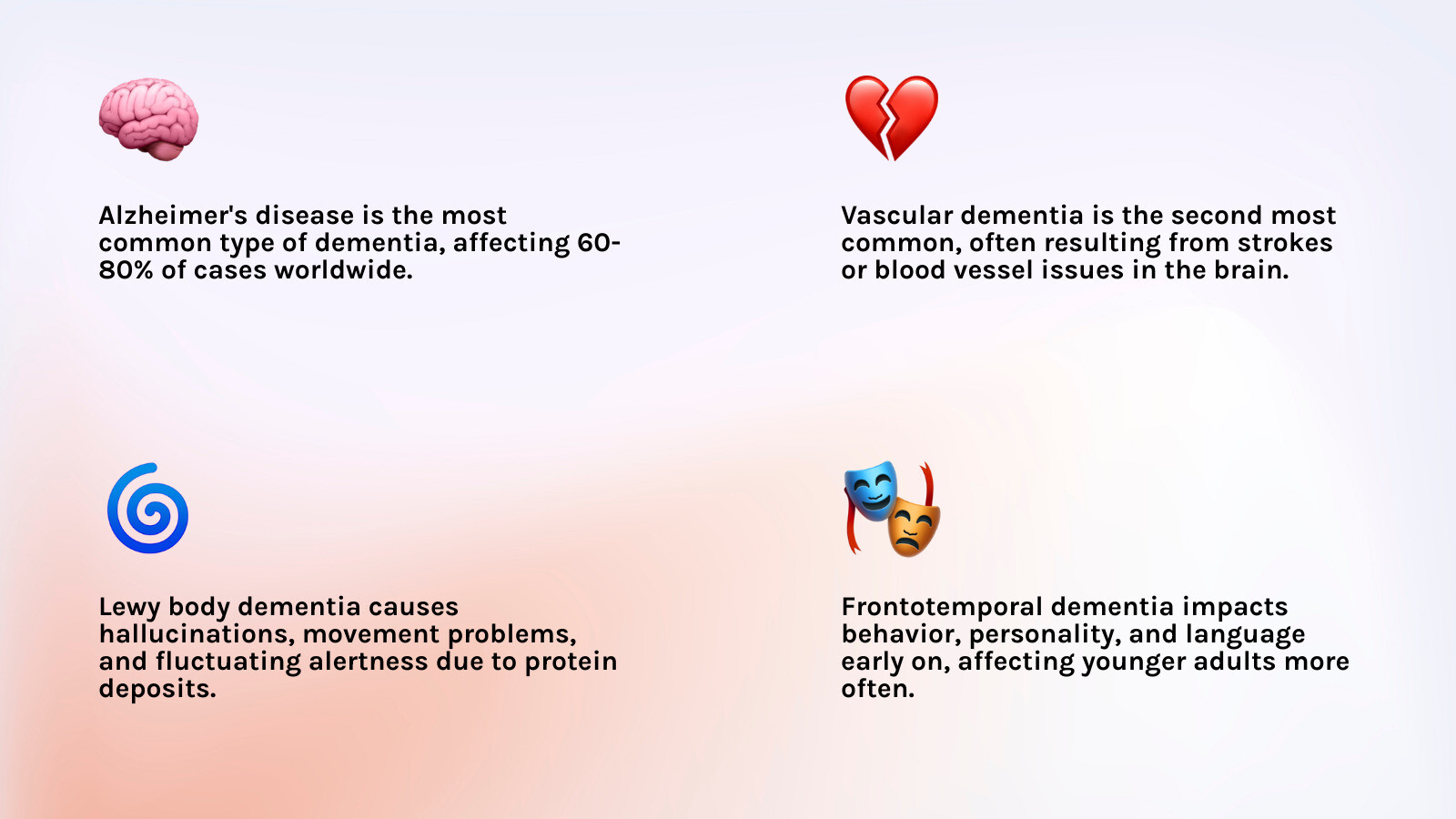
Common types of dementia and their impact on daily life at home - dementia home care infographic 4_facts_emoji_light-gradient

Discover more about dementia home care:

Understanding Dementia Home Care and Common Types

senior and a companion looking at a photo album - dementia home care

When we talk about dementia home care, we aren't just talking about one single condition. Dementia is an umbrella term for a decline in mental ability severe enough to interfere with daily life. While Alzheimer's disease is the most common form, there are several types that families in Virginia and across the U.S. encounter.

  • Alzheimer's Disease: This is the heavy hitter, accounting for the majority of cases. It typically starts with memory loss and progresses to affect language and orientation.
  • Vascular Dementia: Often caused by small strokes or issues with blood flow to the brain, this type can cause problems with planning, organizing, and following through on tasks.
  • Lewy Body Dementia (LBD): This often involves physical symptoms similar to Parkinson's, along with visual hallucinations and fluctuations in alertness.
  • Frontotemporal Dementia (FTD): This type often hits earlier in life and primarily affects personality, behavior, and language.

According to scientific research on dementia types, understanding the specific diagnosis is the first step toward creating a supportive home environment. Because each type affects the brain differently, the strategies for success will vary. For example, someone with FTD might need more help managing social boundaries, while someone with Alzheimer's needs more memory cues.

At Burnie's Way, we believe that staying at home is often the best medicine. Familiar surroundings provide a sense of security that a clinical facility simply can't match. By focusing on what a person can still do, rather than just what they've lost, families can help maintain dignity and joy.

Preparing for Dementia Home Care: Questions for Providers

Choosing who will enter your home to provide support is a massive decision. You aren't just looking for a worker; you're looking for a partner in your loved one's daily life. Whether you are considering a personal concierge for lifestyle coordination or a licensed home health agency for clinical needs, you need to vet them thoroughly.

Here are the non-negotiable questions we recommend asking:

  1. Are your team members trained in dementia-specific support? General senior support is helpful, but dementia requires a different toolkit, including redirection techniques and patience.
  2. Do they have First Aid and CPR certification? Safety is the priority.
  3. Are you bonded and insured? This protects your family and your home.
  4. What is the backup plan? If a primary companion gets sick, who steps in?
  5. Can you provide references from other families? Nothing beats a real-world testimonial.

Getting these answers upfront saves a lot of heartache later. For more guidance on choosing the right path, check out more info about elderly in-home care.

Financial Planning for Dementia Home Care

Let's talk about the elephant in the room: the cost. Dementia home care can be expensive, but there are more options than most people realize.

  • Medicare: Generally, Medicare does not pay for long-term custodial support such as ongoing help with bathing, dressing, or supervision. However, it may cover skilled home health services if a doctor certifies they are medically necessary and the person is homebound. You can use Medicare's online tool for home health compare to find certified agencies.
  • Veterans Benefits: For veterans in Virginia, the VA often provides significant support, including Aid and Attendance benefits that may help pay for home-based assistance.
  • PACE (Program of All-Inclusive Care for the Elderly): This is a joint Medicare/Medicaid program that helps people meet their healthcare needs in the community instead of a nursing home.
  • BenefitsCheckUp: This is a free tool from the National Council on Aging that helps you find federal and state programs to save money on everything from prescriptions to utilities.

We always suggest starting the financial conversation early. It's much easier to plan for the future when you aren't in the middle of a crisis.

Essential Services for Supporting Independence at Home

Supporting a senior with dementia isn't just about watching them; it's about active engagement and thoughtful day-to-day coordination. At Burnie's Way, we see ourselves as a virtual companion and personal assistant. Our goal is to handle the logistics so you can go back to being a daughter, son, or spouse.

Essential services that make a difference include:

  • Companion Services: Social isolation is a major risk for those with dementia. Having someone to talk to, play games with, or simply sit with can reduce depression.
  • Daily-Life Support: This can include help with routines, clothing organization, reminders, and encouragement in a way that supports dignity and independence. For more info about personal care for elderly at home, it's important to understand what type of provider is the right fit for your family's needs.
  • Medication Reminders: Forgetting a pill or taking a double dose is a common danger. A simple reminder system or a companion's oversight can help prevent unnecessary medical issues.
  • Transportation and Errands: Getting to the grocery store or the doctor shouldn't be a source of stress.
  • Light Housekeeping and Meal Prep: A clean, organized home reduces visual clutter, which can be very confusing for someone with cognitive decline. Plus, nutritious meals help support overall well-being.

Creating a Secure Environment: A Home Safety Checklist

Research shows that over 90 percent of the needs of people living with dementia are related to home safety. The brain's ability to process depth, color, and space changes with dementia. What looks like a flat floor to you might look like a deep hole to them.

Use this checklist to perform a safety audit of your home:

  • [ ] Lighting: Increase the wattage. Shadows can be terrifying and lead to "sundowning" (increased confusion in the evening).
  • [ ] Floors: Remove throw rugs. They are trip hazards. Use non-slip mats in the kitchen and bath.
  • [ ] The Bathroom: Install grab bars in the shower and near the toilet. Consider a raised toilet seat.
  • [ ] Kitchen Safety: If wandering is an issue, consider installing hidden shut-off valves for the stove.
  • [ ] Wandering Prevention: Use "medical alert" programs or GPS-enabled wearables. Sometimes, a simple bell on the door is enough to alert you if they try to head out at 2 AM.
  • [ ] Color Contrast: Use a different color for the toilet seat than the floor to help with "aim" and navigation.

For a deeper dive into making your space thrive, look at the scientific research on home safety for dementia. It’s about creating a "Yes" environment where they can move freely without you constantly saying "Don't touch that!" or "Watch out!"

Managing Challenging Behaviors and Promoting Quality of Life

One of the hardest parts of dementia home care is dealing with behavioral changes. Agitation, repetitive questioning, and aggression aren't "bad behavior"—they are symptoms of a brain that is struggling to communicate.

We recommend these strategies to keep the peace:

  1. The Power of Routine: The brain loves predictability. Try to keep meals, naps, and activities at the same time every day.
  2. Music Therapy: Music is often the last thing to leave the brain. Playing a favorite song from their youth can instantly shift a mood from agitated to joyful.
  3. Sensory Stimulation: Activities like folding warm towels, sorting buttons, or gardening can provide a sense of purpose and calm.
  4. Redirection, Not Correction: If they say they want to go home to see their mother (who passed years ago), don't argue. Say, "I miss her too. Tell me about her favorite cake while we have some tea."

Managing these moments requires a lot of patience. If you need more specific tips, check out more info about memory care for elderly.

Preventing Caregiver Burnout and Accessing Resources

You cannot pour from an empty cup. Supporting someone with dementia is a marathon, not a sprint. If you don't take breaks, your own health will suffer.

  • Respite Support: This is temporary relief. Whether it's a few hours a week from a companion service or help from family and community resources, use it.
  • Support Groups: Talking to people who get it is incredibly healing. You can find local chapters through the Alzheimer's Association or Area Agency on Aging.
  • Eldercare Locator: This is a public service that connects you to services for older adults and their families in your specific zip code.

We often tell our clients: bringing in help isn't giving up. It's often the smartest way to make home life more manageable and sustainable. For more on how to find that balance, see more info about elder care support.

Frequently Asked Questions about Dementia Support

Does Medicare cover home care for dementia?

Medicare does not cover long-term, non-medical home care (like help with daily chores or 24/7 supervision). However, it may cover short-term "skilled" nursing or therapy if a doctor orders it for a specific medical condition.

Can a person with advanced dementia stay at home?

Yes, many people stay at home through the end of life. However, it requires a "village" of support, including 24/7 supervision, home modifications, and often the help of hospice services in the final stages.

How do I find a qualified dementia care coordinator?

Start with your primary physician or your local Area Agency on Aging. You can also look for "Geriatric Care Managers" who specialize in navigating the complex web of senior services.

Conclusion

At Burnie's Way, we understand that your goal is simple: you want your loved one to live comfortably and confidently at home. We act as a personal concierge and lifestyle coordinator, providing that virtual companion support that gives families peace of mind.

Whether it's coordinating routines, helping with errands, or just being a friendly face to check in, we believe in a heart-forward approach to independence. You don't have to do this alone. We are here to help you navigate the journey of dementia home care with compassion and 50 years of experience.

Ready to see how we can make life a little easier? Explore our personal support services and let's start a conversation.

Home Sweet Home: Expert Tips for Dementia Care

7 min read

Home Sweet Home: Expert Tips for Dementia Care

What Dementia Care at Home Really Means (And Why It Matters) Dementia care at home is the practice of supporting a person living with dementia...

Read More
Finding Your Peace of Mind: A Comprehensive Look at Non-Medical Home Care

6 min read

Finding Your Peace of Mind: A Comprehensive Look at Non-Medical Home Care

Understanding Non-Medical Home Care: What It Is and How It Helps Non medical home care is professional support that helps older adults live...

Read More
Don't Just Pick Any Home Care: How to Choose Wisely

6 min read

Don't Just Pick Any Home Care: How to Choose Wisely

Why Choosing Home Care Wisely Can Change Everything Choosing home care for an aging parent is one of the most important — and most stressful —...

Read More